The Bible does not describe a globe flying through a void. From Genesis to Revelation it describes something else entirely — an outstretched, level, stationary earth, set on foundations that cannot be moved, beneath a solid firmament that divides the waters above from the waters below, with the sun, moon, and stars set within that firmament as lights. More than two hundred verses say so, plainly, when they are allowed to mean what they say. This is the full case for the cosmology Scripture actually teaches — from the text, from ordinary observation a person can verify with his own eyes, and from the documented history of how the modern model came to replace it. I hold it as a personal conviction. I do not hold it as a test of anyone's standing before God, and the section just below says so before anything else.
None of what follows requires a hostile source to establish. It can be assembled from the plain text of Scripture, from engineering and navigation practice, from the agencies' own published words, and from standard history. No single observation is offered as a knock-down proof on its own. The weight is cumulative — dozens of independent lines, drawn from many fields, converging on one picture. That picture is not the one in the textbook.
A reset on what this actually means
Most readers arrive at a page like this carrying a cartoon in their heads, built up over a lifetime of schoolbook illustrations: a flat disc floating freely in space, waterfalls pouring off the edges, ships tipping over the rim into a void. If that is the picture you have, set it down — it is a caricature, not the position, and it never was.
What virtually every serious student of biblical cosmology actually holds — and, more importantly, what nearly every ancient civilisation that ever recorded a cosmology independently preserved — is the claim of an outstretched, level earth that is enclosed and stationary. The earth is not a free-floating object surrounded by vacuum. It is bounded above by what Genesis 1 calls the firmament — a structural dome dividing the waters above from the waters below — and supported beneath by what the Psalms and Job explicitly describe as pillars and foundations. In that picture there is no edge to fall off, no cascading waterfall, no ship sailing over an unseen lip into nothing. The schoolbook flat earth is a model nobody actually defends and one the Bible itself never describes. It is a strawman handed to readers, generation after generation, in place of the position. What follows is the case for the model Scripture actually teaches.
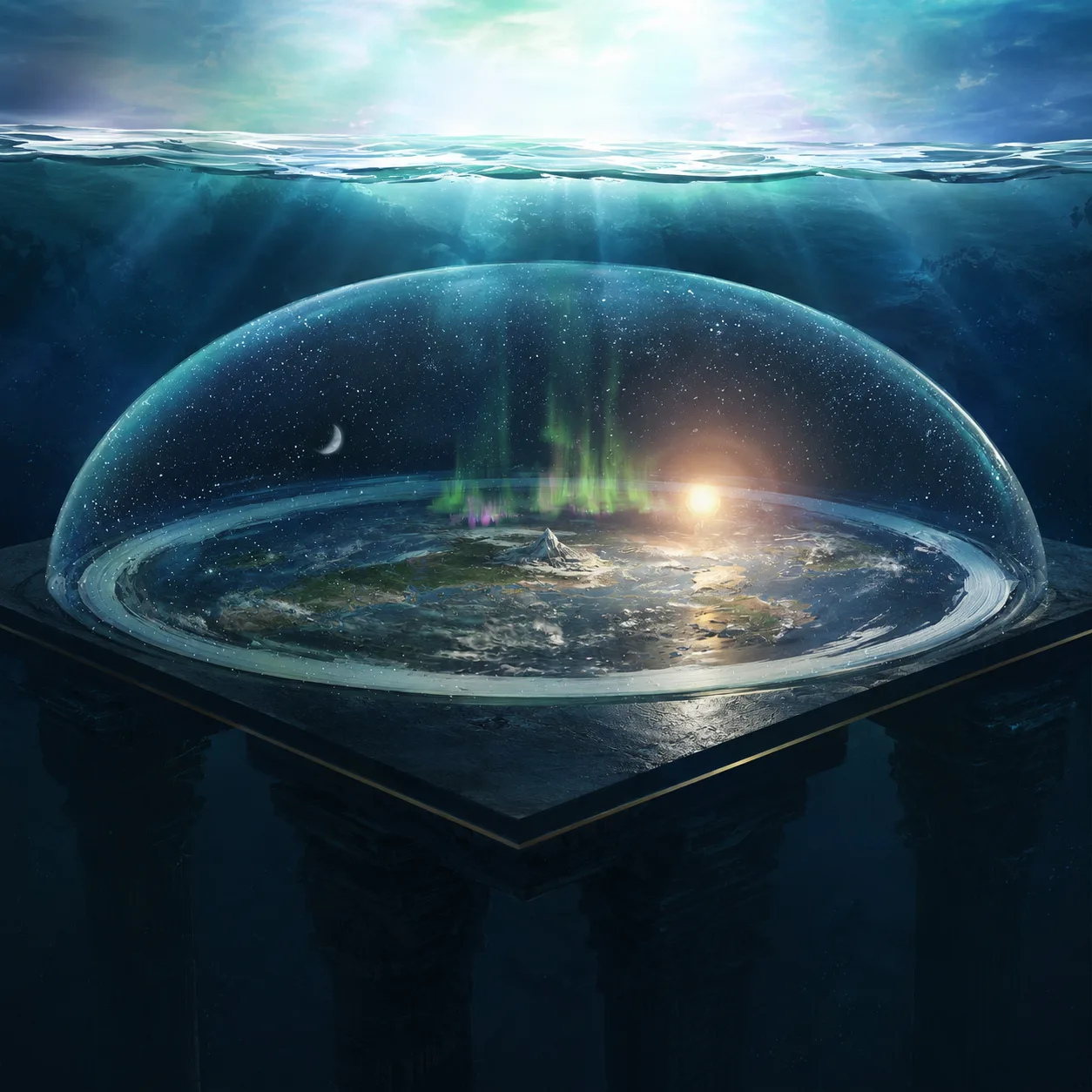
The enclosed model, in cross-section
A rendering of the cosmology Scripture describes: an outstretched, level earth; a domed firmament dividing the waters above from the waters below; the sun, moon, and stars contained within the enclosure; the foundations set beneath. Illustrative — not a literal map, but far truer to the Bible's own language than the model commonly taught today.
A note on two words used throughout, both intentional. Plain (p-l-a-i-n) is the geographical term — a flat region of land, as in the phrase “Christ stood in the plain” (Luke 6:17). Plane (p-l-a-n-e) is the geometric term — a flat surface. The two are related by more than spelling: a geographical plain presupposes a geometric plane, and neither can exist on the outside of a ball.
Not the Flat Earth Society
One caricature deserves naming before the argument begins. The Flat Earth Society — an organisation founded by Samuel Shenton in 1956 and continued today in various online forms — has become, over the last several decades, the public face of “flat earth” in newspapers, search results, and dismissive references. It is not representative of this position, and the great majority of serious biblical-flat-earth observers explicitly reject it. The biblical position differs from the Society on every load-bearing point.
The Society's model is a free-floating disc in otherwise empty space — it accepts the conventional outer-space cosmology and merely substitutes a disc for the globe. Scripture teaches a bounded enclosure under a firmament, with foundations beneath and ends or borders — not a disc adrift in a void. The Society explains gravity by a notion of the disc accelerating perpetually upward through space; Scripture gives the earth pillars and foundations and says it does not move at all. The Society treats the matter as philosophical contrarianism; the biblical position rests on the plain testimony of Moses, the prophets, the apostles, and Christ Himself, and predates the Society by thousands of years.
There is a further observation worth making plainly. The Society functions — whether by design or by accident of its founding posture — as a kind of controlled opposition. It keeps the public conversation about the shape of the earth in a frame so eccentric, so easily caricatured, and so far from the Scripture-based case, that serious inquiry can be dismissed by association. Whoever funds it and whatever its members sincerely believe, the effect has been to attach to the biblical position a public face far easier to laugh at than to refute. A reader searching the subject today will almost certainly meet that framing before encountering any of the case set out here. Evaluate this article on its own terms — the biblical text it cites, the observations it surveys, the history it documents — and not on what an unrelated organisation that happens to share two words of its name has chosen to teach.
A note on the foundation of the modern model
Almost every common rebuttal to the material gathered here depends, in the end, on a single foundational assumption: that the claims handed down by mainstream scientific institutions, government agencies, universities, and media are essentially one hundred per cent factual. That is itself a substantial assumption. It is not a conclusion any of us derived from personal observation, controlled experiment, or independent verification. It is a posture of trust placed in institutions whose claims few of us are ever in a practical position to check.
Once that foundation is set aside — even provisionally, even just to weigh the evidence on its own merits — many of the standard rebuttals to the verses and observations below lose much of the strength their advocates think they carry. They were not, in the main, independent verifications. They were appeals to the authority of the very institutions whose authority is the question. This article does not ask the reader to suspend reason. It asks him to bring reason all the way back to its starting point — to the things he can personally observe, and to the Scripture he can personally read — and to weigh from there.
The reading principle
Before the verses and observations, a word on how this article reads them. Scripture announces its figurative and symbolic language openly when it employs it — Revelation, Ezekiel, and Daniel declare their visions to be visions and their apocalyptic figures to be figures. Outside that signalled framework, the default taken here is that the Bible means what it plainly says. Where a narrative reports an event — the sun standing still over Gibeon — the report is taken as reported. Where the structure of the cosmos is described — a firmament dividing the waters, foundations of the earth that cannot be moved, four corners — the description is taken as describing something real, not as a poetic device applied to a structure modern cosmology has independently fixed.
That hermeneutic is the load-bearing choice of this article. The reader who shares it will read what follows the way I do. The reader who does not is asked to consider one question honestly: whether the figurative-everywhere reading can be applied consistently — or whether it tends to surface only at the precise points where the plain reading would collide with the cosmological assumptions of the modern age.
Part I — the case from observation
Before the biblical catalogue, a survey of the observational arguments — the kind of everyday things a person can weigh without the world's most expensive equipment to mediate them, and to which mainstream rebuttals depend, almost invariably, on the foundational assumption addressed above. The aim here is not a scientific treatise. It is to register, plainly, the observations that draw honest people to look again.
Sensory experience and the horizon
The horizon, at every altitude the ordinary observer can reach, appears flat. It does not curve away in the manner the globe model predicts. It rises to eye level even at the high altitudes accessible to balloons, drones, and commercial flight — on a globe the horizon should drop away and the observer should have to tilt his gaze further and further downward to see it; on an extended plane it rises with him, which is exactly what is reported. Looking out an airliner window at thirty-five thousand feet, the horizon sits at eye level out both sides of the cabin at once; on a globe those views should show nothing but the curve falling away. The visible curvature in some high-altitude footage is consistent with the distortion produced by wide-angle (“fish-eye”) lenses rather than the curvature of a sphere — a fact easily confirmed by comparing the same scene shot with different lens configurations, and by lens-corrected footage from the same altitudes, which shows a flat, level horizon.
The everyday sensory experience of the human observer — a flat horizon, the felt stillness of the ground underfoot, the apparent motion of the sun and stars overhead — is the experience of a stationary, level earth. Whether one accepts that testimony as decisive depends on whether he treats sensory observation or institutional claim as the higher court.
The physics of water
Water, left to itself, finds its level — and the level it finds is straight, not curved. On a globe, no truly flat, consistently level surface would exist anywhere; every standing body of water would have to curve at roughly eight inches per mile squared. Along a six-mile channel of still water, the centre would have to bulge some six feet above a line drawn between the ends. Engineers and surveyors do not, in practice, introduce corrections for the curvature of the earth when building canals, railways, or long bridges. Rivers flow consistently to sea level over hundreds of miles without the climbing and descending a rotating sphere would require.
The nineteenth-century Bedford Level experiments are the best known of these. Standing in a still canal with a telescope held a few inches above the water, the observer watched a flag on a boat sail away six miles; on a globe the entire boat and flag should have dropped behind six feet of curvature, and they did not. A companion test with flags set at every mile marker along the same six miles showed all of them in a perfectly straight line — impossible if the canal lay on a curved surface. Engineering practice corroborates it. The Manchester Ship Canal Company stated the matter plainly: “It is not the practice in laying out public works to make allowances for the curvature of the earth.”
Distant landmarks beyond the calculated curve
Numerous well-documented sightings show distant cities, islands, and landmarks visible at distances the globe model says should hide them entirely behind the curve. The Chicago skyline is photographed at full height from roughly sixty miles across Lake Michigan, where the globe requires it hidden behind some 2,400 feet of curvature. Lighthouses are charted as visible at sea from distances at which their lamps should sit hundreds or thousands of feet below the line of sight. Across the Irish Sea, the Isle of Man and the Welsh coast are mutually visible on clear days at sixty miles, the Welsh shoreline appearing as a straight fifty-mile line. These recur often enough to constitute a pattern, not a fluke.

Chicago · ~60 mi across Lake Michigan
The Chicago skyline observed at full height from roughly sixty miles across Lake Michigan — well documented in real photography. The globe model requires the skyline hidden behind some 2,400 feet of curvature.
Atmospheric and rotational anomalies
The atmosphere does not behave like the skin of a spinning ball. Clouds move independently in different directions and at different speeds; high-altitude winds shift unpredictably. A projectile fired straight up does not land hundreds of metres to the west, as a thousand-mile-an-hour eastward spin at the equator would require — it lands where it was fired from, often back into the muzzle. Eastbound and westbound flights between the same two cities take nearly the same time, when a 500-mph rotation beneath them should make one far shorter than the other. And the atmosphere is asked to be two incompatible things at once: rigidly locked to the spin so that the motion is nowhere felt or measured, yet fluid enough that birds, insects, clouds, smoke, and aircraft move freely through it in every direction. The two requirements are mutually exclusive, and the proposed reconciliation — gravity dragging the atmosphere in perfect lockstep up to some unspecified altitude — has never been observed or coherently described.
Astronomical observations
Polaris stands fixed above the north and does not move; the constellations turn perfect circles around it, holding the same patterns, to the minute, that they held in antiquity. The polestar can be observed not only at high northern latitudes but well into the southern hemisphere — more than twenty degrees south of the equator — which is geometrically impossible on a globe, where the observer would have to see through miles of bulging earth and ocean to reach it. And after centuries of looking, the stellar parallax that a 186-million- mile annual orbit should produce has never been detected in the amount the model predicts — only minuscule oscillations that fit a near and stationary cosmos at least as well. The motion of the sun and moon across the sky is consistent with the bodies themselves moving, which is also the plain reading of the biblical text.
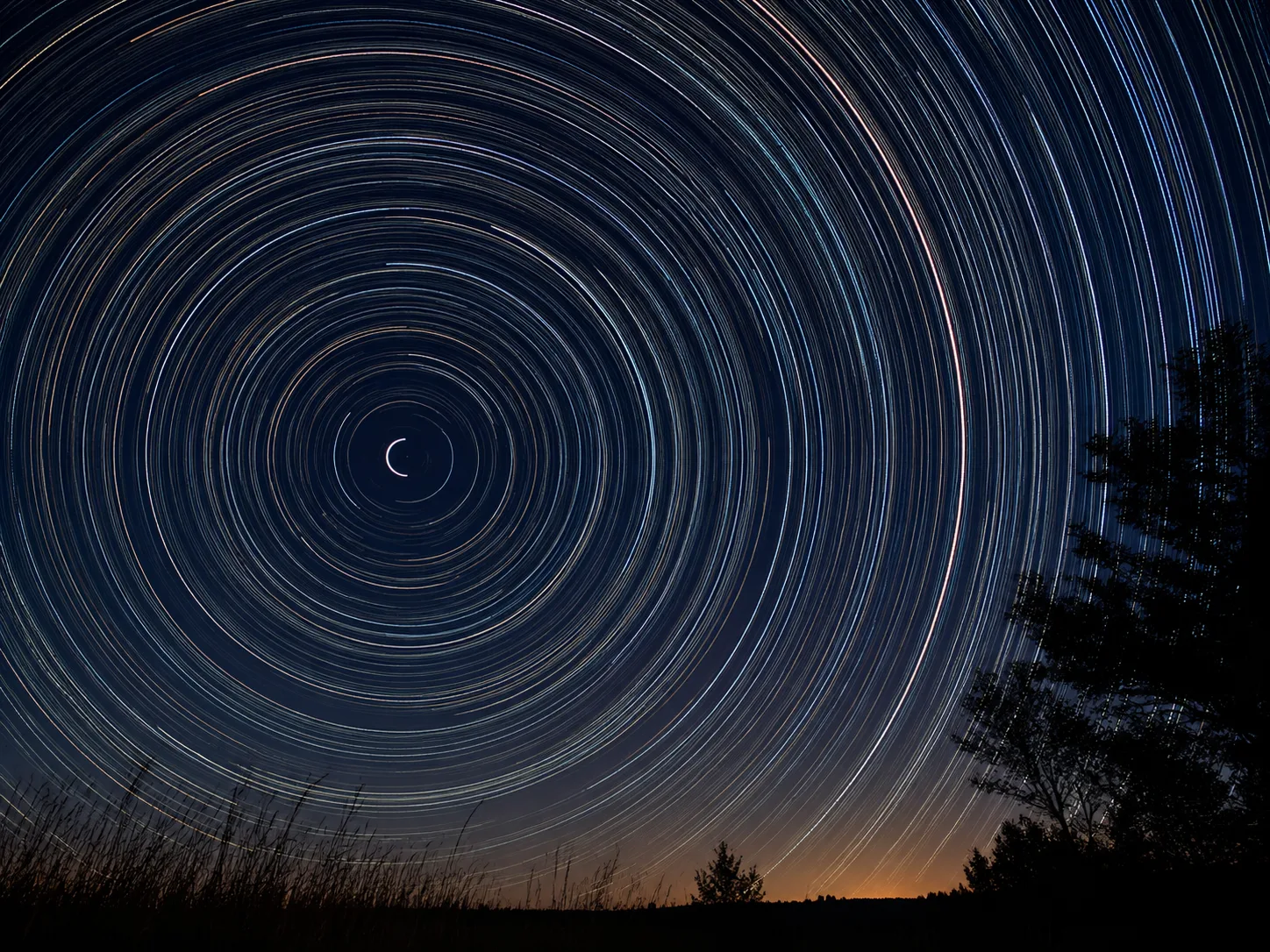
Polaris · long-exposure star trails
Perfect concentric circles around an immovable polestar. Polaris has held the same fixed point through all of recorded history — and can be seen well south of the equator, which a globe does not permit.

Crepuscular rays · converging above the clouds
Trace the rays back and they meet at a point not far above the cloud layer — the behaviour of a near, local light source, not one ninety-three million miles away.
The lens of the atmosphere
The standard rebuttal to the distant-skyline photographs is that any visibility at such ranges must be a “mirage” or temperature inversion. There is a kernel of truth here that, examined honestly, runs the other way. The atmosphere is, in fact, a giant optical medium. The U.S. Geological Survey reports that it holds, at any given moment, thousands of cubic miles of water in vapour form — a haze of microscopic convex droplets that, layered above water bodies and varying in density with temperature, collectively act as one enormous convex lens. The same physics that bends a pencil in a water glass bends light across the atmosphere — refracting, magnifying, and, under the right conditions, partly obscuring what lies far away.
This is not a fringe claim. Mainstream optics treats atmospheric refraction as a standard effect that surveyors, astronomers, and aviation engineers correct for as routine. The researcher Rob Skiba demonstrated the underlying mechanism with a tabletop apparatus a child can replicate: a flexible convex magnifying sheet held over a printed skyline cutout produces precisely the pattern critics attribute to the earth's curve — the lower stories dropping away while the middle and upper band remain visible and magnified — as the camera is pulled back. Two implications follow. The partial “hiding” of distant skylines is fully accounted for by refraction, without any curved earth at all; and the high-zoom recoveries documented elsewhere — the boat or mountain that vanishes to the naked eye and is restored in full by a powerful optical zoom — are not anomalies but the lens behaving as a lens. The objection, pressed, becomes a confirmation of the optical conditions that make the observation work.
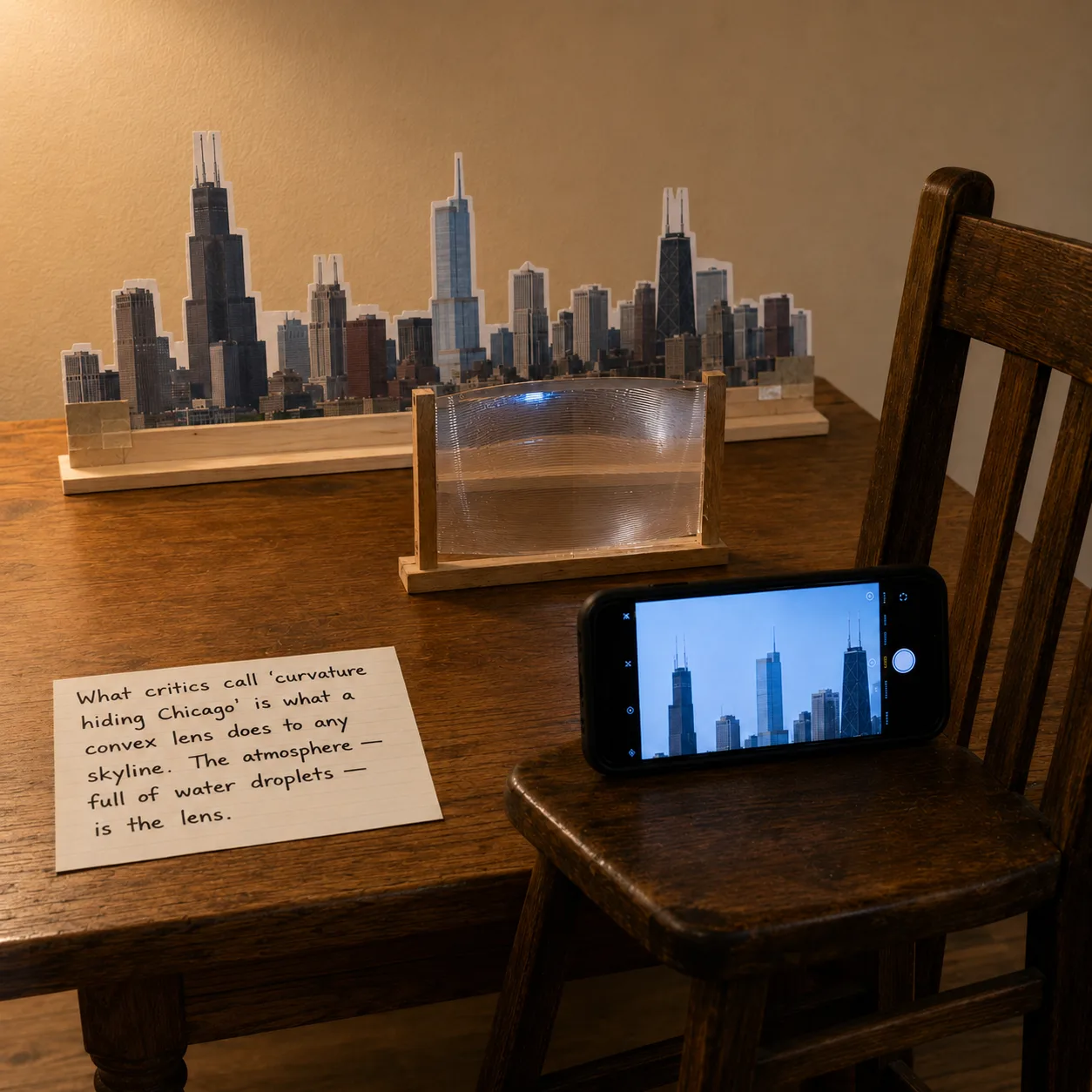
Atmospheric refraction · at the kitchen table
A convex magnifying sheet placed between the viewer and a printed skyline reproduces the exact pattern critics attribute to the earth's curve — the lower stories cropped, the middle band magnified. The atmosphere is a vastly larger version of the same lens.

The enclosed lens apparatus
A Fresnel-lens window mounted in a simple box produces the same lower-band cropping and middle-band magnification across a printed skyline — illustrating the optical principle the atmosphere applies at scale.
Note · The two images above are illustrations, not photographs of an actual experiment — AI-generated re-creations made to show roughly what the demonstration looks like. The point rests on the optics, not on these pictures; anyone can reproduce the real thing at home with a convex magnifying sheet and a printed skyline.
What the amateur balloons show
A wider sample is available from amateur high-altitude balloon flights — at elevations between roughly sixty thousand and a hundred and twenty thousand feet, well above commercial aviation, and free of the wide-angle lenses that bow a horizon. Two of this article's claims are visible across the set. First, the horizon remains flat. Second, the sun behaves as a near, local light — casting a clear hot-spot reflection on the cloud layer directly beneath it, illuminating a bounded region rather than lighting the whole cloud sheet uniformly as a source ninety-three million miles away would.
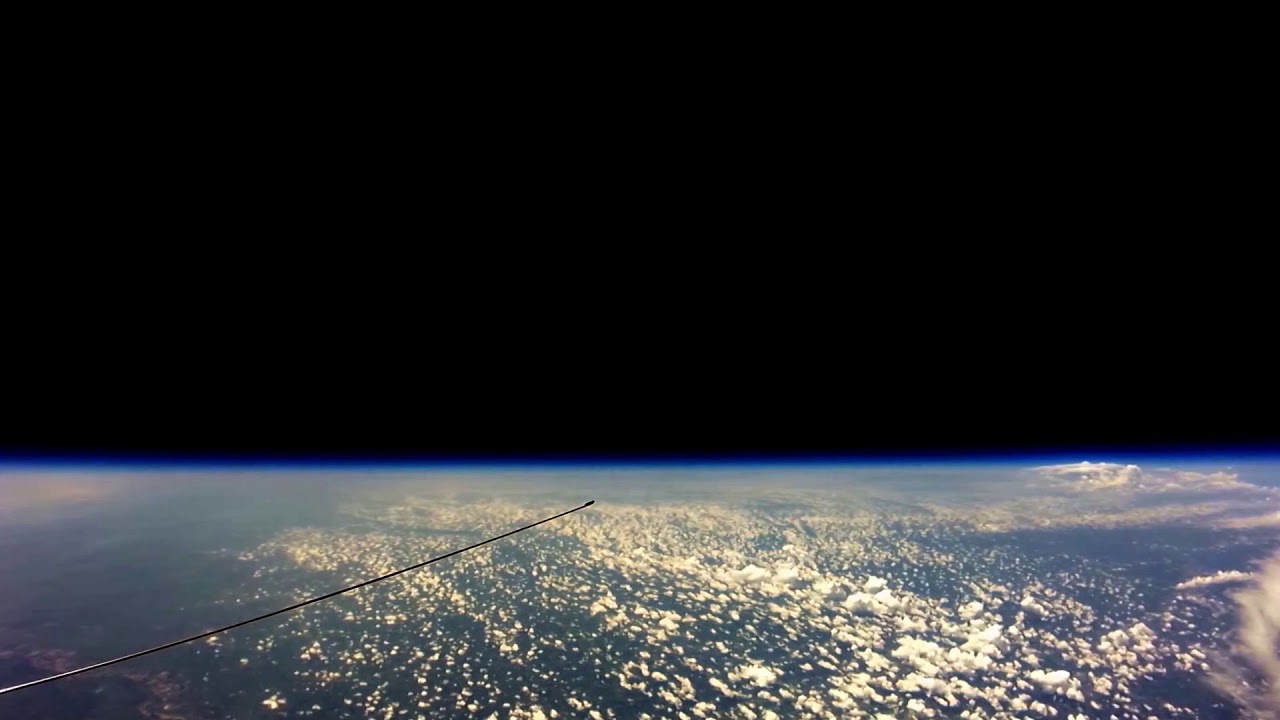
High altitude · flat horizon
A wide, flat horizon at very high altitude, filmed without a fish-eye lens.
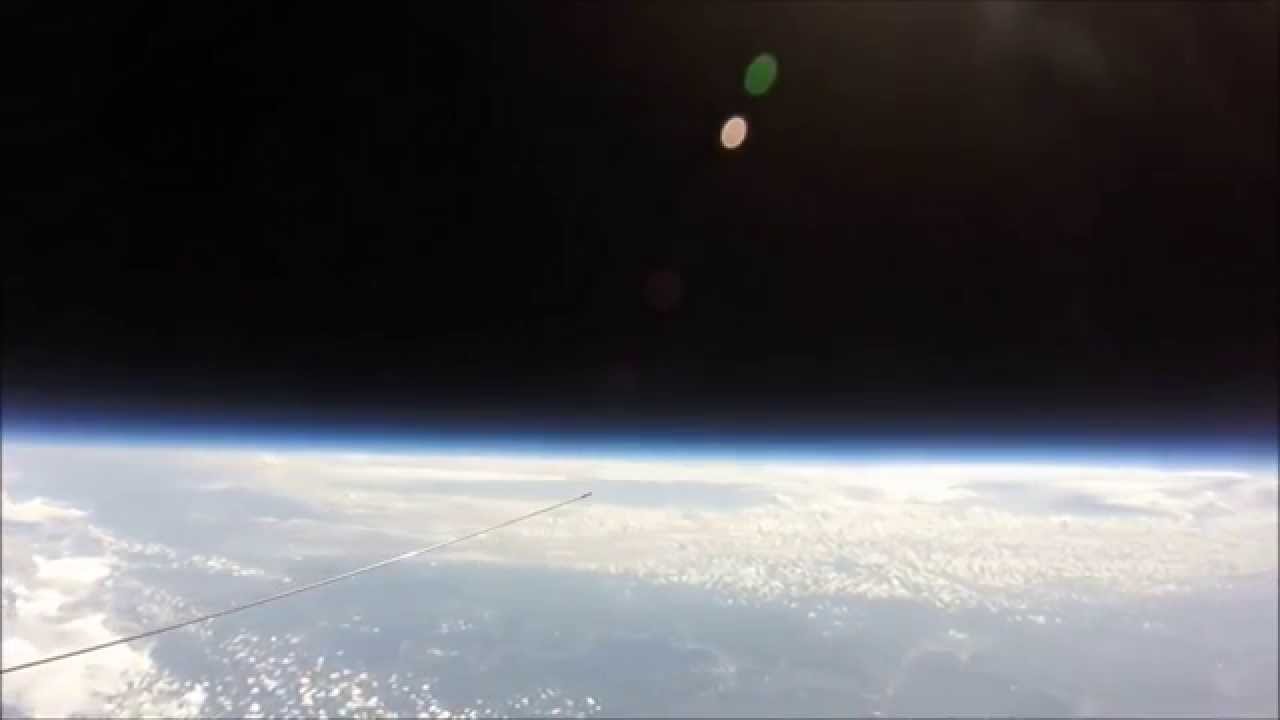
Flat horizon · tether in frame
The horizon stays level across the frame; the balloon's own tether gives a vertical reference.
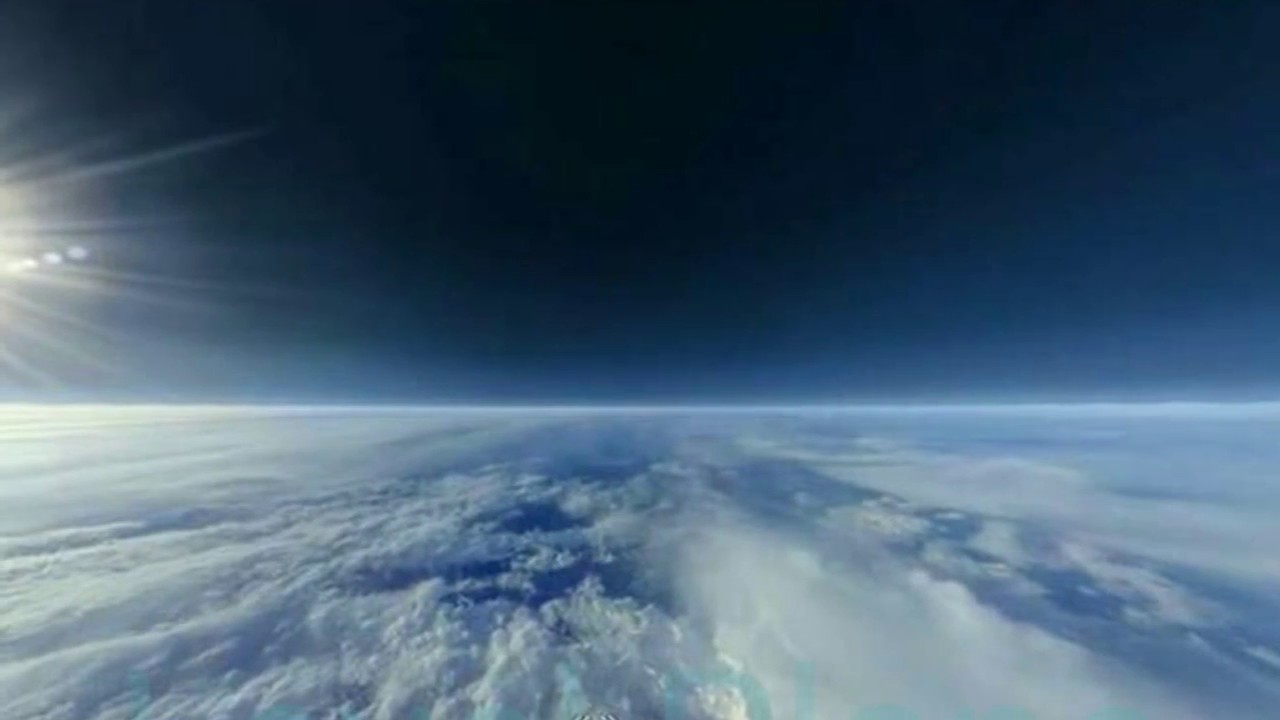
Flat horizon · layered atmosphere
The layered bands of the atmosphere sit above a level horizon, not a curved one.
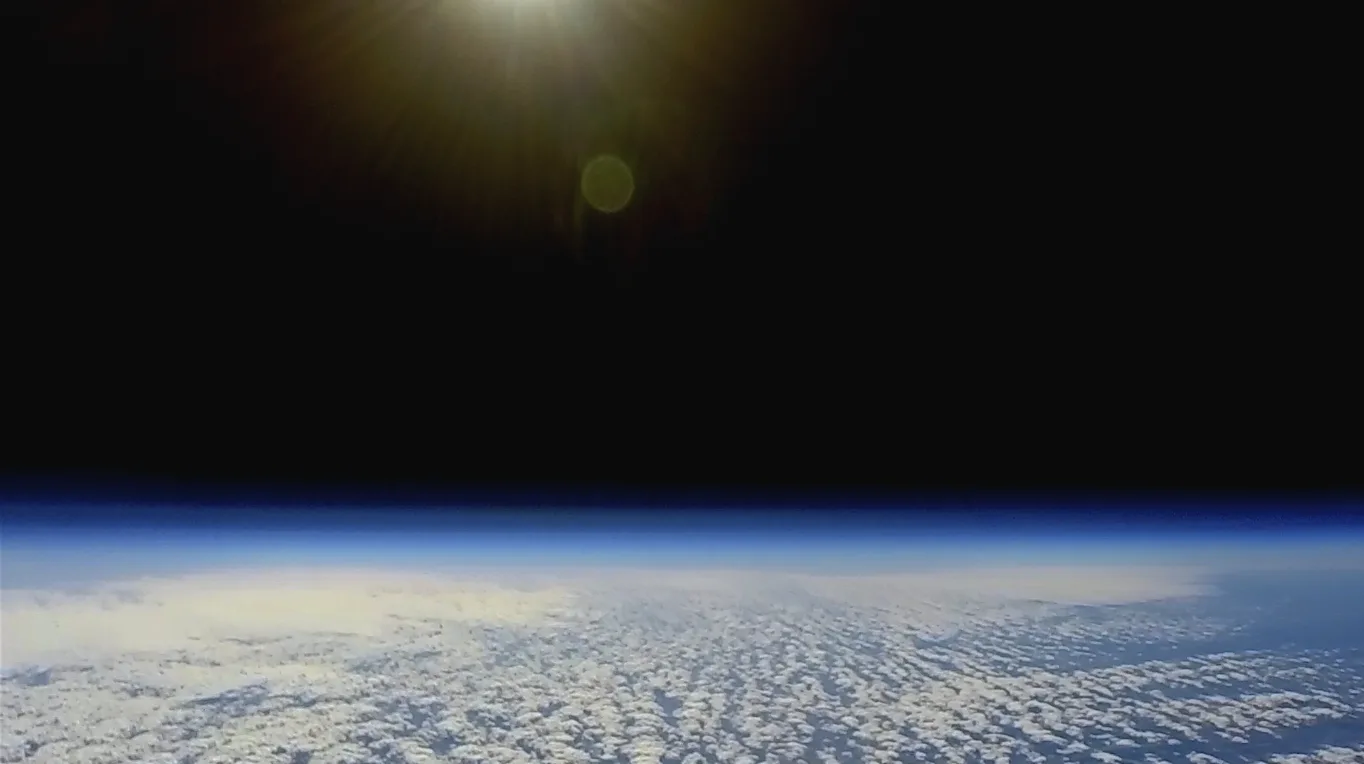
Flat horizon · sun overhead
Even with the sun high in frame, the horizon reads flat across its full width.
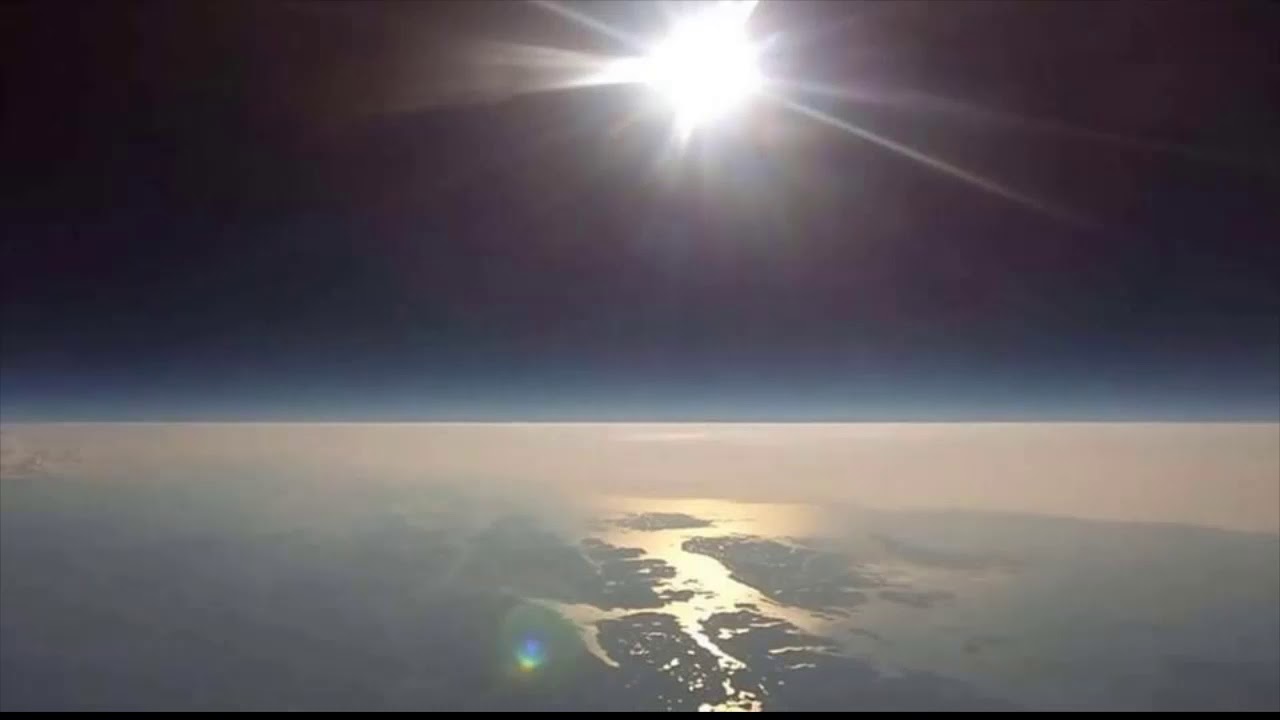
Sun spotlight · over water
A localised hot-spot of sunlight on the surface below — the signature of a near, local source, not a uniformly distant one.
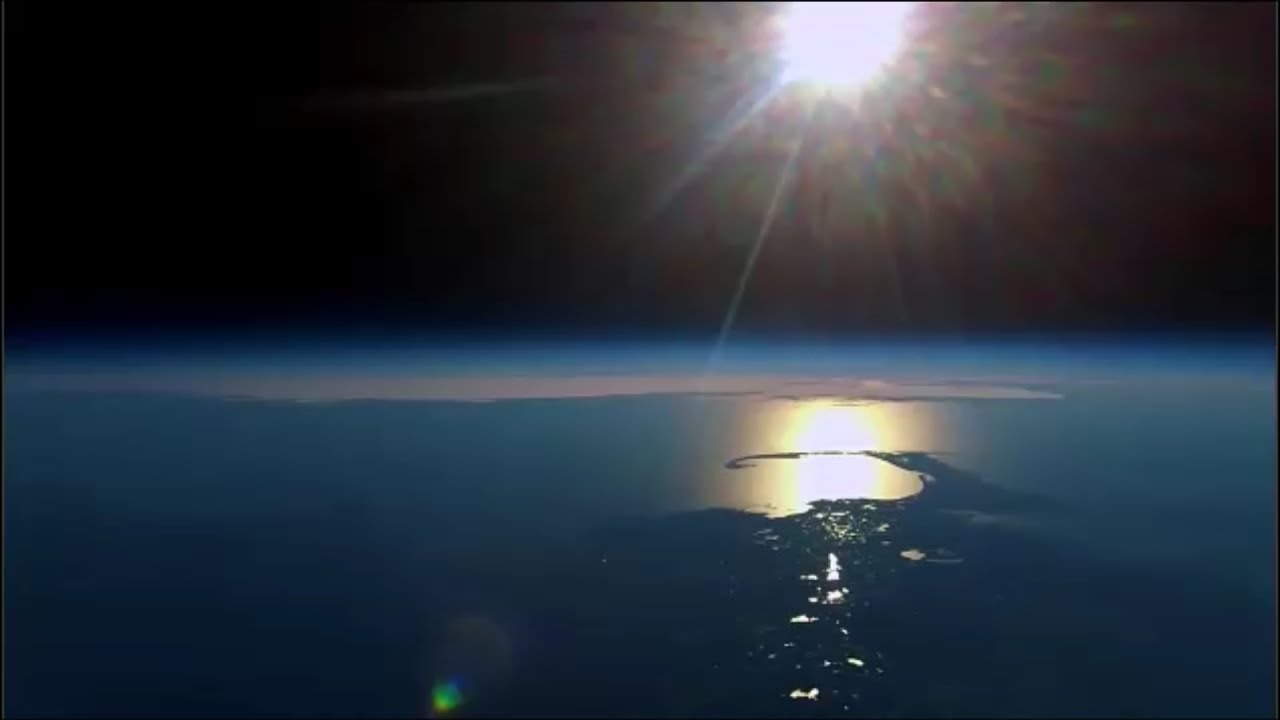
Sun reflection · localised
The reflection is confined to a bounded area directly beneath the sun, not spread evenly across the clouds.
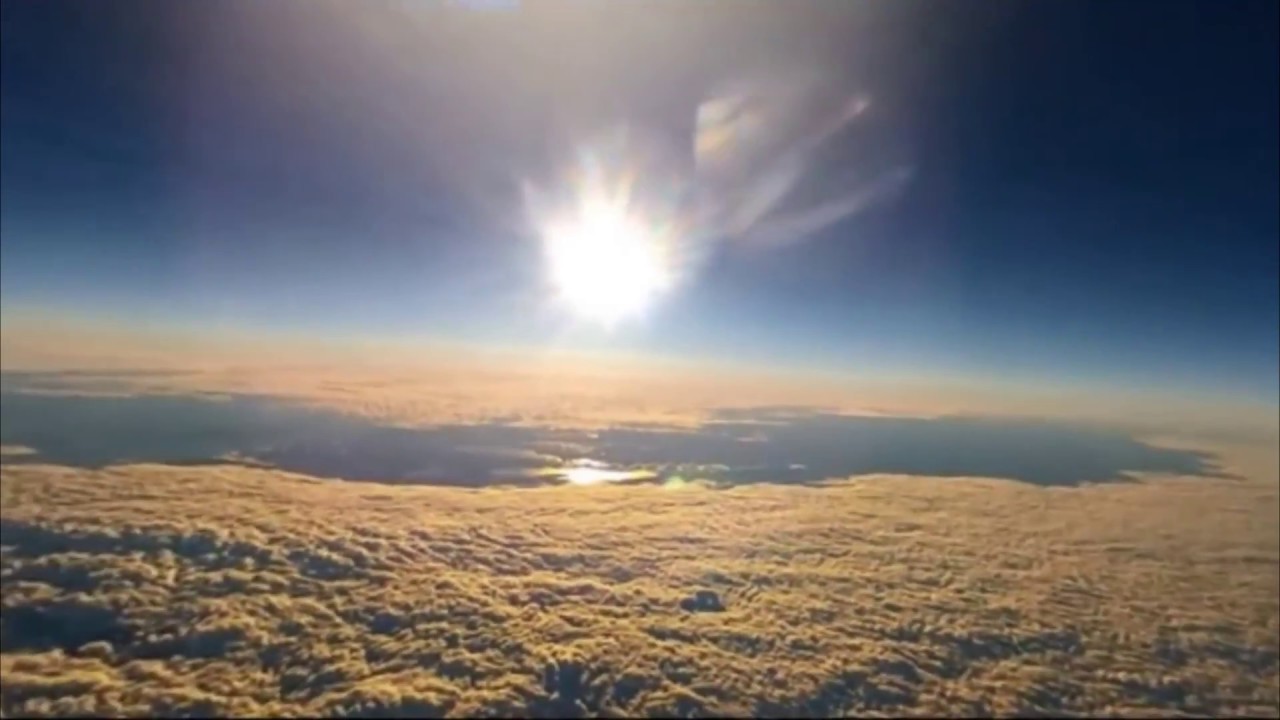
Sun hot-spot · on clouds
A concentrated hot-spot on the cloud sheet — what a near light over a bounded region produces.
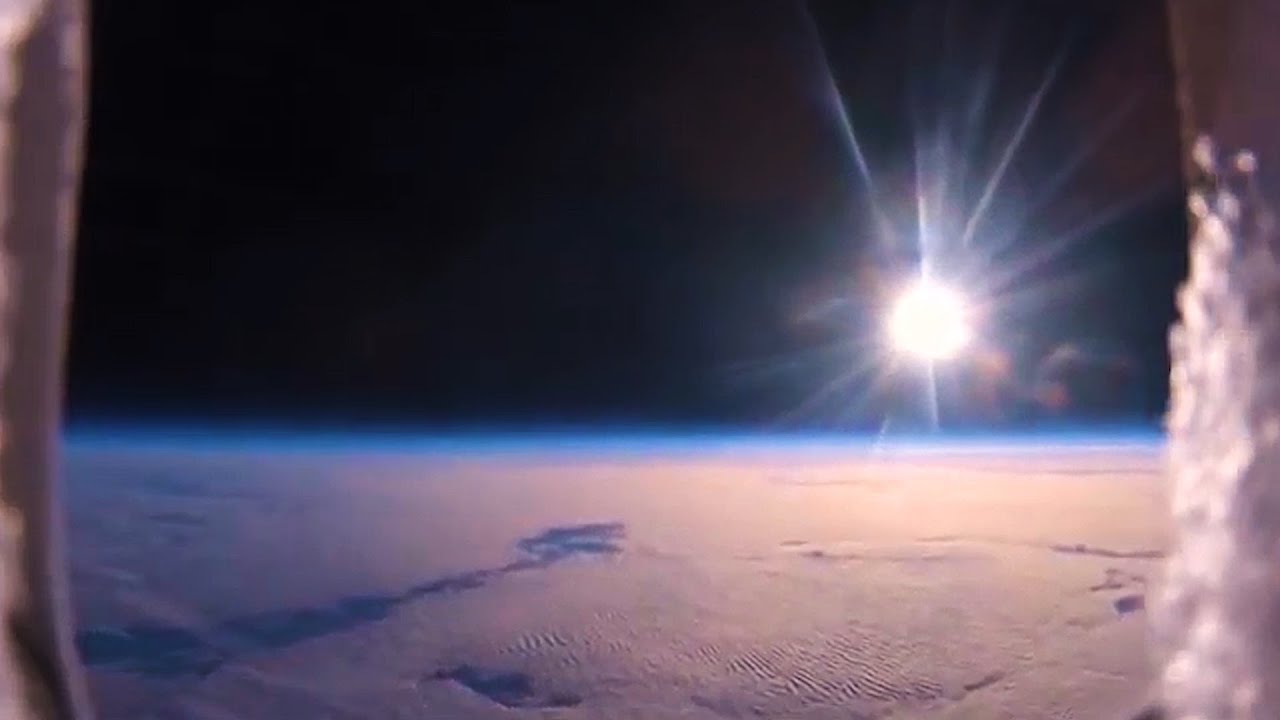
Sun spotlight · over cloud sheet
From high altitude the sun illuminates a bounded circle of cloud directly below it, like a spotlight.
Part II — the biblical catalogue
More than two hundred verses bear on the question. They are grouped below by theme, with the load-bearing texts quoted from the King James Bible and additional references listed beneath so the pattern can be verified without the article becoming an unmanageable wall. Read together, they describe one consistent structure — the same one nearly every ancient people independently remembered.
The earth was created before the sun
Genesis records the earth as the first object of God's creative work, with light on the first day and the sun, moon, and stars formed and set in place only on the fourth (Genesis 1:1–19). The order is the exact reverse of every sun-first origin model: the earth does not orbit a body that did not yet exist when it was made, and there were three ordered days — evening and morning — before there was a sun to measure them by.
The creation was finished — it is not expanding
“Thus the heavens and the earth were finished, and all the host of them” (Genesis 2:1); God “rested… from all his work which God created and made” (Genesis 2:3). The work is spoken of as completed and at rest, not as an expanding, still-unfolding process — language difficult to reconcile with a cosmos said to be flying apart in every direction from an explosion still underway.
The dimensions of the heavens cannot be measured by man
Scripture repeatedly says the heavens and the foundations of the earth cannot be searched out or measured by man: “If heaven above can be measured, and the foundations of the earth searched out beneath, I will also cast off all the seed of Israel” (Jeremiah 31:37) — God stakes His covenant on the impossibility. This sits uneasily beside a body whose circumference has been confidently calculated since antiquity.
The earth is a circle (chug), not a ball (dur)
It is he that sitteth upon the circle of the earth… that stretcheth out the heavens as a curtain, and spreadeth them out as a tent to dwell in.
Where Scripture names the shape of the earth, the word is circle — Hebrew chug (Isaiah 40:22) — the same word used for a disc or a compass-drawn round, not the word for a ball or sphere. And the point is sharpened by the prophet's own vocabulary. The same Isaiah used dur — the proper Hebrew word for a ball — plainly and unambiguously in his own book, to describe a literal ball being thrown: “he will… toss thee like a ball (dur) into a large country” (Isaiah 22:18). If Isaiah had wanted to call the earth a ball, the word was on his shelf and he had already used it. He chose chug — the flat disc, circle, or compass-round — for the earth. That is not an oversight or a limit of ancient Hebrew; it is a deliberate authorial choice by a writer who plainly knew both words.
The earth is measured with a line, not a curve
When God questions Job about the founding of the earth, the imagery is of a building site, not a sphere: “Who hath laid the measures thereof… or who hath stretched the line upon it?” (Job 38:5). A line stretched upon the earth is the language of a level surface laid out by a measuring cord — the way a foundation is set, not the way a globe is described.
A geographical plain presupposes a geometric plane
A geometric plane — a flat surface — is what a geographical plain requires in order to exist, and neither can exist on the outside of a ball. Scripture is full of plains: Christ “stood in the plain” (Luke 6:17); the plain of Jordan, the plain of Shinar, the plains of Moab. A flat region of land presupposes a flat surface beneath it.
The waters are straight, and the deep has a face
The waters of the earth lie flat. When God set the bounds of the sea He “set a compass upon the face of the depth” (Proverbs 8:27) — the deep has a face, a flat surface. Job speaks of the face of the waters being frozen “and the face of the deep is frozen” (Job 38:30). Standing water keeps a level face, exactly as the observational section described — never the bulging curve a sphere would require.
Earthquakes shake the earth — but the earth itself does not move
When God shakes the earth in judgment, it is the surface and the pillars that tremble, not the established world departing from its place: “the pillars of heaven tremble” (Job 26:11); “he… shaketh the earth out of her place, and the pillars thereof tremble” (Job 9:6). An earthquake is precisely a disturbance of a fixed thing — the language assumes a world that normally does not move at all.
The earth is fixed and cannot be moved
Fear before him, all the earth: the world also shall be stable, that it be not moved… the world also is stablished, that it cannot be moved.
This is one of the largest verse-groups in Scripture. The earth is “established” and “cannot be moved” (Psalm 93:1; 96:10); He “laid the foundations of the earth, that it should not be removed for ever” (Psalm 104:5); “the earth abideth for ever” (Ecclesiastes 1:4). And the most familiar of them carries the same sense once you notice it: “Be still, and know that I am God” (Psalm 46:10) — the One Who does not move bidding the restless to be still before Him. Further references: Psalm 119:90; Isaiah 45:18.
The earth has pillars — and yet hangs upon nothing
Two images are held together, not against each other. The earth has foundations and pillars: “the pillars of the earth are the Lord's, and he hath set the world upon them” (1 Samuel 2:8); God “bear up the pillars of it” (Psalm 75:3); the foundations are laid that the earth “should not be removed for ever” (Psalm 104:5; also Job 38:4–6; Hebrews 1:10). And separately, “he hangeth the earth upon nothing” (Job 26:7). These do not conflict. To say a thing does not hang from anything is not to say it does not stand on anything; a thing can fail to hang from above and still rest on a solid foundation beneath. The Hebrew verb in Job 26:7, talah, is the ordinary word for hanging an object on a hook, peg, or branch — it addresses what is, or is not, above the object, and says nothing about what is beneath. What is beneath, Scripture answers plainly elsewhere: the pillars and foundations God has set. We are not told how many there are or how they hold. We are told they exist, and that they are the Lord's.
The earth, the waters, and the sky each have a “face”
A face is, geometrically, a flat surface — and Scripture repeatedly gives one to the earth, the waters, and the sky. The earth: men “scattered abroad upon the face of all the earth” (Genesis 11:9), a snare “on the face of the whole earth” (Luke 21:35), the nations dwelling “on all the face of the earth” (Acts 17:26). The waters: the Spirit moved “upon the face of the waters” (Genesis 1:2). The sky: men can “discern the face of the sky” (Matthew 16:3). The Hebrew and Greek alike describe these as having a face — the language of a surface, not a sphere. Further references: Genesis 1:29; Genesis 7:3–4; Genesis 8:9; Ezekiel 38:20.
The earth has ends
A ball has no ends. Scripture, in more than thirty places across many books, speaks of the ends of the earth— God looking “to the ends of the earth” (Job 28:24), the wind brought “from the ends of the earth” (Jeremiah 10:13; Psalm 135:7), the gospel carried “unto the ends of the earth” (Isaiah 45:22; Acts 13:47), the Lord judging “the ends of the earth” (1 Samuel 2:10). An outstretched plane has ends and borders; a sphere does not. Further references: Deuteronomy 33:17; Psalm 65:5; Psalm 72:8; Proverbs 30:4; Isaiah 40:28; Daniel 4:11; Matthew 12:42.
The earth has four corners and four quarters
Scripture speaks of the four corners and four quarters of the earth: the four angels standing “on the four corners of the earth, holding the four winds” (Revelation 7:1), the deceived nations gathered “in the four quarters of the earth” (Revelation 20:8); the dispersed of Judah gathered “from the four corners of the earth” (Isaiah 11:12; also Ezekiel 7:2). Corners belong to an outstretched, bounded surface, not to a globe.
The firmament — a solid expanse dividing the waters
On the second day God made the firmament — Hebrew raqia, the word for a beaten-out, hammered, stretched solid expanse — and set it “in the midst of the waters” to divide “the waters which were under the firmament from the waters which were above the firmament” (Genesis 1:6–8). On the fourth day He set the sun, moon, and stars in it (Genesis 1:14–17). Job describes the sky as “strong, and as a molten looking glass” (Job 37:18); Ezekiel sees a firmament “as the colour of the terrible crystal, stretched forth over their heads,” with a throne above it (Ezekiel 1:22–26). The lights are in the firmament, the waters above are held back by it, and God's throne is above it. Further references: Genesis 7:11; Genesis 8:2; Psalm 19:1; Psalm 148:4; Psalm 150:1; Daniel 12:3.
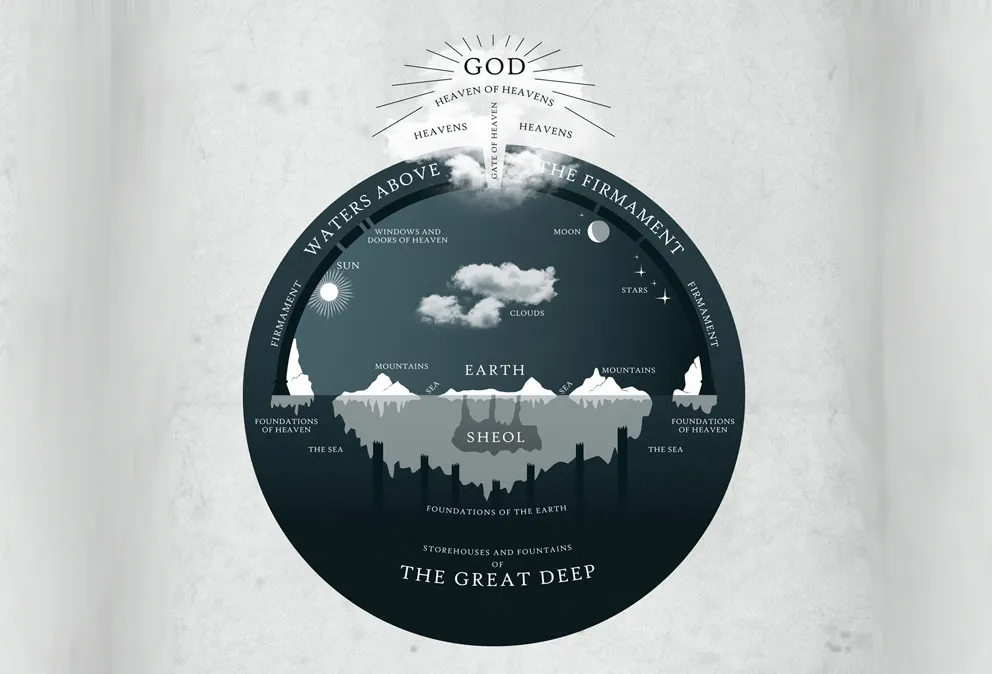
What the Hebrew Scriptures describe
A labelled reconstruction of the structure Genesis, Job, Isaiah, and the Psalms set forth: God above the heaven of heavens, the firmament as a literal vault, the waters above, the lights set in the firmament, the storehouses, the foundations, and the great deep beneath.
The same model, rendered
The same essential structure shown another way — the outstretched, level earth beneath a covering, with the sun, moon, and stars set inside the enclosure.
The sun moves — not the earth
Of all the categories in this catalogue, this is the largest: more than fifty references describe the sun as the moving body and the earth as the stationary frame. The sun “rejoiceth as a strong man to run a race… his going forth is from the end of the heaven, and his circuit unto the ends of it” (Psalm 19:5–6); “the sun also ariseth, and the sun goeth down, and hasteth to his place where he arose” (Ecclesiastes 1:5). The plain, repeated assumption of Scripture, from Genesis to the Gospels, is that the sun moves across a fixed earth. Further references: Joshua 1:4; Psalm 50:1; Psalm 113:3; Malachi 1:11; Matthew 5:45.
The sun stops moving
At Gibeon, Joshua commanded, “Sun, stand thou still upon Gibeon” — and “the sun stood still… and hasted not to go down about a whole day” (Joshua 10:12–13). If the sun's daily course were really the earth's rotation, the command would have had to be for the earth to halt — an event the modern model says would tear the planet apart. The text says the sun stopped, and the moon with it.
The sun moves backward
In the days of Hezekiah, as a sign, “the sun returned ten degrees, by which degrees it was gone down” on the dial of Ahaz (Isaiah 38:8; 2 Kings 20:9–11) — the shadow moving backward, the sun's motion reversed. Again the sun is treated as the body in motion.
The moon has its own light
Genesis calls the moon “the lesser light to rule the night” (Genesis 1:16) — a light, not a mirror. Scripture consistently speaks of the moon giving its light (Isaiah 13:10; Ezekiel 32:7; Matthew 24:29). The qualities differ, too: sunlight is warming and drying, moonlight cool and damp; light focused from the sun heats, light focused from the moon does not. A passive reflector cannot be qualitatively different from its source.
The whole earth seen from a single vantage
Several passages describe a single place from which all the earth is visible at once: Nebuchadnezzar's tree “seen to the end of all the earth” (Daniel 4:11), all the kingdoms of the world shown “in a moment of time” (Luke 4:5; Matthew 4:8), and “every eye shall see him” at His coming (Revelation 1:7). On a sphere of any size, no such vantage exists at any altitude; on an outstretched plane, it does.
The Matthews Bible (1537) reads “the flat earth”
The pre-King-James Matthews Bible of 1537 — drawing heavily on Tyndale's translation — renders 2 Samuel 11:11 with the phrase “upon the flat earth” where the later KJV reads “in the open fields.” Both render the same underlying Hebrew. The sixteenth-century translators read it as describing a flat surface; the seventeenth-century translators, working a generation closer to the new cosmology, chose wording that left the geometry open. The earlier English plainly said flat.
The cosmology every ancient civilisation remembered
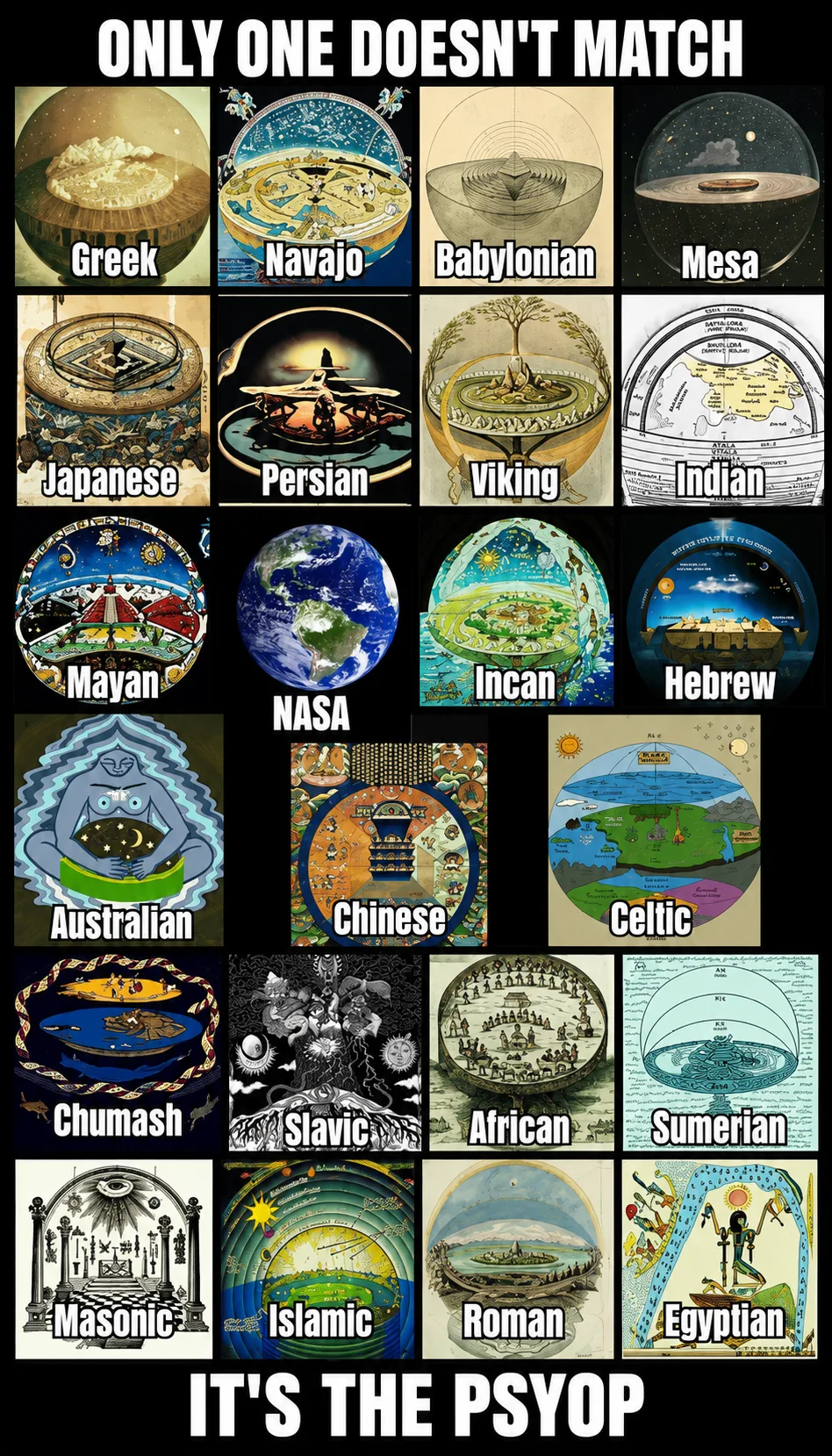
The structure those verses describe — an outstretched earth on foundations that cannot be moved, a firmament dividing the waters above from the waters below, the sun and moon and stars set within it — is not unique to the Hebrews. It is, with remarkable consistency, the cosmology nearly every ancient civilisation independently preserved, until the sixteenth century, when one new model began to displace it.
Set the Hebrew cosmology beside those of ancient Egypt, Norse Scandinavia, India, Babylon, Sumer, Mesoamerica, the Inca, the Navajo, China, and a dozen other peoples spread across the earth, and the astonishing fact is that they essentially agree. Each describes an outstretched, level earth covered by some form of dome, vault, or covering, with the celestial bodies contained within. The remembered cosmology of nearly every civilisation in human history is the same. Only one model breaks the pattern — the one the modern world has been taught is unquestionable. The reader is invited to weigh which is more likely: that every civilisation in recorded history was wrong in the same specific way, or that a single sixteenth-century innovation replaced what humanity had always known.
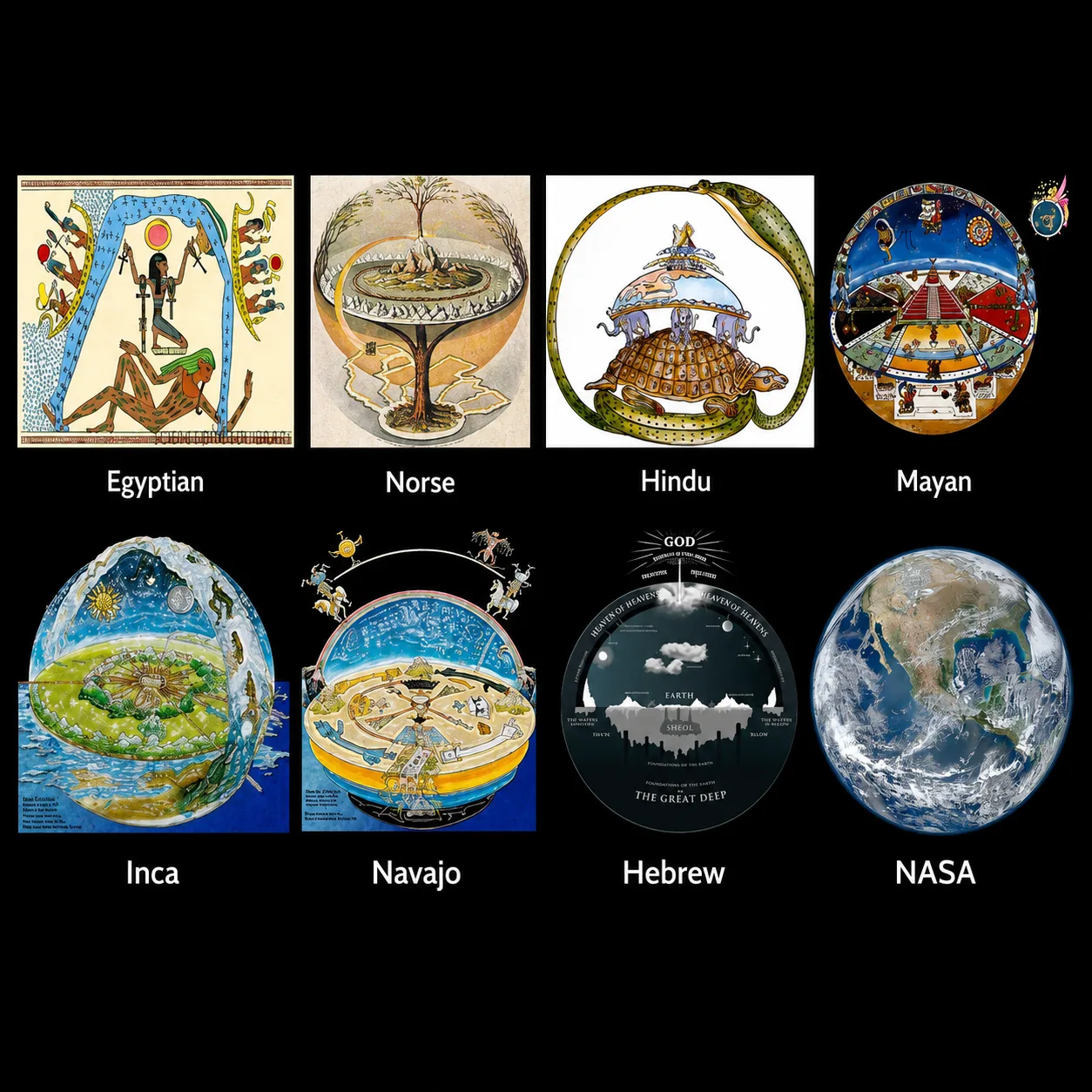
Many cosmologies · one outlier
Egyptian, Norse, Hindu, Babylonian, Mayan, Incan, Navajo, Hebrew and more — all independently describe an enclosed, level earth with a covering above and the lights set inside it. Only the modern depiction — a ball spinning through empty space — stands apart from every pre-Copernican human tradition.

The azimuthal map, in plain sight
The flat, north-centred azimuthal projection is no fringe artifact — it is the U.S. Geological Survey's preferred polar map and, in stylised form, the emblem on the flag of the United Nations.
And lest it be supposed that no figure of consequence inside the very tradition this institute means to recover ever held this: Alexander Gleason, of Buffalo, New York — a Seventh-day Adventist who helped establish a local congregation in 1889, and whom the flat-earth historian Robert Schadewald later called the most important Adventist flat-earther in America — patented in 1893 his “New Standard Map of the World.” It remains the single most widely reproduced flat-earth map in print today, more than a hundred and thirty years on. It is, in plain terms, a pioneer-era Adventist's rendering of the very azimuthal projection on which the modern southern flight routes, the published ice-wall testimony, and the sun's observed circling path all resolve into straight, sensible lines — the same projection the USGS prefers for polar work and the United Nations placed on its flag.
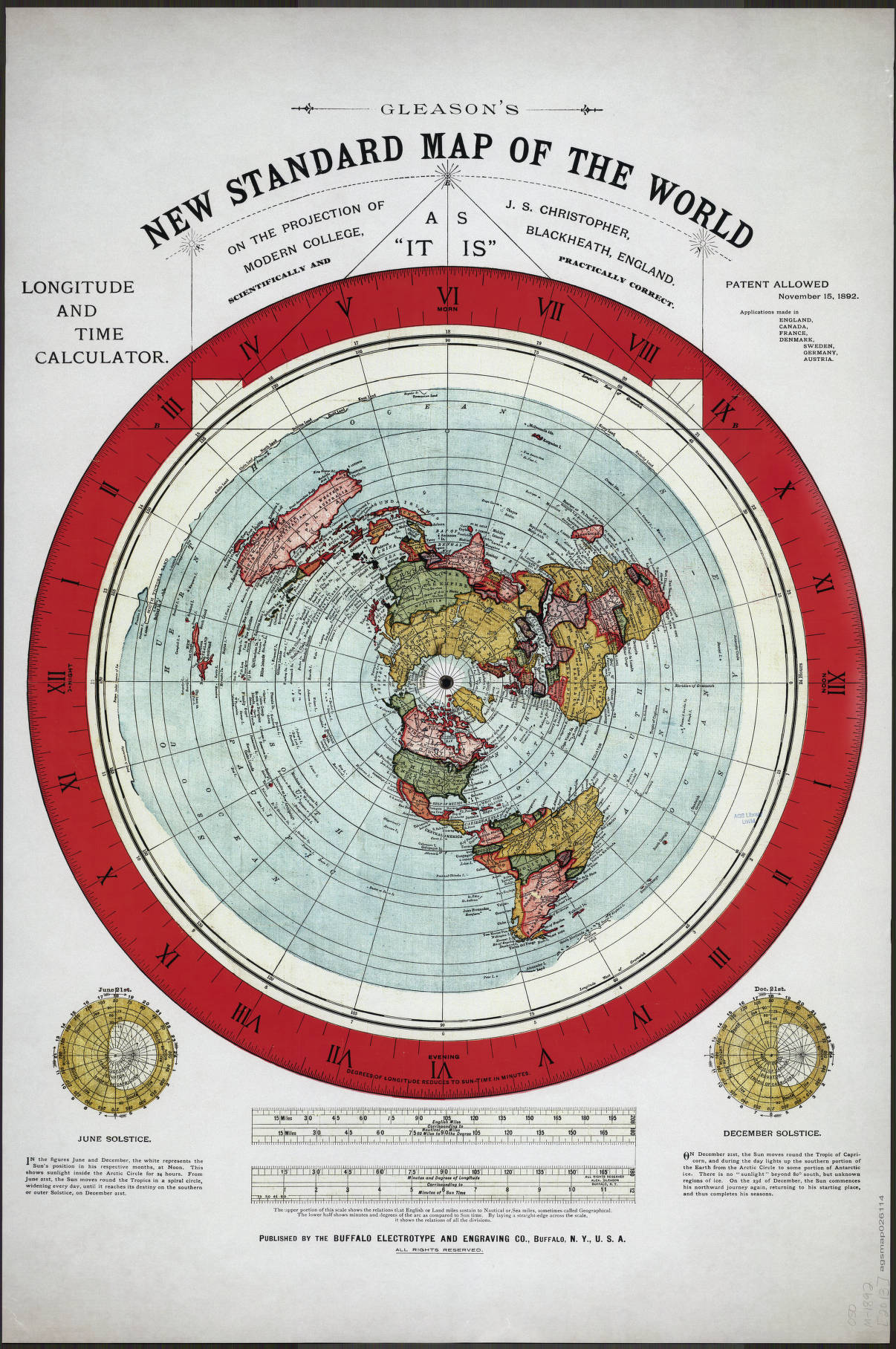
Gleason's New Standard Map · 1892
Drafted by Alexander Gleason, a Seventh-day Adventist, and patented in 1893 — a pioneer-era Adventist's rendering of the azimuthal projection the rest of the world still uses, including the USGS and the UN emblem.
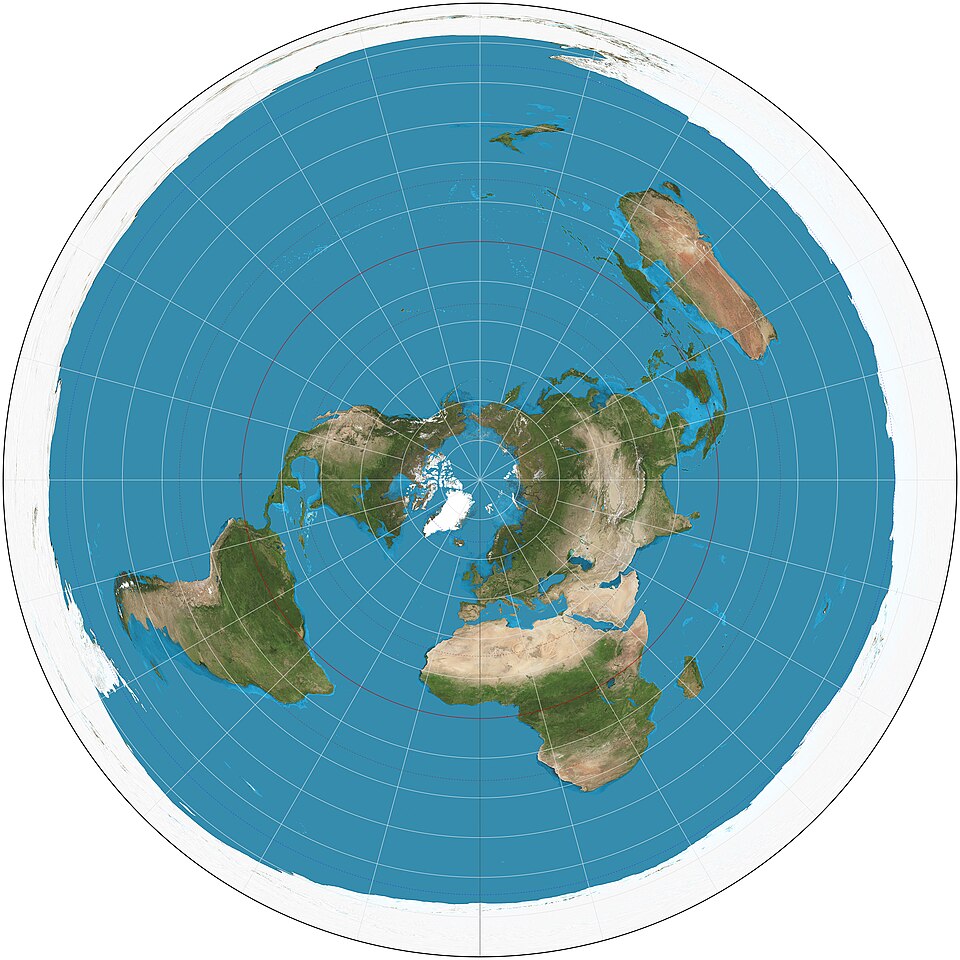
Southern routes · azimuthal projection
Major southern routes overlaid on the azimuthal projection resolve into near-straight lines; on a globe the same routes read as deeply illogical detours through the northern hemisphere.
NASA in its own words
The most disarming witnesses are not critics of the agencies but the agencies themselves. The descriptions NASA publishes alongside its own “Earth” imagery state plainly what those images are. They are composites, mosaics, and renderings— stitched together from data gathered over months, with clouds removed and colour applied — not single photographs. The famous 2002 Blue Marble was described by NASA itself as an image “created… by stitching together data” over four months; the Black Marble as a “composite assembled from data”; other releases as mosaics “with clouds removed.” Read those captions plainly: the iconic pictures the modern world has been handed as photographs of the earth from space are, by the agency's own description, assembled images.
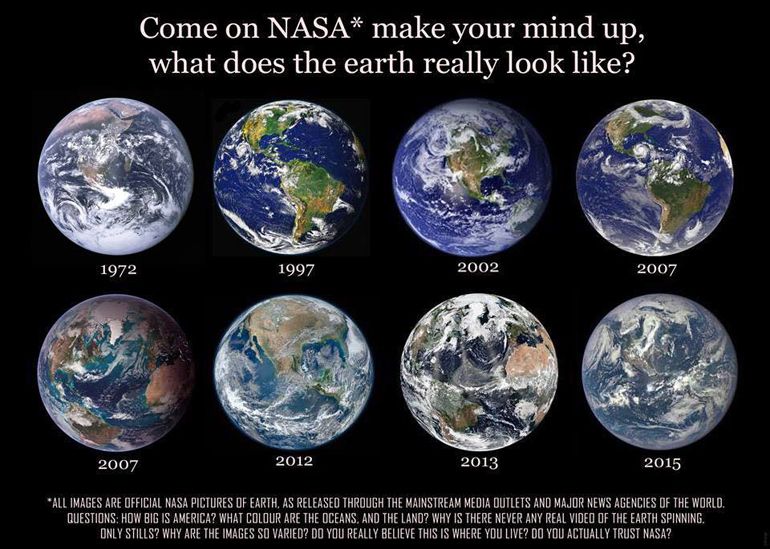
Official 'Earth' images, compared
Several official whole-earth images, all released as depictions of the same planet. Compare the size of the continents and the colour of the oceans. If these are photographs, what changed between them?
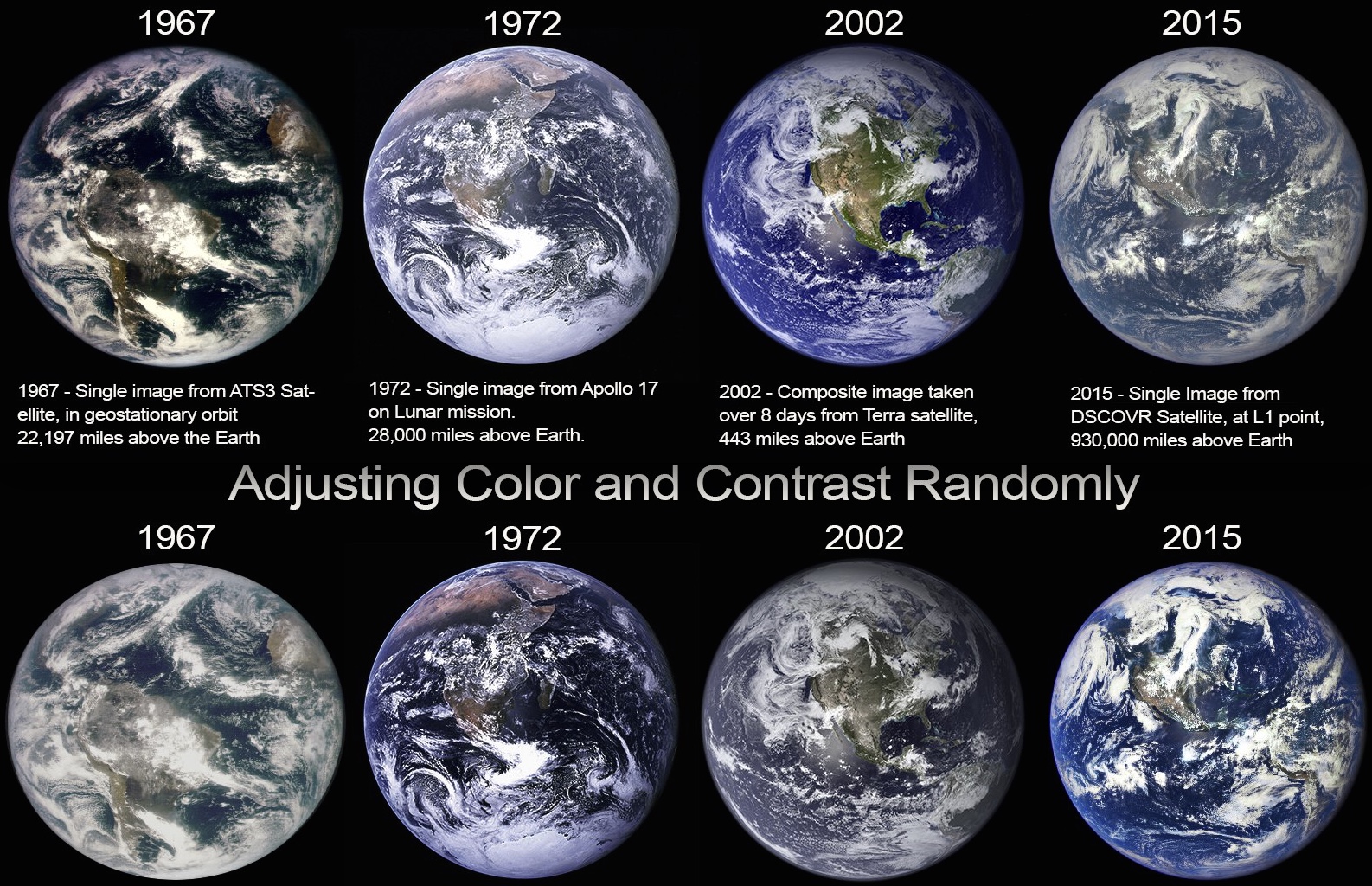
Colour and contrast · adjusted
The colouration of land and ocean shifts markedly from one official release to the next — the signature of post-processing, not of a fixed photographic record.
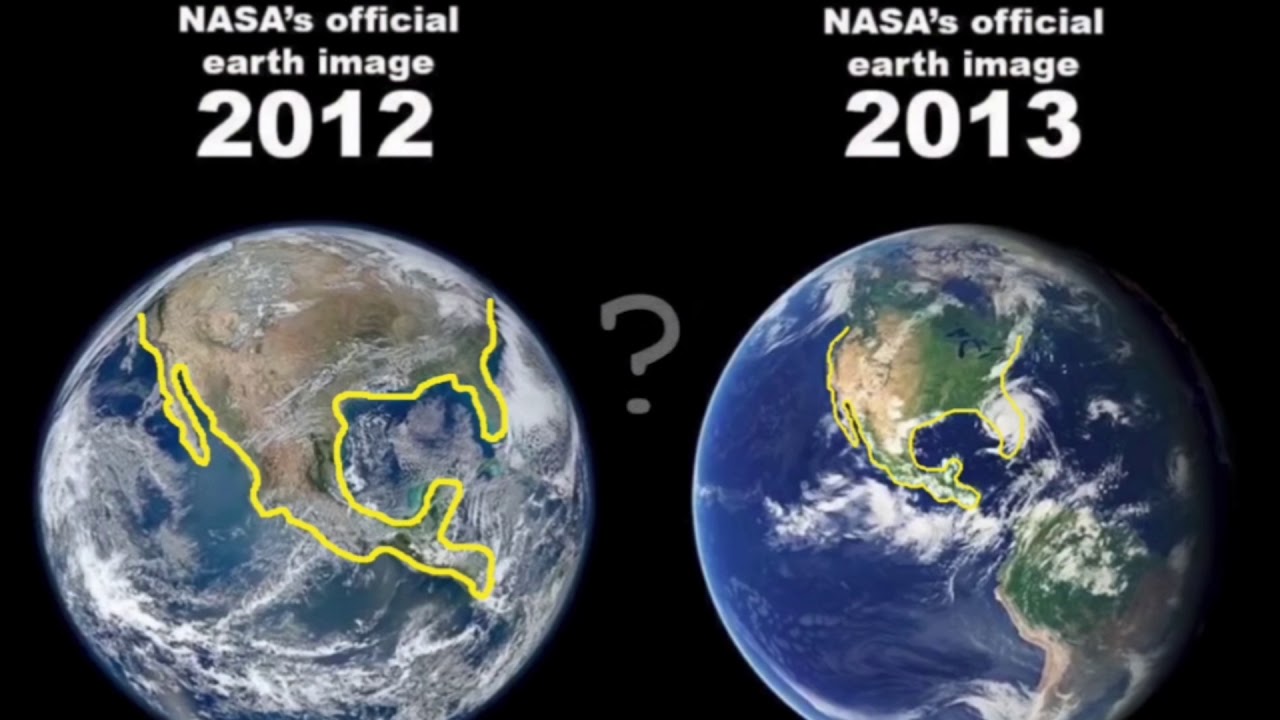
NASA's Earth · 2012 vs 2013
North America highlighted on both official releases at matching scale — the continent visibly changes size between them. A problem for the photograph hypothesis; not for the composite-image hypothesis NASA itself acknowledges.
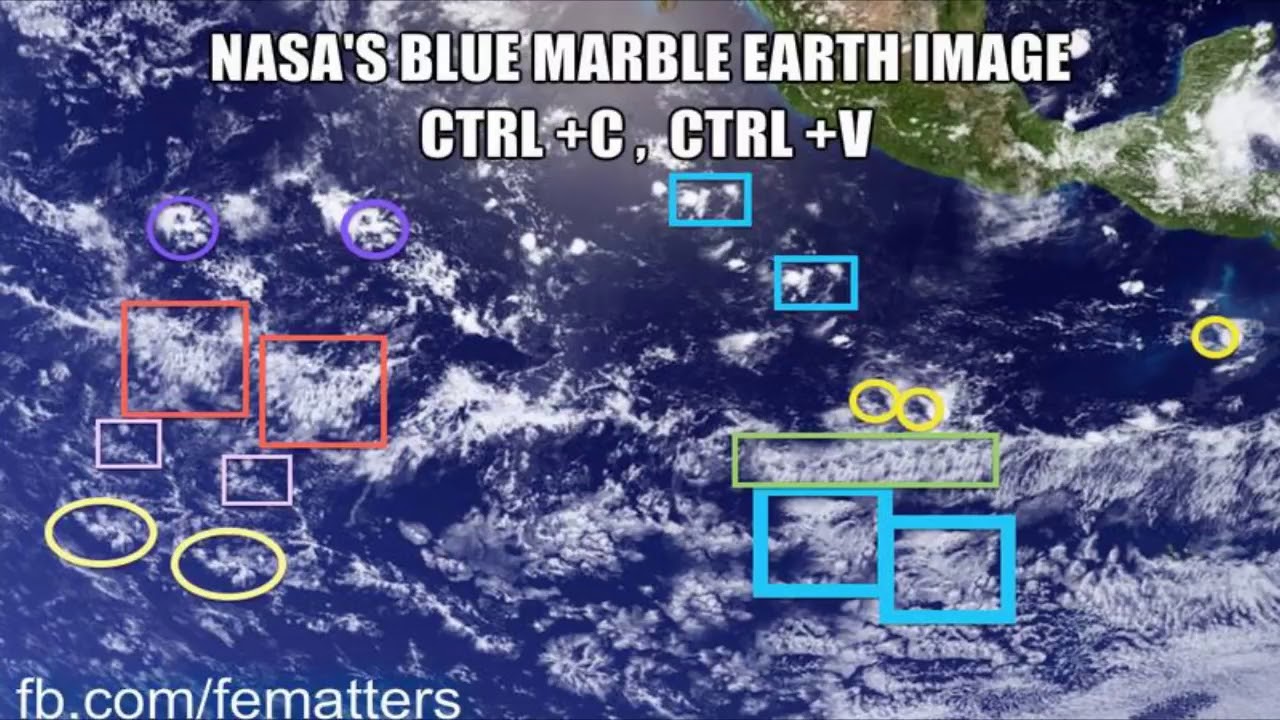
Duplicate clouds · copy-and-paste
Identical, repeated cloud formations within a single official image — the tell-tale signature of copy-and-paste editing rather than a single captured photograph.
The man who built the most reproduced of these images said as much, on the record. Robert Simmon — the NASA data visualiser known as “Mr. Blue Marble” — was interviewed for NPR's Science Friday in 2012 about how the 2002 image was made. He described it not as the reconstruction of a photograph but as iterative artistic composition: layering, simulating the atmosphere, adding the bright specular highlight of sunlight on water, undoing with command-Z whenever something did not look right. His own summary:
It is photoshopped, but it has to be… There's artistry to creating the world — what I imagined it to be. Unfortunately I'm not an astronaut. I've never been to space, but I've looked at these images over and over again, trying to sort of get the essence of it.
The point is not that Simmon was dishonest — he was, in fact, candid. The point is that the brief was never “reproduce a photograph.” It was “produce what the world ought to look like, if it were a photograph.” That is a different thing entirely.
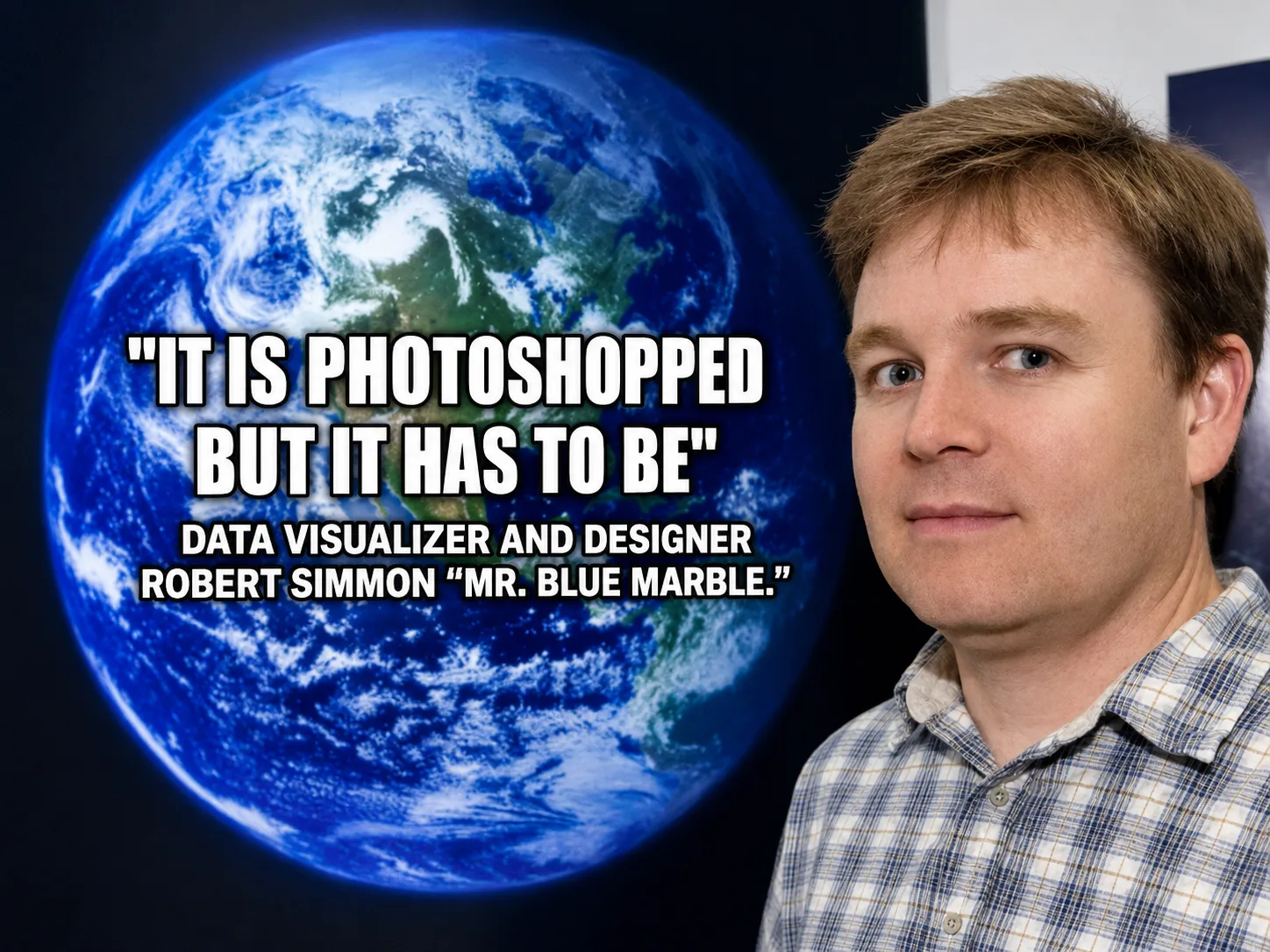
Robert Simmon · in his own words
The NASA visualiser who built the single most reproduced image of the earth in human history: 'It is photoshopped, but it has to be.' Composed in software, by his own account.
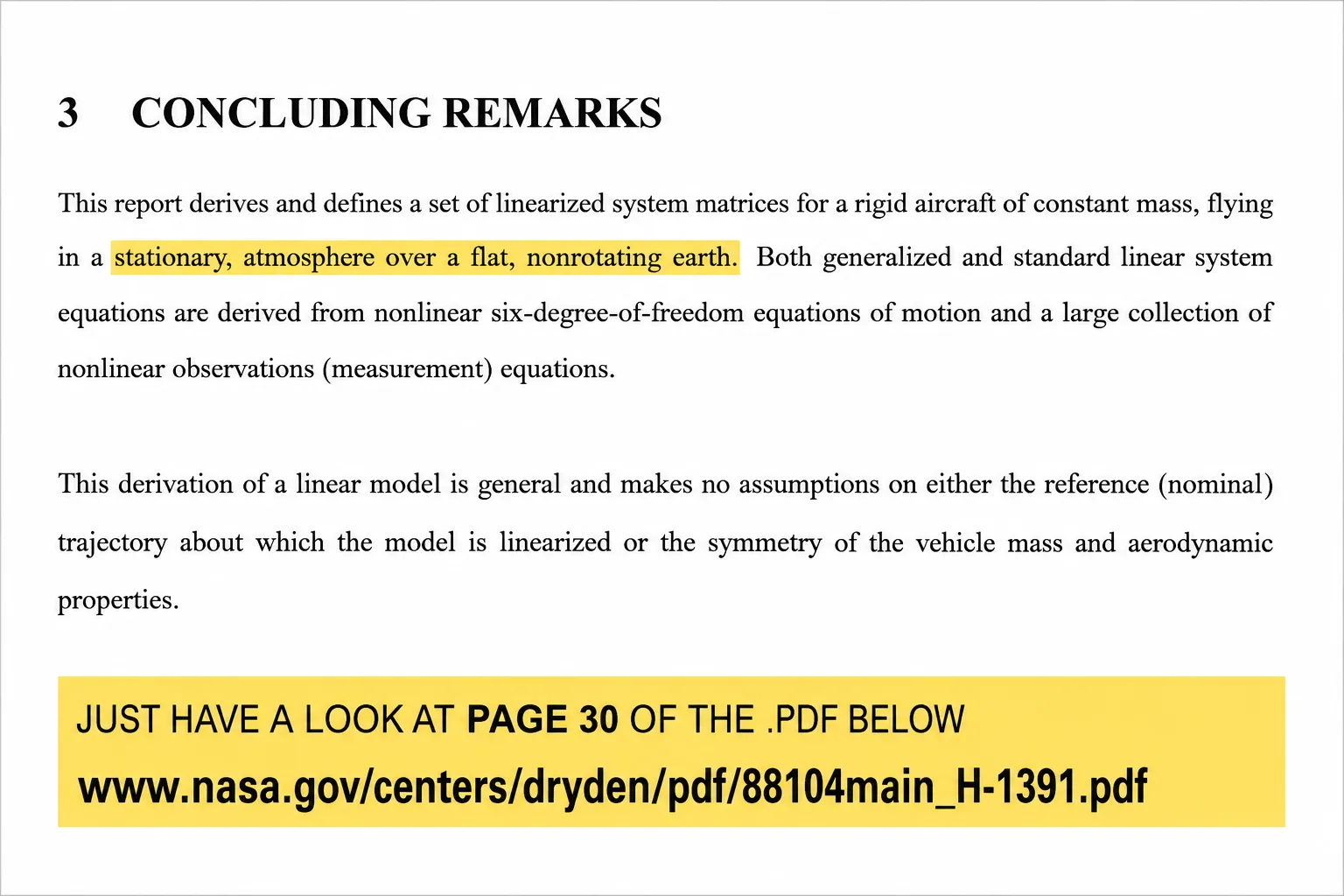
NASA Dryden · RP-1207 · 1988
From 'Derivation and Definition of a Linear Aircraft Model' (Duke et al., 1988): the derivation assumes 'a rigid aircraft of constant mass, flying in a stationary atmosphere over a flat, nonrotating earth.' Standard aerospace practice treats the earth as flat and non-rotating — because the curvature and rotation are not present in the data the engineers fit.
That last figure is no slip of the pen. Inertial-frame conventions standard across aerospace engineering routinely treat the earth, for the duration of a given calculation, as flat and non-rotating — because the curvature and rotation said to obtain on the official model are not present in the data the engineers are actually fitting. There is even a materials problem the agency's own figures create: it reports thermosphere temperatures of up to roughly 4,500°F in the very layer where satellites are said to orbit — hotter than the melting points of the aluminium, gold, and titanium they are built from.
The astronaut record
A surprising amount of the most interesting material comes from the very men the public has been asked to trust most directly. Don Pettit, a veteran NASA astronaut with long stays on the Space Station, was asked at a 2008 public event whether he would like to return to the moon. His answer, widely circulated and never disputed: “I'd go to the moon in a nanosecond. The problem is, we don't have the technology to do that anymore. We used to, but we destroyed that technology.” Read that plainly. A national space agency does not destroy the engineering that put men on another world; blueprints are archived, tooling warehoused, documentation preserved. The most charitable reading is the loss of a capability the agency cannot now reproduce. The less charitable one is harder to argue against.
Buzz Aldrin — the second man, by the official record, to walk on the moon — was asked by a young girl, at a Delaware school event in 2015, why nobody had been back in so long. His answer, more than once and unprompted: “because we didn't go there.” Set that beside Pettit's “we destroyed the technology” and one is looking at the same hole in the official story from two angles. On the public podium, the same man delivers the polished line — “we walked on the moon” — in a wholly different register. Two registers, one man.
The filmmaker Bart Sibrel sought out the surviving Apollo astronauts in the early 2000s to ask them a single thing on camera: whether they would swear, with a hand on a Bible, that they had personally walked on the moon. None of those he approached would swear the oath. Several became openly hostile; one — Aldrin, then seventy-two — struck Sibrel in the face outside a hotel. The behaviour of men asked to affirm under oath the thing they had built their public lives upon is, in itself, an editorial point.
Scott Kelly, asked twice in public Q&A about the air bubbles visible rising from astronauts' helmets in spacewalk footage, first offered a substantive answer — that they were flecks of paint dislodged from the exterior of the station, “never any kind of air bubble” — and months later, reminded of that very exchange, claimed twice not to know what was being asked. Flecks of paint do not rise and accelerate and merge the way the artifacts in the footage do; air bubbles in water do exactly that, and the agency trains every spacewalker for months in an underwater Neutral Buoyancy Laboratory. Chris Hadfield, the most photogenic astronaut of his generation, has told the public that space smells— “like gunpowder and burnt steak,” and elsewhere “like brimstone, as if a witch had just been there.” The reader is invited to weigh the claim that the vacuum of space has a discernible smell at all. And Neil deGrasse Tyson, the most visible public face of the institutional cosmology, managed within two consecutive sentences to describe the earth as both smoother than a cue ball and “pear-shaped” — the public descriptions of the model's central object cannot keep their story straight across two adjacent lines.
Whether the stars are visible from space
The simplest test of whether the men selling the official story have been where they say is one of the plainest questions imaginable: can you see the stars from space? One would expect every astronaut to converge on the same answer instantly. They do not. The Apollo men — those who say they stood on the daylight surface of the moon — report uniformly that the sky was a featureless black and that stars were not visible to the naked eye. Neil Armstrong: “I don't recall… seeing any.” The modern Space Station astronauts, orbiting far closer, report the exact opposite: that space is so star-rich the points are visible in the millions, in colour, in broad daylight, “pretty much all the time.”
Lay the two camps side by side and the problem is inescapable. One group, on an airless body in direct sunlight, says the sky was a black void with no visible stars. The other, orbiting within the atmosphere's influence by the model's own physics, says the stars are ten times as numerous and ten times as bright, visible in their millions, with colour, all the time. The two reports cannot both describe the same medium with the same eye. One of them is wrong — and the reader is left to weigh which group has the stronger motive to misremember. (Michael Collins, who first confirmed Armstrong's account that no stars were visible, later began recalling the “elusive stars” after all; as one narrator dryly noted, his memory seemed to improve the older he got.)
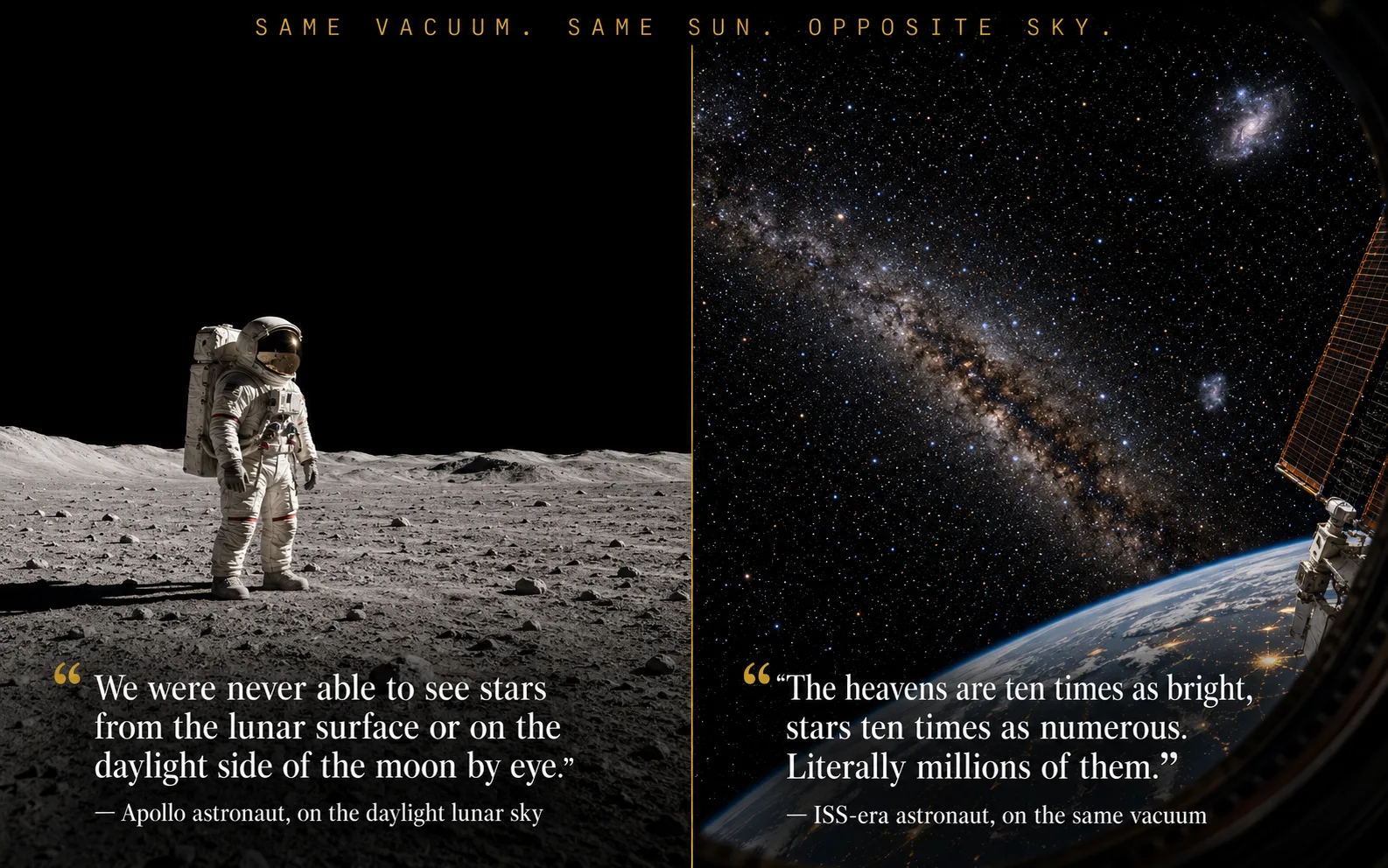
The contradiction at a glance
Quotes verbatim from the public record. The Apollo astronauts say they could not see stars from the daylight lunar surface; the ISS-era astronauts say space is so star-rich it can be seen through daylight, in the millions, with colour. Same medium, same eye — opposite reports.
Where are the actual photographs of the satellites?
We are told that tens of thousands of satellites — and, with debris, hundreds of thousands of trackable objects — crowd the space overhead, an environment the agencies' own risk documents describe as hazardously cluttered. Yet ask for an actual photograph of any specific satellite in its habitat and what returns is, almost without exception, a polished artist's rendering — one object, perfectly alone, beautifully lit, the earth dramatically curved beneath. Two things follow. Every such image, were it a photograph, would require a second camera-bearing satellite a short distance away pointing back at the first — and that second satellite never itself appears in any of the renderings. And when NASA ran round-the-clock live feeds from the Space Station, observers noted that years of uncut footage never once showed a passing satellite or a tumbling fragment of debris, for a region of space officially described as dangerously crowded. The feeds have since been quietly discontinued.
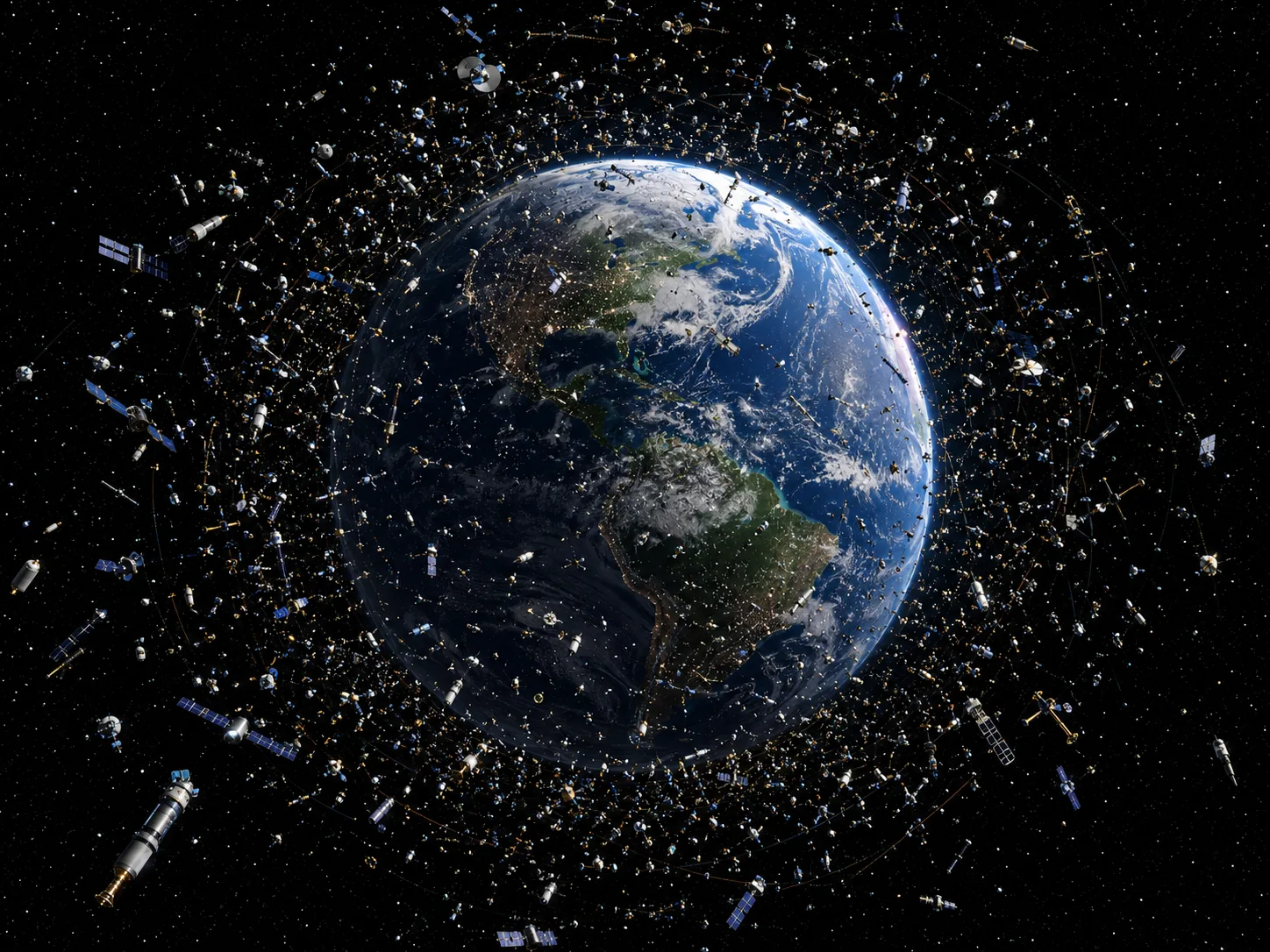
The official picture · orbital traffic
The picture we are given: a planet hemmed in by a dense field of operational satellites, dead satellites, and debris. Yet the official live feeds from the one platform said to be among them showed that space consistently empty.
Search for images of any specific satellite — by name, by mission, by agency — and what comes back is the same genre of imagery: detailed, polished renderings the agencies themselves typically caption as artist's renderings, illustrations, or simulations. The gallery below is composed of stand-ins rendered in that same style, to make the point about the genre without reproducing third-party work. Notice two things across it: every object is alone in an empty frame, despite the dense official picture above — and each, if it were a photograph, would imply another camera satellite nearby that is itself never shown.
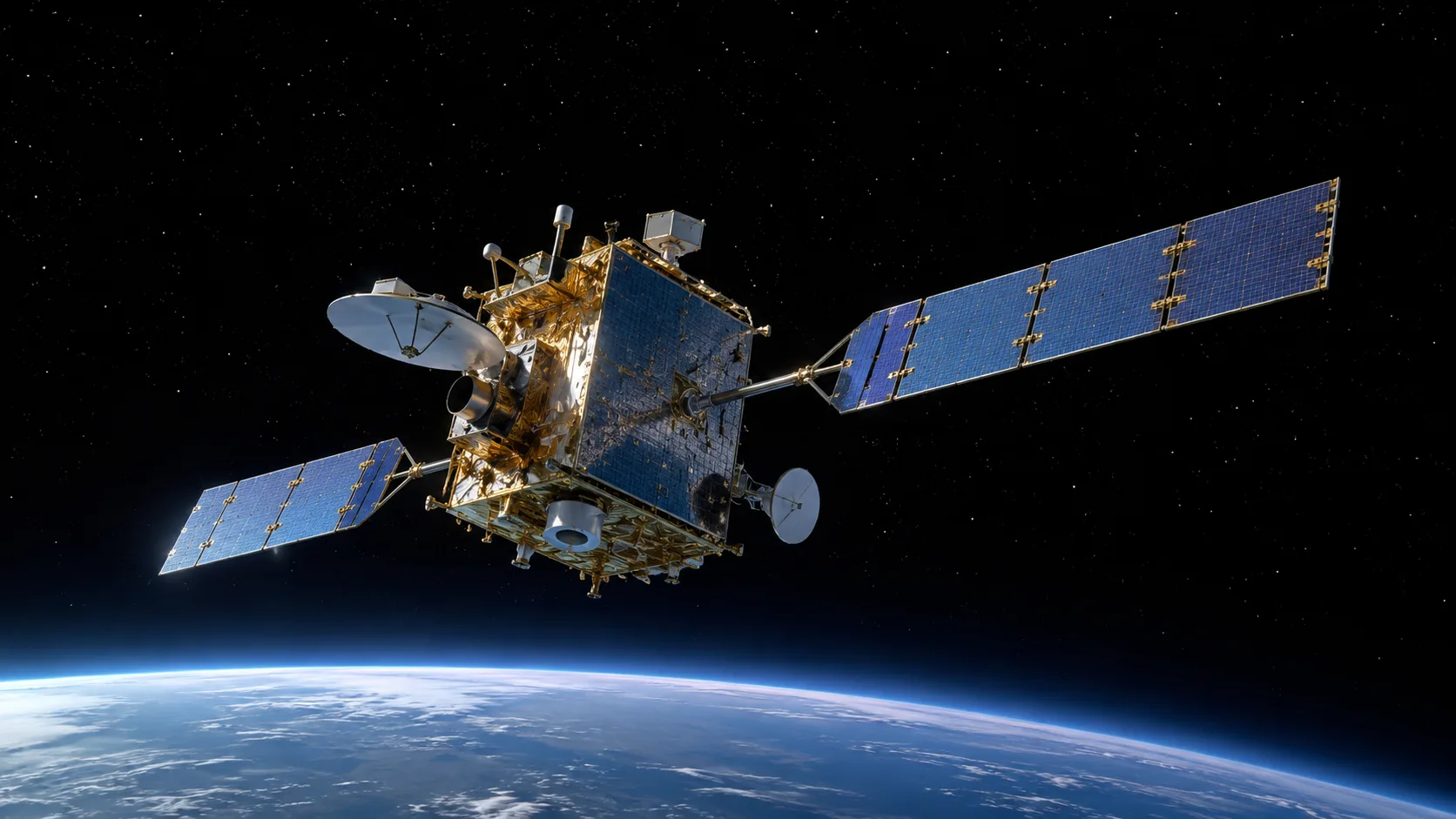
Communications satellite
Alone in frame, dramatically lit.
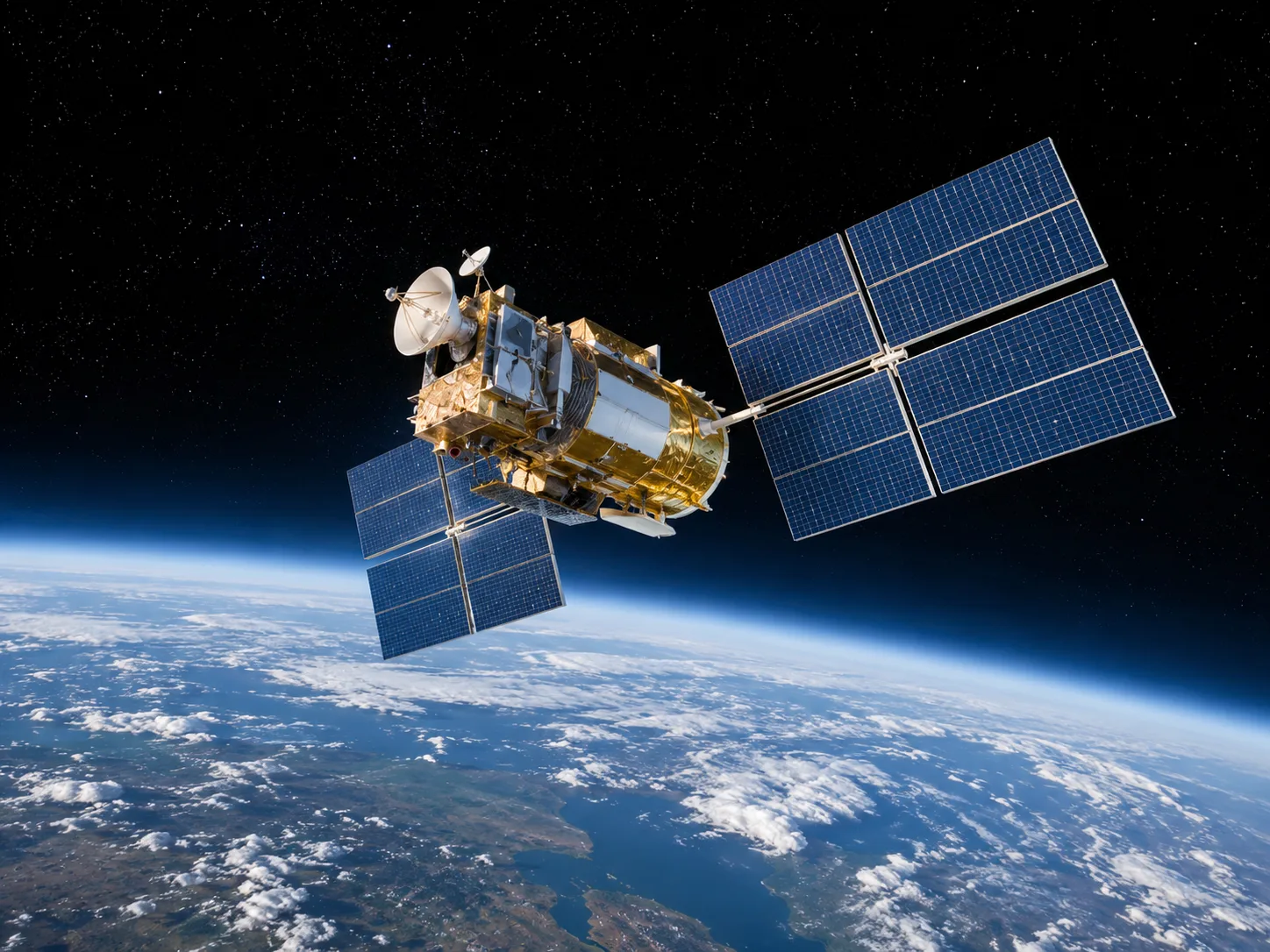
Observation satellite
No other object anywhere in view.
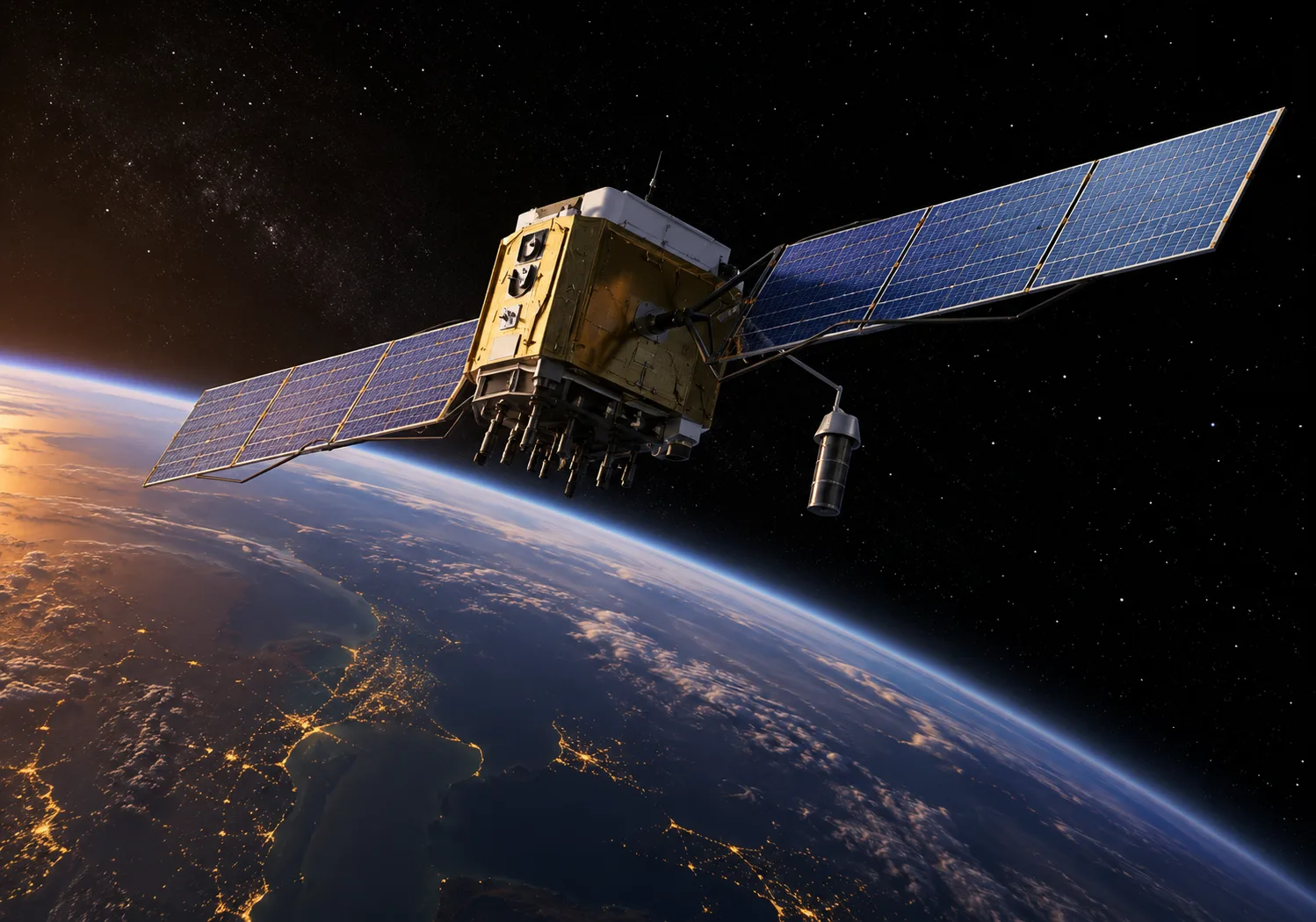
Night-side satellite
The starfield behind, the earth below, the object alone.
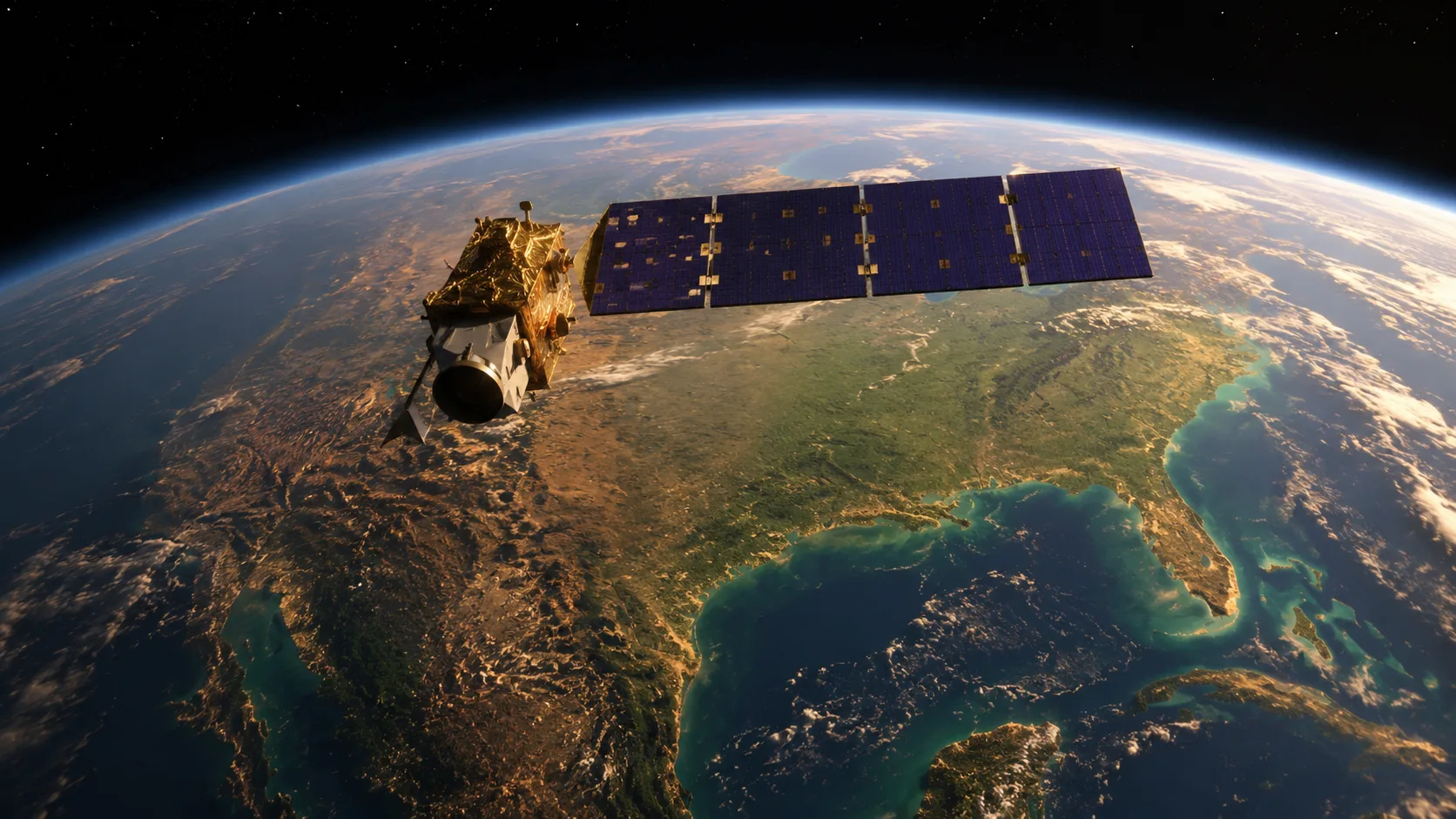
Imaging satellite
Every panel catching the sun at a flattering angle.
CubeSat-style
Smaller form, same isolation.
Geostationary satellite
Said to sit twenty-two thousand miles up — pictured alone.
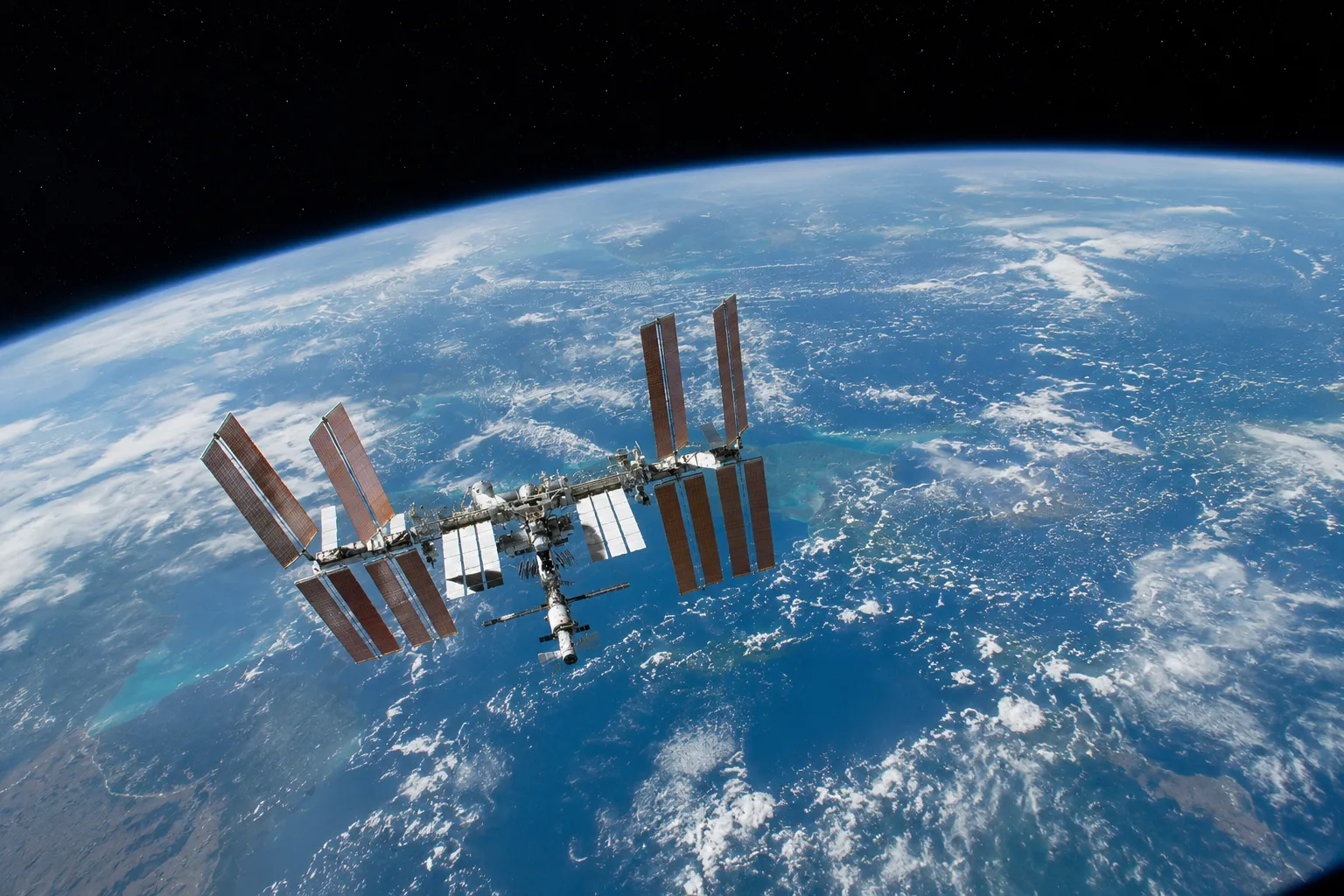
Station-style platform
The large platform, again with nothing else in frame.
Earth-facing satellite
The genre implies a population none of the images ever depict.
What is, in fact, being launched
Alongside the unphotographable orbital population sits a second, far less publicised programme that the agency talks about openly when it talks about it at all — and whose physical existence is not in dispute. NASA operates a continuous Scientific Balloon Program out of its facilities in Texas and Virginia, with major campaigns from McMurdo Station in Antarctica. These are not toy weather balloons: they are dome-stadium-sized, super-pressure helium platforms that carry the very instruments said to live on satellites — telescopes, atmospheric sensors, communications relays. NASA is, by a wide margin, the largest single consumer of helium in the United States. The hardware we are told reaches a vacuum in low earth orbit is, in the cases that are publicly launched and photographed end to end, lifted by helium to the top of the atmosphere and returned to earth — and no further.
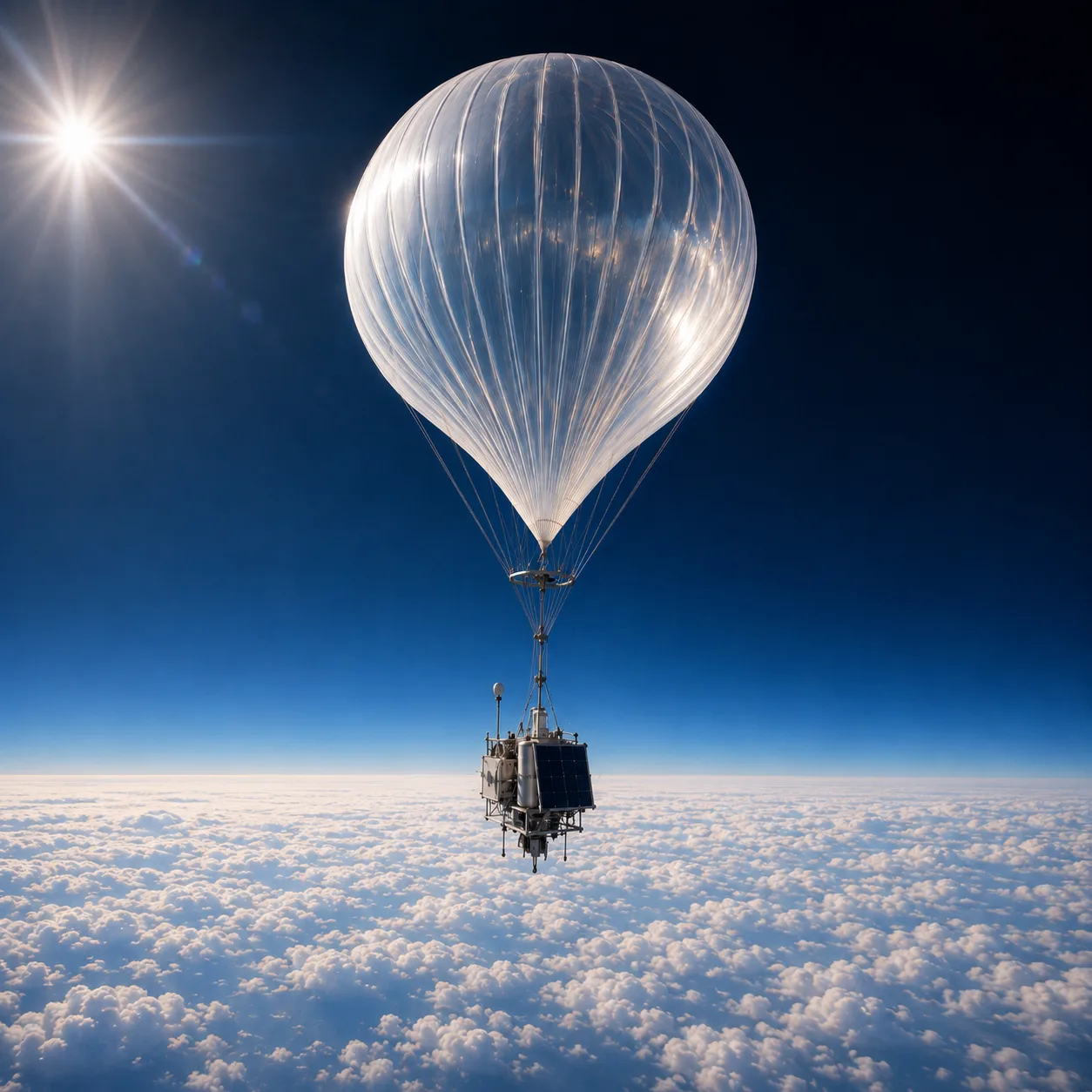
What NASA actually launches
A balloon-borne instrument platform — cubical payload, suspension cabling, solar panels, antennae — visually almost indistinguishable from the hardware shown in the satellite renderings. The difference is altitude: tens of kilometres up, within the atmosphere, and recovered.
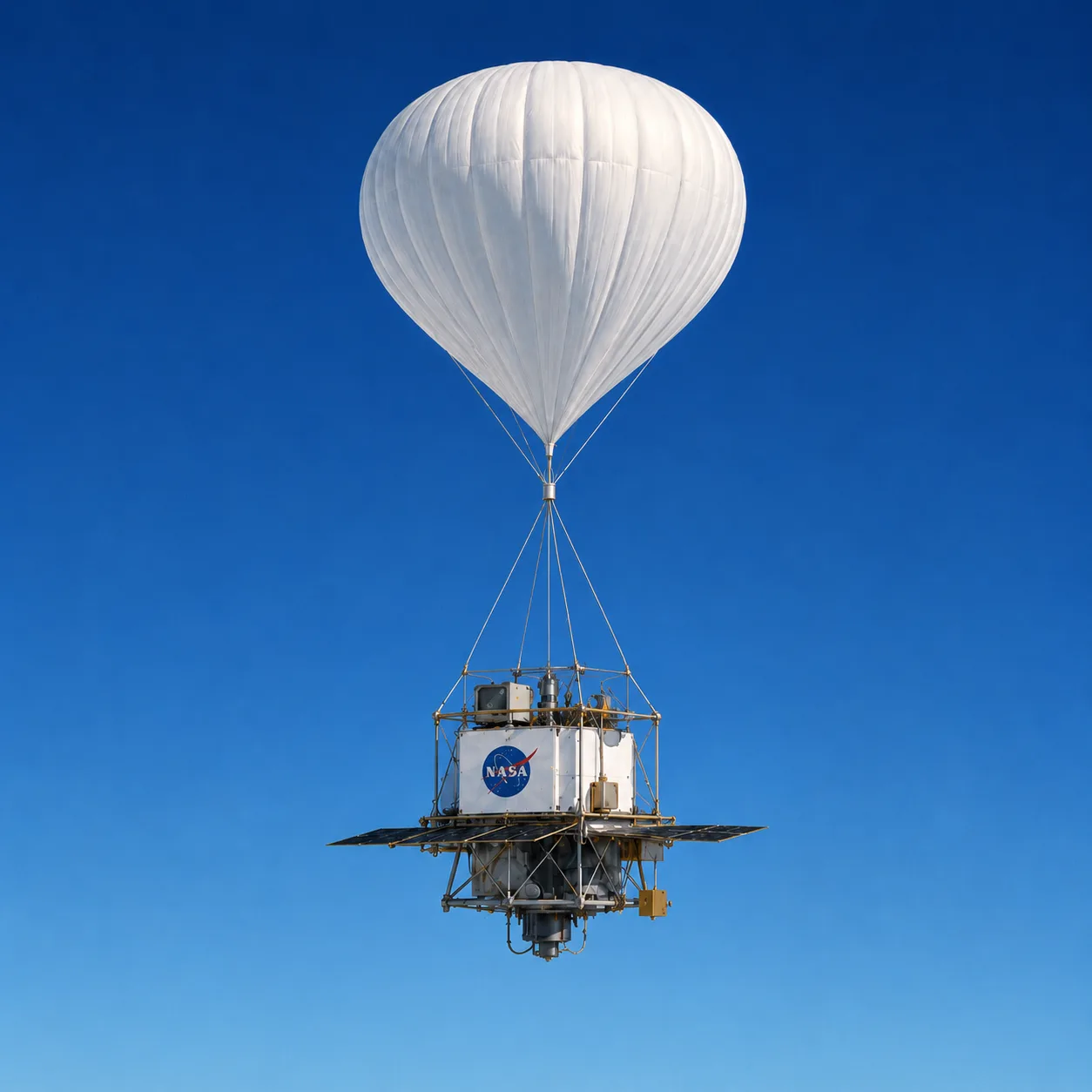
Helium to the upper air
Dome-stadium-sized helium platforms carry telescopes, sensors, and relays to the top of the atmosphere. Recovered debris said to be 'fallen satellites' has, more than once, come down attached to what looks unmistakably like balloon or parachute apparatus.
A smaller observation belongs alongside it. The dishes mounted on the sides of houses for “satellite” television do not, in any country, point straight up. They point at roughly forty-five degrees toward the nearest ground-based repeater tower. If they were receiving from an object twenty-two thousand miles overhead in geostationary orbit, they would near the equator point almost to the zenith. They do not — because the signal comes from terrestrial infrastructure. The point is not that satellite-style television fails to work; it plainly works. The point is that the picture we were given of how it works does not match the way the dishes themselves are aimed.
A note on the internet's actual backbone
The shape of the internet is a quiet case in point. The popular picture — data beamed down from a galaxy of satellites — is broadly mistaken. By the industry's own figures, between 95 and 99 percent of all international internet traffic moves not through space but through roughly three hundred fibre-optic cables, each about the diameter of a garden hose, laid directly on the floor of the world's oceans — descendants of the first transatlantic cable laid in 1850. Asked why it invests so heavily in subsea infrastructure rather than satellites, Amazon Web Services answered plainly that satellite “has higher latency, higher costs, and you just can't get enough capacity or throughput.” The single most consequential piece of physical infrastructure in the modern world — the one your bank, the markets, and your video calls actually depend on — sits silently on the ocean floor, not in orbit. The satellite picture in the textbooks does not match how the internet actually works. It pairs neatly, however, with the broader spatial mythology this article has been examining.
A note on how the conversation has been managed
This case has not been argued in a neutral information environment. In early 2018 the largest video platform in the world began placing “information panels” — fact-check links and encyclopaedia summaries — beneath content it had categorised as conspiracy, with flat-earth material an explicit early target, positioning the platform itself as the arbiter of established fact. On 25 January 2019 it announced, in a formal blog post and statements to the press, a complete overhaul of its recommendation algorithm to stop promoting “borderline content,” and — unusually — named flat earth specifically as a prime example of what the new algorithm would demote. The change followed research framing the spread of the belief as a “rabbit hole” problem driven by “a combination of a conspiracy mindset and lower science intelligence.” The press response was uniformly celebratory; one outlet headlined the move “YouTube Stops Recommending Conspiracy Videos, Finally,” the adverb doing the editorial work.
The point is not that a private company may not tune its own algorithm; it may. The point is that the question of whether the modern cosmology is what it claims to be has been actively managed — by named institutions, at platform scale, with the cooperation of the mainstream press — for the better part of a decade. That fact does not prove the case; the case still has to stand on its own merits. But it answers a question a reasonable reader is entitled to ask: why is this the first I am seeing of any of this? The answer is not that the case is too weak to have surfaced naturally. It is that the surfaces on which it might have appeared were retuned, by name, to ensure that it did not.
Why I hold this position
I want to be exact about the order of things, because the order is the whole point. I did not arrive here by way of a YouTube channel, and I am not asking anyone to follow me down one — nor did I go to the Bible to prove a theory I already held. The truth is the reverse. For years I looked first at what a person can verify with his own eyes, and at the historical record of how the modern model was built and by whom. The observations and the history came first; I opened the Scriptures on this particular question only later, with it already in mind — and what I found there did not have to be forced. That order matters, because it is the opposite of the caricature. The caricature says a person adopts a strange physical belief and then ransacks the Bible for verses to prop it up. What actually happened, for me, is that when I finally read the Bible's own language with this question in view — without the lens I had been handed in school — it already described a settled, founded, enclosed earth under a solid firmament, from Genesis to the Revelation, in every author who touches the subject, without a single dissenting line. I did not bring that language to the text. It was already there, and it confirmed what I had seen.
And I want to say plainly what I said at the opening, because it is more important than anything else on this page. This is not a test of fellowship, and it is not a condition of salvation. No one is saved by the shape of the earth, and no one is lost by it. I have beloved brothers and sisters in Christ who read every verse quoted here and come away holding the modern model, and they are my brothers and sisters still. The blood of Christ does not run thin over a question of cosmography. If a reader finishes this article persuaded of the enclosed plane and yet cold toward Christ, that reader has gained nothing of value and lost the one thing needful. If a reader finishes unpersuaded of a single physical claim here and yet loves the Lord Jesus and trusts His finished work, that reader has everything. I hold this position with conviction. I refuse to hold it with a club.
The cumulative case
The observational arguments gather into a long cumulative list — the kind of catalogue that, taken any single item at a time, the modern model can usually answer, but taken together begins to feel like a great many separate patches stitched over a great many separate holes. I will not pretend each one is individually decisive; many have a standard rebuttal, and an honest writer says so. The force is in the accumulation. A representative sampling, grouped by kind:
Water and the level surface
Standing water always finds and keeps a level surface, and no natural force has ever been shown to bend a still body of water into a convex hill. Canals, lakes, and railway surveys cut across tens of miles without the curvature the model requires. Lighthouses, lit ships, and distant shorelines are routinely seen at distances where, on the stated figures, they should sit thousands of feet below the line of sight. Long-range photography across oceans and lakes repeatedly recovers targets that the curvature formula says should be wholly hidden.
The behaviour of the sky
Polaris holds a fixed point in the northern sky and the entire field of stars wheels around it, night after night, century after century, with a constancy difficult to reconcile with an observer on a planet hurtling through space along an enormous orbit. The same constellations the ancients named are in the same arrangement today; the “fixed stars” have kept their figures with a fixity that strains the scale of motion the model assigns to us. The sun and moon appear the same size, behave like local luminaries moving over the earth, and cast crepuscular rays that converge — geometry, as noted earlier, of a near and local source.
Motion, flight, and gyroscopes
We are told the earth spins eastward at the equator at roughly a thousand miles an hour, races around the sun at tens of thousands of miles an hour, and is dragged with the sun through the galaxy faster still — a stack of enormous motions none of which any human being has ever felt, and which no simple instrument in a still room detects. Long-haul flights, gyroscopic instruments, and artillery tables behave, in practice, as though the surface beneath them is stationary; the corrections the model predicts are, by many accounts, simply not the ones working pilots and gunners apply.
The look of the thing from above
High-altitude footage from balloons and rockets, shot on rectilinear lenses that cannot themselves manufacture a curve, shows a flat horizon that rises to the eye and stays flat — and a horizon that is, tellingly, always at eye level no matter how high the camera climbs, which is the behaviour of a plane, not of a ball falling away beneath you.
None of this is offered as a knockout blow. It is offered as what it is: a large, varied, mutually reinforcing body of ordinary observation that sits more comfortably on the enclosed-plane reading than the reader has ever been told. The model can answer items one at a time. The question this list poses is why so many answers are needed at all.
The convergence of 1946–1969
If the enclosed model is the older and the plainer reading, the obvious question is how the whole of the modern world came to hold the other one so completely. Part of the answer is institutional and recent, and it clusters with striking density in a single quarter-century. Consider the sequence — not as proof of anything, but as a pattern worth seeing laid out in order:
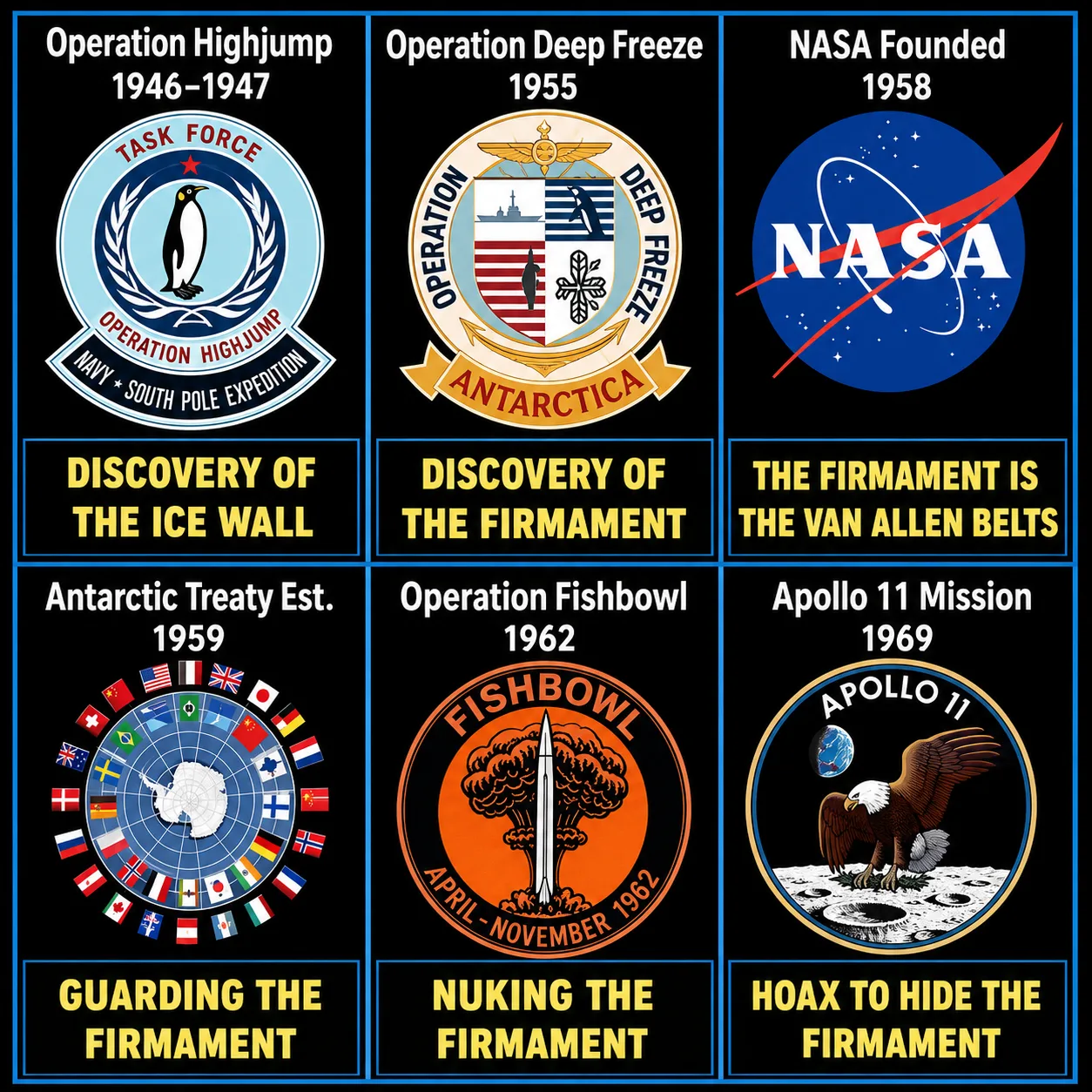
One quarter-century
A single generation, 1946–1969, in which the first photographs from the upper atmosphere, the major space and broadcasting institutions, an international treaty closing off the southern ice, and the manned programmes that delivered the now-iconic images all arrived together — and the public picture of the world was settled.
In 1946 the first cameras were carried to the edge of the atmosphere on captured V-2 rockets, returning the earliest high-altitude images of a flat horizon. Across the same years the institutions that would own and narrate the question were stood up. In 1959 the Antarctic Treaty placed the entire southern ice under an international regime that restricts free, independent civilian exploration of the one region the enclosed model says is not a pole at all but a containing rim. And between 1961 and 1969 the manned programmes delivered the photographs — the whole-earth images examined earlier in this article — that fixed the globe in the public imagination for good. A great many of the load-bearing pieces of the modern cosmological picture were set in place inside a single generation, by a small number of institutions, in a tightly bounded window of years.
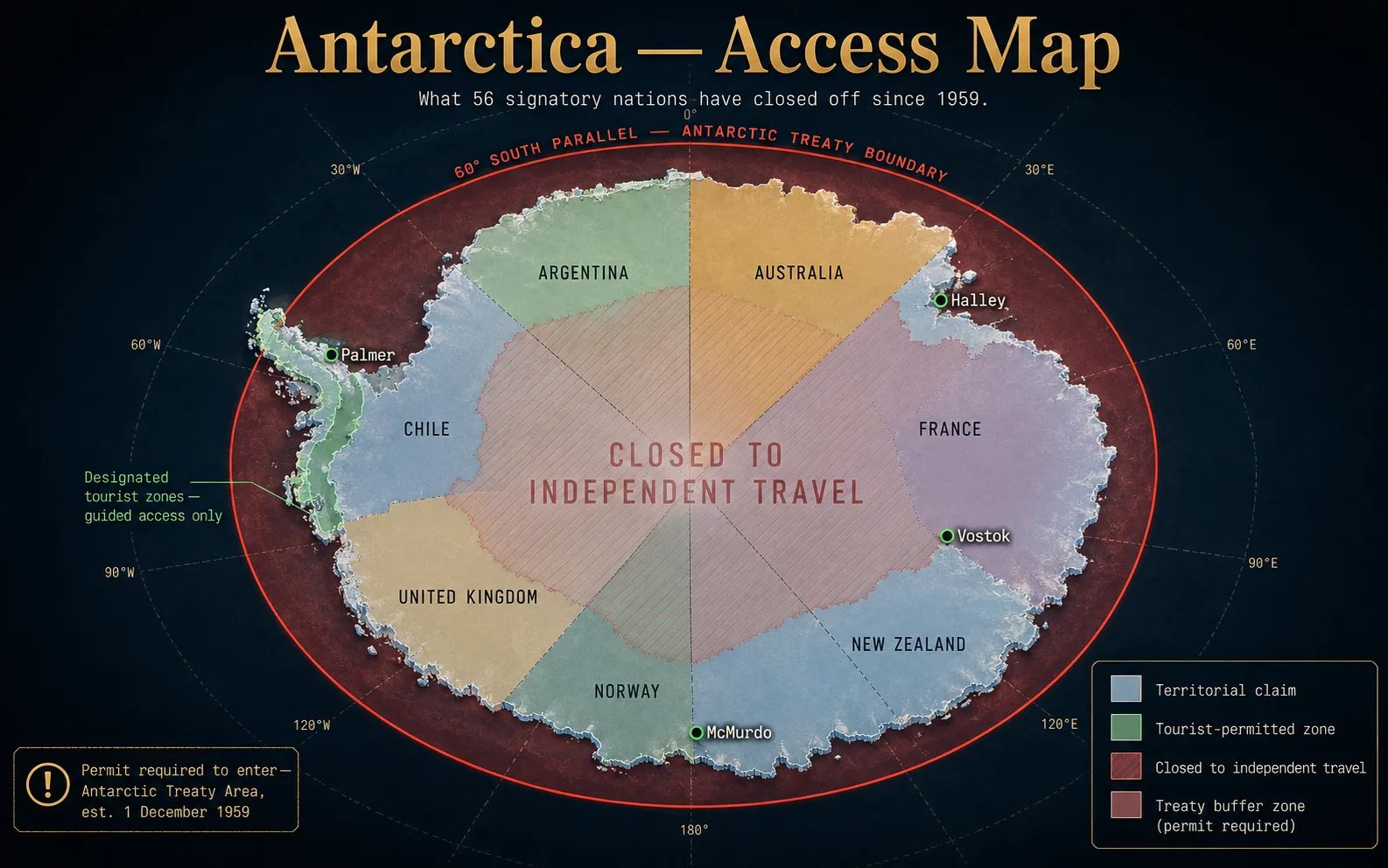
The one place you cannot freely go
Under the 1959 treaty the southern ice is governed by an international regime; independent civilian exploration of its full extent is not freely permitted. Whatever one concludes, it is at least curious that the single region the enclosed model identifies as a containing rim is the one region a private citizen cannot simply charter a boat and circumnavigate at will.
I hold the institutional reading loosely, as I should. People build institutions in clusters; treaties get signed for ordinary reasons; technologies arrive together because the science that enables them arrives together. None of this proves design. But a reader who has followed the argument to this point is entitled to notice that the window in which the modern picture was sealed is narrow, recent, and owned — and to ask, without embarrassment, whether the picture was discovered in those years or installed in them.
Where the globe actually came from
The last question is the one a careful reader will already be forming: if the enclosed, stationary earth was the plain reading of Scripture and the settled picture of nearly every ancient people, where did the moving globe come from, and on what authority did it replace the older account? The honest history is stranger than the textbook version, and I offer it with a historian's caution — these are documented facts and documented texts, and where a claim is contested I will say so. But the documented part is enough to unsettle the tidy story of pure reason triumphing over superstition.
The Hermetic revival
The heliocentric turn did not emerge from a vacuum of cold measurement. In the 1460s, the Florentine banker Cosimo de'Medici acquired a cache of Greek manuscripts and instructed his scholar Marsilio Ficino to set aside his half-finished translation of Plato and translate, first and urgently, a body of mystical-magical texts called the Corpus Hermeticum — writings attributed to the legendary Egyptian sage Hermes Trismegistus and steeped in sun-worship. Ficino obeyed. The Hermetic texts, wrongly believed at the time to be older than Moses, swept the learned culture of Renaissance Europe and carried with them a revived theology of the sun as a visible god. This is not a fringe reading: the historian Frances Yates, in her landmark study Giordano Bruno and the Hermetic Tradition (1964), documented at length how the Copernican revolution was midwifed inside this Hermetic, sun-venerating intellectual world rather than apart from it.
Copernicus himself, in the very book that launched the moving earth — De revolutionibus orbium coelestium (1543) — paused in the midst of his astronomy to praise the sun in frankly devotional, Hermetic terms: the sun sits enthroned in the centre, governing the family of planets that circle it, and — he adds, citing the authority directly — “Trismegistus calls it a visible god.” The founding document of heliocentrism contains, in its own author's hand, an act of homage to the sun lifted from the Hermetic literature the Medici had just put back into circulation. Giordano Bruno, the era's most zealous champion of the moving earth and of infinite inhabited worlds, was an open Hermetic magus and sun-worshipper; when Rome burned him in 1600 it was, as Yates argued, far more for his Hermetic religion than for his astronomy. (To be clear, what is rejected here is Bruno's occult, materialist plurality of worlds — endless planets like ours scattered through an empty void — not the other created worlds Scripture itself speaks of, which are a wholly separate matter.) The reader is not asked to accept any grand conclusion from this — only to notice that the cradle of the heliocentric idea was not a laboratory. It was a revival of ancient sun-religion.
A contested warning, and a Church that owned the globe
There is a line, often attributed to Cardinal Wolsey in the England of the 1520s, warning that a “new learning” was being set up against learning. I flag it honestly as contested — its exact wording and attribution are disputed by historians, and I do not lean on it. What is not contested is more telling. The Roman Catholic Douay-Rheims Bible, in its translation of the Old Testament, rendered passages with the word globe of the earth — importing the very shape into the sacred text that the Hebrew does not carry — while the King James translators, working from the same originals, wrote circle and world. And the Society of Jesus, founded by Ignatius of Loyola in 1540, built within a few generations one of the most formidable astronomical and educational machines in the world, staffing observatories and naming a substantial share of the craters of the moon. The institution that the prophetic chapters of this site identify as the great counterfeit power was, from the first, deeply and officially invested in the new cosmology — not its persecuted opponent in the simple way the Galileo legend implies.
Galileo, reconsidered
The Galileo affair is the founding myth of the “science versus religion” story, and the myth is doing a great deal of concealing. Galileo could not, in fact, prove the earth's motion — his prize argument, that the tides were sloshing proof of a spinning earth, was simply wrong, and the stellar parallax that would have settled the matter was not measured until the nineteenth century, long after everyone had already converted. The quarrel was as much about a brilliant, abrasive man picking a fight with his own Church's authority as about astronomy, and the Church that tried him was itself thick with men committed to the new system. The clean fable — lone genius with the evidence versus blinkered priests defending a flat earth — is almost the reverse of the documented situation. Nobody educated thought the earth was flat; the dispute was between two round-earth models, and the side that won did not win it with a proof.
The magicians who built the machine
Even the figure most synonymous with sober, mechanical science fits the pattern uncomfortably well. Isaac Newton left behind more words on alchemy and on biblical interpretation than on physics. When his secret papers came to auction in 1936, the economist John Maynard Keynes bought a great share of them, read them, and concluded in a 1946 lecture that Newton was “not the first of the age of reason” but “the last of the magicians”— a man who looked on the whole universe as a riddle set by the Almighty in occult clues. And the twentieth century's origin story closes the loop: the Big Bang was first proposed, as the “hypothesis of the primeval atom,” by Georges Lemaître — a Roman Catholic priest. The grand modern account of a universe exploding outward from a single point and expanding ever since was not handed up from a secular laboratory; it was proposed by a Jesuit- educated priest of the very institution this site reads as the great counterfeit, and it sits in flat contradiction to Genesis 2:1, where the heavens and the earth were finished.
I press none of this to a conclusion harder than the evidence bears. Men can hold strange private beliefs and still do honest work; a Catholic priest can be a fine mathematician; institutions invest in many things. But the schoolroom story — that humanity simply grew up, set aside its superstitions, and discovered the true shape of the world through pure reason — does not survive contact with the actual record. The moving globe arrived wrapped in sun-religion, carried by Hermetic magi, formalised by an alchemist, blessed by the institution Scripture warns against, and crowned with an origin myth authored by one of its priests. That is not the genealogy of a plain fact. It is the genealogy of a doctrine.
A closing note on charity
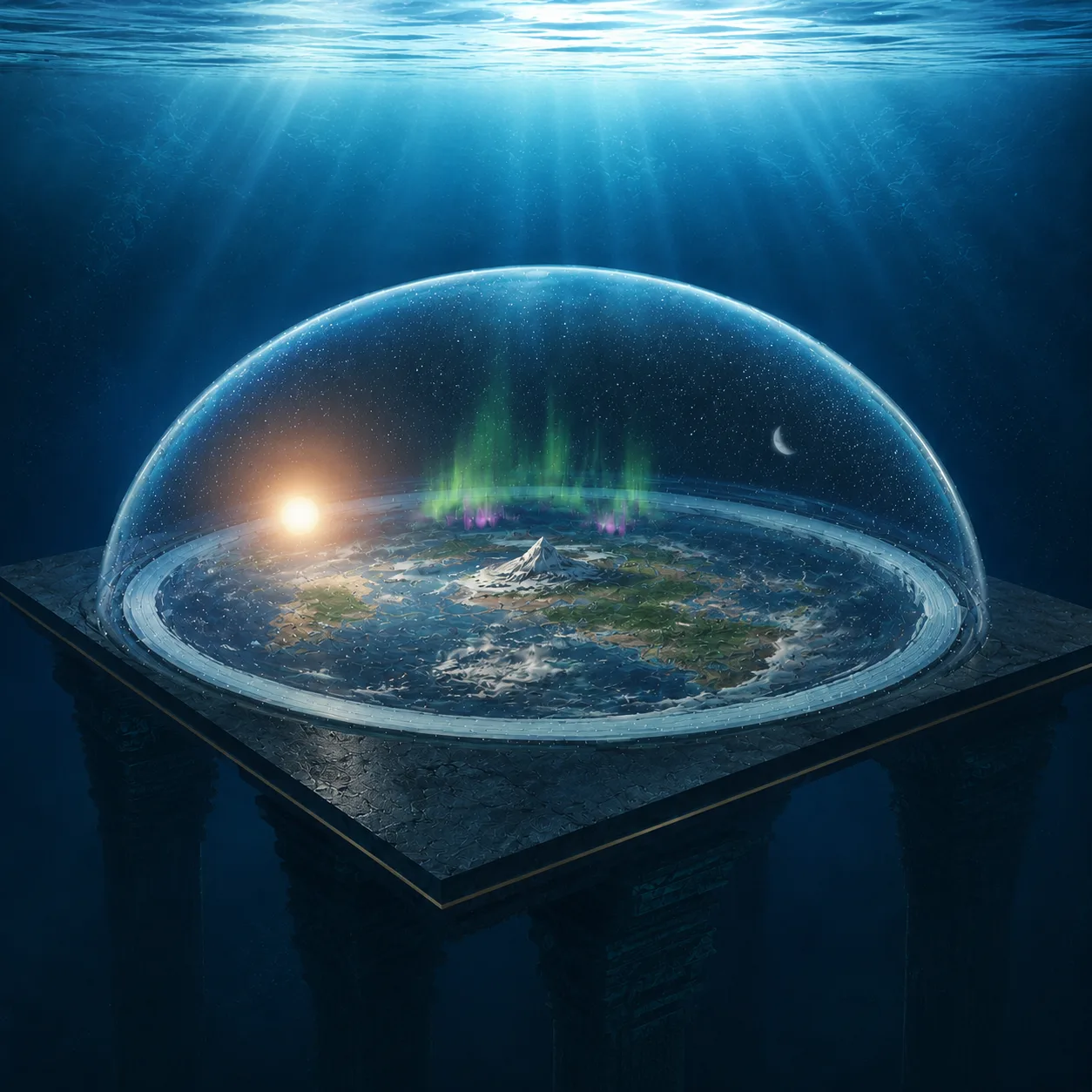
The model Scripture describes
The enclosed level plane, from a second angle: founded earth, dividing firmament, waters above and below, the lights set within and moving over it. Not the universe we were sold — the heavens and the earth we were given.
I have laid out the case as fully as I know how — the Scriptures first, the observations that confirm them, the institutional and intellectual history that explains the swap. If it has done its work, the reader sees that the enclosed, founded, stationary earth beneath the firmament is not an embarrassment to be explained away in the Bible but its consistent and unembarrassed testimony, from the first chapter of Genesis to the last visions of the Revelation. I believe it. I hold it with conviction. And I will close exactly where I began.
None of this is the gospel, and none of it saves anyone. A man may be persuaded of every word on this page and perish; a man may doubt every physical claim here and be saved, fully and forever, the moment he trusts the Lord Jesus Christ Who died for his sins and rose again. The shape of the earth is not the door. Christ is the door. I would a thousand times rather a reader closed this article unconvinced of the firmament and convinced of the Saviour than the reverse. If you take one thing from all of these words, take this: the same God Who “hangeth the earth upon nothing” (Job 26:7) and “laid the foundations of the earth, that it should not be removed for ever” (Psalm 104:5) gave His only-begotten Son, that whosoever believeth in Him should not perish, but have everlasting life (John 3:16). Hold the cosmology loosely if you must. Hold the Son with both hands.
To the law and to the testimony: if they speak not according to this word, it is because there is no light in them.
That is the rule I have tried to keep throughout — to bring every claim, mine included, back to the law and to the testimony, and to let the plain word of Scripture be the light by which the rest is read. Search it for yourself. Prove all things; hold fast that which is good (1 Thessalonians 5:21). And whatever you conclude about the shape of the world, be at peace with the brother who concludes otherwise — for we are not called to be right about the firmament, but to love one another, as He gave us commandment.
Sources & further reading
Scripture is quoted from the King James Version; chapter-and-verse references throughout the article can be read in full at the links below. The historical and documentary sources are public and checkable — readers are encouraged to verify every claim independently rather than take it on my authority.
Scripture (KJV)
- Genesis 1 — the order of creation; light on day one, the lights on day four
- Genesis 2:1 — 'Thus the heavens and the earth were finished'
- Job 26:7 — 'he… hangeth the earth upon nothing'
- Job 38:4–6 — the foundations and the corner stone of the earth
- Psalm 104:5 — 'Who laid the foundations of the earth, that it should not be removed for ever'
- Isaiah 22:18 — 'toss thee like a ball (dur)' — the Hebrew word for a ball
- Isaiah 40:22 — 'the circle (chug) of the earth… the heavens as a curtain… a tent to dwell in'
- Jeremiah 31:37 — the heavens cannot be measured, nor the foundations searched out
- Genesis 1:6–8 — the firmament dividing the waters above from the waters below
- Joshua 10:12–13 — the sun stood still; the sun, not the earth, is commanded to stop
- Isaiah 38:8 / 2 Kings 20:11 — the sun's shadow brought backward ten degrees
- Matthew 4:8 — 'all the kingdoms of the world' seen from a high mountain
- John 3:16 — 'For God so loved the world…'
- 1 Thessalonians 5:21 — 'Prove all things; hold fast that which is good'
- Isaiah 8:20 — 'To the law and to the testimony…' (the reading principle of this article)
Observation & the historical record
- The Bedford Level Experiment (Old Bedford River, Norfolk) — Samuel Rowbotham, 1838; Alfred Russel Wallace's 1870 wager
- NASA Dryden Flight Research Center — technical reports using a 'flat, nonrotating earth' modelling assumption (e.g. NASA RP-1207, Derivation and Definition of a Linear Aircraft Model)
- Robert Simmon ('Mr. Blue Marble'), NASA — Science Friday interview on compositing the Blue Marble images
- The Antarctic Treaty (signed 1959, in force 1961) — the international regime governing the southern ice
- Submarine cable facts — roughly 95–99% of intercontinental internet traffic travels by undersea fibre, not satellite (TeleGeography)
The intellectual history of the moving globe
- Frances A. Yates, Giordano Bruno and the Hermetic Tradition (1964) — the Hermetic, sun-venerating context of the Copernican turn
- Nicolaus Copernicus, De revolutionibus orbium coelestium (1543) — Book I, the praise of the sun: 'Trismegistus calls it a visible god'
- Marsilio Ficino and the Corpus Hermeticum — commissioned by Cosimo de' Medici, translated ahead of Plato (c. 1463)
- John Maynard Keynes, 'Newton, the Man' (1946) — 'the last of the magicians… not the first of the age of reason'
- Georges Lemaître — Catholic priest and physicist who proposed the 'primeval atom' (the Big Bang hypothesis)
- The Galileo affair — what was and was not actually proven; stellar parallax not measured until 1838 (Bessel)
For the fuller archive — the complete biblical catalogue, the extended observational case, and the documentary sources behind the historical section — see the companion treatment at the Adam Hinestrosa Biblical Research Institute, tahbri.com.