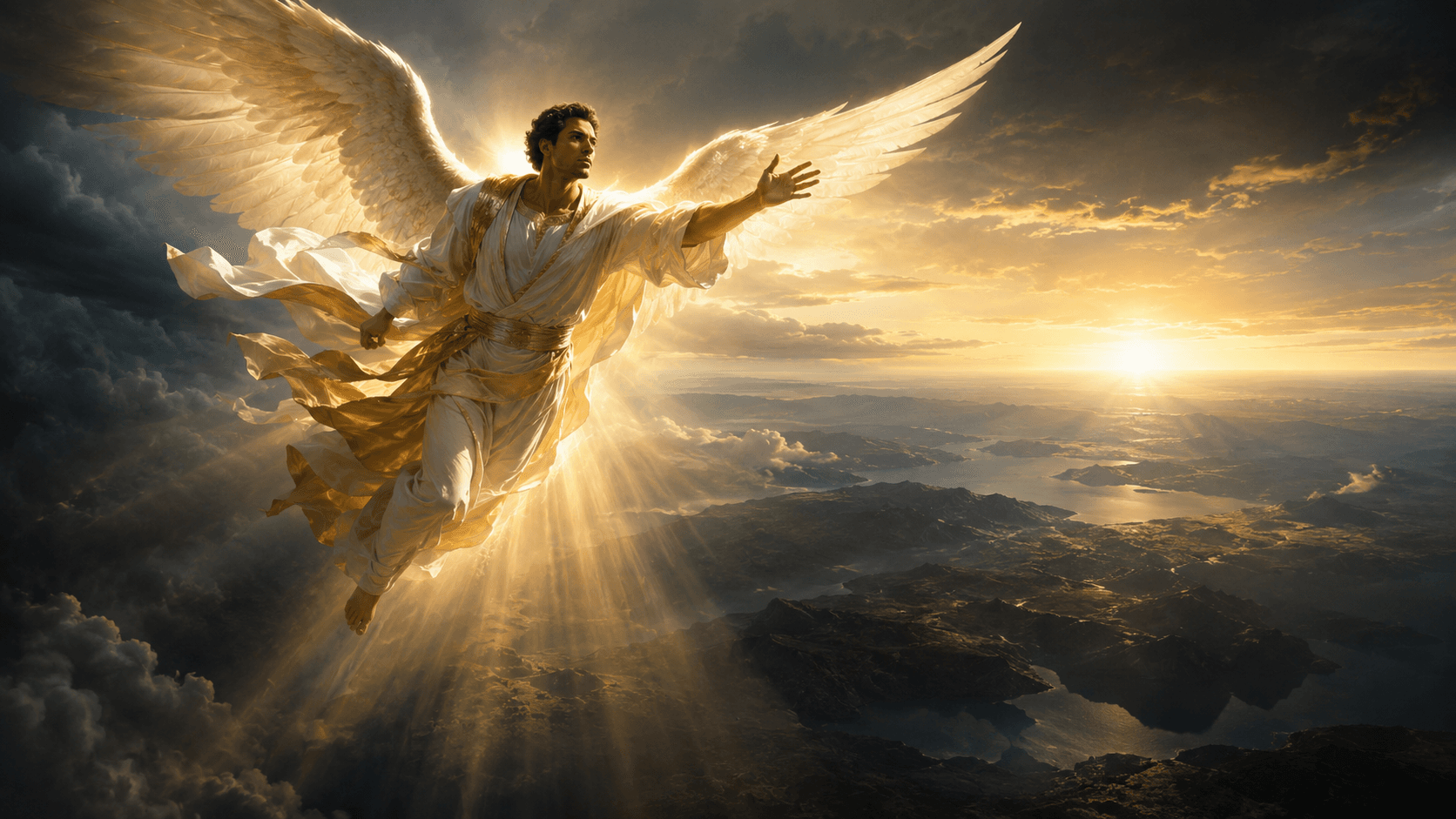
The first of the three angels of Revelation flies through the midst of heaven with a single, ringing announcement: “Fear God, and give glory to him; for the hour of his judgment is come” (Revelation 14:7). Behind that one line stands the longest time prophecy in the Bible — a chain of years reaching from a Persian king's decree, through the anointing and death of the Messiah, to a date in the nineteenth century from which the closing message of the gospel would go to every nation. It is a prophecy of dates, yes. But it was never given to feed speculation. It was given to do one thing: to send the troubled heart to rest on Christ.
When Jacob lay down in the wilderness with a stone for a pillow, he saw a ladder set up to heaven, and woke saying, “Surely the LORD is in this place… this is none other but the house of God, and this is the gate of heaven” (Genesis 28:16-17). The stone he rested on, the ladder he saw — both point to Christ, the rejected Stone become the head of the corner (Psalm 118:22; Matthew 21:42). That is the key to all prophecy. Daniel is not given so that we can argue about empires; it is given so that, watching history unfold exactly as foretold across twenty-five centuries, we may lay our heads on the same Stone and trust Him. This study is a companion to Come Out of Babylon and Daniel & Revelation.
The stone cut out without hands
Every judgment prophecy in Daniel opens onto the same horizon. In Nebuchadnezzar's dream a stone is “cut out without hands”— not quarried by any human institution, dynasty, or movement — and it strikes the image of the world's kingdoms and fills the whole earth (Daniel 2:34-35, 44). The Stone is set up by God alone; it will not share a throne with earthly powers, but replace them. Hold that picture. The prophecy we are about to trace is not finally about the rise and fall of nations. It is about the One whose kingdom outlasts them all, and the work He is doing now, in heaven, before He comes.
The longest time prophecy in the Bible
The anchor text is one line spoken to Daniel:
Unto two thousand and three hundred days; then shall the sanctuary be cleansed.
In prophecy a day stands for a year — the principle God states plainly: “each day for a year” (Numbers 14:34; cf. Ezekiel 4:6). So the 2,300 days are 2,300 years. But from when? Daniel could not bear the vision, and Gabriel returned in the next chapter to give the starting point. Seventy weeks — 490 years — are “determined” (literally cut off) from the longer span for Daniel's people, beginning “from the going forth of the commandment to restore and to build Jerusalem” (Daniel 9:24-25).
Of the decrees in Ezra, only the decree of Artaxerxes in 457 BC gave Jerusalem full restoration of its civil and judicial life. From there the prophetic clock runs, and it keeps astonishing time. Sixty-nine weeks — 483 years — reach to AD 27, when Jesus was anointed with the Spirit at His baptism and began to preach: “Messiah the Prince.” In the midst of the seventieth week, in AD 31, He was “cut off, but not for himself” and caused the sacrifice and oblation to cease — the cross, where the temple veil tore from top to bottom. The week closed in AD 34, when the gospel turned from the nation to the Gentiles at Stephen's death.
And the rest? Subtract the 490 years from 2,300 and 1,810 remain. Add them to AD 34 — remembering there is no year zero — and the long prophecy lands on AD 1844: “then shall the sanctuary be cleansed.” No earthly sanctuary was cleansed that year; the temple had been ash since AD 70. The prophecy points to the sanctuary in heaven, of which the earthly was only the shadow.
The cleansing of the sanctuary
To see what that means, go back to the tabernacle Moses built by the pattern shown him in the mount. Through the year, the confessed sins of Israel were, in symbol, transferred into the sanctuary by sacrifice and ministry. Then, once a year, on the Day of Atonement, the sanctuary itself was cleansed of that accumulated record (Leviticus 16). Two goats were taken; one was the LORD's, slain as a sin offering, and on that solemn day every soul in Israel was commanded to “afflict his soul” (Leviticus 23:29) — to search the heart, confess, and turn to God. It was Israel's day of judgment.
The book of Hebrews tells us the whole earthly system was “a figure for the time then present” (Hebrews 9:9), a shadow of a heavenly reality. Christ, our true High Priest, “is not entered into the holy places made with hands… but into heaven itself, now to appear in the presence of God for us” (Hebrews 9:24). The earthly sanctuary was cleansed yearly with the blood of beasts; the heavenly is cleansed by the blood of Christ, in one great antitypical Day of Atonement — and prophecy dates its beginning to 1844.
This is the point the early Adventists first missed and then, with open Bibles, recovered. The cleansing did not mean Christ would return in 1844. That was their error, and the bitter disappointment corrected it. What began in 1844 is the closing phase of His heavenly ministry — the judgment-hour work in which the cases of those who profess His name are reviewed before the Father, and the final blotting out of sin is set in motion, before He comes in the clouds. They had stood at the right moment, but looked in the wrong direction.
The time of the end
Daniel was told to “shut up the words, and seal the book, even to the time of the end” (Daniel 12:4, 9). When does that time begin? The same chapter gives the marker: a period of “a time, times, and an half” — 1,260 days, and so 1,260 years. From the Reformation onward, Protestant interpreters read this as the long ascendancy of the papal power over Western Christendom, running from AD 538, when the last of the opposing kingdoms was cleared from Rome, to AD 1798, when a French general took the pope captive and he died in exile — the “deadly wound” of the beast (Revelation 13:3). From 1798 the book was unsealed: across Europe, Britain, and the American republic, students of Scripture began publishing the 2,300-day reckoning and pointing to its end. The sealing ended at the time of the end — and the time of the end had come.
The signs in the heavens
Christ had told His disciples that signs in sun, moon, and stars would announce the nearness of the end (Matthew 24; Luke 21), and Revelation 6 sets them in order after the long persecution: a great earthquake, the sun darkened, the moon as blood, the stars falling. Read as history, they fell on a single generation with startling force.
The Lisbon earthquake of 1 November 1755 shook all of Europe and shattered a continent's easy assumptions about providence. The Dark Day of 19 May 1780 fell over New England with no natural cause anyone could name: the sun was hidden at noon, fowls went to roost, candles were lit, and the Connecticut legislature debated by candlelight; the moon that night rose blood-red. And on 12-13 November 1833 the great meteor storm filled the skies of North America, observers counting tens of thousands of falling stars an hour. These were not vague portents but public events, falling exactly as the prophecies were opening — and within that window a New England farmer named William Miller was preaching that the 2,300 days would end about 1843-1844.
The sweet and the bitter
Revelation 10 had foretold the experience exactly. John is given a little book — Daniel's book, now open — and told to eat it: “it shall be in thy mouth sweet as honey… and thy belly shall be bitter” (Revelation 10:9-10). The sweetness was the joy of a soon-coming Saviour; the bitterness was what followed when the day passed and He did not appear. That bitterness fell in October 1844. Believers had settled their accounts, forgiven their debtors, and gathered to meet the Lord. He did not come. Some abandoned the faith; some mocked; a small remnant went back to the Word with broken hearts.
And there they found that the time had been right and the event misunderstood: the sanctuary to be cleansed was not the earth, to be purified by fire at the second advent, but the sanctuary in heaven, entered by the great High Priest for the closing work of atonement. The disappointment had not ended the movement; it had commissioned it. Revelation 10 closes with the charge: “Thou must prophesy again before many peoples, and nations, and tongues, and kings.” The judgment-hour message had only begun to sound.
The High Priest in the heavenly sanctuary
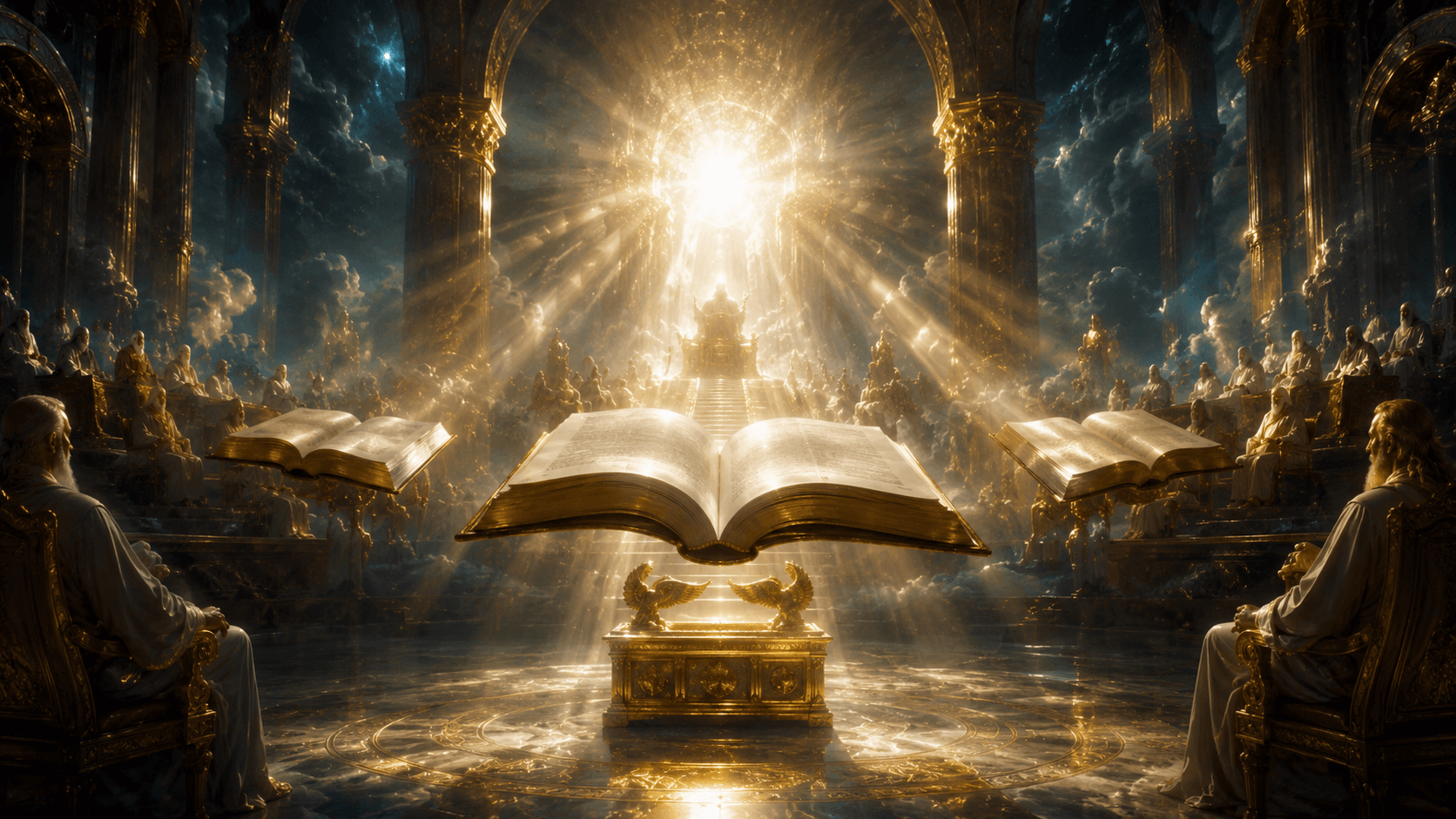
For the risen Christ is not idle in heaven, waiting. He is at work — ministering as our High Priest before the Father's throne:
We have such an high priest, who is set on the right hand of the throne of the Majesty in the heavens; a minister of the sanctuary, and of the true tabernacle, which the Lord pitched, and not man.
See the order of heaven in that one verse. There is one God and Father, on whose throne the Majesty sits; and at His right hand the Son, our High Priest, ministering before Him. The sanctuary is a real place, the priesthood a real work, the ministry a real pleading of His own blood for all who come to God by Him — for “he is able also to save them to the uttermost that come unto God by him, seeing he ever liveth to make intercession for them” (Hebrews 7:25). From 1844 that ministry entered its final phase: the cases of those who profess His name reviewed before the Father — not because God needs to learn anything, but so that the whole universe may see, at the end, that every judgment of God is righteous and no name is blotted out unjustly. This is what the prophecy calls “the hour of his judgment.”
The three angels' messages
Out of 1844 came a clear sense of the message the world must now hear. Revelation 14 sets three angels in sequence, each carrying part of the closing gospel. The first bears “the everlasting gospel… Fear God, and give glory to him; for the hour of his judgment is come: and worship him that made heaven, and earth, and the sea, and the fountains of waters” (Revelation 14:6-7). It is the old gospel of salvation in the Son — with a new announcement attached: the heavenly day of atonement has begun. And its call to worship is framed in the very words of the fourth commandment — worship the One who made heaven and earth.
The second angel cries, “Babylon is fallen, is fallen” (Revelation 14:8), naming the worldwide religious system that mingled truth with tradition and leaned on the arm of kings — the case laid out in Come Out of Babylon. The third gives the most solemn warning in all Scripture — against worshipping the beast and his image and receiving his mark (Revelation 14:9-10) — not in cruelty, but in mercy, that every soul may choose with open eyes whom to worship. And the three close on the mark of those who heed them:
Here is the patience of the saints: here are they that keep the commandments of God, and the faith of Jesus.
The Sabbath and the seal of God
Why does the first angel's worship-call echo the fourth commandment? Because, alone among the ten, that commandment carries the three marks of a seal — the name of the Lawgiver, His title, and His territory:
Remember the sabbath day, to keep it holy… the seventh day is the sabbath of the LORD thy God… For in six days the LORD made heaven and earth, the sea, and all that in them is, and rested the seventh day: wherefore the LORD blessed the sabbath day, and hallowed it.
It is the only commandment that tells you which God is meant — the Maker of heaven and earth. That is why He calls it a sign: “I gave them my sabbaths, to be a sign between me and them, that they might know that I am the LORD that sanctify them” (Ezekiel 20:12, 20). And here is the sober thing: the clearest admissions that the day was changed by mere human authority come from the system that changed it. Rome's own catechisms say it plainly — that there is no Scripture for Sunday, that the church changed the day by her own authority, and that the Protestant world's acceptance of the change is the proof of that authority. The seal of God is the Sabbath set within His commandment; the mark of a rival power is, by its own confession, the day it put in its place. The last controversy turns on which authority the conscience will obey.
The remnant
Two chapters earlier, Revelation had already drawn the portrait of the people God raises up at the close. The dragon, having failed to destroy the woman, “went to make war with the remnant of her seed” — described in exactly two phrases: “which keep the commandments of God, and have the testimony of Jesus Christ” (Revelation 12:17). And the testimony of Jesus, Scripture says, “is the spirit of prophecy” (Revelation 19:10). These marks are deliberately simple. The remnant is not measured by size, age, prestige, or political weight, but by faithfulness to the plain Word — all the commandments of God, and the living gift of prophecy.
The pioneers of the Advent movement — out of the small company that held to the Bible after 1844 — preached exactly this: the heavenly sanctuary, the three messages, the seventh-day Sabbath as the seal of God, the soon return of Christ, and, at the centre, the worship of “one God, the Father… and one Lord Jesus Christ” (1 Corinthians 8:6) — His only-begotten Son, brought forth from the Father from the days of eternity. Their first statement of belief carried no trinitarian formula. It is an honest and sober fact that, in the generations after the founders died, the corporate body moved progressively into the trinitarian creed of the very system the second and third angels were given to call God's people out of. This is said as conviction, not as a verdict on any soul: the remnant is never identified by an institution's name, but by the marks of Revelation 12:17 — and the call of Revelation 18:4 is no respecter of institutions. It is a call to come back to the worship of the one true God and His Son, wherever a person stands.
The sure word
We are living in the hour the first angel announced. The long prophecy has run its course; the signs have come and gone; the High Priest is in the last phase of His ministry above; the messages are sounding; and the final call of Revelation is going out to the honest in heart — not a threat, but the voice of the Father after His own: “Come out of her, my people.” The everlasting gospel stands on two even legs — salvation freely given in the blood of the Son, and a love that keeps His commandments because it loves Him.
And the One whose judgment-hour this is is the same One who became flesh to bear our judgment Himself. The Stone Daniel saw cut out without hands, the Stone the builders rejected, the Stone on which Jacob rested his head in the wilderness — He is the Judge, and He is the Saviour, and He asks only to be trusted. “Fear God, and give glory to him; for the hour of his judgment is come.” Give Him the glory. Rest your head on the Stone. He is worthy, and He is coming soon.
Sources & further reading
Scripture is quoted from the King James Version. The prophecy is laid out so it can be tested, not merely believed; the dates and historical events are matters of public record. The whole study is offered to do what prophecy is for — to send the reader to Christ.
The prophecy and the sanctuary (KJV)
- Daniel 8:14; 9:24-25; Numbers 14:34 — the 2,300 days; the seventy weeks; a day for a year
- Leviticus 16; 23:29; Hebrews 8:1-2; 9:9, 24; 7:25 — the Day of Atonement; the heavenly High Priest
- Daniel 12:4, 9; Revelation 13:3; 6:12-13; 10:9-11 — the sealed book; the deadly wound; the heavenly signs; the sweet and bitter book
The three angels and the seal (KJV)
- Revelation 14:6-12 — the everlasting gospel, the hour of judgment, Babylon, the mark, and the patience of the saints
- Exodus 20:8-11; Ezekiel 20:12, 20; Revelation 12:17; 19:10 — the Sabbath as the seal; the remnant and the testimony of Jesus
On the change of the Sabbath
- James Cardinal Gibbons, The Faith of Our Fathers — 'you will not find a single line authorizing the sanctification of Sunday'
- Stephen Keenan, A Doctrinal Catechism — the change of the day as a mark of the church's authority