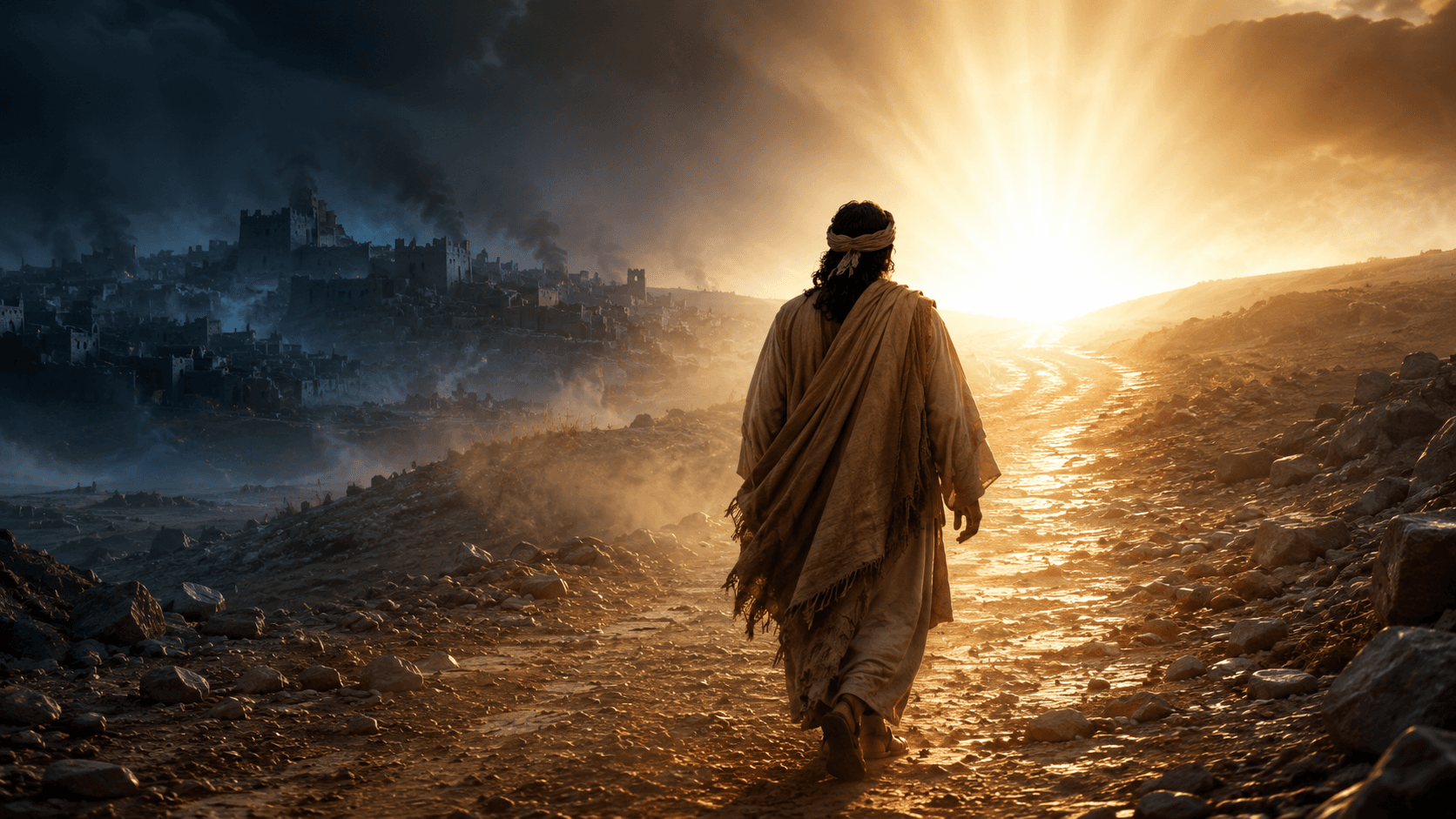
Near the very end of the Bible, a voice from heaven makes a plea so tender it is easy to miss how serious it is: “Come out of her, my people, that ye be not partakers of her sins, and that ye receive not of her plagues” (Revelation 18:4). Her is Babylon — and the people being called out are God's own, scattered all through a religious system that is not what it claims to be. This is not written in hatred of anyone. It is written to do exactly what heaven does: to test long-standing tradition by Scripture, and to call the honest in heart home before the night falls.
Let me say plainly at the start what this is not. It is not contempt for Roman Catholic people, who are loved by God and who include many of the most sincere souls on earth. It is an examination of a system — its claims, its doctrines, its authority — laid beside the Word of God. Scripture remains its own final judge: “to the law and to the testimony: if they speak not according to this word, it is because there is no light in them” (Isaiah 8:20). This study stands beside its companions — The Hour of God's Judgment, Daniel & Revelation, and The Godhead.
Babylon in prophecy
The name is borrowed from the ancient empire on the Euphrates, and it carries that empire's signature: confusion of worship, idolatry, and the forcing of conscience. In Revelation, Babylon is no longer a city of brick but a worldwide religious system at war with the truth of God — pictured as a woman, gorgeously arrayed, who rides upon the kings of the earth. John sees the name written on her:
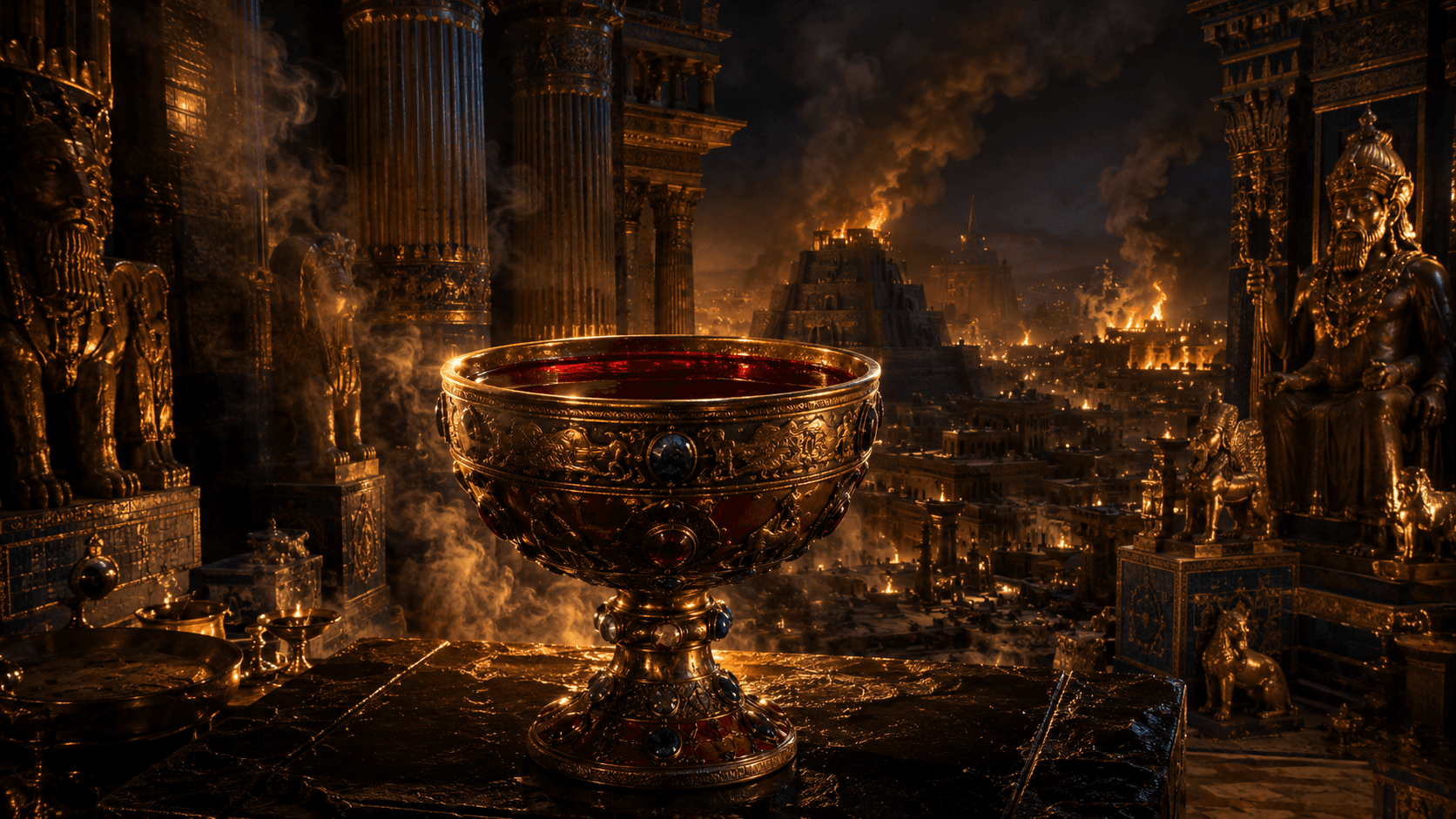
MYSTERY, BABYLON THE GREAT, THE MOTHER OF HARLOTS AND ABOMINATIONS OF THE EARTH. And I saw the woman drunken with the blood of the saints, and with the blood of the martyrs of Jesus.
History knows only one power that fits the portrait: a church that rode the kingdoms of Europe, that shed the blood of those who would not bow, and that calls herself mother while the Scriptures call the New Jerusalem above “the mother of us all” (Galatians 4:26). This is the Roman papal system. But notice that the real charge against her is not chiefly cruelty — it is the wine of her doctrine, the false teaching by which she has made the nations drunk. To understand the call to come out, we have to taste what is in the cup.
The threefold counterfeit
Strip the system to its core and you find a counterfeit raised against each of the three great realities of the gospel. Against the one true God, a counterfeit Godhead — the trinity of the post-apostolic councils. Against the one Mediator, a counterfeit priesthood and a Queen of Heaven. Against the finished sacrifice and the seal of God, a counterfeit sacrifice in the mass and a counterfeit sabbath in Sunday. Set beside them the simplicity of the apostles:
But to us there is but one God, the Father, of whom are all things, and we in him; and one Lord Jesus Christ, by whom are all things, and we by him.
One God, the Father; one Lord, His only-begotten Son; one Spirit, the living presence of both. That is the faith Babylon overlaid. Let us take her counterfeits one at a time.
A counterfeit authority
The system rests on a claim of supreme, infallible authority vested in one man, the successor (it is said) of Peter. But the Scriptures give the headship of the church to no man. “Christ is the head of the church: and he is the saviour of the body” (Ephesians 5:23). Peter himself refused the very veneration the office now demands: when Cornelius fell at his feet, “Peter took him up, saying, Stand up; I myself also am a man” (Acts 10:25-26). And the rock on which Christ builds is not Peter but the confession Peter had just made — “Thou art the Christ, the Son of the living God” (Matthew 16:16). To set a man in the place of Christ as the church's head is the first stone of the counterfeit; the Scriptures call such a power, plainly, the one who “exalteth himself above all that is called God” (2 Thessalonians 2:4).
A counterfeit mediator
Between a holy God and a guilty sinner there must be a mediator — and the gospel gives exactly one. To put the mother of Jesus in that place, to crown her Queen of Heaven and name her mediatrix of all graces, is to answer a question the Bible has already closed:
For there is one God, and one mediator between God and men, the man Christ Jesus.
Mary was a blessed and faithful woman, the honoured vessel of the incarnation — and she is asleep in death like all the saints, awaiting the resurrection, hearing no prayers and granting no graces. To pray to her, or to any departed saint, is to speak to the dead, which Scripture forbids. The living Son “ever liveth to make intercession for them” that come to God by Him (Hebrews 7:25). He needs no help, and He shares the office with no one. A second mediator is no mediator; it is a rival.
A counterfeit sacrifice
At the centre of the system stands the mass — offered, by Rome's own definition, as a true and propitiatory sacrifice, the same sacrifice as the cross, repeated on her altars and administered by her priests. But the cross was not the first of many; it was the last of all:
For by one offering he hath perfected for ever them that are sanctified.
One offering. For ever. The Supper our Lord left us is not a re-sacrificing of Christ but a memorial of the sacrifice already finished — “this do in remembrance of me” (1 Corinthians 11:24). To claim the power to call Christ down and offer Him again is to deny the sufficiency of Calvary and to set a human priesthood where the great High Priest alone ministers. And around this counterfeit cluster the borrowed things — holy water, vestments, processions, incense, images, rosaries — old robes of pagan worship drawn into the church, against the plain word, “Learn not the way of the heathen” (Jeremiah 10:2).
A counterfeit sabbath
The boldest stroke of all was to lay a hand on the law of God itself — to move the holy day from the seventh to the first, from the Sabbath of the LORD to the venerable day of the sun. The commandment is not ambiguous:
Remember the sabbath day, to keep it holy… the seventh day is the sabbath of the LORD thy God… For in six days the LORD made heaven and earth, the sea, and all that in them is, and rested the seventh day.
There is not a line of Scripture transferring its sanctity to Sunday — and Rome does not pretend there is. She rests the change frankly on her own authority, and points to the Protestant world's acceptance of it as proof of that authority. That candour is worth more than a hundred arguments: by her own confession, the change of the Sabbath is the badge of her power to set her word above the commandment of God. The seal of God and the mark of a rival authority meet on this one point. The full case for the day, and for what hangs on it, is laid out in The Hour of God's Judgment.
The wine of Babylon
Revelation says the nations are made drunk with “the wine of the wrath of her fornication” (Revelation 14:8) — and wine, in this figure, is doctrine. Two errors above all have done the work. The first is the immortality of the soul, the old serpent's promise that “ye shall not surely die” (Genesis 3:4); from it flow prayers to the dead, purgatory, and the whole modern traffic of spiritualism. The second is the trinity — a definition of God hammered out not by the apostles but in the fourth- and fifth- century councils, under heavy imperial and ecclesiastical pressure, and unknown to the plain confession of Scripture: one God the Father, and His Son begotten of Him, and the Spirit which is the presence and power of both. These are not small errors. They are the cup itself — and the world, Protestant and Catholic alike, has drunk deeply.
Babylon is fallen, is fallen
That is why the second of the three angels lifts a strange, doubled cry: “Babylon is fallen, is fallen, that great city, because she made all nations drink of the wine of the wrath of her fornication” (Revelation 14:8). The doubling is not for poetry. Babylon fell once when Rome traded the gospel of the one Mediator for an earthly priesthood — she has been fallen for ages. She falls a second time as the Protestant world, which once protested her errors, turns back to embrace them, reaching across the gulf to grasp her hand. And then a final angel, with greater power, lightens the whole earth with his glory and takes up the cry again:
Babylon the great is fallen, is fallen, and is become the habitation of devils, and the hold of every foul spirit, and a cage of every unclean and hateful bird… and the kings of the earth have committed fornication with her.
That is the union we are watching form in our own day: churches setting doctrine aside for the sake of unity, the ecumenical movement gathering the daughters back to the mother, and church and state leaning toward each other again. The fall is not a single past event but a ripening — and as it ripens, the call grows louder.
Why the call is “come out”
Notice the tenderness in the words. Heaven does not say, “Babylon has sinned, and her people with her.” It says, “Come out of her, my people.” God owns them while they are still inside. The honest in heart are everywhere — in every communion, every congregation, every tradition — and to them, before the plagues fall, comes a message not of condemnation but of mercy: separate from her teachings before you share in her sins; come home before the door closes. This last great proclamation, going to every nation with power, is what the older writers called the loud cry — the latter rain poured out to ripen a harvest and to lighten the earth with glory. It is the kindest warning in the Bible, and it is addressed, by name, to you.
The sure word
The choice before the world is not finally between two churches. It is between two authorities — the word of a system that admits it changed the law of God, and the word of God Himself, which changes not. Babylon offers confusion dressed as unity, tradition dressed as faith, a man dressed as Christ. The gospel offers the plain thing it always offered: one God, one Mediator, one finished sacrifice, one holy day, freely given to all who will receive them.
And the One who calls is the same One who entered His own creation to redeem it. The voice from heaven is not a stranger's; it is the Shepherd's, going out after sheep He has never stopped owning. “My sheep hear my voice… and they follow me” (John 10:27). If, reading this, something in you stirs — that is not fear, it is His voice. Come out, and come home. He has been calling you by name.
Sources & further reading
Scripture is quoted from the King James Version. The aim throughout is to test tradition by the Word, not to wound — and the appeal is to the honest in heart, whom God calls His own while they are yet inside.
The call and the system (KJV)
- Revelation 14:8; 18:1-4 — 'Babylon is fallen'; 'Come out of her, my people'
- Revelation 17:5-6 — the woman, the mother of harlots, drunk with the blood of the saints
The one God, one Mediator, one sacrifice (KJV)
- 1 Corinthians 8:6; 1 Timothy 2:5; Hebrews 7:25 — one God the Father; one Mediator; ever living to intercede
- Hebrews 10:14; Acts 4:12; Ephesians 5:23; Acts 10:25-26 — one offering for ever; salvation in none other; Christ the head; Peter refuses worship
- Exodus 20:8-11; Isaiah 8:20; Genesis 3:4 — the seventh-day Sabbath; to the law and to the testimony; the serpent's lie