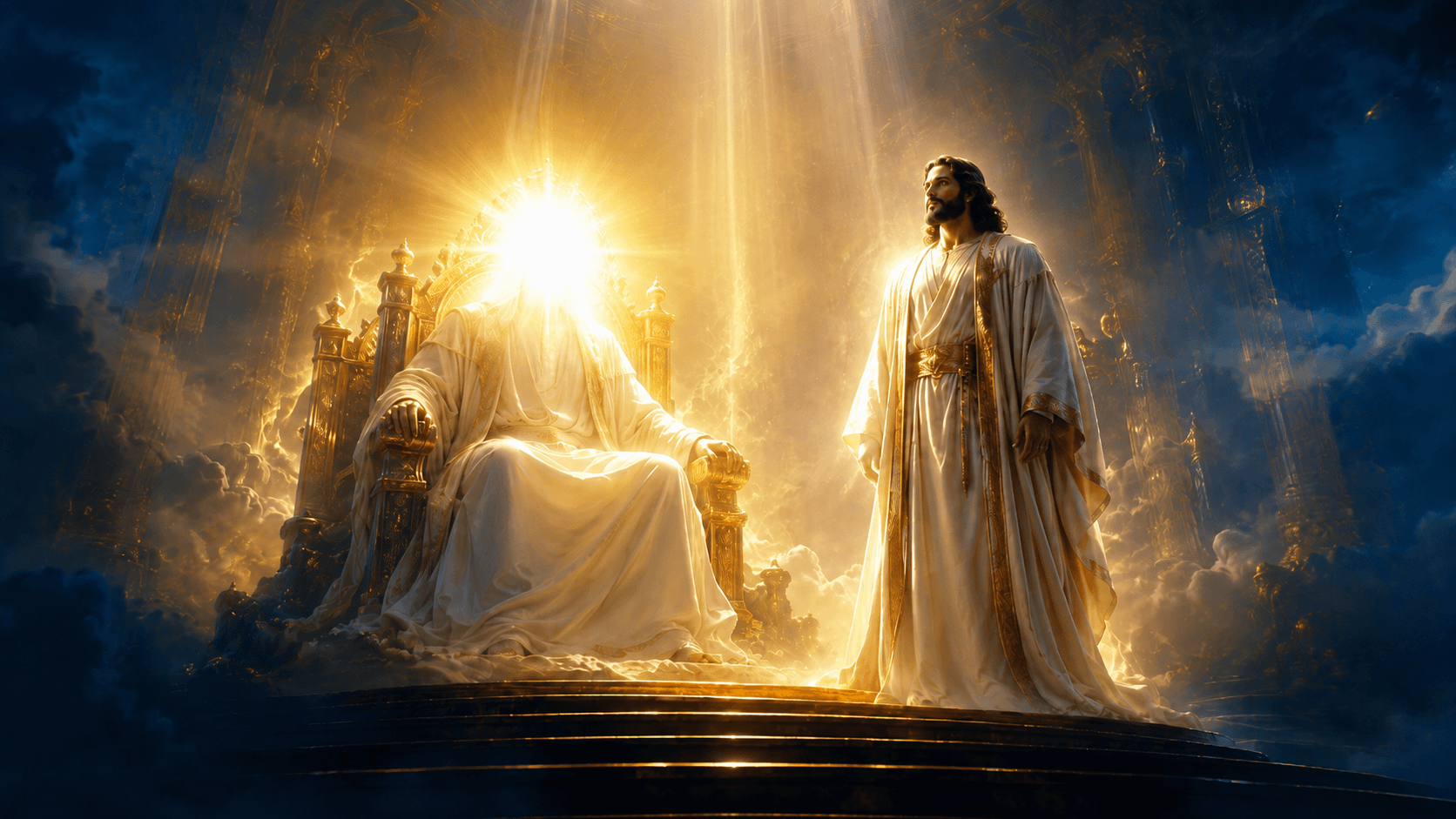
Among the great pillars of biblical faith, none is more sacred than the identity of God Himself. To know God is not to solve a theological puzzle; it is to know the One we worship — the Father Who loved the world, the Son Whom He gave, and the Spirit by which the Father and the Son come near. Christ Himself put this knowledge at the very heart of salvation: “This is life eternal, that they might know thee the only true God, and Jesus Christ, whom thou hast sent” (John 17:3). The doctrine of the Godhead, then, must be built on Scripture — not on inherited creeds, philosophical definitions, or the decrees of later councils. The Bible does not ask us to worship an undefined mystery handed down from post-apostolic systems. It reveals one God, the Father, the source of all things; one Lord Jesus Christ, His only-begotten Son, through Whom all things were made; and one Spirit, the divine presence and power of God and of Christ at work in creation, conviction, and the life of the believer. The companion piece on how the trinity entered Christianity traces the fourth-century overlay; this article sets out the foundation underneath it — and reads the handful of verses usually raised for the trinity in their own plain light.
Let me say at the outset what I will say again at the close, because it governs everything between. This is offered with full conviction — but it is not a test of fellowship, and it is not a condition of salvation. The article does not deny the full divinity of Christ; it does not reduce Him to a created being or a mere prophet. It exalts Him as the divine Son of God, the Word Who was with God in the beginning, the One in Whom the fullness of the divine nature dwells bodily. It simply preserves the Bible's own order: the Father is the one true God and the source of all life, Christ is His only-begotten Son, and the Spirit is the Spirit of the Father and of the Son.
Why the Godhead matters
Many assume the question of the Godhead is too deep, too abstract, or too divisive to matter. Scripture speaks differently. Jesus tied eternal life to knowing the Father and the Son. The apostles preached God through Christ — not a vague philosophical essence, but the living Father Who sent His Son into the world. Worship, prayer, salvation, mediation, and the final message to the world all hang on knowing who God is and how He has made Himself known.
The first angel's message calls the world to “fear God, and give glory to him” and to worship “him that made heaven, and earth, and the sea, and the fountains of waters” (Revelation 14:7). The last-day call is not finally about morality or prophecy charts; it is a call back to the Creator. And Scripture identifies the Creator with great precision: God the Father is the source of creation, and He made all things through His Son.
But to us there is but one God, the Father, of whom are all things, and we in him; and one Lord Jesus Christ, by whom are all things, and we by him.
This is one of the clearest statements in the New Testament. It does not say, “To us there is one God: Father, Son, and Holy Spirit.” It says there is one God, the Father, of whom are all things — and one Lord Jesus Christ, by whom are all things. The Father is the source; the Son is the divine channel through Whom the Father's will is accomplished. Biblical faith does not confuse the Father and the Son, nor split them into rival gods. It honours the one God by honouring the Son Whom He has begotten, sent, exalted, and appointed heir of all things.
The Bible teaches one God
The foundation of the Godhead is plain monotheism, and Scripture never hedges it with a footnote about three persons. Moses declared, “Hear, O Israel: The Lord our God is one Lord” (Deuteronomy 6:4) — the Shema, which Christ Himself named as the first of all the commandments (Mark 12:29). Paul wrote that “there is none other God but one” (1 Corinthians 8:4); James, that “thou believest that there is one God; thou doest well” (James 2:19).
Yet the question remains: who is this one God? Scripture answers directly. Jesus calls His Father “the only true God” (John 17:3). Paul says there is “one God, the Father” (1 Corinthians 8:6), and again, “one God and Father of all, who is above all, and through all, and in you all” (Ephesians 4:6), and again, “there is one God, and one mediator between God and men, the man Christ Jesus” (1 Timothy 2:5). These texts do not describe a committee of three co-equal persons. They name the one God as the Father, and then distinguish Jesus Christ as the one Lord and Mediator through Whom we come to Him.
This does not make Christ less than divine. It follows the Bible's own language. The Father is the one God — the source of divinity, life, authority, and all things. The Son is divine because He is truly the Son of God, having received life from the Father and sharing His nature. Jesus said it plainly: “For as the Father hath life in himself; so hath he given to the Son to have life in himself” (John 5:26). The Son has life in Himself — but that life was given, by the Father. Both truths stand: the Father is the fountainhead, and the Son is fully divine as the One Who came forth from Him.
The only-begotten Son of God
At the centre of the Godhead is a real Father-Son relationship. The Bible does not present “Father” and “Son” as temporary titles adopted for the plan of salvation — roles two members of a tri-personal God agreed to play. The gospel rests on the truth that God actually gave His Son: “For God so loved the world, that he gave his only begotten Son” (John 3:16). The greatness of the gift depends on the reality of the Sonship. If Christ is “Son” only by metaphor, the gift of John 3:16 is hollowed out — nothing was truly surrendered, nothing truly given.
The word the Bible uses for this relationship is begotten — not a decorative honorific, but the single most repeated thing the New Testament says about who the Son is in relation to the Father. It means what it says: brought forth, generated, born of the Father.
- “the only begotten of the Father… in the bosom of the Father” (John 1:14, 18)
- “God sent his only begotten Son into the world, that we might live through him” (1 John 4:9)
- “Thou art my Son, this day have I begotten thee” — quoted of Christ in Hebrews 1:5, where the writer's whole argument is that this was said to the Son and to no angel.
At His baptism the Father declared, “This is my beloved Son, in whom I am well pleased” (Matthew 3:17); on the mount of transfiguration, the same (Matthew 17:5). Peter confessed, “Thou art the Christ, the Son of the living God” (Matthew 16:16). John wrote his Gospel that we “might believe that Jesus is the Christ, the Son of God” (John 20:31). The Sonship is not a denial of His glory; it is the very reason for it. “Being the brightness of his glory, and the express image of his person” (Hebrews 1:3) — a true son bears the nature of his father.
The Old Testament confirms it from its own side, and here it pays to build on the clearest language rather than the most disputed. The plainest is Proverbs 8, where Wisdom — Whom the New Testament identifies with Christ, “the power of God, and the wisdom of God” (1 Corinthians 1:24) — speaks of her own origin. The decisive words are not the much-argued verse 22 but verses 24 and 25: “When there were no depths, I was brought forth… before the hills was I brought forth.” The Hebrew there is the ordinary word for the travail of childbirth — born, brought forth. Micah adds that the One born in Bethlehem is the same Whose “goings forth have been from of old, from everlasting” (Micah 5:2). This is precisely what the fourth-century councils could not leave alone. Unable to square “begotten” with their new claim that the Son had simply always existed in the Father's own way, Rome devised the phrase “eternally begotten” — a begetting that never began — to hold two incompatible ideas together. The Bible does not strain like that. It says the Son was begotten of the Father, and treats that as the ground of everything else.
The Word was God — begotten, and therefore divine
This must not be misheard. To say the Son was begotten is the exact opposite of saying He is a created being or a lesser god. John 1:1 holds two truths together: “In the beginning was the Word, and the Word was with God, and the Word was God.” First, the Word was with God — therefore personally distinct from the Father. Second, the Word was God — therefore divine in nature. The verse does not require a trinity to be true; it does not say the Word was one person in a triune God. It says the Word was with the Father and possessed the same divine nature, because He came forth from the Father.
John then adds: “All things were made by him; and without him was not any thing made that was made” (John 1:3). The Son is not part of creation; He is the divine agent through Whom creation came to be. One cannot be among the things one makes — which already places the begotten Son before and above all created things. So when Paul calls Him “the firstborn of every creature” (Colossians 1:15), the very next verse proves the sense: “for by him were all things created” (Colossians 1:16). “Firstborn” names the heir and the preeminent one — not the first item manufactured. Because He was brought forth from the Father's own being, He inherits the Father's nature, name, and life:
- “the express image of his person” (Hebrews 1:3) — the exact imprint of the Father's own being.
- “so hath he given to the Son to have life in himself” (John 5:26) — underived life, given in the very act of begetting.
- “For in him dwelleth all the fulness of the Godhead bodily” (Colossians 2:9) — and why does it dwell in Him? “It pleased the Father that in him should all fulness dwell” (Colossians 1:19). The Father, the source of divinity, has given the fullness of divine life to His Son.
This is why the old charge — that to deny the trinity is to make Christ “a created being” — misses entirely. The faith of the apostles was that the Son is begotten, not made— truly divine, of the Father's own nature, standing on the Creator's side of the line, never the creature's. Take away the real begetting and you do not protect His divinity; you remove its only stated basis, and are left manufacturing His equality out of philosophy instead of receiving it from His Sonship.
“Let us make man”: Genesis 1:26
Genesis 1:26 — “Let us make man in our image, after our likeness”— is often pressed as a proof of the trinity. The plural “us” and “our” do show that more than one was involved in creation. But they say nothing about three co-eternal persons in one God; the text simply does not state that, and Scripture must explain Scripture. The New Testament tells us plainly who was present: the Father created through the Son (Colossians 1:16; Hebrews 1:2; 1 Corinthians 8:6). The clearest reading of the divine counsel is the Father speaking with His Son. The plural is real — it points to Father and Son, not to a triune mystery.
Some appeal to the Hebrew word Elohim, plural in form. But a plural form does not require a plural number of persons; Hebrew commonly uses plural forms for majesty or fullness, and the same word is used where a single individual is plainly meant. More decisively, Jesus and the apostles, writing in Greek, speak of the true God in consistently singular terms. When Jesus quotes the Shema, He affirms that the Lord our God is one. Malachi asks, “Have we not all one father? hath not one God created us?” (Malachi 2:10). The prophets did not read Genesis as teaching a triune God; they proclaimed one God, Whom the New Testament names as the Father, Who made all things through His Son.
What the word “Godhead” actually means
A great deal of confusion comes from a single English word. The modern reader hears “Godhead” and mentally substitutes “trinity” — as though the word itself taught three co-equal persons. It does not. It appears only three times in the King James Bible — Acts 17:29, Romans 1:20, Colossians 2:9 — and in every case it means divinity, divine nature, or divine essence, never a numerical group of three.
In Acts 17 Paul tells the men of Athens that the God Who made the world is not like gold or silver or stone shaped by human hands — his point is that the divine nature cannot be represented by an idol, not that God is three persons. In Romans 1:20 he says God's “eternal power and Godhead” are seen in the things He has made — divine nature and power, revealed in creation. And in Colossians 2:9, “in him dwelleth all the fulness of the Godhead bodily” is a ringing declaration of Christ's divinity: all the fullness of the divine nature dwells in Him. Read “Godhead” as “divinity” everywhere it appears, and a whole layer of imported meaning falls away.
The Spirit of God and of Christ
Scripture speaks constantly of the Spirit of God, the Spirit of Christ, the Holy Spirit, the Comforter, the Spirit of truth. The question is never whether the Spirit is real — the Spirit is utterly real. The question is whether the Bible presents the Spirit as a separate third divine person, distinct from the Father and the Son in the same way the Son is distinct from the Father, or as the personal presence, power, life, and mind of God and of Christ coming to dwell in the believer.
From the first the language is possessive. “The Spirit of God moved upon the face of the waters” (Genesis 1:2) — the Spirit of God, His own active presence, not a separate being speaking beside Him. “By the word of the Lord were the heavens made; and all the host of them by the breath of his mouth” (Psalm 33:6). The New Testament keeps the pattern. Jesus said, “The words that I speak unto you, they are spirit, and they are life” (John 6:63). Paul, in a single chapter, speaks of “the Spirit of God” and “the Spirit of Christ” as one and the same — not two spirits, but the one divine Spirit by which God and Christ indwell the believer: “if any man have not the Spirit of Christ, he is none of his” (Romans 8:9).
The Comforter
John 14 is often used to make the Holy Spirit a separate divine person from Christ. Jesus did promise “another Comforter” — but He immediately explained the promise in personal terms: “I will not leave you comfortless: I will come to you” (John 14:18), and that the Father and the Son would “come unto him, and make our abode with him” (John 14:23). The Comforter is not the absence of Christ but the spiritual presence of Christ. Through the Spirit, Jesus comes nearer to His people than He could while bodily confined to one place on earth. This is why the Spirit is spoken of in personal terms: it is not an impersonal electricity but the personal presence of God and of Christ. To grieve the Spirit is to grieve the One Whose Spirit it is; to lie to the Spirit is to lie to God (Acts 5:3-4), because the Spirit is God's own presence, not a detached influence.
Blasphemy against the Holy Spirit
Jesus warned that blasphemy against the Holy Spirit would not be forgiven. This does not establish the Spirit as a separate co-equal person; the context shows the Pharisees were attributing the works of God in Christ to Satan — resisting the very power by which God was calling them to repentance. When a person persistently rejects the Spirit's conviction, he cuts himself off from the one means by which repentance is produced. The danger is not that one has insulted a third member of a divine committee, but that one has hardened the heart against God's own saving presence.
The baptism of Christ
The baptism of Jesus is often pictured as a snapshot of the trinity: the Father speaks, the Son stands in the water, the Spirit descends like a dove. But the passage itself does not define God as three co-equal persons; it shows the Father publicly bearing witness to His Son and anointing Him for ministry. The Father's words are central: “This is my beloved Son, in whom I am well pleased” (Matthew 3:17). The event reveals not a triune diagram but that Jesus is the beloved Son of God. Peter later summarised it exactly so: “God anointed Jesus of Nazareth with the Holy Ghost and with power” (Acts 10:38). The voice and the visible Spirit were the Father's witness and the Father's anointing, confirming Jesus as the Messiah.
Matthew 28:19 and the name
Matthew 28:19 commands baptism “in the name of the Father, and of the Son, and of the Holy Ghost.” The verse is often treated as if merely naming three proved the trinity. But listing three does not define the three as one God; the verse says nothing about co-eternity, co-equality, one substance, or three persons in one being. In Scripture, “name” means authority, character, and revealed identity. Baptism brings the believer into the authority and saving work of the Father, the Son, and the Spirit — the Father as the source of salvation, the Son as Mediator and Redeemer, the Spirit as the means by which the life of Christ is applied. Paul gives the same order without any trinitarian gloss: “For through him we both have access by one Spirit unto the Father” (Ephesians 2:18). We come to the Father, through the Son, by the Spirit.
1 John 5:7 and the witness of heaven
First John 5:7 — “For there are three that bear record in heaven, the Father, the Word, and the Holy Ghost: and these three are one” — is among the most cited trinitarian proof texts, and two things must be weighed. First, its textual history is disputed: this wording, known as the Comma Johanneum, is absent from the earliest Greek manuscripts and entered the tradition late. On that ground alone it should not be made the foundation of any doctrine.
Second, even read exactly as it stands, the passage is not defining the nature of God; its theme is witness, record, testimony. The very next verse says “there are three that bear witness in earth, the Spirit, and the water, and the blood: and these three agree in one” (1 John 5:8) — and no one imagines the water and the blood are co-equal persons of a deity. The oneness in view is a oneness of testimony. And the testimony is stated plainly: “Who is he that overcometh the world, but he that believeth that Jesus is the Son of God?” (1 John 5:5). Heaven's witness agrees that Jesus is the Son of God, and that “he that hath the Son hath life” (1 John 5:12).
“I and my Father are one”: John 10:30
Few verses are quoted more often for a triune Godhead than John 10:30, “I and my Father are one.” Many assume it must mean the Father and the Son are a single person or single being. But Jesus Himself tells us in what sense He meant it — and it is not the sense the doctrine requires. In His great prayer He asked:
That they all may be one; as thou, Father, art in me, and I in thee, that they also may be one in us… And the glory which thou gavest me I have given them; that they may be one, even as we are one.
If “I and my Father are one” required them to be a single being, then Jesus was praying for His disciples to become a single being too. No careful reader believes that. The oneness Christ asked for among His disciples — and the oneness He shares with the Father — is a oneness of love, purpose, will, mind, and character. It is also a oneness of substance, but that oneness flows from the begetting: the Son inherited the divine nature from the Father, as any son inherits his father's nature. He shares the Father's substance because He came forth from the Father — not because He is the Father. To honour the Son as the begotten Son of God, fully divine because begotten of God, is not to fall short of His glory; it is to give the Father His place as the source, and the Son His place as the only-begotten.
“The communion of the Spirit”: 2 Corinthians 13:14
The closing benediction of 2 Corinthians — “The grace of the Lord Jesus Christ, and the love of God, and the communion of the Holy Ghost, be with you all” (2 Corinthians 13:14) — appears at first to list three co-equal persons. But read the construction closely. Paul does not write of communion with the Holy Ghost, as if the Spirit were a third person beside the Father and the Son with Whom we hold fellowship. He writes of “the communion of the Holy Ghost” — the fellowship that the Spirit produces.
In Scripture the Spirit is the means by which true communion comes into being. Without the Spirit of God and of Christ at work in the heart, there is no genuine communion with God, and none among believers. The same relational order runs everywhere: “for through him we both have access by one Spirit unto the Father” (Ephesians 2:18). Grace flows from Christ; love flows from God the Father; the communion of the Spirit — the fellowship produced by the indwelling presence of the Father and the Son — is the blessed result. Three blessings, drawn from the order Scripture lays out everywhere; not three co-equal persons drawn from the framework of post-apostolic councils.
The Arian controversy: what Arius actually believed
Anyone who studies the Godhead from the historic position is sooner or later told that it is simply “Arianism” — and that Arianism is the denial of Christ's divinity. Both halves of that claim deserve testing against the record, because both are false. The charge rests on a definition of Arianism the historical Arius would not have recognised.
The controversy that produced the Council of Nicaea began in Alexandria in the early fourth century, when Alexander, the bishop, set out to teach what he called “the unity of the Holy trinity,” and Arius, a presbyter under him, dissented. The dispute spread until it drew in the emperor Constantine, and by the time the council convened in AD 325 the new idea — a triune Godhead of three co-equal, co-eternal persons sharing one substance — was already a century into its development, an idea the apostolic church had not held. What did Arius actually teach? In his own surviving words:
We say and believe, and have taught, and do teach, that the Son is not unbegotten… but that by His own will and counsel He has subsisted before time, and before ages, as perfect God, and only begotten and unchangeable… We are persecuted because we say that the Son had a beginning, but that God was without beginning.
Notice what Arius affirms: the Son is perfect God, only- begotten, unchangeable, subsisting before time and before ages. What he denies is that the Son is unbegotten— and what brings persecution upon him is the statement that the Son had a beginning while the Father did not; that is, that the begetting was real, and that the Father is the source from Whom the Son came forth. That is not a denial of Christ's divinity. It is an affirmation of the biblical Father-Son relationship.
The dispute at Nicaea did not turn on whether Christ was divine. It turned on a single Greek word — homoousion (same substance) against homoiousion (similar substance) — a distinction Athanasius himself, the chief architect of the Nicene formula, candidly admitted he could not comprehend; the historian Gibbon records that “the more he thought, the less he comprehended; and the more he wrote, the less capable was he of expressing his thoughts.” At the council, Eusebius of Caesarea presented the creed he had been taught from childhood — the creed of pre-Nicene Christianity — which confessed “one Lord Jesus Christ, the Word of God, God of God, Light of Light… the only begotten Son, the First-born of every creature, begotten of the Father before all worlds, by whom also all things were made.” The Arian party accepted this creed without hesitation. So why was it not adopted? The record is direct: the opposing party “were determined to find some form of words which no Arian could receive.” The goal was not the most biblical formulation; it was a formulation that would exclude. Under imperial pressure Constantine ordered the word homoousion inserted, and the bishops were commanded to sign under penalty of banishment.
After the council the Roman state went further still: Constantine decreed that every copy of Arius's writings be burned, on penalty of death for concealment. The record of what Arius actually taught was, by deliberate policy, suppressed — what survives of his own voice survives largely because his opponents quoted him in order to refute him. And the word trinity itself appears in no Christian creed or imperial edict until the edict of Theodosius in AD 380 — nearly four centuries after the apostles. The conclusion is plain enough, and it is an indictment of Rome from Rome's own historians: the doctrine was not received from the apostles but developed afterward, and then forced upon the church by councils and the imperial sword. Whatever one calls the historic position, it stands structurally nearer to the faith of pre-Nicene Christianity than the Nicene formula does — and the Bible is older than the council by three hundred years.
The voice of the Adventist pioneers
This reading is not a recent reconstruction. It was held openly and uniformly by the founders of the Advent movement — James White, Joseph Bates, J. N. Andrews, J. N. Loughborough, Uriah Smith, J. H. and E. J. Waggoner, and the wider pioneer body — through the entire founding generation. Their words remain in the original periodicals. A small sampling shows the substance of that witness.
Joseph Bates described, in his 1868 autobiography, how he could not receive the doctrine even before he became an Adventist: “Respecting the trinity, I concluded that it was an impossibility for me to believe that the Lord Jesus Christ, the Son of the Father, was also the Almighty God, the Father, one and the same being.” James White classed the trinitarian creed among the errors Protestantism had carried out of Rome (Review & Herald, 1854), yet refused the opposite ditch as well: “The inexplicable Trinity that makes the Godhead three in one and one in three, is bad enough; but that ultra Unitarianism that makes Christ inferior to the Father is worse” (1877). J. N. Loughborough put the plain-sense objection in 1861: “If Father, Son, and Holy Ghost are each God, it would be three Gods; for three times one is not one, but three. There is a sense in which they are one, but not one person, as claimed by Trinitarians.”
E. J. Waggoner, in Christ and His Righteousness (1890), wrote of the begetting with the careful reverence that has always marked this position: “There was a time when Christ proceeded forth and came from God, from the bosom of the Father… but that time was so far back in the days of eternity that to finite comprehension it is practically without beginning.” And Ellen G. White stated the Son's origin in words no trinitarian formula captures and no Unitarian formula matches:
“God so loved the world, that he gave his only-begotten Son,” — not a son by creation, as were the angels, nor a son by adoption, as is the forgiven sinner, but a Son begotten in the express image of the Father's person… In him dwelt all the fullness of the Godhead bodily.
That historical fact is sometimes treated as an embarrassment to be explained away. It is not. The pioneers studied the Word, prayed earnestly, and reached this position together, while the movement was being raised up to carry the final message of Revelation 14 to the world. To return to their position is not to fall behind; it is to return to the foundation on which the message was built.
Christ as Mediator, and the order of heaven
The Bible's doctrine of God is bound up with the sanctuary and the mediation of Christ. “There is one God, and one mediator between God and men, the man Christ Jesus” (1 Timothy 2:5). A mediator stands between two parties; the Son mediates between the one God — the Father — and humanity. This order holds even to the consummation: “then shall the Son also himself be subject unto him that put all things under him, that God may be all in all” (1 Corinthians 15:28). Christ's subjection to the Father is not inferiority of nature; it is the eternal order of love, authority, and source. The gospel is beautiful because it is relational. The Father did not send an equal partner pretending to be a Son; He gave His actual Son. And the Son came not to reveal an abstract triune essence but to reveal the Father: “he that hath seen me hath seen the Father” (John 14:9).
The pillar, and the final message
The Godhead belongs among the pillars of the faith because the last-day message calls the world back to the true worship of the Creator. The Sabbath points to the Creator; the sanctuary points to the Father's throne and the Son's mediation; the three angels' messages call men and women out of Babylon's confusion and back to “the commandments of God, and the faith of Jesus” (Revelation 14:12). None of these stand safely if the identity of God is obscured. The faith of Jesus includes His own testimony about the Father: He prayed to the Father as the only true God, came in His Father's name, lived by His Father's commandment, received life from the Father, revealed the Father, and returned to the Father — and will at last bring the redeemed into the Father's presence.
Knowing the Father and the Son
The Godhead is not an invitation into confusion; it is an invitation into fellowship. “Truly our fellowship is with the Father, and with his Son Jesus Christ” (1 John 1:3). The Father is the one true God, the source of all life and divinity. Jesus Christ is His only-begotten Son — fully divine, the express image of His Father, the Lord and Mediator through Whom all things were made and through Whom all salvation comes. The Holy Spirit is the Spirit of God and of Christ, Their own presence and power dwelling in the believer. This truth exalts the Father, honours the Son, and welcomes the Spirit; it gives meaning to the cross, clarity to worship, and strength to the closing message.
And this is life eternal, that they might know thee the only true God, and Jesus Christ, whom thou hast sent.
To know the Father and the Son is not merely to hold a doctrinal position. It is to receive eternal life. Prove all things; hold fast that which is good (1 Thessalonians 5:21) — and whatever a brother concludes who has read the same verses and landed elsewhere, love him still, for we are not finally called to be right about a formula, but to know the One Whom Jesus called “the only true God,” and Jesus Christ Whom He has sent.
Sources & further reading
Scripture is quoted from the King James Version; the references below can be read in full. The historical citations — the words of Arius, the Nicene proceedings, and the Adventist pioneers — are drawn from public, checkable sources, and readers are encouraged to verify every quotation independently.
Scripture (KJV)
- John 17:3 — 'that they might know thee the only true God, and Jesus Christ, whom thou hast sent'
- 1 Corinthians 8:6 — 'but one God, the Father… and one Lord Jesus Christ'
- Deuteronomy 6:4 — the Shema: 'The Lord our God is one Lord'
- John 3:16; 1 John 4:9 — 'he gave his only begotten Son'
- John 1:1-3, 14, 18 — 'the Word was God… all things were made by him… the only begotten of the Father'
- Hebrews 1:3-5 — 'the express image of his person'; 'this day have I begotten thee'
- Proverbs 8:22-25 — Wisdom 'brought forth' before the depths and the hills
- Micah 5:2 — 'whose goings forth have been from of old, from everlasting'
- John 5:26 — 'so hath he given to the Son to have life in himself'
- Colossians 1:15-19; 2:9 — 'firstborn of every creature… by him were all things created… all the fulness of the Godhead'
- Romans 8:9 — 'if any man have not the Spirit of Christ, he is none of his'
- John 14:16-23 — 'another Comforter'; 'I will come to you'; 'make our abode with him'
- 1 John 5:5-12 — the witness that Jesus is the Son of God; 'he that hath the Son hath life'
- John 10:30; 17:21-22 — 'I and my Father are one'; the oneness Christ prayed for among believers
- 1 Timothy 2:5; 1 Corinthians 15:28 — 'one God, and one mediator'; 'that God may be all in all'
- Revelation 14:6-12 — the three angels' messages and 'the faith of Jesus'
- Isaiah 8:20 — 'To the law and to the testimony…' (the reading principle of this article)
History of the doctrine
- The First Council of Nicaea (AD 325) and the homoousion controversy — Encyclopædia Britannica
- Arius and the Arian controversy — what Arius actually taught (Encyclopædia Britannica)
- Edward Gibbon, The History of the Decline and Fall of the Roman Empire — on Athanasius and the Nicene formula
- The Edict of Theodosius (Cunctos populos, AD 380) — the first imperial establishment of trinitarian Christianity