Beets are the most underrated whole food in modern nutrition. They lower blood pressure, improve circulation in measurable ways, increase endurance enough that competitive athletes use them as a legal performance enhancer, support the liver's detoxification machinery, and cost about a dollar per pound at the grocery store. They are one of the very few foods where you can feel the effect within a couple of hours of eating them, and one of the even fewer foods where that effect is backed by decades of research that mainstream medicine has — for reasons that should be familiar by now — barely bothered to popularize.
The reason a humble root vegetable does so much is a single molecule: nitric oxide. Beets are one of the highest natural sources of dietary nitrates in the plant kingdom. Your body converts those nitrates, in a two-step process involving the bacteria on your tongue, into nitric oxide — the most important signalling molecule for cardiovascular function in the human body. Dr. Mark Sircus puts the stakes plainly: "High blood pressure causes the inactivation of nitric oxide, an important molecular regulator of blood pressure" — a vicious cycle where the very condition that needs nitric oxide most is also the one that depletes it. Restoring NO is one of the most direct interventions a person can make for arterial health, and beets are the food that does it.
The nitric oxide story
Nitric oxide was such an underappreciated molecule that when Dr. Louis Ignarro and colleagues figured out its role in cardiovascular signalling, they were given the 1998 Nobel Prize in Medicine for the work. NO is what tells your arteries to relax. It is what dilates blood vessels to let more blood through. It is the reason a heart- attack patient gets a nitroglycerin tablet under the tongue — nitroglycerin is metabolized into nitric oxide, which opens the coronary arteries within seconds.
The catch is that the body's own nitric oxide production declines steadily with age. By 40, most people are making significantly less than they did at 20. By 60, the drop is dramatic. This is one of the main mechanical reasons aging tracks so tightly with rising blood pressure, slower recovery, worse circulation, and cognitive decline. Restoring NO from the outside — through diet — is one of the simplest, cheapest, most-evidence-backed interventions in cardiovascular health.
And the food that does it best, by a wide margin, is the beet.
The mouthwash problem (and why your bacteria matter)
The leading academic researcher on nitric oxide biology is Dr. Nathan Bryan — a biochemist with over two decades of published work on NO and the holder of multiple patents in the field. He has spent his career mapping how the body actually converts dietary nitrate into the nitric oxide that ends up dilating your arteries, and he has surfaced one finding that is so consequential, and so under-discussed, that it changes how you should think about beets entirely.
The conversion from beet nitrate to nitric oxide does not happen in your stomach. It happens on your tongue. Specifically, in the crypts of the tongue, a colony of nitrate-reducing bacteria converts dietary nitrate into nitrite, which is then converted to nitric oxide. Without those bacteria, you can drink beet juice every day and never see the cardiovascular benefit. Bryan puts it flatly: "if you don't have the right nitrate reducing bacteria, you get no nitric oxide benefit from nitrate."
Here is the problem. Antiseptic mouthwash kills those bacteria. Chlorhexidine, the active ingredient in most prescription and many over-the-counter mouthwashes, eliminates the entire nitrate-reducing population on the tongue along with the bacteria it's marketed to kill. Bryan cites a study showing that using chlorhexidine mouthwash twice daily for just one week led to significantly higher blood pressure and decreased blood vessel flexibility in otherwise healthy people. Over 200 million Americans use antiseptic mouthwash daily. Whatever benefit they might get from a beet a day is being neutralized by their oral hygiene routine.
The fix is simple: stop using antiseptic mouthwash. Brush your teeth normally, floss, and if you want a rinse, use a saltwater rinse or oil-pulling instead. The bacteria you're keeping are part of how your cardiovascular system regulates itself. Killing them in the name of "fresh breath" is one of the quieter own-goals in modern personal care.
What beets actually do
1. Blood pressure
A single dose of concentrated beet juice — about 8 ounces, or one teaspoon of concentrated juice powder — has been shown in controlled studies to reduce systolic blood pressure by 4 to 10 mmHg within a few hours, with the effect lasting up to 24 hours. That is a clinically meaningful drop, comparable to what some prescription medications produce, from a single dose of a vegetable. Daily intake produces sustained reductions in the same range — the kind of number that, applied across a population, would prevent enormous amounts of cardiovascular disease.
2. Endurance and physical performance
This is the use case competitive athletes already know about. Beet juice has been shown to increase time-to-exhaustion by 15-25% in trained athletes, improve VO2 max efficiency (you use less oxygen for the same work), and meaningfully extend endurance at sustained pace. The mechanism is the same — better nitric oxide means better blood flow means more oxygen delivered to working muscle per heartbeat. World-class cyclists and runners have been using beet juice or beet powder pre-race for over a decade for exactly this reason.
The everyday version of the same effect is what you feel before a long walk: legs that don't tire as quickly, breathing that doesn't get as labored, recovery that's faster. It is not dramatic. It is consistent.
3. Brain blood flow and cognition
One of the more striking pieces of beet research is that, in older adults, daily beet juice consumption has been shown to significantly increase blood flow to the frontal cortex of the brain — the region responsible for executive function, decision-making, and the kind of cognitive sharpness that everyone hopes to keep into old age. The same vasodilation that helps the arteries in your legs helps the small vessels in your brain. Beets are, quietly, one of the better single interventions for cognitive aging that anyone has documented.
4. Liver support and detoxification
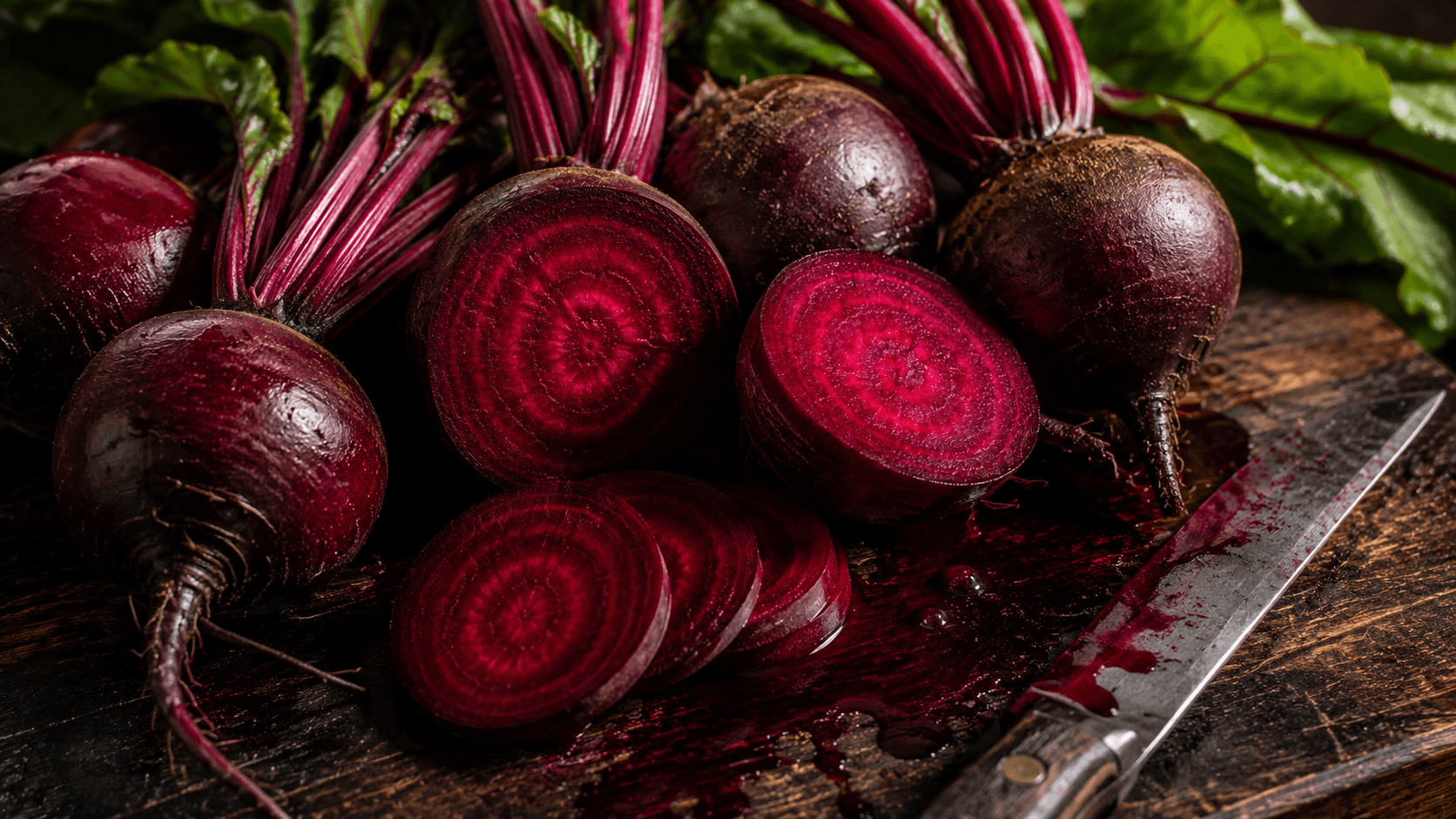
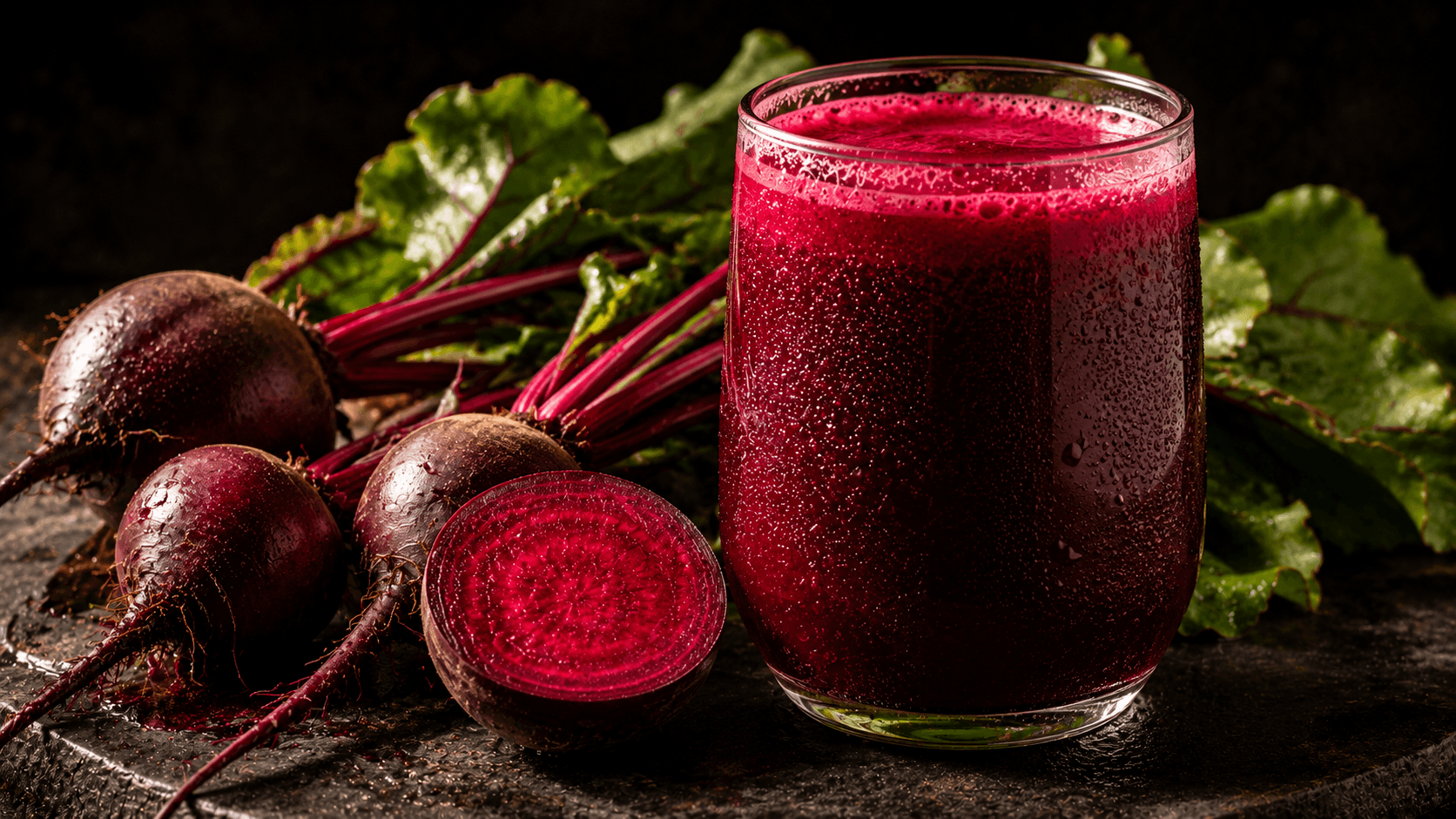
Beets get the deep red color from a class of pigments called betalains — primarily betanin, the pigment responsible for that almost-glowing magenta of fresh beet juice. Betalains are potent antioxidants in their own right, and they support the liver's Phase II detoxification enzymes — the glutathione-conjugation pathway that the liver uses to bind and eliminate toxins. Traditional herbalism has used beets for liver support for hundreds of years; modern research has caught up and confirmed the mechanism. If you've ever wondered why beets show up in almost every liver-cleanse protocol on earth, this is why.
5. Antioxidant load
Betalains, along with vulgaxanthin and the superoxide dismutase (SOD) naturally present in beets, give beet juice powder one of the highest antioxidant capacities per gram of any food. Dr. Berg's product literature highlights this directly — his beetroot powder is specifically marketed for "natural antioxidants such as betalains, vulgaxanthin, and superoxide dismutase (SOD), along with essential minerals like magnesium, potassium, and vitamin B5." A daily teaspoon delivers an antioxidant load comparable to an entire serving of berries.
Why beet juice powder makes daily use realistic
You can absolutely get the same benefits from whole beets and fresh beet juice. The reason a concentrated juice powder is worth keeping in the kitchen is concentration and consistency. Dr. Berg's numbers are illustrative: 20 pounds of fresh beets go into every pound of his concentrated juice powder. That means a single teaspoon of powder carries the active nitrate and betalain content of several whole beets — without the prep, the staining, or the fridge real estate.
For most people, the protocol that actually gets done daily is some version of: a teaspoon of beet powder in a glass of water, stirred or shaken, drunk in the morning or before a walk. No juicer. No mess. No "I'll get to it eventually" backlog of beets in the produce drawer. The powder is the difference between a benefit you read about and a benefit you actually accumulate.
There is one secondary advantage worth naming: juicing whole beets concentrates their oxalates, which can be a problem for people prone to kidney stones. Properly made beet juice powder — particularly powder made from the juice (not the whole root) — typically has a lower oxalate load than raw juicing at home, because the fiber and some of the oxalate are filtered out in production. For someone with a stone history, powder is the more cautious form.
One important warning, courtesy of Dr. Nathan Bryan: not all beet powders are equal, and the difference is not cosmetic. "Most of the beet products on the market contain no detectable nitrate, and as a result, they provide no benefit other than turning urine and feces a pink color." Nitrate is the active compound — the one that drives every cardiovascular benefit beets are known for. Cheap, heat-processed, or poorly-stored beet powders lose the nitrate in production and end up as expensive pink food coloring. The brands worth buying are the ones made from concentrated raw juice with the nitrate content intact: Micro Ingredients and Dr. Berg's both qualify; many of the cheaper options on Amazon do not. If the product is suspiciously inexpensive, you are probably buying powdered fiber with no functional active compound.
Whole beets and the case for pickled
Powder is convenient. Whole beets are still worth eating. The benefits stack — and there are things you only get from the whole vegetable: fiber, the prebiotic effect of that fiber on the gut microbiome, and the broader nutrient matrix that extraction processes inevitably lose some of.
The form I'd push hardest for, beyond raw or roasted, is pickled beets — specifically lacto-fermented pickled beets, the traditional kind made with salt rather than vinegar. Lacto-fermentation preserves the beets and simultaneously seeds them with beneficial bacteria — primarily Lactobacillus — that act as a probiotic when you eat them. You're getting the cardiovascular benefits of the beets and the gut-health benefits of a fermented food in a single jar.
Most store-bought pickled beets are vinegar-pickled, not fermented, and don't have the probiotic effect. If you can find a brand that says "lacto-fermented" or "fermented" on the label — usually in the refrigerated section, not the shelf — that's the one to buy. If you can't, this is a strong case for making your own at home, which is much simpler than people think.
How to make lacto-fermented pickled beets at home
The whole process takes about ten minutes of active work:
- Peel and slice 2–3 medium beets into rounds or sticks. Pack them into a clean quart-sized mason jar, leaving about an inch of headspace at the top.
- Make a brine: 1 tablespoon of unrefined sea salt (Celtic, Redmond, or Himalayan — not iodized table salt) dissolved in 2 cups of filtered, non-chlorinated water. Chlorine kills the fermentation bacteria, so filtered or bottled is important.
- Pour the brine over the beets until they're fully submerged. Add a fermentation weight — a small glass weight, a clean rock, or a smaller jar that fits inside — to keep the beets below the brine line. Anything above the brine will mold; anything below it will ferment.
- Cover loosely with the lid (fermentation produces gas; a tight seal will eventually pressurize). Leave on the counter, out of direct sunlight, at room temperature.
- Taste after 5 days. They should be tangy and slightly fizzy. If they need more time, let them go another 2–3 days. When they taste the way you want, tighten the lid and move them to the fridge.
They'll keep in the fridge for months. A small forkful with dinner is enough — pickled beets are not subtle, and a little goes a long way.
My protocol
Four touchpoints across a typical day and week, and they stack naturally with the rest of my mineral routine.
- One teaspoon of Micro Ingredients Beet Root Juice Powder mixed into my electrolyte glass (with NOW Foods Potassium Gluconate and Dr. Berg's Electrolyte Powder), or just stirred into plain water on a simpler day.
- Dr. Berg's Beet Root Juice Powder rotated in the same way. Two brands kept in the kitchen so I'm never out, and the rotation hedges against any one batch quality issue. Same teaspoon-in-water protocol.
- Pre-walk dosing. Before a long walk or any sustained outdoor activity, I'll have a teaspoon of beet powder in water about 30–60 minutes ahead. This is when the nitric-oxide effect is most noticeable — legs feel lighter, wind comes easier, recovery the next day is faster.
- Evening electrolyte refill. On days when I'm replenishing electrolytes at night, beet powder goes into that mix too. The beets add cardiovascular benefit on top of the mineral replacement, and the slight earthy sweetness actually improves the taste of an unflavored electrolyte blend.
- Whole beets and pickled beets when I can. Roasted beets in salad, raw beets shredded into things, and home-pickled lacto-fermented beets as a side. The powder is the daily backbone; the whole food is the foundation.
How to start (and what to expect)
- Start with half a teaspoon. One full teaspoon of concentrated beet powder is a strong dose. Half a teaspoon for the first week lets you see how your body responds.
- Take it on a relatively empty stomach for the cardiovascular and endurance effects — within an hour of a workout or a walk gives you the strongest nitric-oxide window.
- Don't be alarmed by beeturia. About 10–15% of people will see pink or red urine after eating beets — a harmless genetic trait called beeturia. Your urine isn't bloody, you're not bleeding internally; the betalain pigment is just passing through. It can also happen in stool. If you've never noticed it before, you might now.
- Don't brush your teeth right after. Concentrated beet juice will stain enamel temporarily. Rinse with water, wait 30 minutes, then brush.
- If you're prone to kidney stones (specifically calcium oxalate stones), start with smaller doses of powder rather than raw juice, and pair beets with adequate hydration and magnesium intake to reduce oxalate crystallization risk.
- If you're on blood-pressure medication, check with your prescriber before starting. Beets do lower blood pressure — adding them to a daily protocol while on a BP medication can drop pressure further than the medication was calibrated for.
What I actually take
Closing
Beets are one of the rare foods where the case is built on something specific and mechanistic — dietary nitrates converting to nitric oxide, the molecule that opens your blood vessels and delivers oxygen to every cell in your body. The Nobel committee gave a prize for understanding that mechanism in 1998. Competitive athletes have been using beets to win races ever since. The research showing meaningful drops in blood pressure from a single dose has been replicated dozens of times. And it remains, somehow, a fringe wellness topic instead of standard cardiovascular advice.
A teaspoon of beet powder in a glass of water before a walk is the closest thing modern nutrition has to a cheat code. Add a jar of homemade pickled beets in the fridge, the occasional roasted beet salad, and you've built a serious cardiovascular foundation out of a $2-per-pound vegetable. There is no good reason not to make this part of a daily routine.
Beets, alongside magnesium, potassium, and vitamin D, are the quiet floor of the protocol. Nothing dramatic, just accumulated over months and years into a body that works the way it was designed to.
Sources & further reading
- Dr. Berg — Organic Beetroot Juice Powder (product page with mechanism notes)
- Dr. Sircus — High Blood Pressure Treatment Options (nitric oxide framing)
- Dr. Nathan Bryan — Nitric Oxide research (the academic anchor on dietary nitrates)
- Bryan et al., 'Oral Microbiome and Nitric Oxide: the Missing Link in the Management of Blood Pressure' — PubMed
- Bryan — Why early formation of nitric oxide in the mouth by oral bacteria is essential
- Webb et al., 'Acute Blood Pressure Lowering...Effects of Dietary Nitrate via Bioconversion to Nitrite' — Hypertension, 2008
- Presley et al., 'Acute effect of a high nitrate diet on brain perfusion in older adults' — Nitric Oxide, 2011