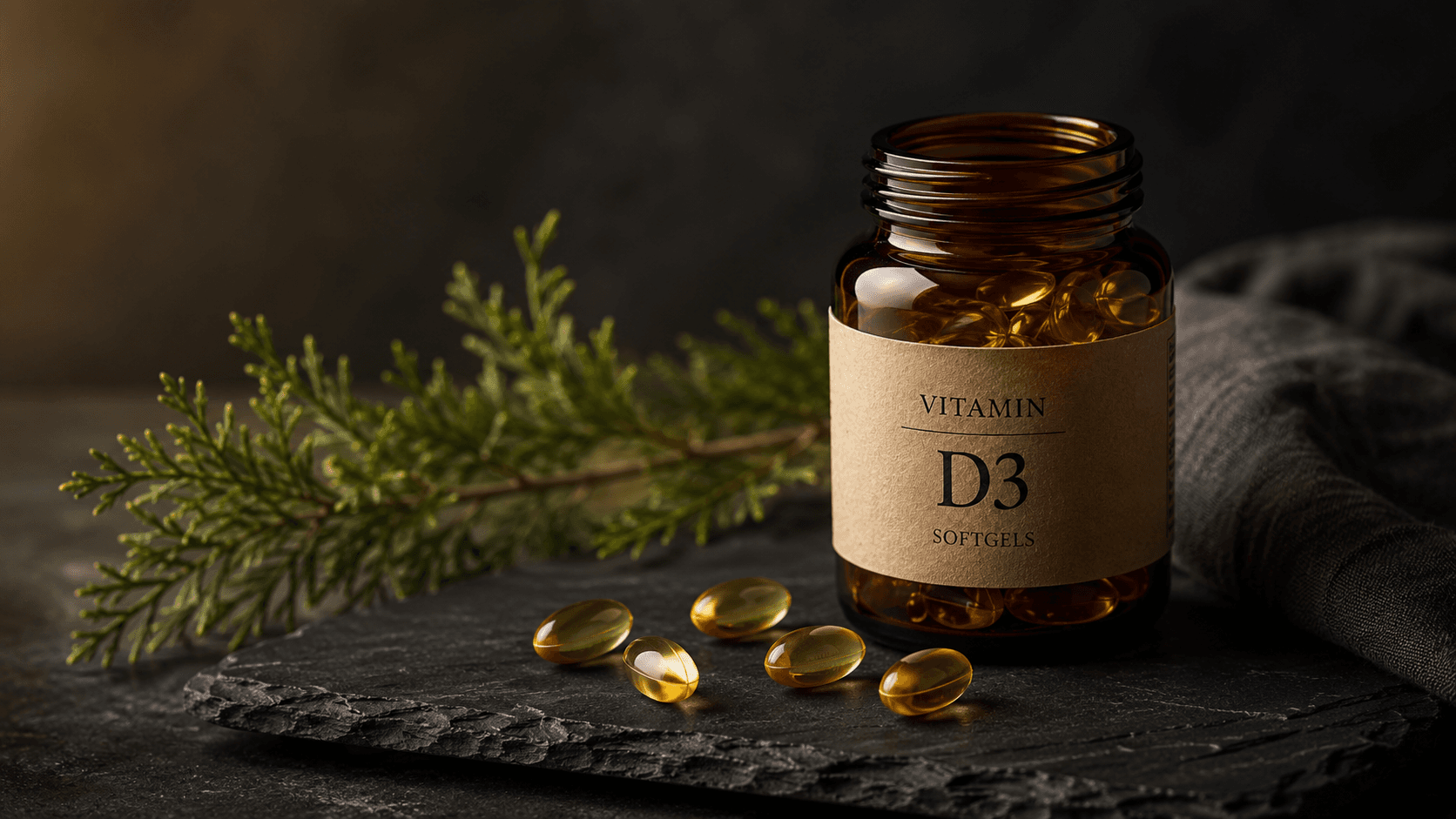
Vitamin D is not really a vitamin. It is a hormone — one your body makes in your skin from sunlight, that travels through your bloodstream and acts on more than a thousand genes. It regulates your immune system, your mood, your bone density, your blood pressure, your insulin sensitivity, and your resistance to everything from the seasonal flu to the diseases of old age. And almost everyone reading this is running on far less of it than they should be — because for the last forty years the entire medical establishment has told us, with extraordinary confidence, to stay out of the sun.
The numbers Dr. Mark Sircus cites are stark. Up to 75% of Americans are vitamin D deficient. More than three-quarters of cancer patients have low vitamin D levels. 90% of Alzheimer's patients have low vitamin D levels. The deficiency rate has tripled in recent years. This did not happen because the sun moved. It happened because we did — indoors, behind glass, covered in sunscreen, terrified of the one thing that was making us the hormone we cannot live without.
This article covers what vitamin D actually does, how much sun you need (by skin color and by time of day), why D3 capsules are the winter and backup strategy rather than the primary one, and the single most important cofactor — vitamin K2 — that determines whether your D3 supplementation helps your bones or hardens your arteries.
How the mainstream got this dangerously wrong
The "stay out of the sun" campaign is a relatively recent invention. For most of human history, sunlight was understood as medicine — you can still find sun therapy ("heliotherapy") wards in early- 20th-century European hospitals, where tuberculosis patients were treated by exposing their bodies to daily sunlight. It worked. Then, in the late 20th century, dermatology branded all sun as dangerous, the sunscreen industry exploded, and a population's vitamin D levels collapsed in a single generation.
Sircus does not mince words about it:
God forbid one of their patients steps outside on a sunny or a cloudy day, they had better cover their skin with sunscreen and do it right so the minimum amount of sunrays actually touches the skin.
His position — and it is the position of a growing number of functional and integrative practitioners, including Dr. Eric Berg — is that the sun is "a primal medicine" and that "light is the most important environmental input, after food, in controlling bodily function." The reframe is dramatic but accurate: most of us are not over-exposed to the sun. We are catastrophically under-exposed. Sunscreen avoided not melanoma — the rates of which have actually risen since sunscreen went mainstream — but vitamin D synthesis, which has crashed.
What vitamin D actually does
The thyroid runs the body's metabolic rate. Vitamin D, in a very real sense, runs the body's regulatory rate. It is a hormone-grade signal that touches almost every system:
- Immune function. Vitamin D is required for T-cell activation. Sircus has written extensively about how adequate D dramatically reduces susceptibility to respiratory infections, including the influenzas that recur every winter precisely when D levels are at their lowest.
- Bone density. The famous one. Vitamin D is what tells the gut to absorb calcium and what tells the bones to take it in.
- Cancer protection. The correlation between low D and increased cancer rates — particularly breast, colon, and prostate — is one of the most consistent findings in nutritional medicine. Sircus's "three-quarters of cancer patients are low" statistic is not an outlier.
- Mood and cognition. The seasonal-affective- disorder pattern is, in large part, a wintertime D-deficiency pattern. Sircus reports "90% of Alzheimer's patients have low levels of vitamin D."
- Insulin sensitivity and blood sugar. Low D is tightly correlated with type-2 diabetes risk.
- Cardiovascular health. Blood pressure regulation, vascular tone, and protection against arterial calcification — though only when paired with the right cofactors. Without K2, supplemental D can actually push calcium into the arteries (more on this below).
- Autoimmune regulation. Low D is implicated in multiple sclerosis, rheumatoid arthritis, Hashimoto's, and other autoimmune conditions.
The sun is the primary source — here's how to actually get it
Capsules are useful. Sunlight is foundational. The body produces vitamin D from a specific wavelength — UV-B, around 290–315 nanometers — that only reaches the ground when the sun is high enough in the sky. Get the timing right and your skin makes vitamin D in quantities no capsule can match. Get the timing wrong and you can sit in the sun for hours and make almost none.
Best time of day
Dr. Berg puts it directly: "The peak hours for optimal vitamin D production are between 10 a.m. and 4 p.m." This is the opposite of the conventional advice to "avoid midday sun" — which is, in vitamin-D terms, advice to avoid the only window when you can actually make any.
The simplest rule of thumb is the shadow rule: if your shadow is shorter than you are tall, the sun is high enough to produce UV-B. If your shadow is longer than you, the sun's angle is too shallow — most of the UV-B is being absorbed by the atmosphere on its way down, and you're getting warmth and visible light but very little vitamin-D-producing radiation. Early-morning and late-afternoon sun is beautiful, and good for circadian rhythm, but it is not the sun that makes vitamin D.
Latitude and season
Sircus is clear about the geographic limit: "except during the short summer months, people who live at latitudes above 37 degrees north or below 37 degrees south of the equator don't get enough UVB energy from the sun to make all the vitamin D they need." In practical US terms, 37° N runs roughly through San Francisco, Richmond Virginia, and the Tennessee–Kentucky border. If you live north of that line — which includes most of the continental United States, all of Canada, and all of Europe — you cannot make vitamin D from sunlight between roughly October and March, regardless of how much time you spend outside. Winter D comes from food or capsules, not the sun.
How long, by skin color
This is the part that almost nobody tells you correctly. Skin produces vitamin D at very different rates depending on melanin content. Melanin is the body's natural sunscreen — it protects against UV damage, but it also blocks the UV-B that triggers vitamin D synthesis. The darker the skin, the more sun is needed to make the same amount of D.
The general guidelines below are for direct midday sun, with arms, legs, and torso exposed (i.e., shorts and a t-shirt, or less), at a low or moderate latitude, in summer. They are starting points, not prescriptions — adjust based on how your skin actually responds. The goal is to get a faint warmth, never a pink:
- Type I — Very fair, freckled, always burns: 10–15 minutes. Stop before the skin pinks.
- Type II — Fair, often burns, tans slowly: 15–20 minutes.
- Type III — Mediterranean, Hispanic, Middle Eastern; sometimes burns, gradually tans: 20–30 minutes.
- Type IV — Olive or light brown; rarely burns, tans easily: 30–45 minutes.
- Type V — Brown skin; very rarely burns: 45–60 minutes.
- Type VI — Dark brown or black skin; almost never burns: 60–90+ minutes. People with deeply pigmented skin living at higher latitudes are at the highest risk of vitamin D deficiency in the world, and almost always need supplementation in addition to sun.
The other consequential variable is how much skin is exposed. Twenty minutes in shorts and a t-shirt is dramatically different from twenty minutes in long sleeves and jeans. Sircus's guidance is to "expose as much skin as possible" — the more surface area, the shorter the time required.
Cloudy days and windows
Light cloud cover lets through some UV-B; heavy overcast blocks most of it. You can still get a partial dose on a cloudy day during peak hours, but it'll take longer. Windows block essentially all UV-B. Sitting in a sunny window does nothing for vitamin D. The same is true of sun through a car windshield — it feels warm, but the wavelength your skin needs is being filtered out.
My approach
I have Mediterranean / Hispanic skin — Fitzpatrick III, the kind of skin you'd see on someone from Spain or Italy. Olive undertone, sometimes burns if I'm careless early in the season, tans easily once I've built a base.
My summer routine, roughly:
- 20–30 minutes of direct midday sun every day I can. Arms and legs exposed at minimum, torso whenever possible. This is the daily minimum.
- On longer days I'll be out for 45 minutes to an hour total, but I cycle between direct sun and shade — ten minutes out, a few minutes in the shade, ten minutes out again. This extends the time I can be outside without burning and gives me more total UV-B exposure than a single shorter session.
- No conventional sunscreen. A hat, a thin long-sleeve shirt I can throw on, and shade are my sun-management tools. For an exceptionally long outdoor day, zinc-oxide-based natural sunscreens are a reasonable backup — zinc oxide is a physical (not chemical) blocker and doesn't disrupt the endocrine system the way the chemical UV filters do.
- Pure Encapsulations Vitamin D3, 5,000 IU daily. This is my year-round baseline. Even during summer when I'm getting sun, the 5,000 IU pill ensures I don't slide on cloudy weeks. In winter it becomes the primary source.
A word on conventional sunscreen
Conventional sunscreens are the other side of the same coin as sun avoidance. The chemical UV filters in most commercial sunscreens — oxybenzone, octinoxate, avobenzone, octisalate — are absorbed through the skin and have measurable hormone- disrupting effects. Studies have detected sunscreen chemicals in breast milk, urine, and bloodstream within hours of application. Hawaii banned the worst of them — oxybenzone and octinoxate — for what they were doing to coral reefs. The same chemicals are being applied daily to children in every country that hasn't banned them.
The trade-off matters: a sunscreen that blocks UV-B blocks vitamin D synthesis completely. SPF 8 reduces vitamin D production by about 95%. SPF 15 takes it down by about 99%. SPF 30 and above is, for vitamin D purposes, the same as staying indoors. The conventional advice — "wear SPF 30 every time you go outside, even briefly" — is, taken to its logical conclusion, a recipe for guaranteed vitamin D deficiency.
The alternatives that work:
- Time-limit your exposure by skin type (see above). Use the warmth of your skin as the signal — get out of direct sun before you turn pink.
- Cover up after you've made your D. A hat, a thin long-sleeve shirt, and finding shade are the original "sunscreens" and they work without any side effects.
- If you need a topical product, look for non-nano zinc oxide as the sole active ingredient. Zinc oxide sits on top of the skin and reflects UV physically rather than absorbing it chemically — and the non-nano (larger particle) versions don't penetrate the skin the way the nano-sized particles in some formulations can.
- DIY options using zinc oxide powder, coconut oil, shea butter, and beeswax are widely shared in the anti-toxin-skincare community and offer a real alternative for anyone willing to mix their own.
D3 supplementation — the winter and backup strategy
Capsule vitamin D is not a replacement for sunlight. It is the backup for when sunlight isn't available — winter, latitude, long indoor stretches, illness recovery. The form to take is almost always D3 (cholecalciferol) — the form your skin produces — and not D2 (ergocalciferol), which is a plant/yeast form and substantially less effective at raising serum D.
Sircus's dosing protocol:
- Maintenance: 5,000 IU per day for healthy adults.
- Rapid replenishment for someone deeply deficient: "One 50,000 IU capsule of Vitamin D3 every two weeks will result in 80% of adults bringing their blood levels to above 40 nanograms/milliliter, an optimal level for good health." For context, a 50,000 IU capsule is roughly equivalent to "sunbathing for 3 days in a sunny climate" — not a mega-dose by historical biological standards.
- Children: 1,000 IU/day under age 2; 2,000 IU/day for older children.
- Lab-test if you can. The standard panel is 25-hydroxy vitamin D (25(OH)D). The "normal" range printed on most lab reports — 30 ng/mL — is the threshold for avoiding rickets, not for thriving. Sircus, Berg, and the broader functional-medicine consensus put the actual optimal range at 50–80 ng/mL.
The critical cofactors — K2, magnesium, boron
Here is the part of the vitamin D story that, if you take only one thing from this article, you should take: vitamin D3 should almost never be taken alone. The three cofactors that determine whether D3 helps you or quietly harms you are vitamin K2, magnesium, and boron.
Vitamin K2 — the calcium traffic cop
Vitamin D3 increases calcium absorption from the gut. That is its job. Where that calcium ends up — bone or artery — is determined by vitamin K2. Berg explains the mechanism plainly: "Vitamin D3 enhances calcium absorption, while K2 helps guide it into bones and away from soft tissues like the arteries."
K2 activates a protein called matrix Gla protein (MGP) that actively prevents calcium from depositing in blood vessels. If you take high-dose D3 without adequate K2, the absorbed calcium has no traffic cop — and a meaningful fraction of it ends up in arterial walls, soft tissue, and kidneys instead of bone. Over years, this is the mechanism behind a phenomenon that is counterintuitive on its face: D3 supplementation, without K2, can actually accelerate arterial calcification. The fix is simple and cheap: take K2 (specifically the MK-7 form, which has the longest half-life) every time you take D3.
Berg's recommended ratio is 100 micrograms of K2 (MK-7) for every 10,000 IU of vitamin D3. For a 5,000 IU daily D3 protocol, that's about 50 mcg of K2 daily — or, more conveniently, the 100 mcg dose that most K2 supplements come in, taken every other day or alongside a 10,000 IU D3 dose.
Honest note: I am currently taking 5,000 IU of D3 without a dedicated K2 supplement. Writing this article is the prompt for me to fix that. If you're already taking D3 and not K2, adding K2 is the single most important change you can make to this protocol.
Magnesium
Magnesium is required at multiple steps of vitamin D metabolism — the enzymes that activate vitamin D in the liver and kidney are magnesium-dependent. People who supplement D3 without adequate magnesium often see their D levels rise slowly or not at all on the lab. If you've been taking D3 and not seeing the numbers move, magnesium is the first thing to look at. (Full piece on magnesium here.)
Boron
Boron is the cofactor for the kidney enzyme that converts D3 into its most active form (calcitriol, 1,25-OH-D3) — and it also extends vitamin D's biological half-life in the body. If your D labs are stuck despite supplementing aggressively, boron is the second thing to check, after magnesium. (Full piece on boron here.)
How to start
- Get a 25(OH)D blood test first if you can. Standard panel, cheap to add to any annual physical, or available direct-to-consumer for around $30 without a doctor. This is the only way to actually know where you're starting.
- Start sun exposure at your skin type's lower end (see the table above), build up slowly, never push past pink.
- Take 5,000 IU of D3 daily as a baseline if you live north of 37° latitude or spend most days indoors. Re-test after 8–12 weeks. Adjust dose based on whether you've reached the 50–80 ng/mL range.
- Take K2 (MK-7) every time you take D3. Roughly 100 mcg K2 per 10,000 IU D3. Non-negotiable.
- Pair with magnesium and boron. The two cofactors that determine whether D3 actually does its job.
- Don't burn. Sunburn is the only proven cause of skin cancer from sun exposure. Time-limit your sessions and cover up before you turn pink. Tan, faintly warm, never red.
What I actually take
I'll be adding a K2 (MK-7) supplement to this stack — that's the next purchase. The protocol above is what I'd recommend, but I want to be honest that my own current setup is missing that piece. When I land on a K2 brand I'm happy with, I'll add it here.
Closing
The honest summary of vitamin D is this: your body is designed to make it from the sun, the modern world has gone out of its way to prevent that, and the simplest way to take back your health is to step outside in the middle of the day with some skin showing, regularly, year-round. Capsules are a backup. Sun is the strategy.
Pair the sun with K2 so the calcium ends up in the right place, with magnesium so the D activates, and with boron so it stays around long enough to work — and you have a quiet, cheap, foundational protocol that does more for long-term health than almost anything modern medicine sells.
Step into the sun. Take off the shirt. Don't burn. That's the whole thing.
Related reading on this site: the red light therapy article covers how to deliver concentrated doses of the red and near-infrared wavelengths that the sun also provides — useful when sun exposure is limited. The natural testosterone article covers vitamin D as a direct precursor and modulator of male hormonal production (Pilz 2011: ~20% testosterone increase with D supplementation in deficient men). The women's cycle article covers the Bertone-Johnson finding that women with the highest vitamin D intake have 30–40% lower PMS risk. The sleep article covers morning sunlight as the most important single circadian-rhythm intervention.
Sources & further reading
- Dr. Sircus — Vitamin D and the Sun (topic archive)
- Dr. Sircus — Killing People with Sun Deficiency
- Dr. Sircus — Safe High-Dose Vitamin D Treatments
- Dr. Berg — Vitamin D3 & K2 Synergy: The Ratio You Need
- Dr. Berg — Best Ratio of Vitamin D3 to K2
- Dr. Berg — Can You Get Vitamin D on a Cloudy Day?
- Holick — Vitamin D Deficiency (New England Journal of Medicine, 2007)