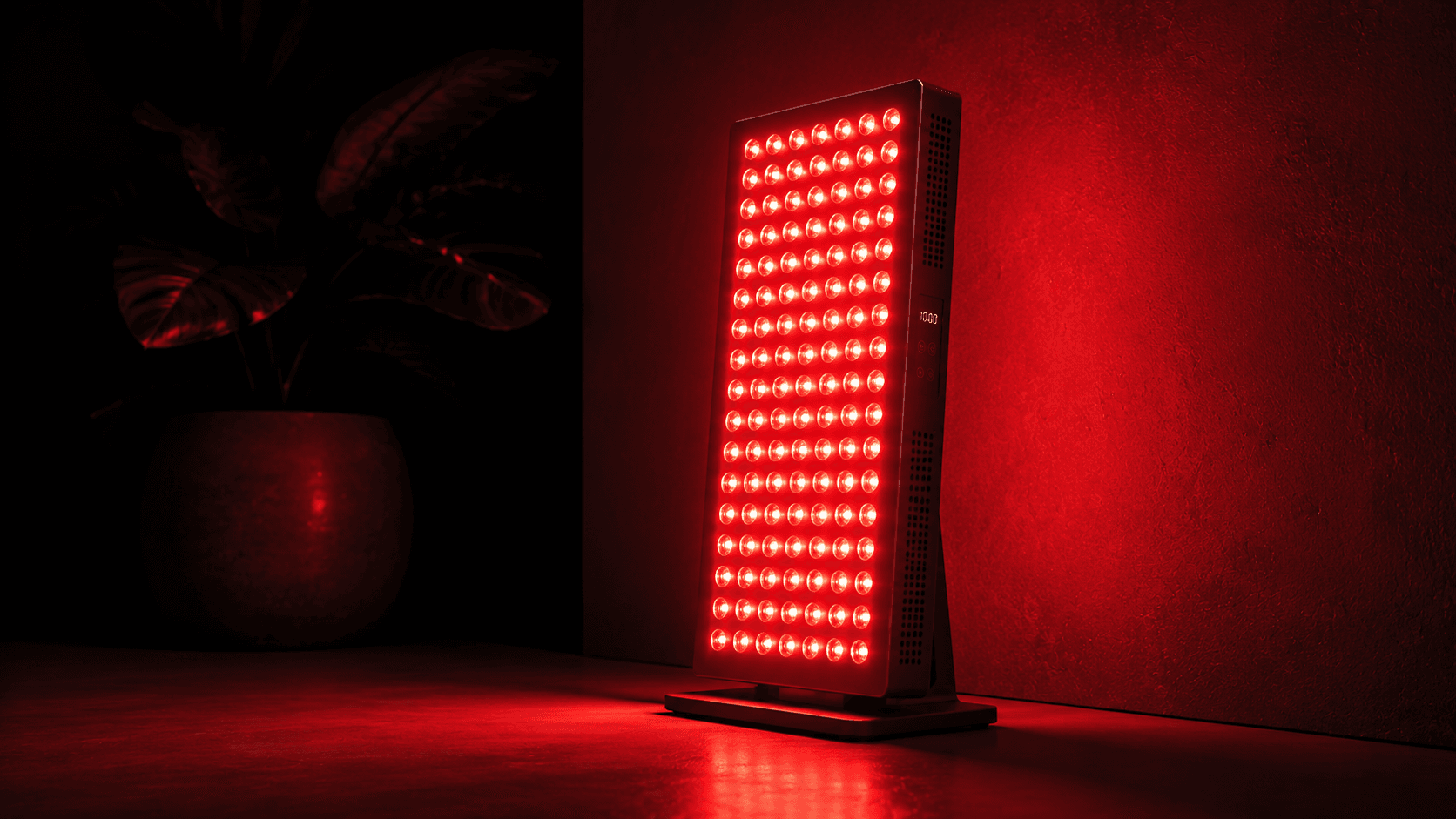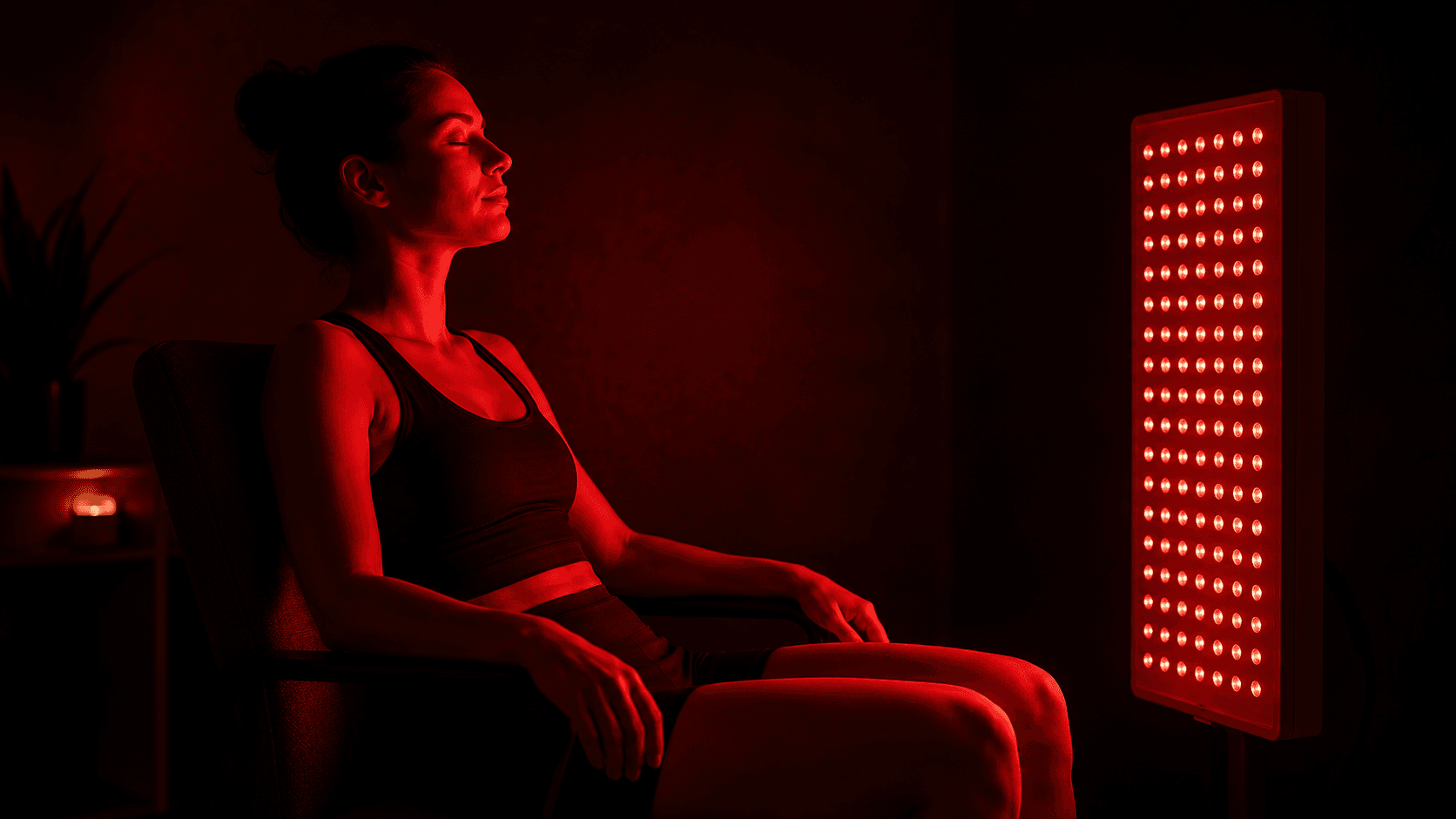
Red light therapy — known in the academic literature as photobiomodulation (PBM) or low-level laser therapy (LLLT) — is one of the very few "biohacks" in the modern wellness space with a substantial peer-reviewed evidence base behind it. The mechanism is well-characterized at the molecular level. The clinical studies span thousands of published papers across dozens of conditions. The FDA has cleared specific devices for specific indications (hair loss, pain reduction, certain skin conditions). The mainstream medical world has been slow to embrace it largely because the intervention is non-pharmaceutical, can't be patented in any meaningful way, and competes with prescription products across multiple categories. The science, however, is real — and the underlying biology is the same biology that has made human beings beneficiaries of sunlight for the entire history of the species.
The most useful single fact to anchor everything else: the sun emits massive amounts of red and near-infrared light, and for almost all of human history people spent their days outside receiving this light for free. Roughly 40–50% of the sun's energy reaching the earth's surface is in the red and near-infrared spectrum. The benefits being studied in red light therapy trials are, in effect, the same benefits humans have always received from regular outdoor sun exposure — concentrated into a delivery system that compensates for the modern shift to indoor living. Modern adults spend, on average, more than 90% of their lives indoors. Red light therapy devices are, at their core, a partial replacement for the sun exposure modern life has engineered out of the daily rhythm.
This article covers what red light therapy actually is and how it works at the molecular level, the wavelengths that matter and the ones that don't, the documented benefits across the systems where the research is strongest (skin and collagen, wound healing, pain and inflammation, muscle recovery, hair regrowth, brain health, mood and depression, thyroid function, testosterone, eye health), the biphasic dose-response curve that means more is not always better, the practical protocol for daily use, the equipment landscape (from $100 entry-level panels to $5000 full-body setups), the synergy with morning sun exposure, the combined protocol with the rest of the site, and the honest cautions.
What red light therapy actually is
Red light therapy is the application of specific wavelengths of red light (typically 600–700 nanometers) and/or near-infrared light (typically 700–1100 nm) to the body, usually delivered through LED panels, lasers, or wearable devices. The key wavelengths and what they do:
- 630–660 nm (red light) — penetrates the skin to about 5–10mm. Primary applications are skin health, collagen production, wound healing, and superficial tissue effects. The wavelength you typically see described as "red" in marketing.
- 810–850 nm (near-infrared, NIR) — penetrates deeper, reaching muscle, joint, and bone tissue (typically 30–40mm). The wavelength range used for deeper-tissue applications like muscle recovery, joint pain, and transcranial brain therapy. Invisible to the eye.
- 1064 nm (deep near-infrared) — penetrates even deeper. Used for some advanced applications and emerging research areas. Less common in consumer devices.
- 415 nm (blue light) — sometimes included in skin treatment devices specifically for acne (it kills P. acnes bacteria). Not "red light therapy" proper but often combined in skin-focused devices.
The standard combination in serious red light therapy devices is both 660nm red and 850nm near-infrared, delivering the surface-level skin benefits and the deeper tissue benefits simultaneously. This combination is what most of the foundational clinical research has used.
The mitochondrial mechanism — what's actually happening
The biological mechanism behind red light therapy is well-characterized and not particularly mysterious. The short version: red and near-infrared light at specific wavelengths penetrates the skin and is absorbed by the enzyme cytochrome c oxidase (Complex IV) in the mitochondrial electron transport chain. This absorption produces several immediate downstream effects:
- Increased ATP production. Cytochrome c oxidase activation accelerates the mitochondrial energy production cycle. Cells produce more ATP — the universal energy currency — and have more available energy for repair, regeneration, and normal function.
- Nitric oxide release. Red and NIR light dissociates nitric oxide from cytochrome c oxidase (where chronic stress, inflammation, and certain metabolic states can bind it inappropriately). The released nitric oxide improves local circulation, relaxes blood vessels, and supports tissue oxygenation.
- Modulation of reactive oxygen species (ROS). Brief bursts of ROS — produced as a hormetic signaling response to the light — trigger adaptive cellular defense pathways that improve long-term resilience to oxidative stress.
- Anti-inflammatory signaling. Reduction in pro-inflammatory cytokines (TNF-alpha, IL-1, IL-6) and increase in anti-inflammatory mediators. Mechanism is partly through the ROS/NO pathways and partly through direct effects on immune cell function.
- Increased cellular repair signaling. Activation of growth factor and tissue repair pathways including TGF-beta, FGF, and the broader wound-healing cascade.
- Gene expression changes. Effects on hundreds of genes involved in metabolism, mitochondrial biogenesis, antioxidant defense, and tissue repair. Effects can persist for hours to days after a single session.
The unifying frame: red light therapy is a mitochondrial intervention. It works by improving the cellular energy production system that all of biology runs on. This is why the documented benefits span such a wide range of conditions — virtually every chronic disease has a mitochondrial dysfunction component, and improving mitochondrial function improves the underlying substrate of healing across many systems simultaneously.
Red light therapy doesn't treat individual diseases. It treats the mitochondrial dysfunction underneath many diseases. That's why the benefits look implausibly broad on first encounter — and why the mechanism actually supports the claim.
The sun connection — humans used to get this for free
The single most important contextual fact about red light therapy is that sunlight is the original red light therapy. Solar radiation reaching the Earth's surface contains:
- UV light (~5%) — responsible for vitamin D synthesis, skin tanning, and (in excess) burning
- Visible light (~40%) — including the red wavelengths used in red light therapy
- Near-infrared and infrared light (~50–55%) — the warming, deep-penetrating portion of the spectrum, which includes most of the therapeutic NIR wavelengths used in PBM
For essentially all of human history, people spent the majority of their daylight hours outside, receiving large doses of red and near-infrared light alongside the UV and visible light. The full spectrum was part of the daily background condition of human biology. Mitochondrial function, circadian regulation, hormone production, skin health, mood — all of it was tuned to the assumption of substantial daily sun exposure.
Modern life has reversed this. The average modern adult spends more than 90% of their time indoors, frequently getting almost zero direct sunlight on any given day. The consequences are visible across every metric of modern health — vitamin D deficiency epidemic, circadian rhythm disruption (covered in the sleep article), increased rates of depression and seasonal affective disorder, and the broader pattern of mitochondrial dysfunction that drives much of modern chronic disease.
Red light therapy devices, in this frame, are a partial replacement for the daily sun exposure modern life has engineered out. They deliver a concentrated dose of the red and NIR wavelengths specifically — without the UV component (which has its own important benefits but also its own real risks). For someone who already gets daily outdoor sun exposure — covered in the vitamin D article's protocol — red light therapy is a useful supplement. For someone who lives an indoor life with minimal sun exposure, it can be a meaningful intervention against the consequences of that pattern.
Skin, collagen, and anti-aging — the most-studied application
The single most well-established application of red light therapy is skin health. The research record on wavelengths in the 630–660nm range for skin is unusually robust, with multiple controlled trials, FDA-cleared devices, and consistent findings across studies.
Collagen production
Red light at therapeutic wavelengths stimulates the fibroblasts in the dermis to produce more collagen and elastin — the two structural proteins that determine skin firmness, elasticity, and the visible signature of youthful skin. Collagen production naturally declines with age (roughly 1% per year after age 25), and the visible effects of aging — sagging, thinning skin, fine lines, deeper wrinkles — are largely the consequence of this decline.
A 2014 study by Wunsch & Matuschka published in Photomedicine and Laser Surgery randomized 113 subjects to red and near-infrared light therapy or control for 15 weeks. The treatment group showed significantly improved skin complexion, smoothness, collagen density (measured by ultrasound), and reduced fine lines and wrinkles compared to control. The effect sizes were comparable to or better than topical retinoid protocols, without the irritation, peeling, or photosensitivity that retinoids produce.
Fine lines and wrinkles
Multiple controlled trials have shown measurable reductions in fine lines and wrinkles with consistent red light therapy use over 8–12 weeks. The improvements are particularly noticeable around the eyes (crow's feet), mouth (smile lines), and forehead. The mechanism combines the collagen stimulation, improved local circulation (more nutrient delivery to skin cells), and the anti-inflammatory effects that reduce the chronic micro-inflammation underlying much skin aging.
Acne
Red light (and the blue light frequently combined with it in skin-focused devices) has FDA clearance for mild to moderate acne treatment. The mechanism involves reducing inflammation in active lesions, regulating sebum production, and (with blue light specifically) killing the P. acnes bacteria that contribute to acne formation. For acne patients looking for alternatives to antibiotics and isotretinoin (Accutane), red and combination red/blue light therapy is a well-supported intervention with minimal side effects.
Rosacea, pigmentation, and broader skin tone
Red light therapy has emerging evidence for rosacea (reduced flushing and redness), hyperpigmentation (lightening of dark spots over time), and general skin tone improvements. The anti-inflammatory and circulation effects underlie most of these benefits.
Wound healing — the original clinical application
Red light therapy has been used in clinical wound care for decades. The same mechanisms that produce skin anti-aging effects — improved mitochondrial function, increased ATP availability, anti-inflammatory signaling, stimulated collagen production, improved circulation — accelerate the healing of cuts, burns, surgical wounds, diabetic ulcers, and pressure sores. NASA originally investigated red light therapy in the 1990s specifically for wound healing applications in astronauts and the accelerated healing of slow-to-heal wounds in diabetic patients.
Clinical applications include:
- Post-surgical wound healing — faster closure, less scarring, reduced infection rates
- Diabetic ulcer healing — particularly important given the typical poor wound healing in diabetic patients
- Burn recovery — accelerated re- epithelialization and reduced pain
- Scar reduction — both prevention of hypertrophic scarring and improvement of existing scars
- Acne scarring — gradual improvement of both texture and pigmentation
Pain, inflammation, and joints
Near-infrared wavelengths (810–850nm) penetrate deeply enough to reach muscles, joints, ligaments, and bones — where they produce well-documented anti-inflammatory and analgesic effects. Red and NIR light therapy has been studied extensively for:
- Osteoarthritis and joint pain — multiple controlled trials show significant pain reduction and improved function in arthritic joints. NIH has acknowledged red light therapy as a useful intervention in this category.
- Lower back pain — both acute and chronic, with effect sizes comparable to NSAIDs in some trials, without the gut and kidney side effects
- Tendinitis and tendon injuries — tennis elbow, Achilles tendinitis, plantar fasciitis, and similar conditions consistently respond to consistent NIR application
- Fibromyalgia — emerging evidence for reduction in widespread pain and improvement in quality of life
- Post-injury recovery — sprains, strains, and impact injuries heal faster with consistent application
- Carpal tunnel syndrome — symptom reduction documented in controlled trials
For anyone dealing with chronic joint pain who has been relying on NSAIDs (ibuprofen, naproxen) to manage it, near-infrared light therapy is a meaningful alternative worth trying. The chronic NSAID use that this population typically falls into is one of the major causes of gastric ulcers, kidney damage, and cardiovascular events in older adults. Light therapy that produces comparable pain relief without these side effects is a real upgrade.
Muscle recovery and athletic performance
Red and near-infrared light therapy has accumulated significant evidence for athletic recovery applications. The mechanism involves accelerated mitochondrial recovery in worked muscle, reduced exercise-induced inflammation, and improved muscle protein synthesis in the post-workout recovery window.
- Reduced delayed-onset muscle soreness (DOMS) — multiple controlled trials show that light therapy applied before or after training reduces the post- workout soreness substantially
- Faster recovery between training sessions — allowing for more frequent or harder training without overtraining symptoms
- Improved performance metrics in controlled trials when light therapy is applied pre-workout — including strength output, power, and time to exhaustion
- Reduced markers of muscle damage (creatine kinase, lactate dehydrogenase) post-exercise
- Faster recovery from training injuries — minor muscle pulls, strains, and overuse injuries resolve faster with consistent application
For anyone running a serious resistance training protocol, red light therapy can be a useful addition. Apply for 10–20 minutes on worked muscle groups within a few hours post-workout, and pre-workout if time allows for the performance benefits. Professional sports teams have quietly been adopting light therapy as part of their recovery protocols for years.
Hair regrowth — FDA-cleared and well-studied
Low-level laser therapy (LLLT) for androgenetic alopecia (male and female pattern hair loss) has FDA clearance and a substantial clinical evidence base. The mechanism involves stimulating hair follicle stem cells, improving local circulation to the scalp, reducing the inflammatory environment that contributes to follicle miniaturization, and extending the active (anagen) phase of the hair growth cycle.
Controlled trials of LLLT caps and helmets have shown consistent results: roughly 30–40% increase in hair count in treated areas over 6–12 months of consistent use, with improvements in both terminal hair density and the diameter of existing hairs. The improvements are most pronounced in early-stage hair loss and less effective once follicles have been fully dormant for years.
For people considering pharmaceutical hair loss interventions (finasteride, minoxidil), light therapy is worth trying first or in combination. Finasteride in particular has significant sexual side effects (post-finasteride syndrome is a real and growing concern) that light therapy doesn't share. The well-known brands in this category are Capillus, Theradome, and iRestore for the cap/helmet form factor. For people with diffuse thinning rather than localized balding, a large flat-panel red light device covering the scalp can produce similar effects at lower cost.
Brain health, mood, and depression — transcranial PBM
One of the more interesting emerging areas of red light therapy research is transcranial photobiomodulation — application of near- infrared light through the scalp to reach brain tissue. The 810–850nm wavelengths penetrate the skull sufficiently to reach the prefrontal cortex and superficial brain regions, where they produce mitochondrial activation in neural tissue.
The evidence base is younger than the skin and pain literature but is accumulating rapidly:
- Major depressive disorder — controlled trials of transcranial NIR have shown significant antidepressant effects, with response rates comparable to or exceeding SSRI medications in some studies, and without the side effects.
- Cognitive function in healthy adults — improvements in attention, processing speed, and executive function documented in multiple studies.
- Traumatic brain injury (TBI) recovery — accelerated cognitive and functional recovery in patients with TBI, including military veterans.
- Alzheimer's and cognitive decline — early-stage research showing slowing of cognitive decline and possible improvements in mild cognitive impairment.
- Parkinson's disease — emerging evidence for symptom improvement.
- Seasonal affective disorder (SAD) — improvements in winter mood disorders, particularly when paired with morning bright light therapy.
- Stroke recovery — accelerated neurological recovery in stroke patients in some studies.
The brain-focused application is a frontier area with enormous potential. For people dealing with depression, cognitive fog, or post-concussion symptoms, transcranial PBM is worth knowing about — though the protocols are still being refined and the equipment specifically designed for transcranial use (like the Vielight Neuro series) is more specialized than standard skin/ body panels.
Thyroid — the Hashimoto's evidence
One of the more surprising and well-supported emerging applications is red light therapy for Hashimoto's thyroiditis — the autoimmune thyroid condition that is the most common cause of hypothyroidism in modern Western populations. A 2013 study published in Lasers in Medicine and Science (Hofling et al.) randomized 43 patients with chronic autoimmune hypothyroidism to LLLT or placebo for ten sessions. The treatment group showed significant reduction in TPO antibodies (the autoantibodies that drive the thyroid attack), improvement in thyroid tissue echogenicity (the ultrasound marker of thyroid damage), and a substantial fraction of patients were able to reduce or discontinue their levothyroxine (synthetic thyroid hormone) medication.
Follow-up studies have replicated and extended these findings. The mechanism appears to involve direct mitochondrial support of thyroid tissue, reduction of local autoimmune inflammation, and improved thyroid hormone production from the gland itself. For anyone with diagnosed Hashimoto's or borderline hypothyroidism, red light therapy applied directly to the front of the neck (over the thyroid) is one of the more promising interventions available and is increasingly being incorporated into functional-medicine thyroid protocols alongside the iodine and broader mineral support covered in the iodine article.
Testosterone — emerging evidence
The testosterone case for red light therapy is younger and more limited than the skin or pain case, but the existing evidence is interesting enough to mention. A frequently-cited 2013 South Korean study found that near-infrared light applied to the testes produced measurable increases in testosterone in men, primarily through direct mitochondrial support of Leydig cells (the testosterone-producing cells in the testes).
The biological logic is consistent with the rest of what we know about photobiomodulation: testosterone production is mitochondrially demanding, and improving mitochondrial function in Leydig cells should improve their output. The same logic explains why direct sun exposure on the genital area (covered in some traditional protocols and in Russian research from the 1930s) has been claimed to support male hormonal health — the sun delivers the same wavelengths to the tissue.
For men running the full natural testosterone protocol from the testosterone article, adding targeted red/NIR exposure to the lower abdomen and groin area is a low-risk addition with some real evidence behind it. The research is preliminary enough that it shouldn't be treated as a standalone testosterone fix — but as part of the broader stack, it's a reasonable addition.
Eye health — the surprising area
One of the more surprising areas of recent red light therapy research is eye health, particularly age-related macular degeneration and general visual function. A 2020 University College London study (Jeffery et al.) found that just three minutes of daily exposure to 670nm red light improved color contrast vision in adults over 40 by 17–20%, with effects lasting for at least a week after the exposure ended. The mechanism is the same mitochondrial activation — retinal cells are among the most mitochondria-dense in the body, and they benefit from the same energy-boost effect that benefits other tissues.
This area is still preliminary research, but the implications are significant. Age-related macular degeneration is a leading cause of blindness in older adults, and the existing pharmaceutical interventions are limited. A simple morning exposure to 670nm light for a few minutes daily as a long-term prevention or mild treatment is an unusually appealing intervention if the research continues to hold up.
The standard caution: most red light therapy panels deliver doses substantially higher than what these studies use, and direct staring into a bright LED panel at close range is not what the research is testing. For eye-specific applications, dedicated lower-intensity devices (or simply ambient exposure from a panel used at appropriate distance) is the right approach.
The biphasic dose-response — why more isn't always better
One of the most important practical facts about red light therapy is the biphasic dose-response curve, sometimes called the Arndt-Schulz law. The effect of red light is not linear with dose. The curve looks like an inverted U:
- Too little light — no effect. The mitochondrial activation threshold isn't reached.
- The right dose — peak therapeutic effect. Mitochondrial activation, repair signaling, anti-inflammatory cascade all firing optimally.
- Too much light — effect plateaus and then reverses. Excessive doses can produce oxidative stress that overwhelms cellular antioxidant defenses, potentially worsening rather than improving tissue function.
The practical implication: longer is not better. Sitting in front of a panel for an hour a day doesn't produce three times the benefit of a 20-minute session — it may produce less benefit than the 20-minute session, depending on the specific context. Standard recommended doses are 10–20 minutes per body area, at appropriate distance, 3–7 times per week. More than that is unnecessary and potentially counterproductive. The biohackers running multiple hours of daily exposure are, in many cases, getting less benefit than they would from a shorter, more measured protocol.
The dose-response curve for red light therapy is an inverted U. The right dose works. Too much doesn't work better — it works less, or stops working at all. More is not more.
The practical protocol
Distance, time, and frequency
- Distance from panel: 6–18 inches is the standard therapeutic range for most consumer panels. Closer = more intense dose per minute, but also more risk of overdosing. Most quality panels include dose calculators or recommended distance charts.
- Session time: 10–20 minutes per body area is the standard. Acne, hair loss, and skin applications on the shorter end (10–15 min); muscle recovery, joint pain, and deeper-tissue applications on the longer end (15–20 min).
- Frequency: Daily is fine. 3–5 times per week produces most of the benefit. Daily for specific acute conditions (recent injury, active pain flare); 3x/week for maintenance.
- Bare skin matters. Clothing blocks most of the relevant wavelengths. Treatments should be on uncovered skin for the target area.
- Timing — morning is ideal. Red light in the morning supports circadian rhythm (similar to morning sunlight, covered in the sleep article) and is the most physiologically appropriate timing. Evening exposure is also fine and doesn't disrupt melatonin the way blue light does — but morning is preferable when the schedule allows.
Eye protection
Standard red light at consumer panel intensities is generally safe for the eyes — many devices come with eyewear, but the wavelengths used aren't harmful at normal exposure distances. Direct staring at the LED panel from close range isn't a good idea regardless; looking off to the side or closing the eyes during exposure is the conservative approach. For high-power panels and longer exposures, the included eyewear is worth using.
Combining with morning sun
One of the cleanest practical approaches is to combine red light therapy with morning sun exposure. The sun provides UV, full visible spectrum, and additional NIR that the panel doesn't. The panel provides a concentrated dose of the therapeutic red and NIR wavelengths that even the morning sun doesn't deliver as efficiently. Together, they cover the full beneficial spectrum and address the consequences of indoor modern life with complementary mechanisms.
The simplest morning protocol: 10 minutes outside in direct sun (covered in the walking and sleep articles), followed by 10–20 minutes in front of a red light panel for the body areas you're targeting. The combination is more effective than either alone.
The equipment landscape — what to actually buy
The red light therapy device market has matured dramatically in the last five years. The price range spans from $50 hand-held devices to $5000+ full-body professional systems. The key things to look for in any device:
- Correct wavelengths — 660nm red and 850nm NIR is the standard combination. Some devices offer additional wavelengths (630, 810, 1064nm) which can be useful but aren't essential.
- Adequate power output (irradiance) — measured in mW/cm². Therapeutic dose typically requires 100+ mW/cm² at the appropriate treatment distance. Devices with output below this require very long sessions to produce results.
- Low EMF — quality panels are designed to minimize the electromagnetic field emissions from the LED drivers. Cheap panels often emit substantial EMF, which some users prefer to avoid.
- Flicker-free — quality panels run on DC power and don't visibly flicker. Cheap AC-driven panels flicker at 60Hz, which can be irritating and potentially counterproductive.
- Appropriate size for intended use — small panels for face/skin applications, medium panels for targeted body areas, large panels for whole-body treatment.
Tiered brand recommendations
- Premium tier — Joovv. The most recognized name in the space. High-quality build, strong irradiance, low EMF, modular system that scales up. Expensive but well-supported and well-engineered. The Joovv Mini and Joovv Solo are the entry points; the larger Joovv Elite is the full-body option.
- Mid-tier — Mito Red Light, Platinum LED, Red Light Man. Strong performance at lower prices than Joovv. Good build quality, appropriate irradiance, well-regarded in the community. Mito Red Light is probably the most commonly recommended mid-tier brand and offers a wide range of panel sizes.
- Budget tier — Hooga, PlatinumLED Biomax, and similar. Entry-level pricing with most of the essential features. Hooga in particular has become the go-to budget recommendation for people wanting to try red light therapy without the premium investment. The build quality and irradiance are genuinely adequate for the price.
- Specialty form factors: Light therapy face masks (CurrentBody, Omnilux, Solawave) for facial skin applications, hair regrowth caps (Capillus, Theradome, iRestore) for androgenetic alopecia, and dedicated transcranial devices (Vielight Neuro) for brain-focused applications.
My approach
The practical version I'd recommend, anchored in the rest of the protocol covered across this site:
- Morning sun first — the foundation, covered in the sleep, walking, and vitamin D articles. The sun delivers the full spectrum including the UV component for vitamin D synthesis. No red light panel replaces this.
- Red light therapy as the supplement, not the replacement. 10–20 minutes in front of a quality panel, 3–5 times per week, on bare skin, ideally in the morning shortly after the outdoor sun exposure.
- Target areas in rotation — face (skin, anti-aging), full torso (general mitochondrial support), worked muscle groups post-training, specific painful joints, scalp (hair support), front of neck (thyroid).
- Post-workout application for muscle recovery on the worked muscle groups — within a few hours of training is the ideal window.
- Combined with the broader protocol — sleep, training, walking, sun, minerals, clean food. Red light therapy is part of the stack, not a standalone fix. Its effects compound dramatically with the rest of the protocol and produce relatively little benefit in isolation if everything else is broken.
How to start
- Start with morning sun first. Free. Most of what red light therapy delivers, the sun delivers plus additional benefits. Don't skip the free version while saving up for the paid one.
- Pick a goal. Skin/anti-aging? Muscle recovery? Joint pain? Hair? Thyroid? Different goals point to different form factors and protocols.
- Buy a quality budget-tier panel to start. Hooga or similar at the $150–300 price point is enough to evaluate whether red light therapy produces noticeable effects for you. Don't drop $2000 on a premium panel before you've tested whether you'll actually use it consistently.
- Use it consistently for 8–12 weeks before judging the effects. Most benefits are cumulative and gradual rather than immediate.
- Track what you notice. Skin texture, joint pain, recovery between workouts, hair density, mood, sleep quality. Pay attention to what changes and what doesn't.
- Upgrade if it works. If you've used a budget panel consistently for three months and seen meaningful results, upgrading to a larger, higher-power panel makes sense. If you used it briefly and stopped, the device is going to sit in the corner regardless of how much you spent.
- Combine with the rest of the protocol. Red light therapy on top of broken sleep, sedentary life, and a processed-food diet does almost nothing. Red light therapy on top of a real protocol is a meaningful contribution.
Honest cautions
- Photosensitivity conditions. Lupus, porphyria, and certain other autoimmune conditions can be aggravated by light exposure. Consult a practitioner first.
- Photosensitizing medications. Several drugs (some antibiotics, retinoids, certain antihistamines, lithium, certain chemotherapy agents) increase light sensitivity. Check your medication list against known photosensitizers.
- Active skin cancer. Don't apply red light therapy directly to suspected or known skin cancer lesions without specialist guidance.
- Pregnancy. Skin and superficial applications are generally considered safe, but direct abdominal exposure during pregnancy hasn't been well-studied and the conservative approach is to avoid it.
- Severe hyperthyroidism. Red light therapy on the front of the neck for thyroid applications is studied in hypothyroid (low function) conditions, not hyperthyroid (overactive) conditions. The latter case warrants caution and specialist guidance.
- Eye exposure to high-intensity NIR. Very high-intensity near-infrared exposure to the eyes can theoretically cause thermal damage to retinal tissue at extreme doses. Use the included eyewear with high-power panels at close range. Don't stare directly into the LEDs.
- Don't overdose. The biphasic dose-response is real. 10–20 minutes per area is enough. Marathon sessions don't produce more benefit.
- Cheap, unverified devices from unfamiliar marketplaces may not deliver the wavelengths or irradiance advertised. Stick with recognized brands.
- Red light therapy doesn't replace sun exposure. The sun provides UV for vitamin D and the full visible spectrum for circadian regulation — neither of which a red-only panel delivers.
Equipment to consider
For the premium tier, Joovv is the most-recognized brand and the standard professional- grade option — typically purchased direct from their website rather than through Amazon. For dedicated hair regrowth, the Capillus or Theradome helmets/caps are the FDA-cleared specialty options. For brain-focused applications, the Vielight Neuro series is the specialized transcranial option.
Closing
Red light therapy is one of the few modern wellness interventions where the underlying science has more or less caught up with the marketing claims. The mitochondrial mechanism is well-characterized. The clinical evidence spans thousands of papers across dozens of conditions. The FDA has cleared specific devices for specific applications. The intervention is non-invasive, has minimal side effects, and addresses a real underlying biology — the modern indoor life that has deprived us of much of the full-spectrum sun exposure that human biology was made to expect.
The honest framing: red light therapy is not magic, not a replacement for the foundational protocol covered across this site, and not a fix for an otherwise broken lifestyle. It is a real, evidence-supported addition to the stack that produces meaningful benefits across skin, pain, recovery, hair, mood, brain function, thyroid, and potentially testosterone — particularly when added on top of the rest of the protocol.
The combined picture: get morning sun. Walk daily. Lift weights. Sleep before midnight. Take the minerals. Eat real food. Filter your water. Reduce plastic exposures. And add 10–20 minutes of red light therapy a few times a week as a concentrated dose of the wavelengths modern indoor life has cut out of your daily background. The body responds to the full protocol in ways that no single intervention produces alone — and red light therapy is one of the cleaner additions to the stack the modern landscape has produced.
Sources & further reading
- Hamblin, 'Mechanisms and applications of the anti-inflammatory effects of photobiomodulation' — AIMS Biophysics, 2017 (foundational review by the leading PBM researcher)
- Hamblin & de Sousa, 'Handbook of Low-Level Laser Therapy' — the comprehensive reference text
- Avci et al., 'Low-level laser (light) therapy (LLLT) in skin: stimulating, healing, restoring' — Seminars in Cutaneous Medicine and Surgery, 2013
- Wunsch & Matuschka, 'A Controlled Trial to Determine the Efficacy of Red and Near-Infrared Light Treatment in Patient Satisfaction, Reduction of Fine Lines, Wrinkles, Skin Roughness, and Intradermal Collagen Density Increase' — Photomedicine and Laser Surgery, 2014
- Avci et al., 'Low-level laser (light) therapy (LLLT) for treatment of hair loss' — Lasers in Surgery and Medicine, 2014
- Hofling et al., 'Low-level laser in the treatment of patients with hypothyroidism induced by chronic autoimmune thyroiditis: a randomized, placebo-controlled clinical trial' — Lasers in Medical Science, 2013
- Cassano et al., 'Review of transcranial photobiomodulation for major depressive disorder: targeting brain metabolism, inflammation, oxidative stress, and neurogenesis' — Neurophotonics, 2016
- Schiffer et al., 'Psychological benefits 2 and 4 weeks after a single treatment with near infrared light to the forehead: a pilot study of 10 patients with major depression and anxiety' — Behavioral and Brain Functions, 2009
- Naeser et al., 'Significant improvements in cognitive performance post-transcranial, red/near-infrared light-emitting diode treatments in chronic, mild traumatic brain injury' — Journal of Neurotrauma, 2014
- Ferraresi et al., 'Light-emitting diode therapy in exercise-trained mice increases muscle performance, cytochrome c oxidase activity, ATP and cell proliferation' — Journal of Biophotonics, 2015
- Borsa et al., 'Phototherapy laser and LED on muscle recovery: a systematic review' — Lasers in Medical Science, 2013
- Jeffery et al., 'Optically improved mitochondrial function redeems aged human visual decline' — Scientific Reports, 2020 (the 670nm vision study)
- Huang et al., 'Biphasic dose response in low level light therapy' — Dose-Response, 2009 (the foundational biphasic curve paper)
- Ari Whitten, 'The Ultimate Guide to Red Light Therapy' — comprehensive popular reference
- Andrew Huberman — Using Light (Sunlight, Blue Light & Red Light) to Optimize Health (Huberman Lab episode)
- Dr. Berg — Red Light Therapy Benefits
- NASA — Light-Emitting Diodes Used in Wound Healing (foundational research that helped legitimize PBM)