Ghee is butter's older, more stable, and more medicinal cousin. It is the cooking fat that built Indian and Middle Eastern cuisine for thousands of years, the food that Ayurvedic medicine treated as one of its central healing substances, and — somewhat unexpectedly to people raised in the saturated-fat-fear era — one of the most practical additions a modern kitchen can make. It has a higher smoke point than almost any common cooking fat. It is naturally free of the two compounds (lactose and casein) that make regular dairy intolerable for many people. It contains the highest concentration of butyrate of any food on earth. And, used in the way it has been used in the cultures that invented it, it is one of the cleanest ways to add a quality cooking fat to your daily life.
This article is a primer — what ghee actually is, why it cooks the way it does, the specific health properties that make it more than just clarified butter, and how to add it to your kitchen if you haven't already.
What ghee actually is
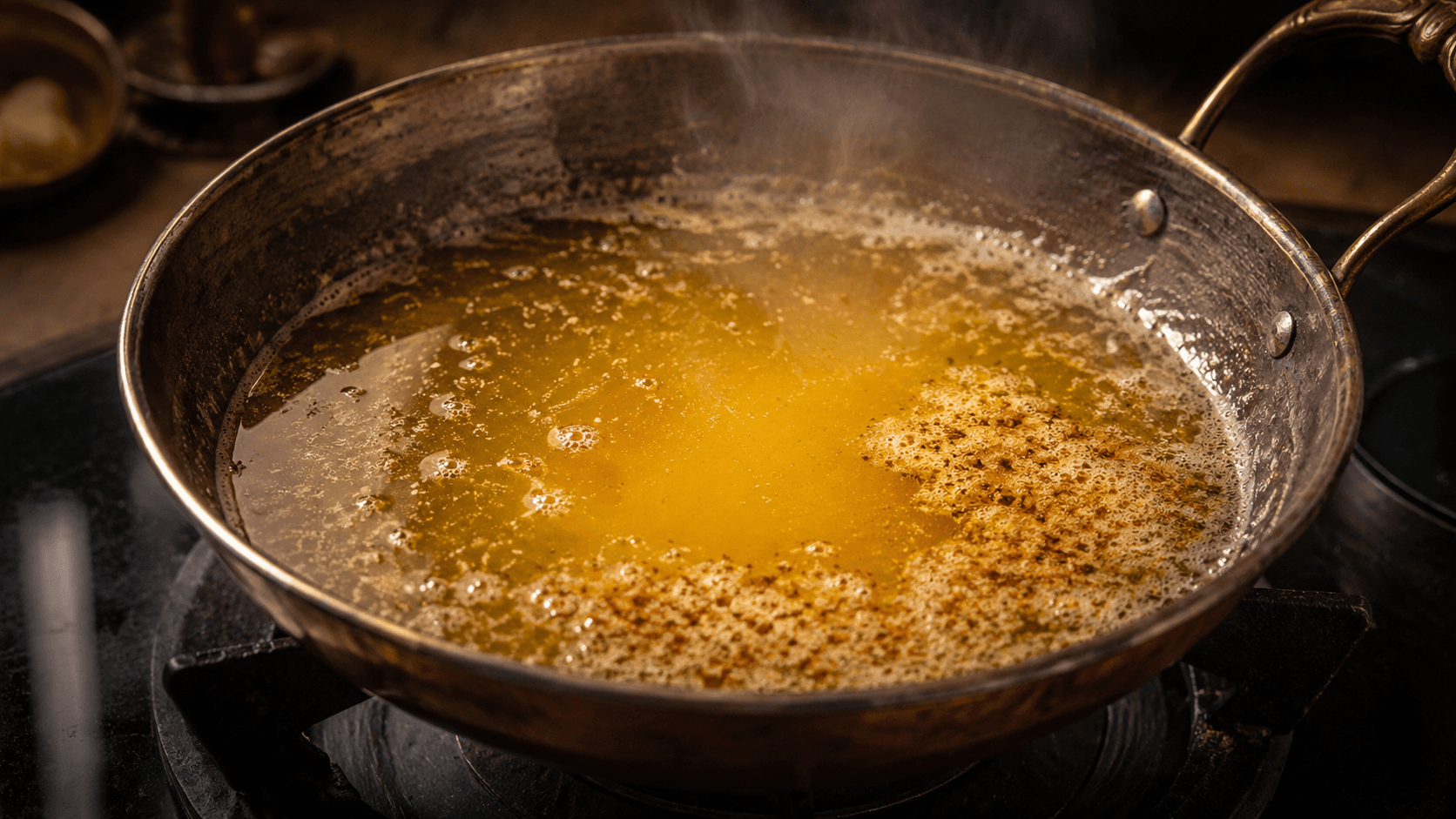
Ghee is clarified butter — butter that has been gently simmered to drive off the water, separate out the milk solids, and leave behind only the pure butterfat. The process is simple: slow heat melts the butter, the water evaporates, the milk proteins (casein) and milk sugars (lactose) settle to the bottom as a caramelized residue, and the remaining clear golden fat is strained off and stored.
What's left after clarification:
- Pure butterfat (about 99%+) — the saturated and monounsaturated fats that make butter butter, minus the proteins and water.
- Fat-soluble vitamins A, D, E, and K2 — concentrated in the fat fraction, preserved by the gentle simmering process.
- Butyrate (butyric acid) — the short-chain fatty acid responsible for much of ghee's anti-inflammatory and gut-health effects.
- Conjugated linoleic acid (CLA) — a naturally occurring fatty acid with documented anti-inflammatory effects, present in higher concentrations in grass-fed ghee.
What's removed:
- Lactose — the milk sugar that lactose- intolerant people can't digest properly.
- Casein — the milk protein responsible for most dairy allergies and many low-grade dairy sensitivities. (Beta-casomorphins, opioid-like peptides that form from casein digestion, are implicated in a range of dairy-related inflammatory issues.)
- Whey — the other major milk protein, removed with the milk solids.
- Water — driven off by the gentle heat, which is why ghee is shelf-stable in a way butter isn't.
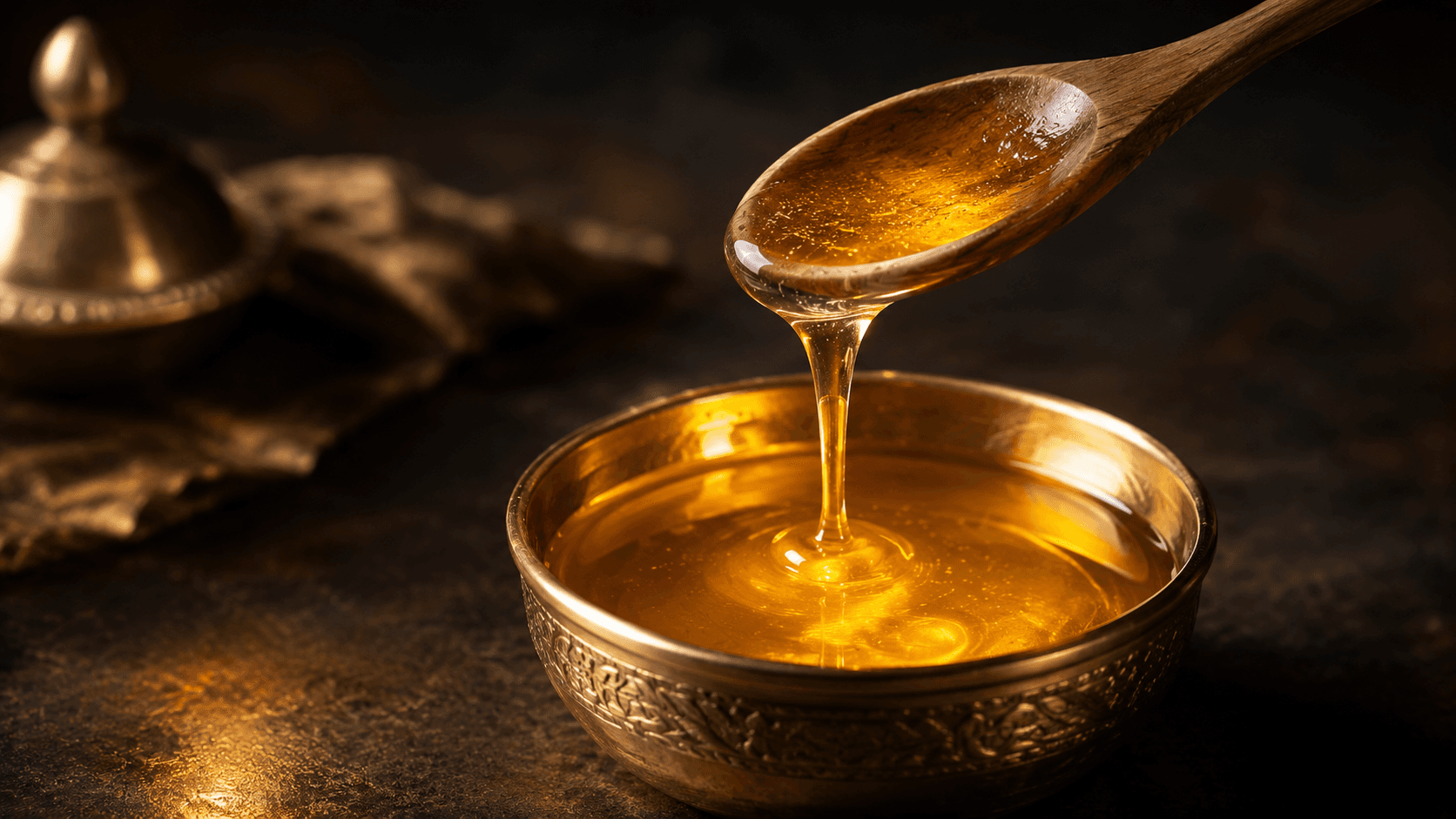
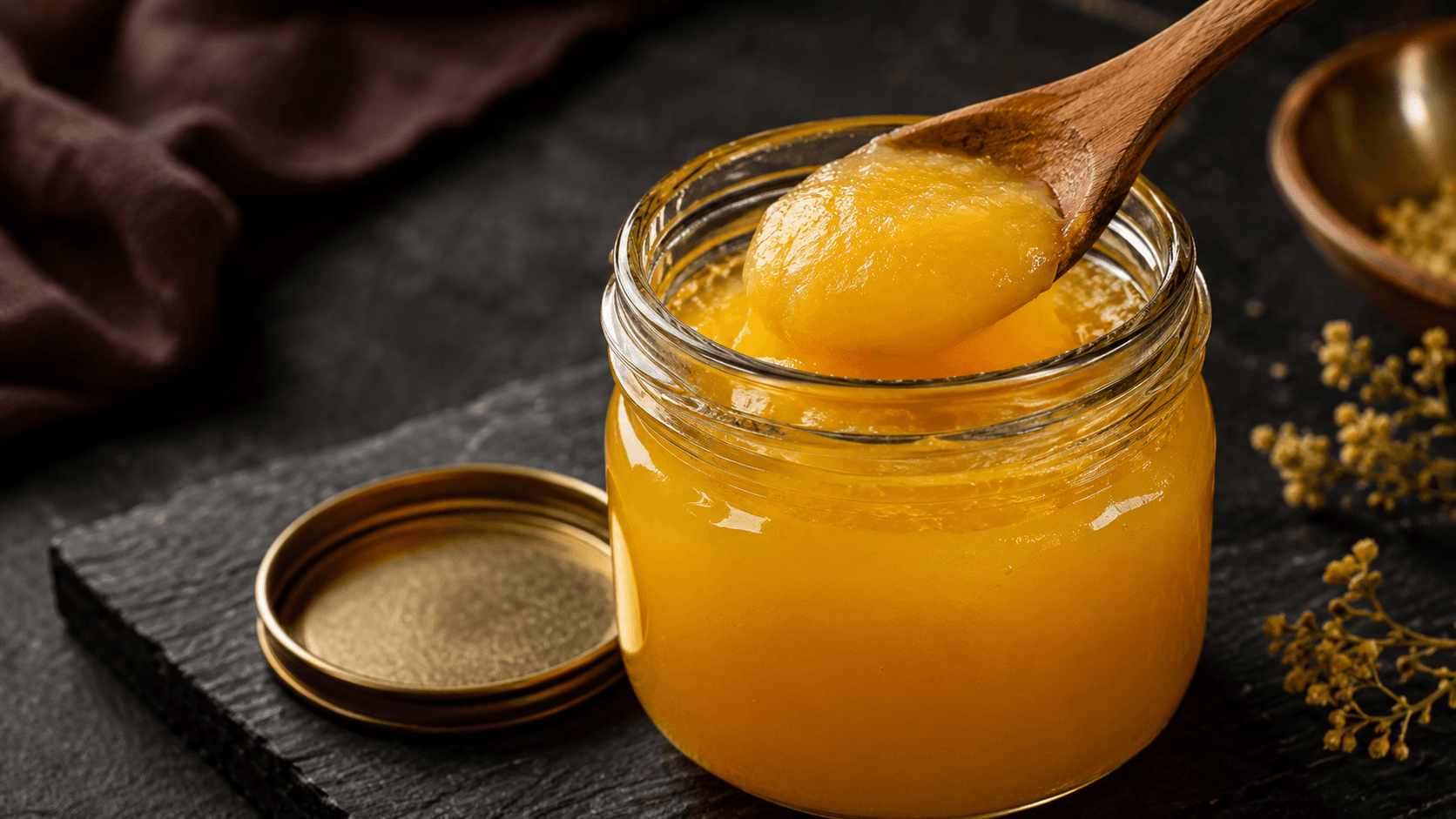
What you end up with is a pure, golden, shelf-stable fat with a richer and slightly nuttier flavor than the butter it came from. It looks like liquid gold when warm, solid and creamy white-to-amber when cool.
The Ayurvedic tradition
Ghee is not a modern wellness invention. It has been central to Indian food and medicine for at least 5,000 years. In Ayurvedic medicine — the traditional medical system of the Indian subcontinent — ghee is considered one of the most important single substances available. It is treated as both a food and a medicine, used to deliver herbal preparations (fat-soluble compounds dissolve in it more effectively than in any other carrier), to lubricate the joints and tissues, to balance the body's doshas, and to nourish what Ayurvedic theory calls the deeper layers of tissue.
The cultural depth here matters. When a single food has been used continuously for fifty centuries in a tradition that produced sophisticated medical theory long before Western medicine existed, that is a longer track record than any pharmaceutical product on the market. The modern functional-medicine rediscovery of ghee is, in a sense, catching up to what a billion people have known for most of recorded history.
The cooking case — higher smoke point, real stability
The single most practical reason to use ghee in your kitchen is the smoke point. Dr. Eric Berg gives the numbers cleanly:
Ghee has a high smoke point of between 450 and 485 degrees Fahrenheit (230 to 250 degrees C), which is significantly higher than regular butter.
Compare that to butter at 350°F — the temperature at which butter starts to smoke, burn, and produce off-flavors and harmful oxidation byproducts. The difference of 100+ degrees Fahrenheit is enormous in practical cooking terms.
The cooking applications:
- High-heat sautéing and stir-frying — ghee handles every standard stovetop cooking temperature without breaking down. Most home cooking happens between 300 and 425°F, all of which is well below ghee's tolerance.
- Roasting — coat vegetables or proteins in ghee before roasting at 400°F+ and they develop a beautiful golden crust without the oxidation issues of seed oils.
- Searing — ghee browns meats and fish cleanly at the high temperatures searing requires.
- Baking — ghee can replace butter cup-for-cup in most baked goods. The flavor is slightly different (nuttier, more savory) but the function is very similar.
- Finishing — drizzle warm ghee over rice, vegetables, eggs, or roasted meat. The flavor is rich enough to be the finishing fat all by itself.
The chemistry behind the stability is the same as the case for coconut oil and beef tallow: ghee is predominantly saturated and monounsaturated fat, which means very few of the carbon-carbon double bonds where heat oxidation happens. The result is a cooking fat that produces a fraction of the inflammatory oxidation byproducts of refined seed oils, regardless of how high you push the heat.
The butyrate story — the highest of any food
This is the part most people don't know. Ghee contains the highest concentration of butyrate (also called butyric acid) of any food on earth. Dr. Berg notes it directly: "Ghee is loaded with the highest concentration of butyrate or butyric acid than any other food, and if you have colitis, irritable bowel syndrome and any bowel problems, taking ghee is very beneficial to people with GI problems."
Butyrate is a short-chain fatty acid — the primary energy source for the cells lining your colon. It is what your gut bacteria produce when they ferment fiber, and it is what those colon cells use as fuel to maintain the intestinal barrier, regulate inflammation, and keep the immune system working properly. People with chronic gut inflammation — colitis, IBS, Crohn's disease, ulcerative colitis — tend to be chronically low in butyrate. Restoring it is one of the most direct interventions available.
What butyrate actually does:
- Fuels the colon cells. Butyrate is essentially food for the colon epithelium. Without adequate butyrate, those cells become dysfunctional — which is the underlying mechanism of "leaky gut."
- Reduces gut inflammation. Butyrate inhibits NF-κB, one of the primary inflammatory signalling pathways. The effect on inflammatory bowel conditions is measurable in published research.
- Supports the intestinal barrier. Tight junctions between colon cells depend on adequate butyrate. The "leaky gut" most functional-medicine practitioners talk about is, mechanistically, often a butyrate-deficient gut.
- Supports healthy insulin sensitivity and metabolic function — short-chain fatty acids in general, butyrate especially, play meaningful roles in glucose regulation.
- May support brain health. Emerging research connects butyrate to neuroprotection through the gut-brain axis, including potential roles in depression, anxiety, and cognitive aging.
The practical implication: regular cooking with ghee, or adding a spoonful to oatmeal, rice, or eggs, delivers a dietary source of butyrate that no other common food comes close to matching.
Why dairy-sensitive people often tolerate ghee
A meaningful fraction of the modern population has some degree of dairy sensitivity — anywhere from lactose intolerance (an enzyme deficiency that affects most adults of non-European descent) to casein-related inflammatory issues (which can be much harder to identify). Many people who can't eat butter, milk, or cheese without symptoms find that they tolerate ghee beautifully.
The reason is that the clarification process strips out both lactose and casein. What remains is essentially pure fat — and fat does not contain the molecules either of those sensitivities react to. For people who suspect they have a dairy issue but love the flavor of butter, ghee is the rare workaround that delivers the flavor without the symptoms.
This is also why Ayurvedic medicine treats ghee as "non-dairy" for most purposes — the dosha-imbalancing properties Ayurveda attributes to milk and cream do not apply to ghee, because the relevant components have been removed.
The vitamin story — A, D, E, and K2
Ghee — particularly grass-fed ghee — is one of the more concentrated dietary sources of the fat-soluble vitamins most people are running low on:
- Vitamin A (true retinol form, not the beta-carotene precursor) — supports immune function, vision, skin, and reproductive health. Most plant sources provide beta-carotene, which the body converts inefficiently. Animal fats like ghee deliver retinol directly.
- Vitamin D — present in small but meaningful amounts in grass-fed ghee, alongside the other fat-soluble vitamins it comes packaged with. See the vitamin D article for why this matters.
- Vitamin E — antioxidant, supports skin and cellular membrane integrity.
- Vitamin K2 — the underappreciated cofactor that directs calcium to bone instead of arteries. Grass-fed ghee is one of the better dietary K2 sources available, alongside grass-fed butter, cheese, and egg yolks. (See the K2 section of the vitamin D article for why this is one of the most important cofactors in the entire mineral system.)
Grass-fed makes a real difference
Like with beef tallow, the difference between conventional grain-fed ghee and grass-fed ghee is meaningful. Grass-fed ghee has:
- Substantially higher vitamin K2 content
- Higher CLA (conjugated linoleic acid)
- Better omega-3 to omega-6 ratio
- Higher beta-carotene content (visible as a deeper golden color)
- No traces of grain-related residues, hormones, or antibiotics (when the producer adheres to those standards)
The cost difference between conventional and grass-fed ghee is modest enough that grass-fed is worth it for the jar you keep on the counter. A pound of grass-fed ghee lasts most home cooks one to two months.
How to use ghee in the kitchen
The simplest possible answer: use it anywhere you would use butter or another cooking oil. Ghee is one of the most versatile single fats available, and it especially shines in the following applications:
- Scrambled eggs. A teaspoon of ghee in the pan instead of butter — eggs come out creamier and don't take on the burnt-butter notes that high-heat butter cooking sometimes produces.
- Roasted vegetables. Toss with melted ghee before roasting. Cauliflower, broccoli, Brussels sprouts, sweet potatoes, and squash all develop deeper flavor and richer browning with ghee than with seed oils.
- Steaks, chops, and pan-seared fish. Ghee's high smoke point makes it ideal for the high-temperature initial sear, while the rich flavor adds depth that a neutral oil wouldn't.
- Rice. Stir a tablespoon of ghee into cooked rice (basmati especially) for a flavor closer to what rice actually tastes like in the cultures that perfected it. Indian and Middle Eastern cooks have done this for millennia.
- Stovetop popcorn. Pop your kernels in ghee instead of seed oil for popcorn that is both higher-quality and significantly tastier.
- Bulletproof-style coffee. A teaspoon of ghee blended into morning coffee delivers a slow release of fat-soluble vitamins and butyrate, plus a smoother mouthfeel than plain coffee. (The "Bulletproof" version originally used butter; ghee works as well or better and is lactose/casein free.)
- Drizzled finishing fat. Warm ghee poured over roasted vegetables, cooked grains, fish, or meat just before serving — a traditional Indian finishing technique that elevates almost any dish.
How to buy good ghee
- Grass-fed on the label — for the reasons covered above, this is the meaningful upgrade over conventional ghee.
- Organic when available — the cattle used for ghee production are exposed to the same agricultural inputs as any other dairy cow, and organic standards meaningfully reduce that exposure.
- Glass jar over plastic. Ghee is shelf-stable, and glass protects the fat-soluble vitamins from oxidation better than plastic during long-term storage.
- Cultured ghee if available — a traditional Indian preparation made from cultured butter (fermented before clarification) that has even more pronounced flavor and additional fermented-food benefits.
Quality brands worth knowing about (not products I'm specifically affiliated with — these are reference points rather than personal endorsements):
- 4th & Heart — California-based, grass-fed, available in flavored and unflavored versions, widely distributed at Whole Foods, Sprouts, Costco, and on Amazon.
- Pure Indian Foods — family-owned, grass-fed, organic, traditional cultured ghee in glass jars. Closer to authentic Indian preparation than most mass-market brands.
- Ancient Organics — grass-fed, small-batch, glass jar. Premium pricing but high quality.
- Tin Star Foods — grass-fed Vermont ghee, well-regarded in the keto/paleo community.
- Aldi and Lidl — many locations carry organic ghee at substantially lower prices than the premium brands above. Quality is fine for everyday cooking, the same logic that applies to coconut oil: don't let the perfect be the enemy of the good-enough.
- Making your own is also realistic. One pound of quality grass-fed butter, slowly simmered for 20–30 minutes until the milk solids brown and settle, strained through cheesecloth into a jar, yields about three-quarters of a pound of homemade ghee. Costs a fraction of the store-bought version, lasts months, and lets you control the source.
How to start
- Buy one jar of grass-fed ghee. A small jar (typically 9 oz or so) is plenty to start with. Keep it on the counter — ghee doesn't need refrigeration, and being able to spoon some directly into a hot pan or onto warm food is part of how it integrates into a kitchen rhythm.
- Replace one cooking fat at a time. Start with the things you'd otherwise sauté in seed oil — scrambled eggs, vegetables, the morning protein. You don't have to overhaul your kitchen overnight; even replacing one daily cooking-oil use with ghee is a meaningful upgrade.
- Try a teaspoon stirred into rice or oatmeal. One of the simplest ways to taste what ghee actually does for food is to add it to a plain starch and see how the entire flavor profile changes.
- Try it in coffee. A teaspoon of ghee blended into morning coffee is the easiest way to get a daily dose of butyrate, fat-soluble vitamins, and sustained morning energy without adding sugar or seed-oil-based creamers.
- Don't refrigerate it. Ghee is shelf-stable for many months at room temperature. Refrigeration makes it rock-hard and harder to spoon. Counter storage in a sealed jar is the traditional and correct approach.
Closing
Ghee belongs in the same category as coconut oil, beef tallow, and grass-fed butter — the traditional, stable, nutrient- dense cooking fats that built every long-lived food culture on earth, that got pushed off the shelf in the late 20th century by industrial seed oils with much worse track records, and that are now being rehabilitated one kitchen at a time. Of those four, ghee is the one with the longest continuous use record (5,000+ years), the highest smoke point, and the unique butyrate-and- vitamin-K2 profile that the others don't quite match.
Adding a single jar of grass-fed ghee to your kitchen is one of the lowest-friction, highest-leverage cooking upgrades available. It costs less per month than most dietary supplements. It replaces refined seed oils one-for-one. It works in essentially every cooking application a home cook encounters. And it carries with it a piece of one of the world's oldest and most refined food traditions.
Pair ghee with real extra-virgin olive oil for drizzling and salads, coconut oil for medium-heat cooking and the antimicrobial benefits, and beef tallow for the highest-heat applications and the occasional skincare use, and you have effectively reconstructed the entire traditional fat rotation that human cooking relied on for millennia. None of these are exotic. All of them are simple, ancestral foods. And in combination, they make the entire seed-oil aisle of your grocery store unnecessary.
Sources & further reading
- Dr. Berg — Health Benefits of Ghee
- Dr. Berg — Is Butter Good for You? (covers the butter → ghee distinction)
- Hamer et al., 'Review article: the role of butyrate on colonic function' — Alimentary Pharmacology & Therapeutics, 2008
- Weston A. Price Foundation — The Skinny on Fats (background on saturated fats and traditional cooking oils)
- Sharma et al., 'Ghee: its properties, importance and health benefits' — Lipid Universe (a research review covering the Ayurvedic and biochemical literature on ghee)