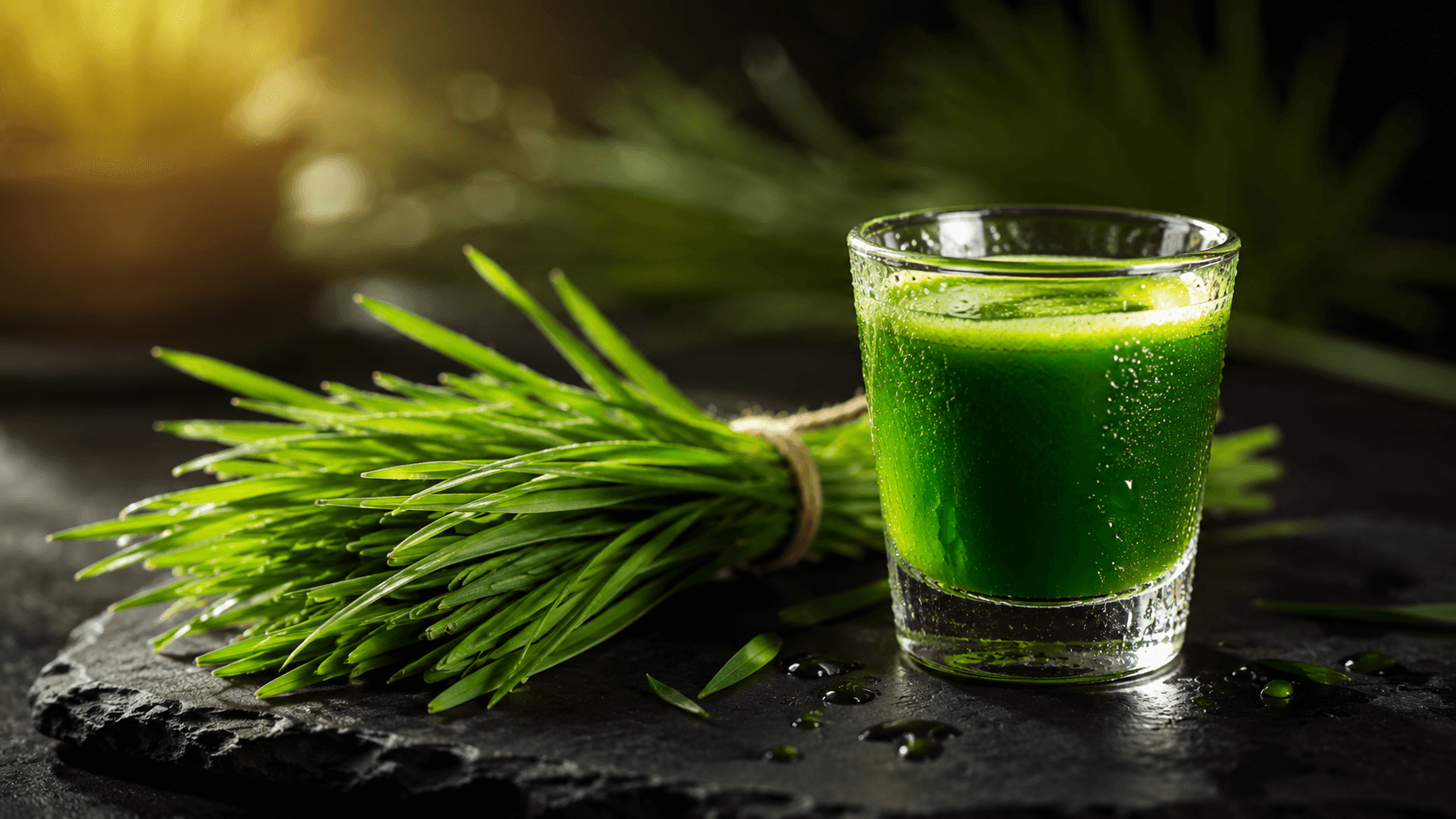
Wheatgrass is, in the most literal sense, concentrated sunlight. The young blades absorb solar energy and convert it into chlorophyll, minerals, enzymes, and amino acids at a density unmatched by anything else in the plant kingdom. Drinking a shot of wheatgrass juice — or a teaspoon of properly made juice powder dissolved in water — is closer to drinking liquid sunlight than any other food a person can put in their body. And once you understand the molecular biology behind why that's not just a poetic phrase, you understand why a sixty-year tradition of natural healers have considered wheatgrass one of the most important single foods on earth.
The case for wheatgrass has two parts. The first is the chlorophyll story — the deep biological resonance between the green pigment in plant cells and the red pigment in your own blood. The second is the practical density argument: wheatgrass juice contains so much vitamin, mineral, enzyme, and antioxidant content per ounce that even occasional use functions as a serious nutritional intervention. This article covers both, plus the working protocol that comes out of them — which, in my case, is intermittent rather than daily.
The Ann Wigmore tradition
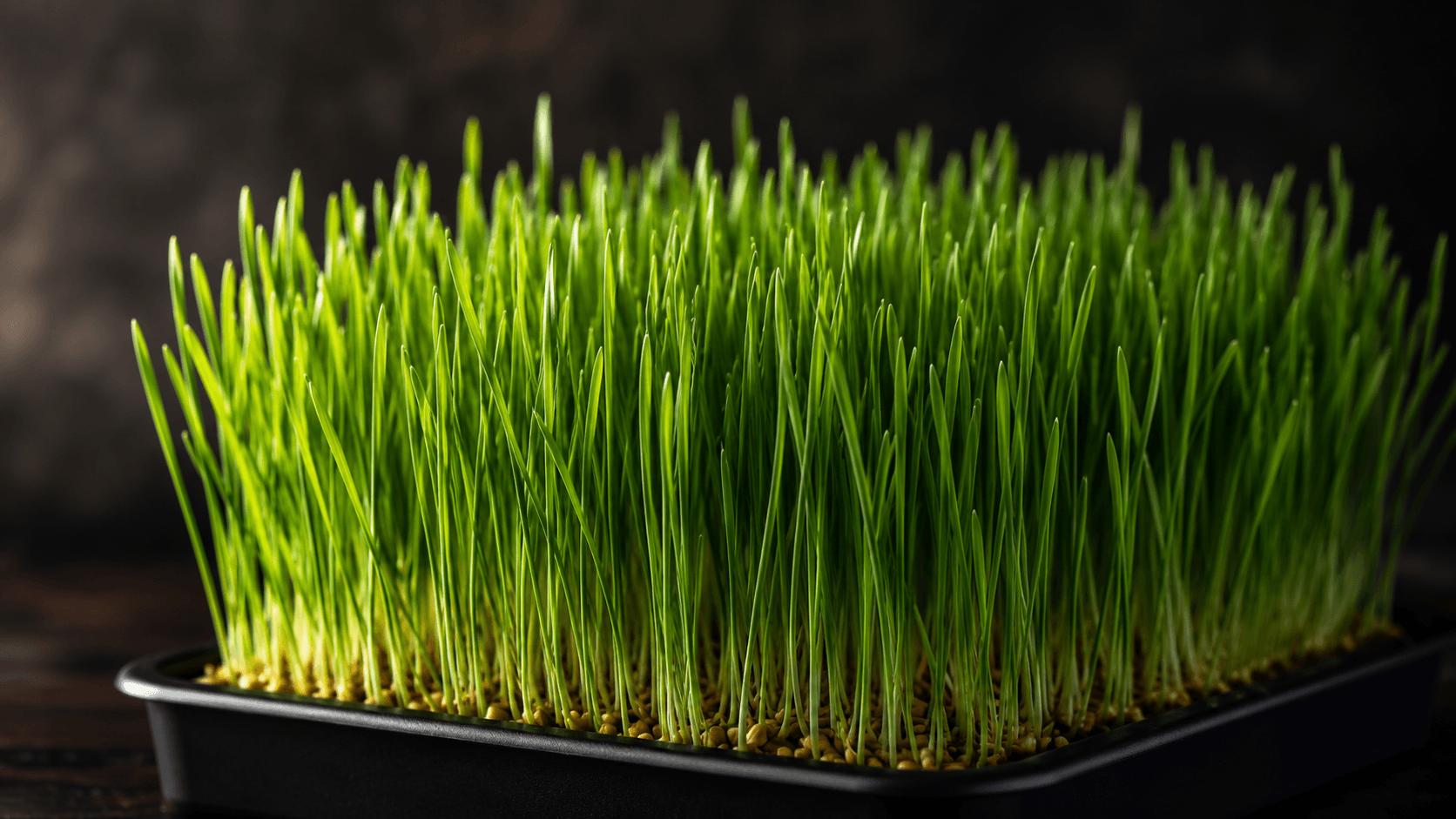
Modern wheatgrass therapy starts with one person: Dr. Ann Wigmore (1909–1994), the Lithuanian- American naturopath who, beginning in the 1940s, put wheatgrass on the map as the centerpiece of a "living foods" healing tradition. Wigmore founded what became the Hippocrates Health Institute, later the Ann Wigmore Foundation, and trained tens of thousands of people in growing wheatgrass at home and juicing it daily as the foundation of an uncooked, plant-based, chlorophyll-rich diet.
Her core philosophy compressed into a single sentence:
Food for Living is Living Food.
The position she taught for fifty years was that fresh, raw, enzyme-active plant food — wheatgrass at the center, paired with sprouts, fermented foods, and uncooked vegetables — could do what modern medicine could not. Wigmore claimed wheatgrass juice could be used in the treatment of a long list of serious conditions including "colitis, obesity, indigestion, ulcers," as well as more controversial claims around cancer, multiple sclerosis, diabetes, arthritis, and even gray hair reversal — her own gray, she reported, returned to its original brown after she committed to the diet fully. She believed wheatgrass juice could "double the red blood cell count in a matter of days" and described it as a "powerful detoxifier and liver and blood protector" whose enzymes and amino acids could "protect us from carcinogens like no other food or medicine can."
Those are her claims, presented in her own words. Mainstream medicine has spent the years since either ignoring or actively dismissing them. The Wigmore tradition has persisted regardless — partly because the people who actually adopted her practice found it works, partly because the chlorophyll biology underlying her thinking turns out, on inspection, to be real.
The chlorophyll story — green blood
The most striking biological fact about chlorophyll is its molecular structure. Chlorophyll and hemoglobin — the molecule that carries oxygen in your blood — are almost identical. Both are built on the same backbone called a porphyrin ring. The only meaningful difference is the metal atom sitting at the center of that ring:
- Hemoglobin — the same porphyrin ring, with an iron (Fe) atom at its center. Carries oxygen in animal blood.
- Chlorophyll — the same porphyrin ring, with a magnesium (Mg) atom at its center. Carries light energy in plant cells.
Dr. Mark Sircus emphasizes the magnesium-at-the-center point repeatedly: "the most powerful alkalizing foods on the planet are the ones that are highest in chlorophyll, with magnesium being the central atom in the chlorophyll molecule." Chlorophyll is, in essence, a magnesium delivery system as well as everything else it does — which is part of why chlorophyll-rich foods have such consistent effects on energy, alkalinity, and the nervous system. Sircus places wheatgrass, barley grass, kamut, alfalfa, oat grass, spirulina, and chlorella in a single category — green-food medicines that are "thousands of times more powerful than ordinary green vegetables because they are super concentrated in chlorophyll, alkaline minerals, rare trace minerals, vitamins, phyto-nutrients, and enzymes."
Wigmore's intuition about chlorophyll being structurally a close cousin of hemoglobin was correct. Her broader claim — that chlorophyll consumed orally is, in effect, "transformed into human blood" — is more poetic than biochemically literal, but the underlying point that chlorophyll-rich food rapidly improves blood quality, oxygenation, and energy is observable in anyone who has actually committed to it.
What wheatgrass actually does
The list is long enough that it sounds like marketing. The density of the food is the reason it isn't.
1. Alkalizing
The modern Western diet — coffee, sugar, processed grains, conventional animal protein — produces a chronic mild acidosis that the body buffers by pulling minerals (calcium, magnesium, potassium) out of bone and tissue. Chlorophyll-rich foods are the most powerful dietary alkalizers available. Wheatgrass juice's pH and mineral profile push the body's terrain back toward the slightly alkaline state most metabolic systems actually function best in.
2. Heavy metal and toxin detoxification
Chlorophyll is one of the most studied natural chelators of heavy metals and environmental toxins. It binds directly to mercury, lead, cadmium, and aluminum in the gut and prevents their reabsorption, escorting them out through stool. Wigmore called wheatgrass a "powerful detoxifier and liver and blood protector" and described it as something that "detoxifies the liver, bloodstream, and chemically neutralizes environmental pollutants." Sircus uses chlorophyll-rich green foods (along with chlorella and spirulina) as a central piece of his heavy-metal detox protocols.
3. Antioxidant load
Wheatgrass juice contains superoxide dismutase (SOD), one of the body's most important endogenous antioxidant enzymes, plus a high concentration of betacarotene, chlorophyll, and other polyphenols. Sircus describes wheatgrass and barley grass as exceptional free-radical scavengers that "reduce inflammation and pain." The antioxidant load per teaspoon is comparable to several servings of ordinary vegetables.
4. Vitamin and mineral density
Dr. Berg's product literature lists what a quality wheatgrass juice powder actually delivers: "vitamins A, C, and B- complex; minerals including iron, magnesium, calcium, potassium, zinc, and selenium; chlorophyll and amino acids; superoxide dismutase (SOD)." That is, in a single ingredient, most of a daily mineral and vitamin protocol — which is why wheatgrass historically functioned as a complete nutritional intervention for people without access to a varied diet.
5. Live enzymes
This is the part Wigmore emphasized most. Fresh wheatgrass juice contains hundreds of active enzymes that the body would otherwise have to produce internally. Cooking destroys them. Drying at high temperatures destroys them. The reason quality wheatgrass juice powder (not whole-plant powder) matters here is that it's made by juicing the fresh blades and dehydrating the juice at low temperatures — preserving the enzymes that would otherwise be destroyed by ordinary milling.
Why juice powder is the practical form
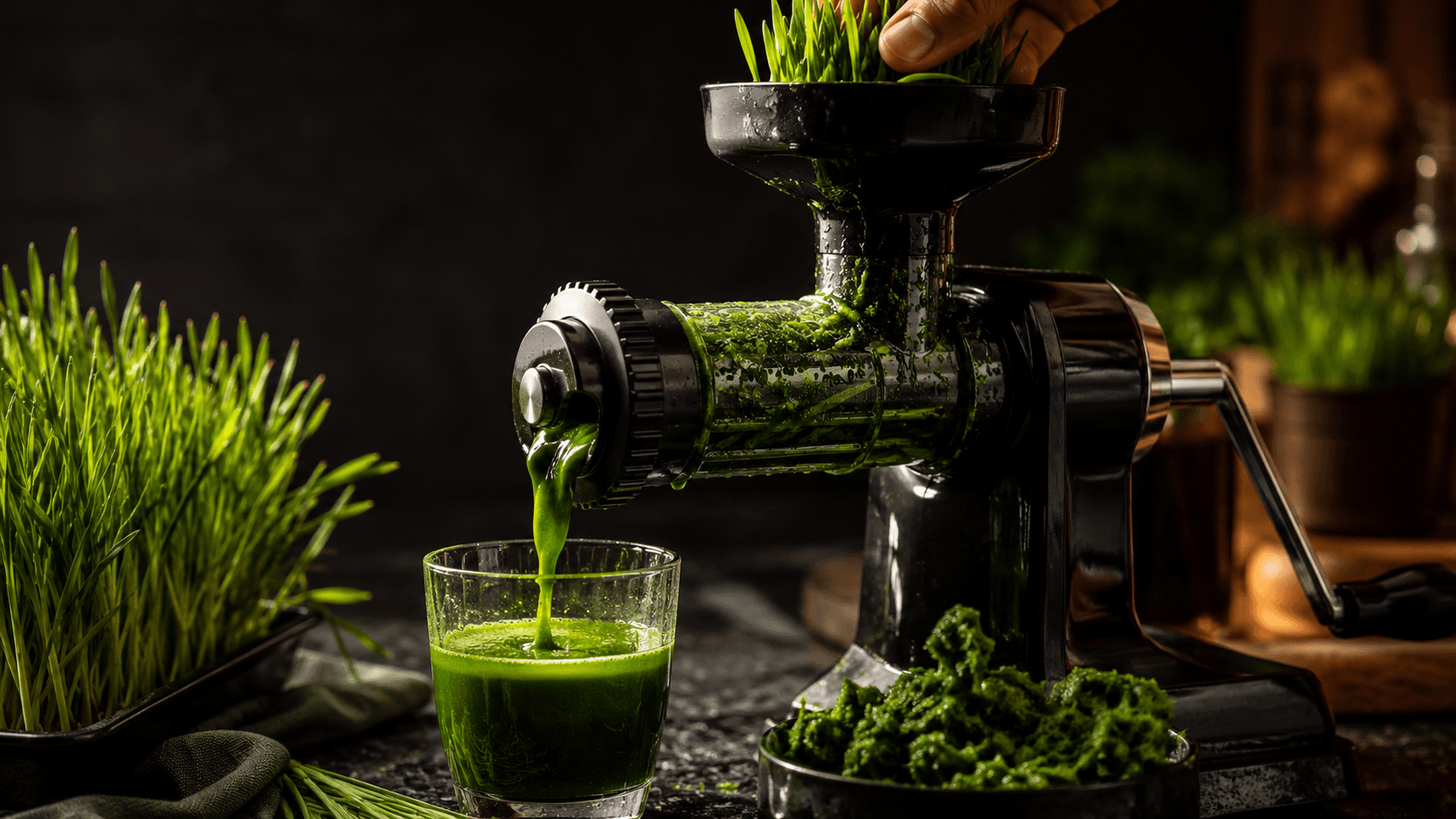
Wigmore's original protocol was fresh wheatgrass juice from home-grown trays, two ounces at a time, shot down quickly because the taste is famously intense. That protocol works. It is also, for most modern people, completely impractical — you need a special wheatgrass juicer (standard juicers don't extract well from grass), trays of growing wheatgrass on your counter, and a daily commitment to harvesting and juicing. The number of people who actually keep this up for years is small.
Dr. Berg's distinction between "wheatgrass powder" and "wheatgrass juice powder" is the key to making this accessible:
- Whole wheatgrass powder is the entire dried plant — leaves, fiber, the works — ground up. It's cheaper to produce, but the fiber content makes it gritty and difficult to digest, and the nutrient density is far lower per gram.
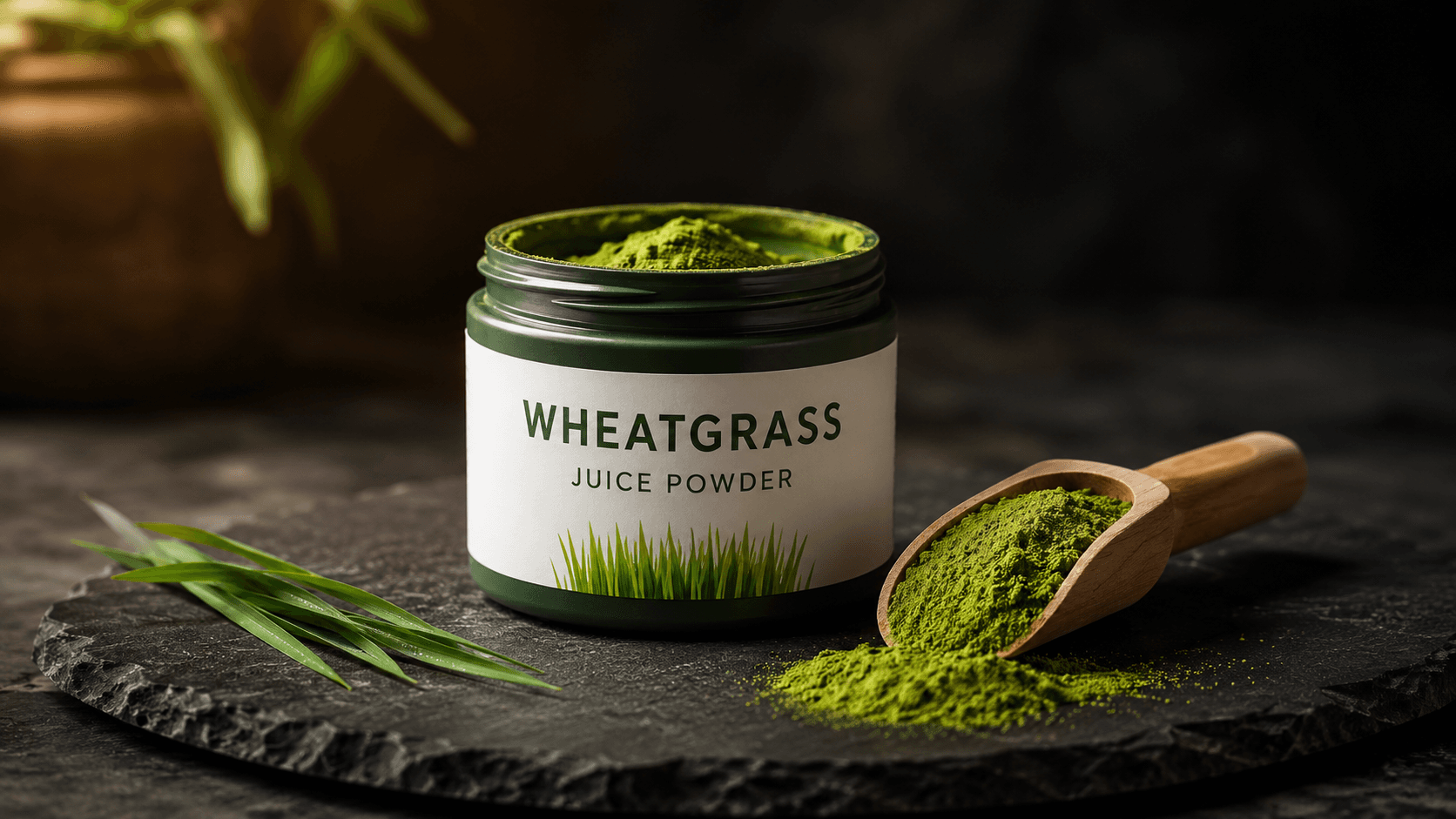
- Wheatgrass juice powder is made by juicing fresh wheatgrass first, then dehydrating the juice at low temperatures. It contains "only the juice," without indigestible fibers — far more concentrated, far more bioavailable, and far more closely matched to what Wigmore was actually recommending when she said "drink wheatgrass juice every day."
If you're going to take wheatgrass in a powdered form, it needs to be juice powder, not whole-plant powder. The difference in effect is dramatic.
The detox reaction — what to expect
One honest warning. Wheatgrass juice is aggressively detoxifying. Sircus notes plainly that "some people have difficulty tolerating wheatgrass juice perhaps because it is extremely detoxifying." The first few times you drink it, the body releases stored toxins faster than it normally would, and the result can include mild nausea, lightheadedness, headache, or a faint detox-y feeling for an hour or two afterward.
This is not allergy. It is not the wheatgrass disagreeing with you. It is your body doing the work it had not been doing. Start small — half a teaspoon of juice powder, taken with plenty of water, ideally in the morning — and give yourself time to adjust before increasing. If you push too hard too fast, you can have a genuinely unpleasant afternoon. Done gradually, the body acclimates and the reaction fades within a few weeks of regular use.
My approach — the intermittent powerhouse
I want to be honest: I don't take wheatgrass daily. Among the protocol I run — iodine, magnesium, potassium, boron, vitamin D, beets — wheatgrass is the one I treat as a powerful occasional intervention rather than a daily backbone. The reasons are practical: it's stronger than everything else on my counter, the taste is intense even in powder form, and the daily protocol I've already built covers most of the same minerals at a steadier pace.
What I actually do is keep a tub of Dr. Berg's wheatgrass juice powder in the kitchen and reach for it when I need it:
- After a stretch of bad eating. A travel week, a holiday weekend, a few days where the diet drifted — a serving of wheatgrass juice powder pulls the nutrient and chlorophyll levels back up quickly.
- Coming out of illness. The first few days after a cold or flu, when appetite is low and the body needs concentrated nutrition without bulk, a teaspoon of wheatgrass in water delivers what would otherwise take several proper meals.
- Short detox stretches. A week or two of once-daily wheatgrass, paired with extra water and the usual magnesium and potassium, as a periodic reset.
- As-recommended on the bottle. Berg's packaging gives a serving size; one or two servings a day is appropriate for someone using it as a daily supplement. For my use pattern — occasional rather than daily — one serving per use is plenty.
For someone who wants to commit to wheatgrass as a daily protocol in the Wigmore tradition, the path is straightforward: one to two servings of a quality juice powder daily, taken in the morning on a relatively empty stomach. The benefits compound over weeks and months, not days.
How to start
- Half a serving for the first week. Mixed in a full glass of water. Drink in the morning on a relatively empty stomach for the strongest effect; with food if you're sensitive.
- Increase slowly. A full serving the second week, twice a day after that if you want a more intense protocol. Watch for the detox-reaction signs — back off if they're sharp.
- Pair with plenty of water. Chlorophyll mobilizes toxins; water carries them out. Under-hydrated wheatgrass days are the ones with the worst detox reactions.
- Buy juice powder, not whole-plant powder. The difference in effect is large and the difference in price is small. If the label doesn't specifically say "juice powder," it isn't.
- Don't overheat it. Wheatgrass juice powder's enzyme content is heat-sensitive. Stir into cool or room-temperature water, never hot.
What I actually take
Closing
Wheatgrass is one of the rare foods where the romance — "liquid sunlight," "green blood," "the food the body recognizes as medicine" — is backed up by the actual chemistry. The porphyrin ring shared with hemoglobin, the magnesium at the center of the chlorophyll molecule, the dense load of vitamins and minerals and enzymes in a single ounce of juice — these are real, and they explain why a sixty-year tradition of natural healers, starting with Ann Wigmore, have treated this food as something close to sacred.
Whether you use it daily in the full Wigmore tradition or occasionally as a powerful tool kept in the cupboard for when it's needed, wheatgrass earns its place in a serious health protocol. It is not a magic bullet. It is concentrated sunlight, in powder form, available on demand. Treated with respect — used carefully, started slowly, paired with magnesium, potassium, and beets — it does work that almost nothing else in the kitchen can do.
Sources & further reading