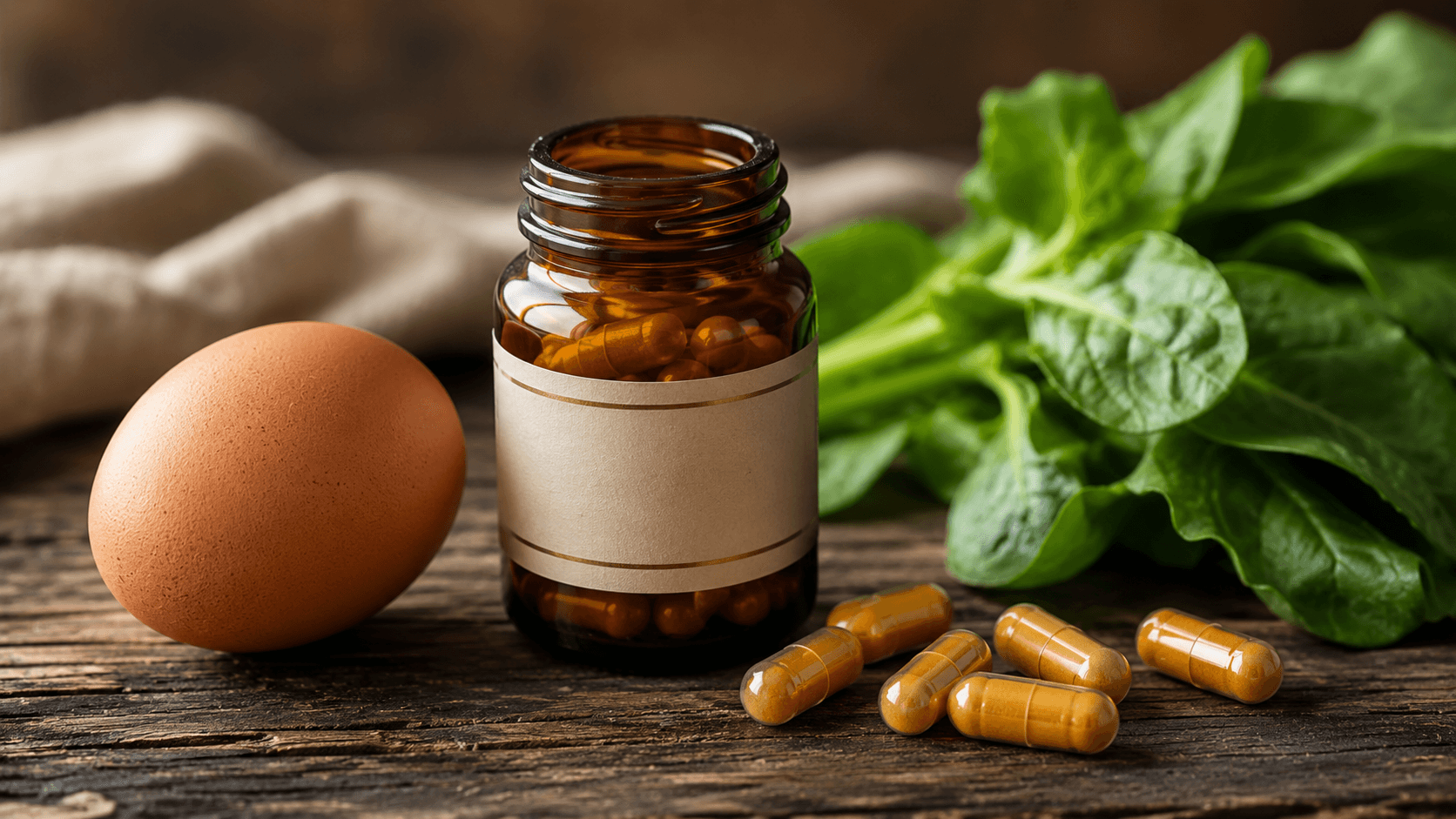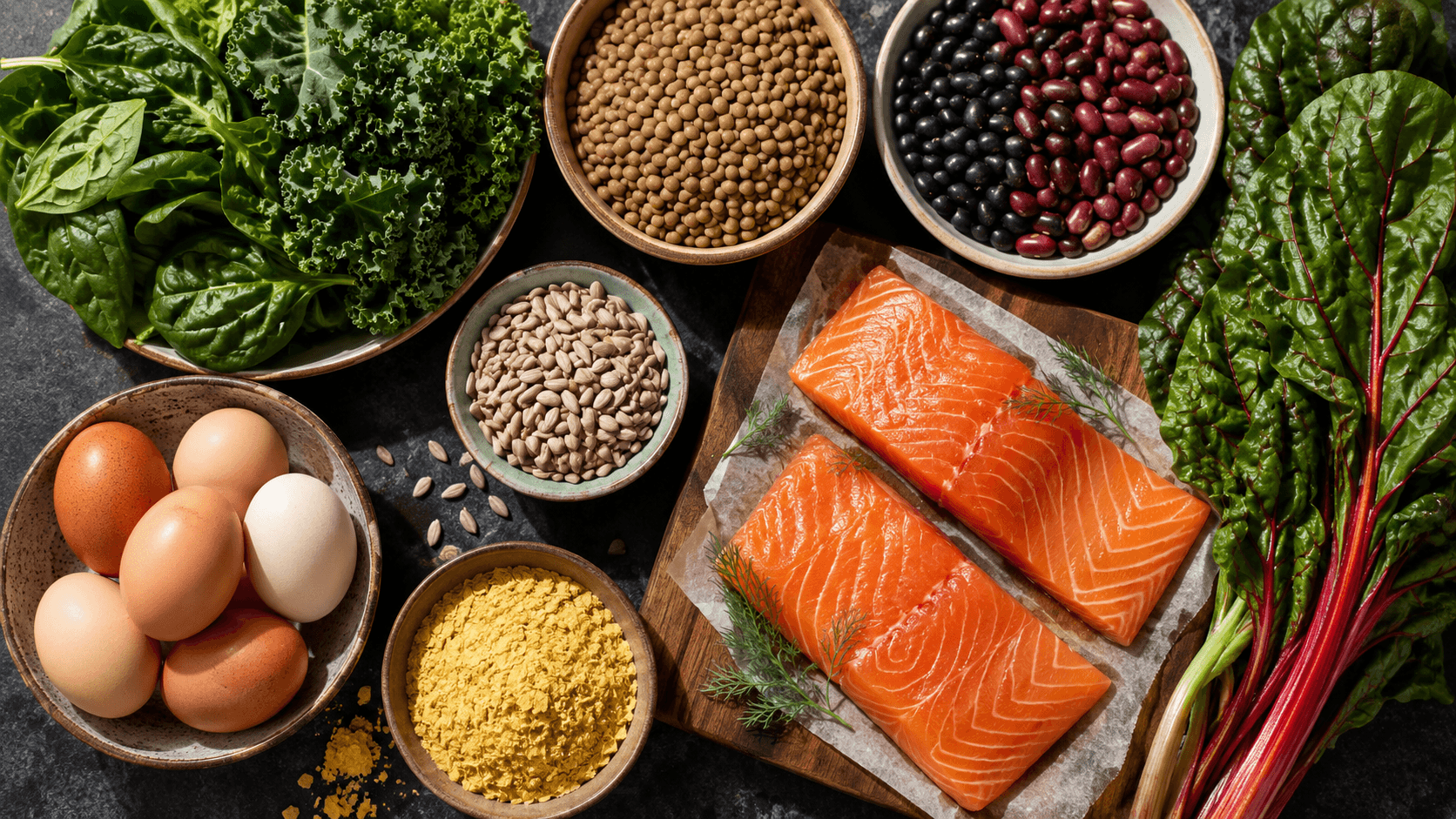
B vitamins are the metabolic engine. Eight separate molecules, all water-soluble, all working together — which is why they're called the B "complex" — to power energy production, nervous system function, hormone synthesis, DNA repair, neurotransmitter production, and the methylation reactions that regulate gene expression across your entire body. Run short on B vitamins for long enough, and almost everything starts to drag. Run adequate on them, and a substantial fraction of the chronic low-grade fatigue, brain fog, mood instability, and metabolic dysfunction the modern world treats as baseline simply lifts.
The case for B vitamins is mostly uncontroversial. The interesting question is how to get them. The mainstream answer is a daily synthetic B-complex pill — convenient, cheap, theoretically complete. The honest answer turns out to be more nuanced, because (a) synthetic folic acid in B-complex supplements is genuinely problematic for the 20 to 40 percent of people who carry an MTHFR gene variant, (b) the synthetic forms of several B vitamins are less bioavailable than the food forms, and (c) the right whole foods — particularly eggs, organ meats, fish, and grass-fed beef — deliver the full B-complex with their natural cofactors and methylated forms intact. This article covers what each B vitamin does, the methylation pathway that ties them together, the MTHFR / folic acid issue that doesn't get nearly enough discussion, the food-first protocol I run myself, and where nutritional yeast fits in.
Note: B12 deserves its own article, and will get one. It is the most complex of the eight, has the largest deficient population (older adults, vegans, people on certain medications), and the form question (methylcobalamin vs. cyanocobalamin vs. hydroxycobalamin) is detailed enough to warrant a dedicated treatment. This piece introduces B12 alongside the rest of the complex; a companion article will follow.
The eight B vitamins, briefly
Each one does several things. The headlines:
B1 — Thiamine
The Krebs-cycle catalyst. B1 is essential for converting carbohydrates into ATP, the energy currency of the cell. Without adequate thiamine, glucose metabolism fails and neurological problems follow. Severe deficiency causes beriberi (a wet/dry neurological condition that was historically common in white-rice- dependent populations) and Wernicke-Korsakoff syndrome in heavy drinkers. Sub-clinical deficiency — which is far more common — shows up as fatigue, brain fog, mood instability, and a strange sensitivity to noise and stress. Dr. Derrick Lonsdale's work argues that high sugar consumption depletes thiamine at a rate the modern Western diet can't keep up with, which is one of the more under-discussed deficiencies of our time.
Top sources: pork, sunflower seeds, beans, whole grains, asparagus, and trout.
B2 — Riboflavin
The "yellow" vitamin (you've seen it turn urine bright yellow when you take a B-complex pill — that's riboflavin being excreted). Required for energy production at the mitochondrial level and for the regeneration of glutathione, the body's master antioxidant. Deficiency shows up as cracked lips at the corners of the mouth, sore throat, light sensitivity in the eyes, and skin issues.
Top sources: eggs, dairy, liver, leafy greens, almonds.
B3 — Niacin
The cholesterol vitamin. B3 is required for over 400 enzymatic reactions in the body, plays a central role in glycolysis and the Krebs cycle, and is the precursor to NAD+ and NADH, the coenzymes responsible for energy production at the cellular level. Severe deficiency causes pellagra — the "four Ds" (dermatitis, diarrhea, dementia, death) — historically common in corn-dependent populations of the American South before the connection was understood. High-dose niacin (1,000–3,000 mg daily) has a documented effect on cholesterol panels (raises HDL substantially, lowers LDL and triglycerides), though it produces the famous "niacin flush" — a temporary skin reddening as histamine is released. Niacinamide (non-flush form) is widely used for joint and skin support.
Top sources: salmon, chicken, beef, tuna, peanuts, brown rice.
B5 — Pantothenic Acid
The adrenal vitamin. B5 is required for the synthesis of coenzyme A, which is involved in essentially every metabolic pathway including the synthesis of cortisol and other adrenal hormones. Chronic stress depletes B5 at a rate ordinary diets struggle to keep up with — which is why functional medicine practitioners often point to B5 for adrenal fatigue support.
Top sources: liver, egg yolks, mushrooms, avocados, salmon, sweet potatoes.
B6 — Pyridoxine
The neurotransmitter vitamin. B6 is the cofactor for more than 100 enzymatic reactions including the synthesis of serotonin, dopamine, GABA, and the conversion of tryptophan into niacin. Also critical for methylation (covered below) and for the metabolism of amino acids. Deficiency contributes to depression, anxiety, irritability, and PMS in women.
Top sources: salmon, beef, chicken, banana, potatoes, chickpeas.
B7 — Biotin
The "hair, skin, and nails" vitamin — though the case is broader than that. B7 is required for fatty acid synthesis, gluconeogenesis, and amino acid metabolism. Most people get adequate biotin from food; clinical deficiency is rare unless you eat large amounts of raw egg whites (which contain avidin, a protein that binds biotin and prevents absorption). The hair-skin-nails marketing is somewhat overblown but the underlying metabolic role is real.
Top sources: egg yolks, liver, salmon, nuts, sweet potatoes.
B9 — Folate
The DNA vitamin. Folate is required for DNA synthesis and repair, fetal neural tube development (which is why pregnant women are told to take folate aggressively), and the methylation pathway. The folate / folic acid distinction is one of the most consequential teaching points in the entire B-vitamin conversation — see the dedicated section below.
Top sources: liver, leafy greens (spinach, kale, romaine), asparagus, lentils, beans, broccoli, avocado.
B12 — Cobalamin
The most complex of the B vitamins — and the only vitamin in nature that contains a metal (cobalt, hence the name "cobalamin"). B12 is essential for red blood cell formation, nervous system function, DNA synthesis, and methylation. Deficiency causes megaloblastic anemia, peripheral neuropathy, cognitive decline that can mimic dementia, and methylation pathway dysfunction. B12 is essentially only available in usable form from animal foods — meat, fish, eggs, dairy. The plant sources marketed as B12 (algae, spirulina, fermented foods) provide mostly pseudo-cobalamin, a biologically inactive analogue — see the spirulina article for the full breakdown of why this matters. A dedicated B12 deep-dive article is coming.
Top sources: beef liver (off the charts), beef, salmon, eggs, dairy, sardines, clams.
Methylation — why B vitamins matter more than the textbook says
Most of the deepest health benefits of B vitamins trace back to a single biochemical process called methylation. Methylation is the attachment of a small chemical group (a methyl group — one carbon, three hydrogens) to other molecules throughout the body. It happens roughly a billion times per second in a healthy adult and underlies:
- Gene expression regulation — methyl groups silence and activate genes; this is the foundational layer of epigenetics
- Neurotransmitter synthesis — serotonin, dopamine, melatonin, and norepinephrine all require methylation for their production
- Detoxification — many hormones and environmental chemicals are methylated by the liver for elimination
- DNA synthesis and repair
- Homocysteine clearance — elevated homocysteine is an independent cardiovascular risk factor; methylation converts it back into methionine
- Energy production — creatine, CoQ10, and carnitine all require methylation in their synthesis
The three B vitamins most directly involved in methylation are B6, B9 (folate), and B12. When all three are adequate and in the right forms, methylation runs smoothly. When any of them are deficient — or when one is in the wrong form, as discussed below — methylation slows, and downstream symptoms accumulate.
A surprising amount of what is called "chronic fatigue," "anxiety," "depression," "brain fog," or "just getting older" is, on closer inspection, methylation pathway dysfunction.
The folate vs. folic acid problem — and the MTHFR gene
Here is the single most consequential teaching point in this article. Folate and folic acid are not the same thing, and the distinction has serious implications for a significant fraction of the population.
- Folate is the natural form found in food — particularly leafy greens, liver, and legumes. Your body uses it directly.
- Folic acid is a synthetic, laboratory-produced form that does not exist in nature. It was developed in 1943 because it was cheaper and more stable than real folate. It is the form added to fortified grains (bread, cereal, pasta in most Western countries) and the form in nearly every cheap multivitamin and B-complex pill on the market.
- Methylfolate (5-MTHF) is the biologically active form your body actually uses for methylation. Real folate from food and synthetic folic acid both need to be converted into methylfolate to be useful. The enzyme that does that conversion is called MTHFR (methylenetetrahydrofolate reductase).
Here is where it gets serious. The MTHFR C677T gene variant reduces the activity of this conversion enzyme by 30–70% depending on whether you carry one or two copies. The variant is common — present in roughly 20 to 40 percent of white and Hispanic populations in the United States, and at variable rates in other ethnic groups. People with this variant struggle to convert synthetic folic acid into usable methylfolate.
The practical implications:
- Unconverted folic acid accumulates in the blood in people with the variant, and may interfere with normal folate metabolism.
- The cheap B-complex pill at the drugstore — with synthetic folic acid — may be actively counterproductive for a third of the people taking it.
- Symptoms of "unmethylated" folate include anxiety, depression, mood instability, elevated homocysteine, and cardiovascular risk elevation.
- The solution is straightforward: get folate from food (where it's the natural form), or if you supplement, use methylfolate (5-MTHF) — sometimes sold as L-methylfolate, Metafolin, or Quatrefolic — not folic acid. Read the label.
This is one of the clearest cases of the alt-health space being more right than the mainstream. Most conventional medical advice still treats folic acid as equivalent to folate. It isn't. The MTHFR variant is well-documented in the genetics literature. The functional-medicine community has been on this for over a decade. The mainstream is slowly catching up.
The food-first case — why whole foods beat B-complex pills
A B-complex pill is convenient. It is also, for most people, a substantially worse way to get B vitamins than eating the right foods. The reasons:
- Form quality. Cheap synthetic B vitamins use the wrong forms. Folic acid instead of methylfolate. Cyanocobalamin (which contains a cyanide molecule, released when the body processes it — small amounts but unnecessary) instead of methylcobalamin. Pyridoxine hydrochloride instead of pyridoxal-5- phosphate (the active B6). Real food delivers the active forms naturally.
- Cofactor matrix. Food delivers B vitamins alongside the minerals, amino acids, and fats the body needs to use them. Egg yolks have B vitamins and the cholesterol that helps absorb the fat-associated ones. Liver has every B vitamin plus the iron and copper that work with them. Pills give you the vitamin in isolation — which the body handles less efficiently.
- Bioavailability. Whole food forms are generally more bioavailable than synthetic versions, even when the synthetic version is in the active form.
- Saturation kinetics. Water-soluble vitamins are absorbed in modest doses. A large synthetic dose is mostly wasted (this is the famous "expensive urine" effect with high-dose B-complex pills). Food delivers them at the doses the body was made to handle.
The exceptions where supplementation makes sense:
- Vegans and strict vegetarians need to supplement B12 from a non-food source (animal foods are the only reliable dietary B12 source).
- Adults over 50 often have declining stomach acid and intrinsic factor production, which reduces B12 absorption from food. Supplementation — ideally sublingual methylcobalamin — becomes increasingly necessary with age.
- People on PPIs (Prilosec, Nexium, etc.) — these acid blockers significantly reduce B12 absorption.
- People on metformin — the diabetes drug depletes B12 and B6 over time.
- Heavy drinkers — alcohol depletes thiamine especially, plus folate and B12.
- People with known MTHFR variants may benefit from methylfolate supplementation specifically.
- Pregnant women need substantially more folate than diet alone usually provides — but use methylfolate, not folic acid, especially given the MTHFR prevalence.
The top B-vitamin foods
A short list of foods that genuinely deliver. The density and the form quality both matter:
- Beef liver. The single most B-vitamin- dense food on earth. Off the charts for B12, B2, B3, B5, B6, B9, and B7. Eating 3 oz of liver once a week essentially covers the entire B complex by itself. (Liver is also high in choline, vitamin A, iron, and copper — the most complete single food in the human diet.)
- Grass-fed beef. Strong source of B12, B3, B6, and B2. The grass-fed version delivers a better fatty acid profile alongside the B vitamins (see the beef tallow article for the grass-fed case).
- Eggs (yolks especially). One of the most complete single foods. B2, B5, B7, B12, and choline (which works alongside the methylation B's). One of the cheapest and most accessible B-vitamin foods available.
- Salmon. Exceptionally high in B12, B3, and B6, plus a meaningful dose of B5. A 3.5 oz serving of salmon delivers over 100% of daily B12 on its own.
- Sardines and other small oily fish. Similar B-vitamin profile to salmon, plus the bone- content calcium and omega-3 benefits.
- Cod and other lean fish. Moderate B12 and B6 sources. Not as dense as salmon but a real contributor in a varied diet.
- Dairy (especially fermented). Real B2, B12, and (in fermented forms) B vitamins produced by the bacterial cultures. Yogurt, kefir, and aged cheeses are particularly good.
- Leafy greens. The primary plant source of folate (B9) — spinach, kale, romaine, arugula, beet greens.
- Legumes. Lentils, chickpeas, and black beans for folate, B1, and B6.
- Avocado. Folate, B5, and B6 in meaningful amounts. One of the better plant sources of B5.
My approach
Almost entirely food-based. My B-vitamin protocol is just the foods I eat anyway — there is no separate "B-vitamin time" in my day, no pill to remember.
- Eggs. One of the most consistent B-vitamin foods in my diet. B2, B5, B7, B12, plus choline. Cheap, available everywhere, and they pair with almost any meal of the day.
- Grass-fed beef. Real B12, B3, B6, B2. The grass-fed source quality matters (see the beef tallow article for the grass-fed-vs-grass-finished distinction). A few times a week is enough to keep B12 and the other animal-source B's where they should be.
- Salmon and cod. Both make regular appearances. Salmon is one of the most concentrated B12 foods in the entire human diet — a single serving covers daily requirements on its own. Cod is leaner but still contributes meaningfully.
- Tangy Tangerine. A half-serving daily (also covered in the boron article) — Dr. Joel Wallach's Youngevity comprehensive trace-mineral and vitamin drink, which includes a balanced B-vitamin contribution alongside the trace minerals. Not a substitute for the food sources, but insurance against any gaps.
Notably absent: a daily B-complex pill. With this food coverage, there is no real gap to fill. If lab work someday revealed a deficiency I couldn't address through diet — or if I were eventually in the older-adult / declining-stomach-acid bracket — I would add a quality methylated B-complex (methylfolate, methylcobalamin, P-5-P) on top of the food protocol. For now, food does the job.
Nutritional yeast — what it is and how people use it
This section is informational — not part of my personal protocol, but worth covering because nutritional yeast comes up in almost any B-vitamin conversation, and the way people use it isn't always obvious.
What it actually is
Nutritional yeast (often called "nooch" by people who use it regularly) is deactivated Saccharomyces cerevisiae — the same species as baker's yeast and brewer's yeast, but heat-killed during processing so it doesn't ferment. It comes as yellow flakes or as tablets, has a savory cheesy umami flavor, and is naturally rich in protein and B vitamins. Most commercial nutritional yeast is fortified with additional B vitamins on top of what's naturally present, including methylcobalamin (B12) — one of the few accepted vegan-friendly B12 sources.
Important not-to-confuse-it-with: baker's yeast (live, used for leavening bread) and brewer's yeast (a byproduct of beer brewing, similar nutritional profile but with a more bitter flavor). Nutritional yeast is deactivated, doesn't leaven, and is specifically grown and dried for food use.
B vitamin content
A typical 2-tablespoon serving of fortified nutritional yeast delivers:
- ~5–8 grams of complete protein
- All eight B vitamins — typically at 40–200% of daily requirement per serving for the major B's
- B12 (methylcobalamin) at meaningful levels in fortified versions — important for vegans, since this is one of the few non-animal sources of real B12 (not pseudo-B12)
- Trace minerals: zinc, selenium, magnesium
Dr. Berg's nutritional yeast specifically uses methylcobalamin rather than cyanocobalamin, which is the form preference outlined above.
How people actually use it
The savory, cheesy umami flavor lends itself to a specific family of culinary applications:
- On popcorn. The single most popular use. Replaces parmesan and gives popcorn an addictive cheesy-savory finish. Sprinkle on while the popcorn is still hot.
- On eggs (scrambled, omelets, fried). A sprinkle on top adds parmesan-like umami depth that plays beautifully with egg flavor.
- As a parmesan substitute on pasta. Grated on at the end the same way you'd use real parm. Vegan cooks rely on this; non-vegans use it for variety and added B vitamins.
- On roasted vegetables. Tossed onto broccoli, cauliflower, Brussels sprouts, asparagus, or sweet potatoes after they come out of the oven. The flakes cling to the slight surface oil and add a savory crust.
- In creamy sauces and dressings. A tablespoon in Caesar dressing, alfredo-style sauces, or vegan "cheese" sauces. Provides the cheesy backbone without dairy.
- Stirred into soups, stews, and chili. Adds umami depth and a slight thickening effect.
- On avocado toast. Sprinkled as a finishing seasoning along with salt and pepper.
Baking with nutritional yeast
Yes, nutritional yeast is used in baking — but only in savory baking. The cheesy umami flavor works in:
- Vegan "cheesy" crackers — many homemade vegan cracker recipes use nutritional yeast as the primary flavoring.
- Savory scones and biscuits — added to the flour mixture for a parmesan-like flavor in cheddar-style biscuits or rosemary-and-cheese scones (vegan versions).
- Bread toppings and crusts — sprinkled on focaccia, pizza crust edges, or breadstick tops for a cheesy finish.
- Casserole and gratin toppings — mixed with breadcrumbs and herbs to create a savory crust on baked vegetable dishes, mac-and-cheese-style casseroles, or shepherd's-pie-style toppings.
- Savory crackers and breading — blended into the breading mixture for baked "Parmesan-crusted" chicken, fish, or vegetables.
It is not used in sweet baking — cakes, cookies, muffins, sweet breads. The savory flavor conflicts with sugar.
Choosing quality nutritional yeast
- Look for B12 in the methylcobalamin form if it's fortified.
- Non-GMO is preferable — most commercial yeasts are GMO-derived; the better brands (Bragg, Sari Foods, Dr. Berg's brand) are specifically non-GMO.
- Flakes for flexibility, tablets for convenience. Most home use is flakes.
- Store sealed in a cool, dry place. Doesn't need refrigeration but stays freshest in a cabinet rather than near the stove.
How to know if you're deficient
Most modern people with B-vitamin deficiencies don't present with classical clinical pictures (pellagra, beriberi, megaloblastic anemia). Sub-clinical deficiency is much more common and shows up as:
- Fatigue and low energy
- Brain fog and difficulty concentrating
- Mood instability, irritability, anxiety, depression
- Numbness or tingling in extremities (B12 especially)
- Cracked lips at the corners of the mouth (B2)
- Memory issues and cognitive slowing
- Heart palpitations
- Hair thinning, brittle nails (B7)
- Elevated homocysteine on a blood test (methylation B's)
The most useful lab tests if you suspect a problem: serum B12, methylmalonic acid (MMA), homocysteine, RBC folate. Standard "B12" tests can show normal levels even when functional B12 is low, which is why MMA is increasingly recommended as a more accurate marker.
How to start
- Eat eggs daily if you can. One of the most complete and accessible B-vitamin foods, plus choline for methylation support.
- Add salmon or sardines twice a week. Among the highest B12 and B6 foods available.
- Eat liver, even occasionally. 3 oz of beef liver once or twice a month essentially fills any B-vitamin gap by itself. Pâté is the easy entry point for people who don't love organ meat flavors.
- Add leafy greens daily. The primary plant source of real folate. Spinach in eggs, kale in soups, romaine in salads.
- If you supplement, use methylated forms. Methylfolate (5-MTHF), methylcobalamin, pyridoxal-5- phosphate. Read the label — most cheap B-complex pills use the wrong forms.
- Avoid synthetic folic acid where possible. This is harder than it sounds because folic acid is in virtually all fortified grains in the US. The mainstream supplement industry has been slower to switch to methylfolate than the science warrants.
- Watch for the special-case situations — vegan, older adult, PPI use, metformin use, heavy drinking. Each of these warrants targeted supplementation on top of dietary improvements.
Closing
The B vitamins are the most important vitamins almost nobody thinks about strategically. Most people either ignore them entirely or take a cheap synthetic B-complex pill that is — for a meaningful fraction of the population — actively counterproductive due to the folic acid problem. The genuinely high-leverage move is neither of those. It's eating the foods that deliver the active forms naturally, alongside the cofactors the body needs to use them.
Eggs, grass-fed beef, salmon, occasional liver, leafy greens, dairy, legumes. With that food coverage, the B-complex is largely taken care of — and the methylation pathway that ties them together runs the way it was designed to.
Combined with adequate magnesium, iodine, vitamin D, and the rest of the mineral foundation, a real food- based B-vitamin intake completes most of the micronutrient infrastructure the modern Western diet tends to leave half-finished. The dedicated B12 deep-dive article follows.
Related reading on this site: the natural testosterone article covers B vitamins as part of the steroid hormone synthesis cofactor stack — particularly B6 and B12. The women's cycle article covers the Wyatt BMJ meta-analysis on B6 (P5P) for PMS symptoms and the broader B-vitamin depletion caused by long-term birth control pill use.
Sources & further reading
- Dr. Berg — Nutritional Yeast: The Amazing Source of B Vitamins
- Dr. Berg — Methylcobalamin vs Cyanocobalamin: Which Is Better
- Servy & Menezo, 'The Methylenetetrahydrofolate Reductase (MTHFR) variants: Impact on Cardiovascular and Mental Health' — multiple reviews
- Active Folate Versus Folic Acid: The Role of 5-MTHF (Methylfolate) in Human Health — PMC, 2022
- Exploring neuropsychiatric manifestations of vitamin B complex deficiencies — Frontiers in Psychiatry, 2025
- Lonsdale, 'Thiamine and Magnesium Deficiencies: Keys to Disease' — research and book references on the thiamine angle