Garlic is the most powerful natural medicine that almost everyone already owns. It is antibacterial against a range of pathogens that includes hospital-grade superbugs like MRSA. It is antiviral at a documented potency that cuts common-cold incidence by more than half in controlled trials. It is antifungal against the same yeast and dermatophyte infections that pharmaceutical antifungals struggle to clear cleanly. It is antiparasitic. It lowers blood pressure, supports cardiovascular function, and binds and removes environmental toxins from the body. And it costs about fifty cents a bulb.
The case for garlic is one of the few in the entire natural-medicine space where the traditional folk wisdom and the peer-reviewed research are saying exactly the same thing. People have been using garlic for infection, immunity, and general health for at least 5,000 years — and modern research, much of it published in the last two decades, has confirmed almost every major traditional claim. This article covers what garlic actually does, the single biggest preparation mistake most people make (the 10-minute rule), the flu bomb recipe I drink at the first sign of any sickness, and a half-dozen practical ways to get more of it into your daily life.
The allicin story — and the 10-minute rule
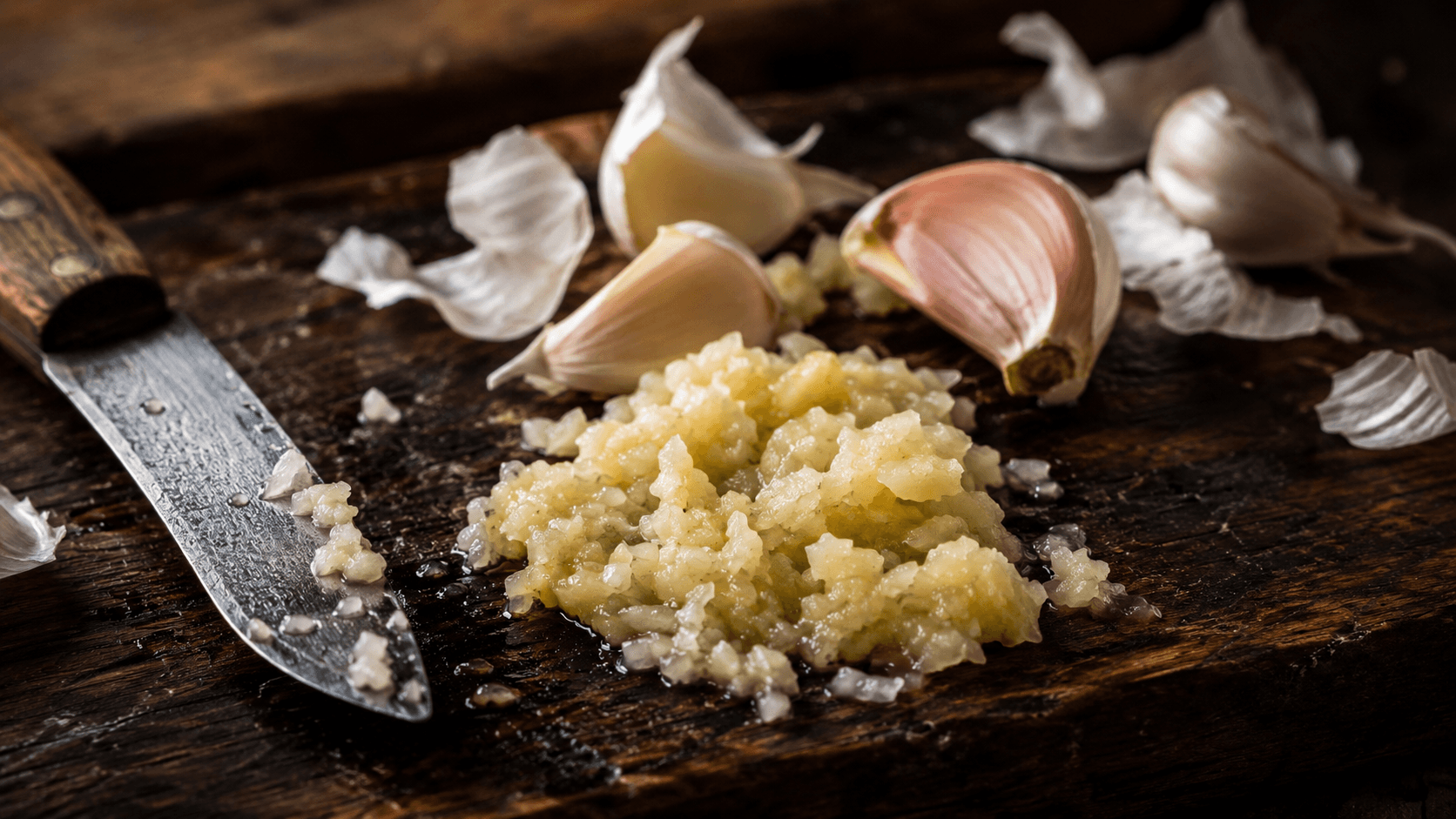
Almost everything that makes garlic medicinal comes down to one compound: allicin. And the most consequential thing to know about garlic is that allicin does not exist in a whole, intact clove. It is produced — created from scratch — only when you crush, chop, or otherwise damage the clove.
The chemistry: garlic contains two precursors held in separate cellular compartments. One is alliin, a stable sulfur-containing amino acid. The other is an enzyme called alliinase. When the clove is intact, these two never meet. The moment you crush the clove, the compartments break open, alliin meets alliinase, and the enzymatic reaction produces allicin within seconds.
The conversion takes about 10 minutes to peak. This is the single most important practical fact in the entire article:
Crush or chop the garlic. Wait at least 10 minutes. Then eat it or add it to your dish.
Most people violate this rule constantly. They crush a clove and immediately throw it into a hot pan, or they buy pre-minced garlic that has been sitting in oil for weeks. In both cases, most of the allicin potential is lost — either by heat denaturing the enzyme before the reaction can complete, or by allicin's natural breakdown over time. The 10-minute rest is what determines whether you are eating a flavor agent or a medicine.
One important nuance from Dr. Eric Berg: "Cooking garlic doesn't affect its medicinal properties. The health-promoting compounds found in garlic are heat-resistant up to 212 degrees F (100 degrees C) for as long as 20 minutes" — if you've done the 10-minute rest first. Crush, wait, then cook. The enzymatic reaction has to complete before the heat hits. Done in that order, cooked garlic retains most of its medicinal value. Done in the wrong order — into the pan straight from the press — much of it is lost.
The antibacterial case — including MRSA
Garlic is broad-spectrum. The peer-reviewed research documents activity against both gram-positive and gram-negative bacteria, including:
- Escherichia coli
- Salmonella species
- Staphylococcus aureus — including, importantly, methicillin-resistant Staphylococcus aureus (MRSA), the hospital superbug that has become a major public-health concern as conventional antibiotics lose effectiveness against it
- Streptococcus pyogenes — the bacterium behind strep throat
- Helicobacter pylori — the bacterium responsible for most stomach ulcers
- Klebsiella, Pseudomonas, and a wide range of other clinical isolates
The MRSA point is worth lingering on. Multiple peer-reviewed studies have documented in-vitro antibacterial activity of crude garlic extract against clinical MRSA isolates — bacteria that have developed resistance to every front-line pharmaceutical antibiotic. Allicin still kills them. The mechanism is part of why this is true: pharmaceutical antibiotics typically target one specific bacterial process, which gives the bacterium one specific thing to develop resistance against. Allicin attacks multiple bacterial targets simultaneously — enzymes, energy production, cell membrane integrity — which makes resistance development much harder. Bacteria have not adapted to allicin in 5,000 years of human consumption. They are not going to.
The antiviral case — the Josling cold study
The single most-cited piece of research on garlic and the common cold is a controlled trial conducted by Peter Josling, published in Advances in Therapy. The design was simple: 146 volunteers, taken over a 90-day winter period, randomized to either a daily garlic supplement or a placebo. The results:
- Placebo group: 65 colds over the 90-day study period.
- Garlic group: 24 colds — a 63% reduction in cold incidence.
- People in the garlic group who did get colds recovered significantly faster than the placebo group — both shorter duration and milder symptoms.
For a daily food intervention with no side effects, those are remarkable numbers. The mechanism, per Dr. Berg's summary of the research, is that allicin "may help prevent viruses from entering cells, which supports the immune system against viral infections." More specifically, allicin disrupts viral envelope proteins, blocks viral entry and fusion with host cells, and suppresses viral replication once a cell has been infected. The viral targets that have been studied include rhinoviruses (the common cold), influenza, herpes simplex, and a range of others.
The antifungal case
Garlic is one of the few foods with documented broad-spectrum antifungal activity. It is particularly effective against:
- Candida albicans — the yeast behind oral thrush, candida overgrowth, and recurrent vaginal yeast infections
- Aspergillus species
- Trichophyton and related dermatophytes — the fungi behind athlete's foot, jock itch, ringworm, and nail fungus
For topical fungal infections, traditional folk medicine has used garlic poultices — a crushed clove pressed against the affected skin for 15–30 minutes — for centuries. The allicin penetrates the skin and acts directly on the fungal population. (A word of caution: raw garlic can burn sensitive skin if held in contact too long, so short applications and a layer of oil between garlic and skin are both good ideas for first-timers.)
Cardiovascular and detox benefits
The infection-fighting case is the headline, but garlic earns its place in a daily diet on supporting evidence alone:
- Blood pressure reduction. Daily garlic consumption has been shown in meta-analyses to lower systolic blood pressure by an average of 7–10 mmHg in people with elevated baseline pressure. That's a clinically meaningful drop from a single food.
- Cholesterol moderation. Reductions in total cholesterol and LDL, plus some HDL increase, are documented across multiple controlled studies.
- Anti-platelet effect. Garlic acts as a mild natural blood thinner — useful for circulation, but worth noting if you're already on prescription blood thinners (see the caution section below).
- Reduced arterial plaque progression. Several long-term studies have shown that daily garlic supplementation slows the progression of atherosclerosis measured by carotid artery imaging.
- Pesticide detoxification. Dr. Berg highlights a specific mechanism: "Garlic has the ability to bind with organophosphates, a class of pesticides, which helps detox these chemicals from your body. Organophosphates have a devastating effect on your immune system."
- Cancer protection. Epidemiological studies consistently show that populations with high garlic consumption have lower rates of certain cancers, particularly stomach and colorectal cancer. The diallyl sulfides in garlic have been studied as anti-cancer compounds in multiple research programs.
My flu bomb — what I drink at the first sign of sickness
This is what I actually do, and what has stopped more colds and flus from developing in me over the years than anything else I've tried. The recipe is simple, the ingredients are cheap, and the effect is dramatic when you catch the sickness early.
The recipe:
- About a full glass of water (roughly 8–12 ounces) — this goes into the blender first, as the base of the drink, before any of the other ingredients
- 2 cloves of garlic — crushed or roughly chopped, allowed to sit for 10 minutes before blending (the 10-minute rule applies here too)
- A piece of fresh ginger about the size of a pebble — peeled, roughly chopped
- 1 to 2 rings of raw onion, sliced — white or yellow works fine
- The juice of one whole lime, squeezed fresh
Pour the water into the blender first, then add the garlic, ginger, onion, and lime juice. Blend everything together for about a minute until it's a uniform liquid. The full glass of water is what turns the recipe into an actual drink rather than a concentrated paste — you want enough volume that you can drink the whole thing down without it being overwhelming. Strain through a mesh strainer if you don't want the pulp; drink it as-is if you don't mind the texture.
Dosing: three times a day, at the very first sign of anything coming on — sore throat, sniffles, that vague "I might be getting sick" feeling that you recognize after years of dealing with seasonal illness. The key is to start immediately. The earlier you catch it, the more dramatic the effect. In my experience, three days of this protocol usually obliterates whatever was about to land, before it has a chance to fully take hold.
The ingredient logic, briefly:
- Garlic is the antibacterial / antiviral workhorse.
- Ginger is anti-inflammatory, supports digestion, settles nausea, and has its own antiviral activity. The two work synergistically.
- Onion contains quercetin and similar sulfur compounds — chemically related to garlic and additive in their effect on immune function.
- Lime brings vitamin C, lowers the overall pH which extracts more of the active compounds from the alliums, and makes the drink — frankly — actually drinkable.
A note: this drink is not subtle. The taste is intense. That's part of what tells you it's doing something. If you're new to it, dilute with a bit more water and a touch of raw honey to round the edges; if you're used to strong flavors, drink it straight. Either way, your body knows immediately that something powerful just arrived.
Dr. Berg's elaborate version — the natural antibiotic drink
If you want a more elaborate, batch-prepared version of the same idea — something you can make once and keep in the fridge for several days — Dr. Berg has a more involved recipe that adds turmeric, apple cider vinegar, honey, and oil for absorption. His recipe (for about a 16-ounce batch):
- 15 garlic cloves, peeled
- 1 whole lemon (not lime)
- 1 tablespoon turmeric powder
- 1/4 cup grated fresh ginger
- 1/4 cup Manuka honey
- 1 ounce extra-virgin olive oil or coconut oil
- 3 ounces apple cider vinegar
- 1 cup water
Blend everything for 1–2 minutes, transfer to a sealed mason jar, and refrigerate. Take one shot-glass serving up to four times a day at the first sign of illness. Berg notes that the potency increases as the mixture sits in the fridge for a few days — which is the fermentation effect doing its work.
My simpler version is faster to make and uses ingredients you already have. Berg's version is more comprehensive and gives you several days of doses from one batch. Both work on the same principle.
Other ways to get garlic into daily life
Raw cloves, daily
The simplest preventive protocol — and the one with the longest folk tradition — is one to two raw garlic cloves a day. Per Berg: "Consuming one to two garlic cloves daily is associated with improved immune function." The procedure is straightforward: crush the cloves, wait ten minutes, and then either swallow them with water (cut into pill-sized pieces if needed), or mix into a spoonful of raw honey to soften the bite. Some people chase with a little parsley or mint to manage the breath afterward.
A practical note: many people find raw garlic on an empty stomach uncomfortable — the active compounds can be hard on a sensitive lining. Take it with a small piece of food or right before a meal if that's an issue.
Honey-fermented garlic
This is one of the most elegant traditional preparations and the one Dr. Berg specifically recommends for winter immune support. He notes that the fermentation process "increases the bioavailability of nutrients and boosts its antioxidant content."
The preparation is almost laughably simple:
- Peel a head's worth of garlic cloves (8–12 cloves). Crush each one lightly with the side of a knife — this activates the allicin reaction.
- Place the cloves in a clean jar. Pour raw, unprocessed honey over them until they're fully submerged. Leave a little headspace at the top.
- Loosely cover the jar (fermentation produces a small amount of gas; a tight seal will eventually pressurize). Leave on the counter, out of direct sunlight, at room temperature.
- Stir or invert the jar daily for the first week. After about 3–4 weeks, the garlic will have softened, the honey will have thinned, and the two will have merged into a single golden, flavorful, intensely medicinal preparation.
Take a spoonful of the honey daily for prevention, or a spoonful of the honey plus a clove or two of the fermented garlic when sickness threatens. It keeps in the cupboard for months — actually it keeps indefinitely, since both raw honey and fermentation are naturally preservative.
Pickled (fermented) garlic
A close cousin to honey-fermented garlic, and one Dr. Berg specifically recommends. The fermentation here is done with salt brine rather than honey, in the same general style as lacto-fermented pickled beets. The process:
- Peel several heads of garlic (you want enough to fill a pint or quart jar most of the way).
- Make a brine: 1 tablespoon of real sea salt, Himalayan, or Celtic salt (never iodized) dissolved in 2 cups of filtered, non-chlorinated water.
- Pack the garlic into the jar, pour brine over until fully submerged, weight down so nothing floats above the brine line.
- Loose cover, room temperature, 2–4 weeks. The garlic mellows in flavor — most of the sharp bite softens — while gaining probiotic content from the lacto- fermentation.
- Once it tastes how you want, tighten the lid and move to the fridge. Keeps for many months.
Pickled garlic is more approachable for people who find raw garlic too harsh. Eat a clove or two as a side with dinner, add to salads, or take preventively during cold and flu season.
Cooking with garlic
The bulk of the world's garlic consumption is, and probably always will be, in cooked food — and that's fine. Berg's point about cooked garlic retaining medicinal properties (provided you crush and rest first) means you don't have to choose between flavor and medicine. The rules:
- Crush or chop the garlic, wait ten minutes, then cook. This is non-negotiable for preserving allicin in cooked garlic.
- Add it at the end of cooking, not the start. Brief exposure to heat at the end of a dish preserves more of the active compounds than sweating garlic at the beginning. (Italian cooks have known this for centuries.)
- Avoid pre-minced garlic in jars. By the time you buy it, much of the allicin potential is gone. Buy whole heads and use them fresh.
- Use plenty of it. A clove or two per person per meal is a reasonable target for any savory dish. Garlic-rich cuisines (Mediterranean, Korean, Thai, Indian) tend to use far more than most Western cooking does.
Honest cautions
- Blood thinners. Garlic has a mild natural anti-platelet effect. If you are on prescription blood thinners (warfarin, Coumadin, clopidogrel, etc.), talk to a doctor before adding daily medicinal doses of raw garlic to your routine. Cooking amounts are fine.
- Surgery. Most surgeons recommend avoiding heavy raw garlic intake for a couple of weeks before any scheduled surgical procedure, for the same anti-platelet reason.
- Stomach sensitivity. Raw garlic on an empty stomach can be rough for people with reflux, gastritis, or sensitive digestion. Take it with food, or use the honey-fermented or pickled forms which are much gentler.
- Topical burns. Raw garlic in direct skin contact for too long can cause chemical burns, especially in children or on sensitive skin. For topical antifungal use, limit to 15–30 minutes and consider a thin layer of oil between garlic and skin.
- The breath. This is the most common objection to daily raw garlic. Strategies that genuinely help: chew fresh parsley after, drink milk (which binds the sulfur compounds), brush teeth and tongue, or simply accept it. The honey-fermented and pickled forms are dramatically milder on the breath than fresh raw garlic.
How to start
- Today: cook with more of it. Crush, wait ten minutes, add at the end. This single change takes you from "garlic as flavoring" to "garlic as food-medicine."
- This week: try the honey-fermented preparation. It takes five minutes of active work and a few weeks of waiting. Once it's ready, you have a daily winter immunity tool that costs almost nothing.
- Next time you feel something coming on: make the flu bomb. Two cloves, a pebble of ginger, an onion ring or two, the juice of one lime. Blend, drink, three times a day. The earlier you catch it, the more dramatic the effect.
- Build the habit if you can: a raw clove a day. Crushed, rested ten minutes, swallowed with food or honey. One of the lowest-cost, highest-leverage daily immune practices available.
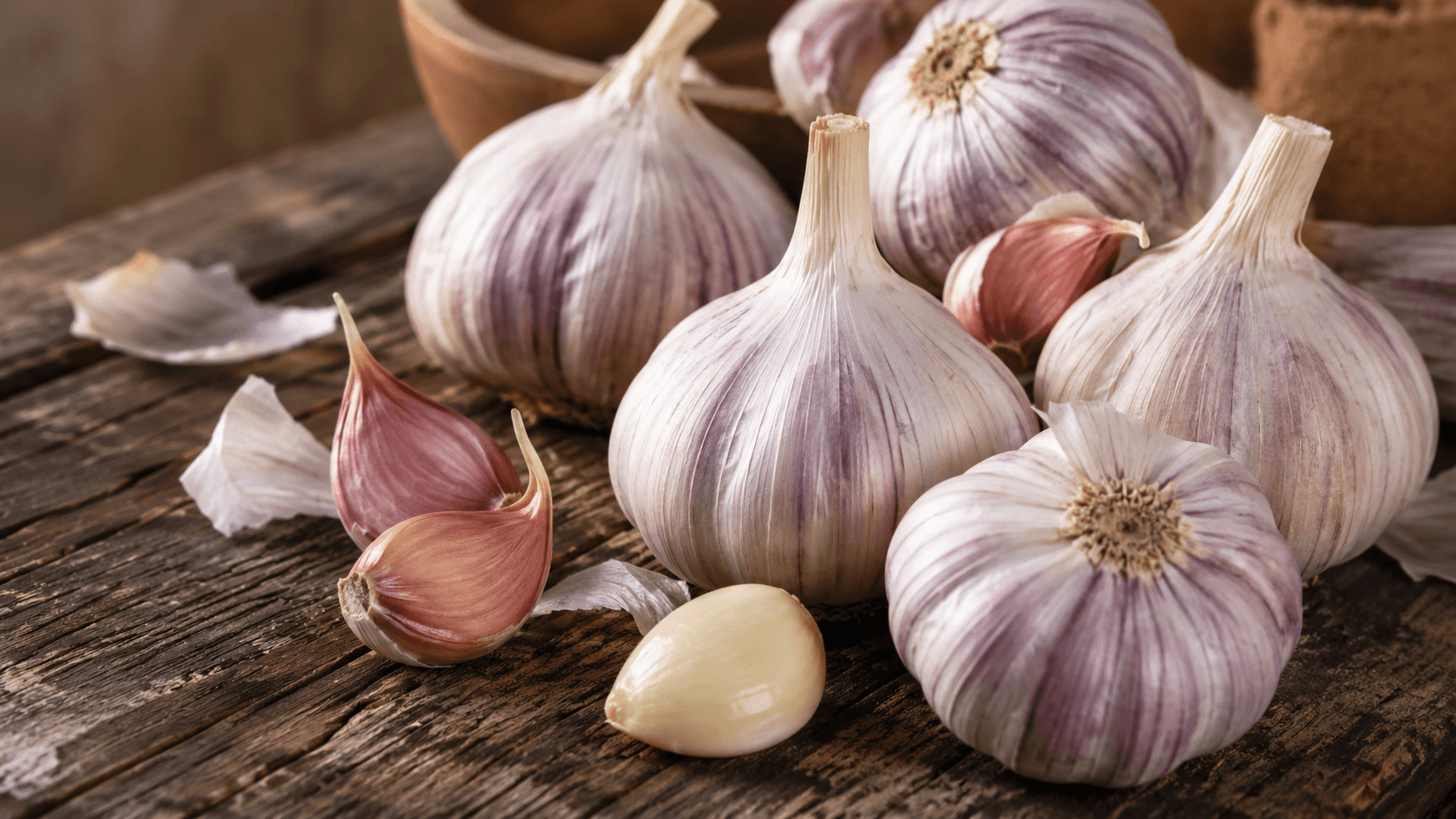
- Buy fresh whole bulbs. Firm, dense, no green sprouts visible. Pre-peeled garlic, pre-minced garlic in oil, and garlic powder are all dramatically less potent than the fresh-crushed real thing.
Closing
Garlic is the closest thing to a complete natural medicine that almost every kitchen on earth already has. It is antibacterial against the bacteria that conventional antibiotics struggle with. It is antiviral at a level documented to cut common colds by more than half. It is antifungal, antiparasitic, cardioprotective, detoxifying, and immune-modulating — all in a single, five-thousand-year-old food that costs almost nothing.
The flu bomb is what I reach for when I feel something coming on, and it works. The honey-fermented preparation is what I'd build into a daily winter routine. The pickled version is what I'd add for variety. And the crushed-and-rested clove added to dinner cooking is what makes the difference between garlic-as-seasoning and garlic-as-medicine.
Combined with the rest of the protocol on this site — iodine for the systemic antimicrobial and thyroid support, coconut oil for the lauric-acid antimicrobial profile, daily walking and sun for the immune-system foundation — garlic is the missing piece that gives you a real, food-based, multi-pathogen defense system that the modern medical world has been slow to acknowledge.
A bulb costs fifty cents. The medicine has been here all along.
Sources & further reading
- Josling, 'Preventing the common cold with a garlic supplement: A double-blind, placebo-controlled survey' — Advances in Therapy, 2001
- Dr. Berg — Amazing Benefits of Garlic Through the Winter (covers honey-fermented and pickled preparations)
- Dr. Berg — The Best Natural Antibiotic Drink: Home Remedy Formula
- Rouf et al., 'Antiviral potential of garlic (Allium sativum) and its organosulfur compounds: A systematic update' — Trends in Food Science & Technology, 2020
- In-Vitro Antibacterial Activity of Crude Garlic Extract Against Clinical Isolates of MRSA — Biomedical and Pharmacology Journal
- Cochrane Review — Garlic for the Common Cold (Lissiman et al., 2014)
- Bayan et al., 'Garlic: a review of potential therapeutic effects' — Avicenna Journal of Phytomedicine, 2014