Ginger is one of the very few traditional plant medicines that modern controlled clinical trials have repeatedly validated. It has been used as medicine in Chinese, Indian, Persian, Greek, and Roman traditions for at least 2,500 years — first documented as a medicinal herb around 3000 BC — and it remains, to this day, one of the few natural compounds the institutional medical establishment grudgingly acknowledges as effective. The European Medicines Agency formally recommends dried powdered ginger for the prevention of motion sickness. Systematic reviews of randomized controlled trials support its use for nausea in pregnancy, travel, post-surgery, and chemotherapy. Published osteoarthritis studies — multiple, large, double-blind — confirm it reduces knee pain and stiffness comparable to some prescription anti-inflammatories.
That mainstream grudging acceptance is itself a tell. For a system that reflexively dismisses almost every other food-based traditional medicine, the fact that it has had to make peace with ginger is a measure of how strong the evidence is. This article covers what's actually in ginger, the half-dozen well-documented things it does, how to use it across tea, raw, the flu bomb, and cooking, and why it deserves a permanent place in any thoughtful kitchen.
The active compounds — gingerol and shogaol
Ginger contains a family of phenolic compounds that are responsible for almost everything medicinal it does. The two most important:
- 6-Gingerol — the dominant active compound in fresh ginger. Gives raw ginger its distinctive sharp, warming, slightly pungent character. Strongly anti-inflammatory, antioxidant, and antiviral.
- 6-Shogaol — formed from 6-gingerol by dehydration when ginger is dried, cooked, or heated. Found in much higher concentrations in dried powdered ginger than in fresh. In some studies, 6-shogaol is more potent than 6-gingerol — particularly for anti-inflammatory and analgesic effects. This is part of why both fresh and dried ginger have real medicinal value, just in slightly different ways.
- Zingerone, paradols, gingerdiones — secondary compounds that contribute to ginger's antimicrobial and antioxidant action.
The practical implication is that fresh ginger and dried ginger are not interchangeable, but both have real medicinal value. Fresh has more gingerol — better for digestion, raw consumption, and the flu bomb. Dried/powdered has more shogaol — better for sustained anti-inflammatory effects and traditional capsule supplementation. Cooking with ginger converts some gingerol to shogaol along the way, which is why ginger-rich cuisines maintain medicinal activity even in long-cooked dishes.
The anti-nausea case — the gold-standard evidence
If you only know one thing about ginger from the research literature, this is it. Ginger is one of the most well-evidenced natural anti-nausea agents in existence. The clinical trial record is unusually robust for a traditional remedy.
The European Committee on Herbal Medicinal Products (HMPC) — a regulatory body whose default position is skepticism of herbal claims — has formally endorsed dried powdered ginger rhizome for the prevention of nausea and vomiting in motion sickness. Multiple systematic reviews of randomized controlled trials show ginger is effective for:
- Pregnancy-related nausea (morning sickness) — one of the few interventions considered safe enough for pregnant women that most obstetricians will recommend it.
- Motion sickness — strong evidence, European regulatory endorsement.
- Post-operative nausea and vomiting — effective enough that some surgical centers now recommend it as part of recovery protocols.
- Chemotherapy-induced nausea — adjunct use alongside standard antiemetics; reduces severity and improves patient quality of life in multiple published trials.
- General digestive nausea — the everyday "I ate something that disagreed with me" queasiness most people experience occasionally.
The mechanism: ginger appears to act on serotonin receptors in the gut and brainstem in a way that partially blocks the nausea-signalling pathway — similar in direction to pharmaceutical antiemetics like ondansetron, but at a much gentler intensity and without the side effects. For most everyday nausea — not chemo-grade, just human-life nausea — a cup of ginger tea or a small piece of chewed fresh ginger root will resolve the symptoms within ten to twenty minutes.
The anti-inflammatory case
Ginger is one of the most powerful natural anti-inflammatories available — not as concentrated as some pharmaceutical anti-inflammatories per milligram, but with a dramatically better side-effect profile and enough potency that it produces measurable effects in controlled trials at dietary doses.
The mechanism is multi-target. 6-Shogaol in particular has been shown to:
- Inhibit NF-κB — the master switch of the inflammatory cascade in immune cells. (This is the same pathway influenced by butyrate in ghee and quercetin in onions.)
- Inhibit COX-2 and 5-LOX — the two enzymes that pharmaceutical NSAIDs (ibuprofen, aspirin) target. Ginger does this through different specific interactions, with much less GI risk.
- Reduce neutrophil activity in autoimmune conditions — a documented effect that's relevant to chronic inflammatory diseases.
- Reduce edema and leukocyte infiltration at sites of acute inflammation.
The practical effect: regular ginger consumption reduces chronic, low-grade inflammation — the kind that underlies most modern chronic disease — without the ulcer, kidney, or cardiovascular side effects that long-term NSAID use carries.
Osteoarthritis and joint pain — the published RCTs
The osteoarthritis evidence deserves its own section because it is one of the more dramatic real-world applications of ginger. At least nine randomized controlled trials have looked at ginger — either oral or topical — for knee osteoarthritis pain, and the consistent conclusion is that it works.
Across the studies, ginger produced:
- Meaningful reductions in knee pain, comparable in some studies to low-dose ibuprofen.
- Reduced joint stiffness, especially morning stiffness.
- Improved functional capacity in standardized tests of mobility.
- Effects most pronounced in early-stage treatment — meaning the benefit shows up within weeks, not months.
The clinical interpretation: for people with mild to moderate joint pain — the kind most adults over 40 deal with — daily ginger consumption (either through diet or as a standardized supplement) is a real intervention, not folk medicine wishful thinking. Combined with boron (the joint and bone mineral) and magnesium (for muscle and nervous system support), ginger is part of a serious natural joint-health protocol.
The antimicrobial case
Like its Allium-family neighbors garlic and onion (though ginger is actually in the Zingiberaceae family, a different botanical family entirely), ginger has real documented antimicrobial activity. Dr. Eric Berg notes it plainly: "Gingerol has been shown to possess natural antibacterial and antiviral properties that promote microbial balance and robust immune functions."
Specifically, ginger has demonstrated activity against:
- Respiratory viruses — including common-cold and influenza strains
- Various bacterial strains — including some that contribute to dental plaque and oral infections
- Gut pathogens — including the organisms behind common food-borne illness
This is why ginger fits naturally into the flu bomb: it adds antiviral and antibacterial action to garlic's allicin and onion's quercetin, while contributing the anti-inflammatory and anti-nausea action that the other two don't provide. The four ingredients (garlic, ginger, onion, lime) cover different mechanisms in parallel.
Digestive support and gut health
The traditional Chinese medicine and Ayurvedic uses of ginger are heavily focused on digestion, and modern research confirms why. Dr. Berg summarizes the mechanism: "Compounds such as gingerols and shogaols have been found to stimulate the production of digestive enzymes and bile, which promotes better digestion and helps reduce gastrointestinal discomfort."
The practical effects:
- Increased gastric emptying. Helpful for people with sluggish digestion, feelings of fullness after eating, or chronic bloating after meals.
- Stimulated bile production. Bile is essential for fat digestion and for moving toxins out of the body via the digestive tract. Ginger gently increases bile flow.
- Reduced intestinal hypersensitivity. Published research shows ginger reduces the inflammatory hypersensitivity seen in diarrhea- predominant irritable bowel syndrome.
- Gas and bloating relief. Traditional use that has held up — ginger tea after a heavy meal is one of the most consistent folk remedies, and the mechanism is the digestive-enzyme stimulation.
Cardiovascular, blood sugar, and other benefits
The supporting list — well-documented but secondary to the nausea, anti-inflammatory, and digestive cases:
- Blood sugar regulation. Modest but real improvements in fasting glucose and HbA1c in multiple studies, particularly in pre-diabetic and type 2 diabetic populations.
- Cholesterol moderation. Reductions in total cholesterol, LDL, and triglycerides in some controlled trials.
- Anti-platelet effect. Ginger acts as a mild natural blood thinner — useful for circulation, worth noting if you're on prescription blood thinners (see cautions below).
- Menstrual cramp relief. Several RCTs show ginger comparable to ibuprofen for the pain of primary dysmenorrhea, without the side effects.
- Warming circulation. Traditional Chinese medicine describes ginger as a "warming" herb; modern interpretation is that the vasodilation effect of gingerol increases peripheral blood flow. Useful for people with chronically cold extremities, sluggish winter circulation, or general feeling-cold-all-the-time symptoms.
- Cognitive support. Emerging research on ginger's neuroprotective effects — promising but still early-stage.
My approach
Ginger shows up in my kitchen in four ways. Roughly in order of how often I use it:
- Cooking. Fresh ginger gets grated, minced, or sliced into soups, stir-fries, marinades, and dressings. The cooked version still does meaningful anti-inflammatory and digestive work, and the flavor is fundamental to most cuisines that have ever used the root.
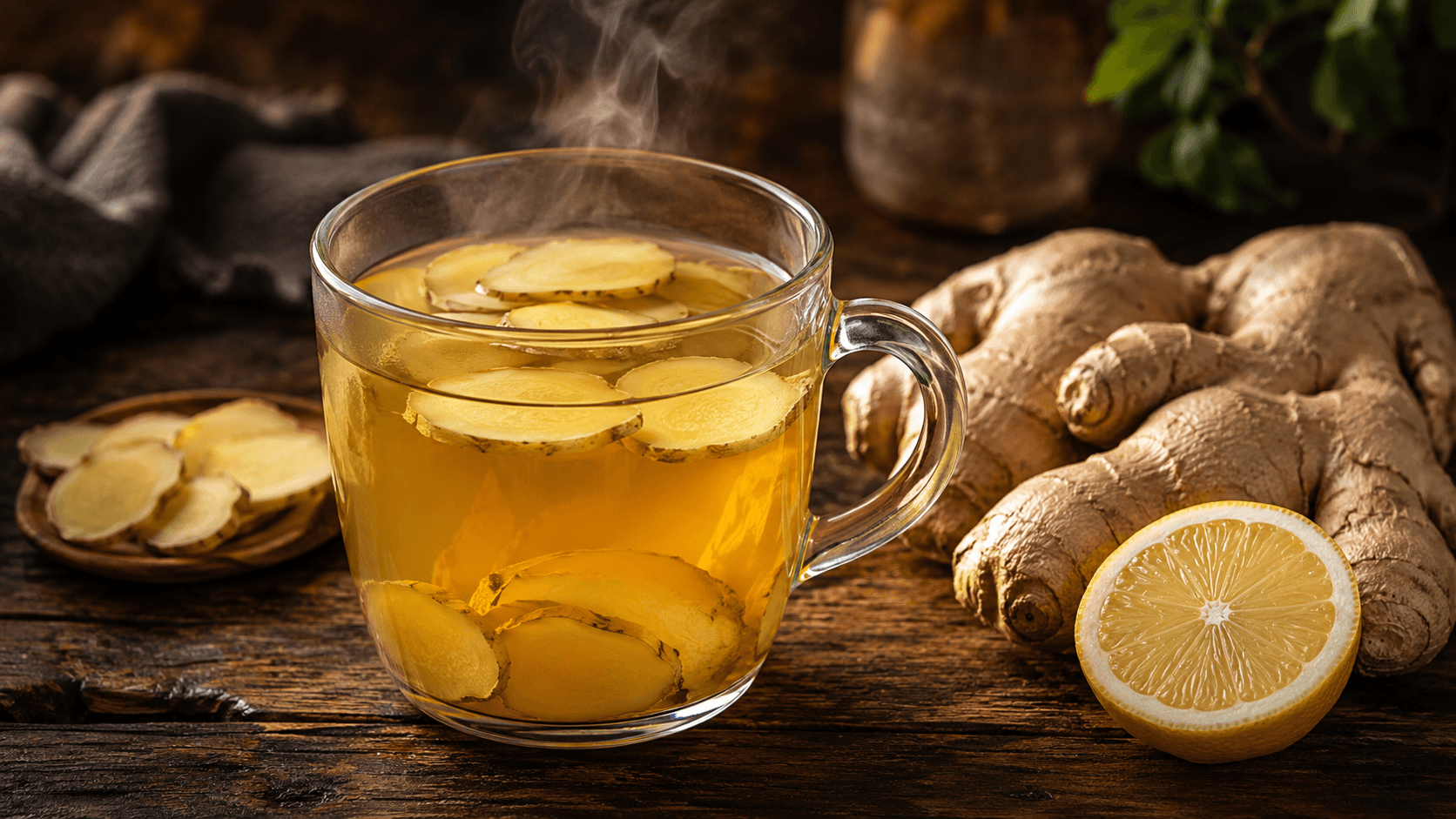
- Ginger tea — not just when sick. A regular cup, not strictly tied to feeling unwell. The ritual of a hot drink with a clear function is part of why it's stayed in my rotation. The recipe is below.
- Raw piece, occasionally. Sometimes I just bite off a small piece of fresh ginger root and chew it slowly. The burn is real, but so is the digestive and immune effect, and it cuts through any queasiness or post-meal heaviness in a way nothing else does. Not a daily thing, but a useful tool when needed.
- The flu bomb. Pebble-sized piece into the garlic flu bomb three times a day at the first sign of sickness. The ginger handles the anti-inflammatory and anti-nausea sides of the equation while garlic and onion handle the antibacterial and antiviral fronts.
How to make ginger tea
Real ginger tea — not the dried tea-bag version, which works in a pinch but is dramatically less potent — is one of the simplest hot drinks you can make:
- Slice a 1–2 inch piece of fresh ginger root into thin rounds — no need to peel if it's organic and you've washed it. The skin actually contains medicinal compounds you'd otherwise lose.
- Add to 2 cups of water in a small pot. Bring to a boil, then reduce to a simmer.
- Simmer 10–15 minutes, covered, to extract the active compounds. Longer is fine if you want it stronger — some people simmer for 30 minutes for a more intense brew.
- Strain into a mug. Optional additions: a squeeze of lemon or lime, a teaspoon of raw honey, a small piece of fresh turmeric (if you want the anti-inflammatory effect amplified further).
- Sip warm. The slices in the pot can be re-used once for a second batch later in the day, though it'll be milder.
Drink one to three cups a day. Most beneficial first thing in the morning, after a heavy meal, or any time you feel digestive discomfort or the start of congestion. The hot liquid also has its own benefit — warming the body, soothing the throat, encouraging drainage of the sinuses and respiratory passages.
How to buy and store ginger
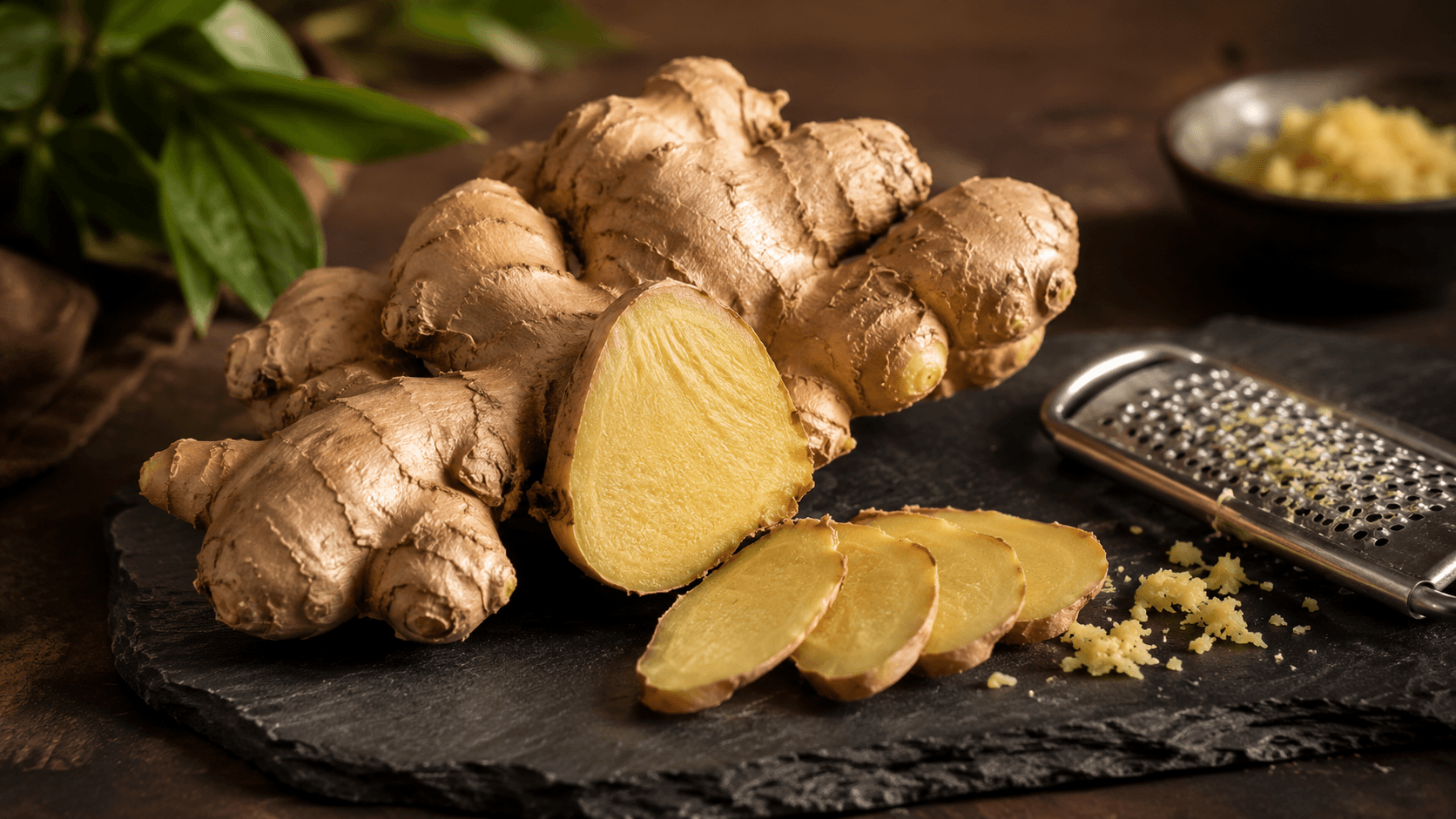
- Look for firm, plump root with smooth skin. Wrinkled, shriveled, or soft ginger is past its prime — the active compound content drops as the root dries out.
- Organic is worth it. Ginger is grown in soil and the skin is often eaten or steeped in tea. Conventional ginger from some sources is heavily sprayed.
- Store unpeeled, in the fridge, in a paper or mesh bag. A whole root keeps 2–3 weeks in the fridge this way. Plastic bags trap moisture and accelerate mold.
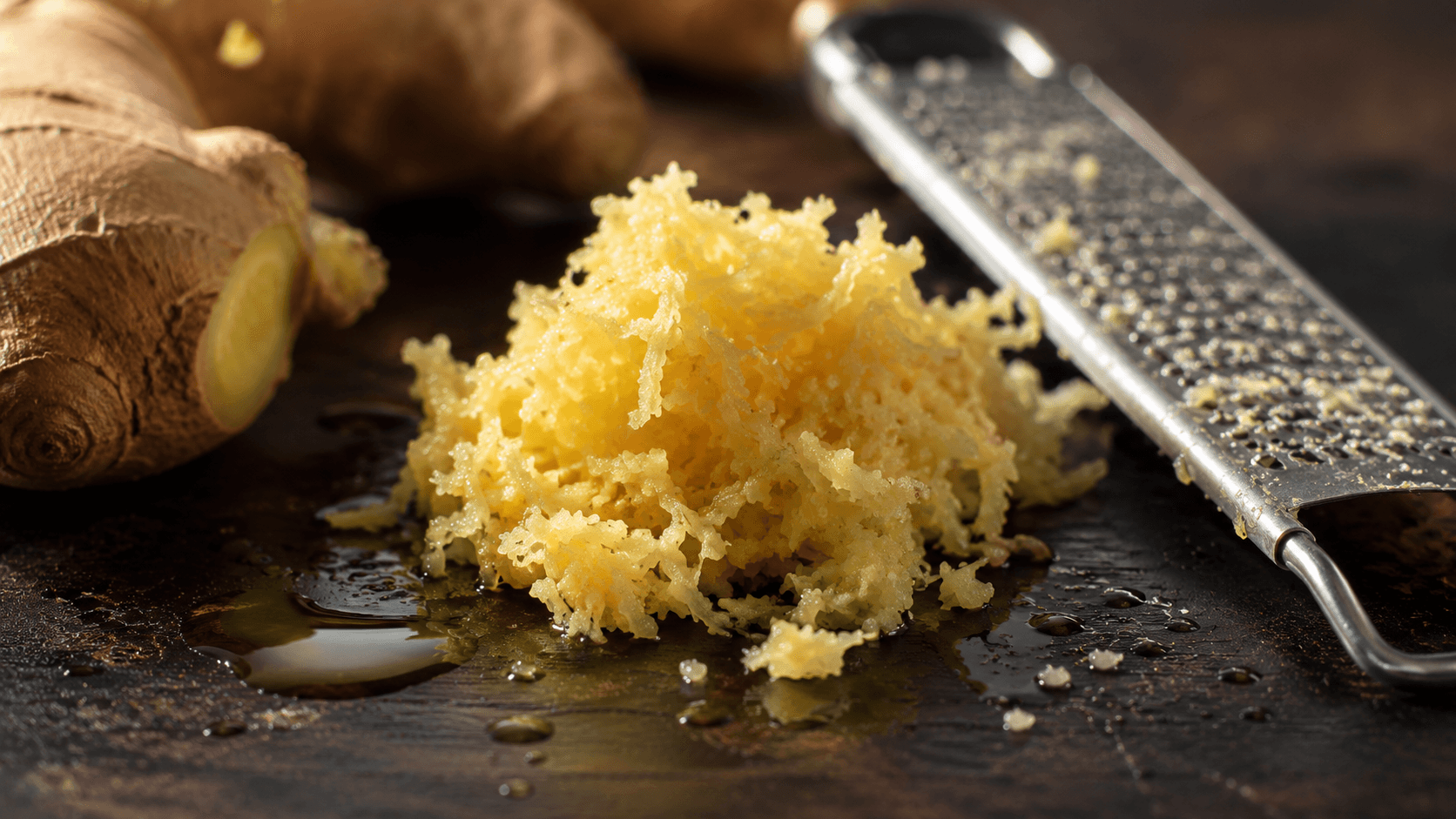
- Freeze it for long-term storage. Whole ginger root frozen and grated as needed (no thawing required — it grates beautifully from frozen) keeps for many months and retains nearly all its medicinal value.
- Dried powdered ginger has its place — for baking, capsule supplementation, and longer-shelf- life convenience. It's higher in shogaol than fresh but lower in gingerol. Keep both forms in the kitchen.
Honest cautions
- Blood thinners. Ginger has a mild anti-platelet effect — similar to garlic. If you're on prescription blood thinners (warfarin, clopidogrel, etc.), talk to a doctor before adding heavy daily medicinal doses. Culinary amounts are fine.
- Surgery. Most surgeons recommend avoiding heavy ginger intake for a couple of weeks before scheduled surgery, same anti-platelet reason as for garlic.
- Gallstones. Ginger stimulates bile flow, which is usually a good thing, but can occasionally cause discomfort in people with active gallstones. If you've been diagnosed with gallstones, check with a practitioner before adding heavy daily doses.
- Heartburn. Very high doses of ginger can cause mild heartburn in some people. A few cups of tea a day is fine; a tablespoon of dried powdered ginger at once is asking for trouble.
- Pregnancy. Ginger is one of the few herbal interventions considered safe and effective for morning sickness, but only in moderate amounts (1–1.5 g per day). Very high doses during pregnancy should be cleared with a midwife or doctor.
How to start
- Buy a single root of fresh ginger this week. Keep it in the fridge unpeeled. Slice some into your next stir-fry, soup, or marinade. The cooking habit is the easiest entry point.
- Make ginger tea once. Just to see how different the real version is from the dried tea-bag version. Most people don't go back after they've had it properly.
- Try a small piece raw after a heavy meal that's left you feeling overstuffed. The sharpness is intense, but so is the digestive relief.
- Keep a piece in the freezer. Convenient for grating directly into hot water for a fast tea, or into any cooking application where fresh would be impractical.
- Build into the flu bomb habit. Next time you feel something coming on, the ginger is one of the four ingredients — and it's doing real, specific anti-inflammatory and anti-nausea work alongside the garlic and onion's antimicrobial action.
Closing
Ginger is one of the most unambiguous wins in the entire natural-medicine conversation. The traditional uses across 2,500 years align almost perfectly with what controlled clinical trials have repeatedly demonstrated. The active compounds are well-characterized. The mechanisms are understood. The safety profile is excellent. And the cost — a single root, a few dollars, weeks of usage — is laughable compared to almost any pharmaceutical it competes with.
A cup of ginger tea is one of the simplest medicinal acts a person can perform. The combination of warm liquid, real bioactive compounds, and the brief ritual of preparation is doing several jobs at once: digestive support, anti-inflammatory action, gentle immune modulation, and the parasympathetic-nervous-system benefit of taking ten minutes to make something with your hands.
Combined with garlic for infection control, onions for the quercetin and cardiovascular support, and boron plus magnesium for joint and muscle health, ginger fills out the natural medicine cabinet that almost every long-lived culture on earth has kept stocked since long before modern medicine existed.
A piece of root in your fridge, the kettle on, ten minutes of patience. That's the whole thing.
Sources & further reading
- Dr. Berg — The Unique Health Benefits of Ginger
- Dr. Berg — Use Ginger for Everything Stomach
- Wang et al., 'Benefits of Ginger and Its Constituent 6-Shogaol in Inhibiting Inflammatory Processes' — Pharmaceuticals, 2021
- Rondanelli et al., 'Clinical trials on pain lowering effect of ginger: A narrative review' — Phytotherapy Research, 2020
- Bode & Dong, 'Ginger', in Herbal Medicine: Biomolecular and Clinical Aspects (2nd edition)
- European Medicines Agency / HMPC — Community Herbal Monograph on Zingiber officinale Roscoe, rhizoma
- The 'root' causes behind the anti-inflammatory actions of ginger compounds in immune cells — Frontiers in Pharmacology, 2024