Regular sauna use is one of the most evidence-supported longevity interventions in modern medicine, and one of the most underused in the modern American lifestyle. The Finnish epidemiological data is the foundation: a multi-decade cohort study following over 2,300 men found that 4–7 sauna sessions per week was associated with a 40% reduction in all-cause mortality, a 50% reduction in cardiovascular mortality, and a 66% reduction in dementia and Alzheimer's risk compared to once-a-week users. The effect sizes are large enough that if a pharmaceutical company had produced a pill with these numbers, it would be one of the biggest drugs in history. Sauna doesn't have a marketing budget, isn't patentable, and competes with a long list of existing treatments, so the data has remained largely a niche conversation in functional medicine and longevity circles. The biology underneath the numbers is solid, the mechanisms are well-characterized, and the protocol is simple.
This article covers the Finnish epidemiological data that anchors the modern sauna case, the cross-cultural tradition of heat therapy that has been practiced for thousands of years, the mechanism at the cellular level (heat shock proteins, HGH, BDNF, norepinephrine, the broader hormetic stress framework), the documented benefits across cardiovascular, brain, mood, training recovery, and detoxification, the honest comparison of traditional Finnish sauna versus infrared sauna and the specific overlap of near- infrared sauna with the red light therapy covered elsewhere on this site, the practical protocol (temperature, duration, frequency, cold contrast, electrolyte support), the equipment landscape from gym saunas to home infrared cabins to the accessible sauna blanket option, and the broader place this practice takes in a serious longevity protocol.
The Finnish data — what actually started the modern conversation
Sauna is so deeply embedded in Finnish culture that the country has roughly 2–3 million saunas for a population of 5.5 million — more saunas than cars. Most Finns sauna multiple times per week from childhood. This cultural saturation provided the foundation for the most important modern sauna research: a series of prospective cohort studies led by Dr. Jari Laukkanen and collaborators at the University of Eastern Finland, following thousands of middle-aged Finnish men over decades.
The landmark 2015 paper published in JAMA Internal Medicine reported the headline numbers that have anchored the modern sauna conversation:
- 2–3 sauna sessions per week: 22% reduction in sudden cardiac death, 23% reduction in fatal coronary heart disease, 27% reduction in fatal cardiovascular disease, and 24% reduction in all-cause mortality compared to once-a-week users
- 4–7 sauna sessions per week: 63% reduction in sudden cardiac death, 48% reduction in fatal coronary heart disease, 50% reduction in fatal cardiovascular disease, and 40% reduction in all-cause mortality
- Session duration matters: sessions over 19 minutes produced larger effects than shorter sessions across the same frequency categories
A 2017 follow-up paper from the same group, published in Age and Ageing, examined dementia outcomes in the same cohort and reported:
- 4–7 sauna sessions per week: 66% reduction in dementia risk and 65% reduction in Alzheimer's risk compared to once-weekly users
Subsequent papers from the same and related cohorts have added findings on hypertension reduction, stroke risk reduction, pulmonary disease outcomes, and psychiatric conditions including depression. The consistency of the cardiovascular finding across the multiple papers and analyses is unusually strong for an observational study.
The standard scientific caveat applies and is worth stating directly: this is observational epidemiology, not a randomized controlled trial. The men who saunaed 4–7 times per week were likely healthier in other ways than the men who saunaed once a week. The studies controlled for the major confounders (smoking, blood pressure, cholesterol, exercise, alcohol, socioeconomic status), but residual confounding is always possible in observational work. That said — the effect sizes are large enough, the mechanistic case is strong enough, and the consistency across outcomes is good enough that the case for regular sauna use is one of the stronger lifestyle- intervention cases in modern medicine.
"Sauna bathing is an activity that promotes longevity and may be linked to a greater functional life expectancy in middle-aged and older adults."
The cross-cultural tradition — humans have done this forever
Sauna and heat therapy are not Finnish inventions — they are one of the most cross-culturally consistent practices in human history. Virtually every major cultural tradition has independently developed a form of heat-based bathing or cleansing practice:
- Finnish sauna — the most-studied modern form, traditionally a wooden room heated by a stove with rocks (kiuas), at 80–100°C (176–212°F) with controlled humidity via water thrown on the rocks (löyly)
- Native American sweat lodges — ceremonial heat practice across many tribal traditions, often combined with spiritual ritual, prayer, and community
- Russian banya — close cousin to the Finnish sauna, typically higher humidity, often with birch branches (venik) used for circulation stimulation
- Turkish hammam — Ottoman steam bath tradition, derived from earlier Roman thermae, with gradient rooms moving from warm to hot, exfoliation, and washing
- Japanese sento and onsen — public bath houses and natural hot spring traditions, with the bathing culture deeply integrated into Japanese daily life
- Roman thermae — elaborate bathhouse complexes with multiple temperature rooms (caldarium, tepidarium, frigidarium), central to Roman urban life for centuries
- Korean jjimjilbang — public bathhouses with multiple themed rooms at different temperatures, including infrared and salt rooms
- Mesoamerican temazcal — pre- Columbian sweat lodge practice with herbal steam, still practiced today in indigenous communities
The cross-cultural pattern is what you would expect if heat therapy genuinely worked across diverse human populations. Different cultures, observing carefully across generations, kept arriving at variations of the same practice — extended heat exposure followed by cooling, often combined with social and spiritual context, integrated into regular life rather than treated as exotic. The modern medicalization of health has made this kind of practice optional in most Western lives. The traditions that maintained it have consistently shown the longevity advantages now being documented in formal research.
How sauna actually works — the cellular cascade
The biological mechanisms underneath sauna's documented benefits are well-characterized and not particularly mysterious. Sauna use creates a controlled physiological stress that activates a series of adaptive responses, collectively called the hyperthermic conditioning response — the body's reaction to elevated core temperature. This triggers protective changes across multiple systems that compound over weeks and months of regular practice.
Heat shock proteins — the cellular janitors
The single most important molecular mechanism activated by sauna use is the production of heat shock proteins (HSPs), particularly HSP70 and HSP90. These are a family of proteins the body produces in response to elevated temperature — the cellular system that protects proteins from misfolding, helps damaged proteins refold or be cleared, and broadly maintains cellular protein quality control.
What HSPs do:
- Protect proteins from heat- and stress- induced misfolding — the same misfolding that underlies many neurodegenerative diseases (Alzheimer's amyloid-beta, Parkinson's alpha- synuclein, Huntington's, ALS)
- Refold damaged proteins or escort them to the cell's protein-degradation systems for recycling
- Suppress apoptosis (cell death) under stress conditions
- Support immune function — HSPs play roles in antigen presentation and the immune response to infections and cancer cells
- Reduce inflammation through modulation of NF-kB and other inflammatory signaling pathways
- Support muscle hypertrophy and repair when paired with resistance training — one of the reasons sauna pairs unusually well with the weight lifting protocol covered elsewhere on this site
- Tumor suppression — HSP-mediated cellular quality control is part of the body's defense against cancer development
HSP production rises substantially with regular sauna use. A single sauna session activates HSP synthesis; repeated regular use produces sustained elevated HSP expression that persists between sessions. This is the adaptive response that compounds over weeks and months of practice and is part of why the longevity benefits require consistency rather than occasional use.
The HGH cascade — sometimes 16x baseline
Sauna use produces dramatic increases in human growth hormone (HGH), similar in scale to the increases produced by fasting. The specific numbers from the research:
- 15 minutes at 80°C (176°F) — HGH acutely elevated 200–300% above baseline
- 2 hours total at 80°C across multiple sessions in a day — HGH elevated up to 500% above baseline
- Repeated daily sessions over a week — sustained elevation, with one classic study showing HGH levels 16 times baseline after a week of intensive twice-daily sauna sessions
HGH supports tissue repair, fat oxidation, lean tissue preservation, skin and connective tissue health, and broader cellular regeneration. The anti-aging clinics charging thousands of dollars per month for synthetic HGH injections are selling a hormone that consistent sauna use produces naturally — at scales comparable to or exceeding what those injections deliver, with the additional cardiovascular, cognitive, and longevity benefits sauna brings along.
The HGH effect compounds when sauna is paired with fasting. A fasted sauna session produces a larger HGH response than either intervention alone. People running serious longevity protocols frequently stack the two specifically for this synergy.
BDNF and brain health — the dementia mechanism
The 66% dementia risk reduction in the Finnish data is among the more striking findings, and the mechanism underneath it involves several intersecting pathways. Sauna use elevates brain-derived neurotrophic factor (BDNF), the same neuroprotective protein covered in the weight lifting article that supports neuronal survival, growth, and memory formation. The mechanisms underneath the dementia finding include:
- Increased BDNF — neuroprotection, synaptic plasticity, support for the hippocampus and prefrontal cortex
- HSP-mediated protein quality control — clearing misfolded amyloid-beta and tau proteins implicated in Alzheimer's
- Improved cerebral blood flow — heat exposure produces substantial peripheral vasodilation, increasing blood flow to brain tissue
- Reduced systemic inflammation — chronic inflammation is increasingly recognized as a central driver of neurodegenerative disease
- Cardiovascular benefits — the connection between cardiovascular health and brain health is one of the strongest in modern medicine; what's good for the heart is largely good for the brain
- Norepinephrine release — sauna use produces substantial norepinephrine elevation, which supports attention, focus, and broader neurotransmitter function
For anyone with family history of Alzheimer's or dementia, or anyone aiming at long-term cognitive preservation, the sauna case is unusually strong. The dementia-reduction effect size — 66% at the high end of usage — is larger than virtually any pharmaceutical intervention currently being studied for dementia prevention.
Benefits across systems — the broader picture
Cardiovascular
- Reduced blood pressure — chronic sauna use produces sustained reductions in both systolic and diastolic blood pressure
- Improved endothelial function — the health of blood vessel linings
- Increased heart rate variability (HRV) — a marker of cardiovascular fitness and autonomic nervous system balance
- Acute cardiovascular workout effect — a 20-minute sauna session produces heart rate elevation (typically 100–150 BPM) comparable to moderate-intensity exercise, with cardiovascular adaptation that resembles aerobic training
- Reduced stroke risk — also documented in the Finnish data
Mood and depression
- Antidepressant effects — multiple controlled trials have shown that single sessions of whole-body hyperthermia (essentially intensive sauna sessions) produce significant reductions in depression symptoms that persist for weeks
- Norepinephrine elevation up to 310% — supports mood and attention
- Beta-endorphin release — the "sauna high" most regular users experience
- Improved sleep quality — covered below; better sleep is itself a major mood factor
Training recovery and athletic performance
- Improved muscle recovery between training sessions
- HSP-mediated muscle repair — particularly when sauna is used post-workout
- Heat acclimatization — regular sauna use produces adaptations that improve exercise performance in hot conditions
- Increased plasma volume — supports endurance performance
- Improved insulin sensitivity — compounding with the resistance-training effects covered in the weight lifting article
Detoxification
Sweat is one of the body's mechanisms for eliminating certain compounds — particularly heavy metals (lead, mercury, cadmium, arsenic) and some persistent organic pollutants (BPA, phthalates, PCBs, some flame retardants). Research by Stephen Genuis and others has documented measurable levels of these toxins in sweat from sauna sessions.
The honest framing: sweat is one route of elimination, not the only one. The liver and kidneys do most of the heavy lifting. Claims that sauna alone "detoxes" the body in some dramatic way oversell what sweat actually accomplishes per session. But over months and years of regular practice, the cumulative elimination of toxic load is meaningful — and for certain toxins (heavy metals especially), sauna- induced sweating contributes more to elimination than urine or feces. People with documented heavy metal burden frequently include intensive sauna protocols as part of medically-supervised detoxification.
Sleep
Sauna use improves sleep quality through several mechanisms:
- Core temperature reset — the post- sauna temperature drop mimics the natural pre- sleep core temperature decline, supporting sleep onset
- Parasympathetic nervous system activation in the cooldown phase
- Reduced anxiety and improved mood — both predictive of better sleep
- The relaxation effect on muscle and connective tissue
Evening sauna use — finished 60–90 minutes before bed — is one of the more consistently sleep-improving single interventions in the broader sleep protocol. The temperature drop after exiting the sauna, timed appropriately before bed, supports the natural circadian temperature curve.
Immune function
Regular sauna users in controlled trials show improved immune markers, fewer common-cold incidents, and faster recovery from upper respiratory infections. The mechanisms involve HSP-mediated immune support, elevated circulation, and the general anti-inflammatory effect of regular sauna use.
Types of saunas — what each one does
Traditional Finnish sauna
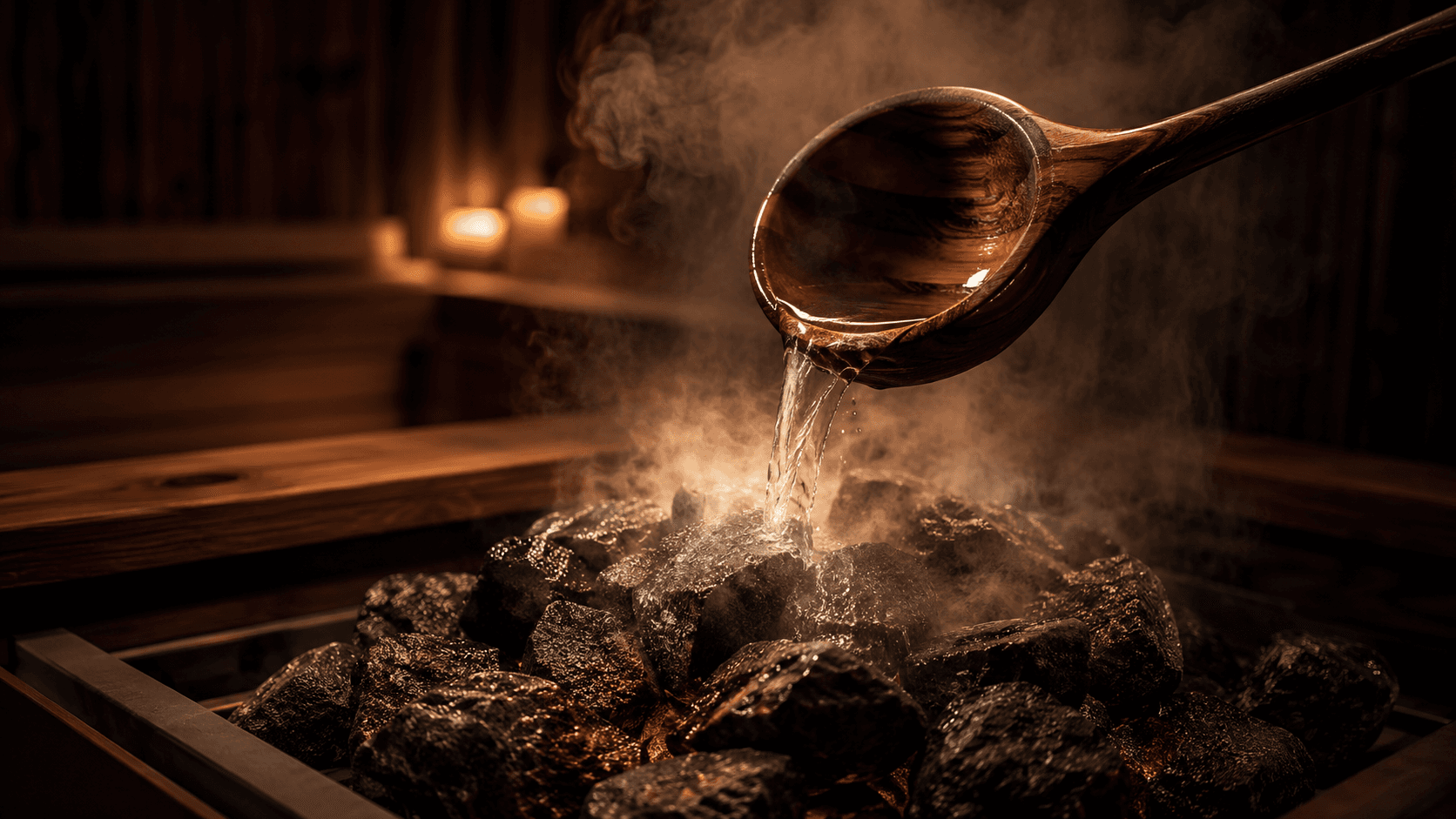
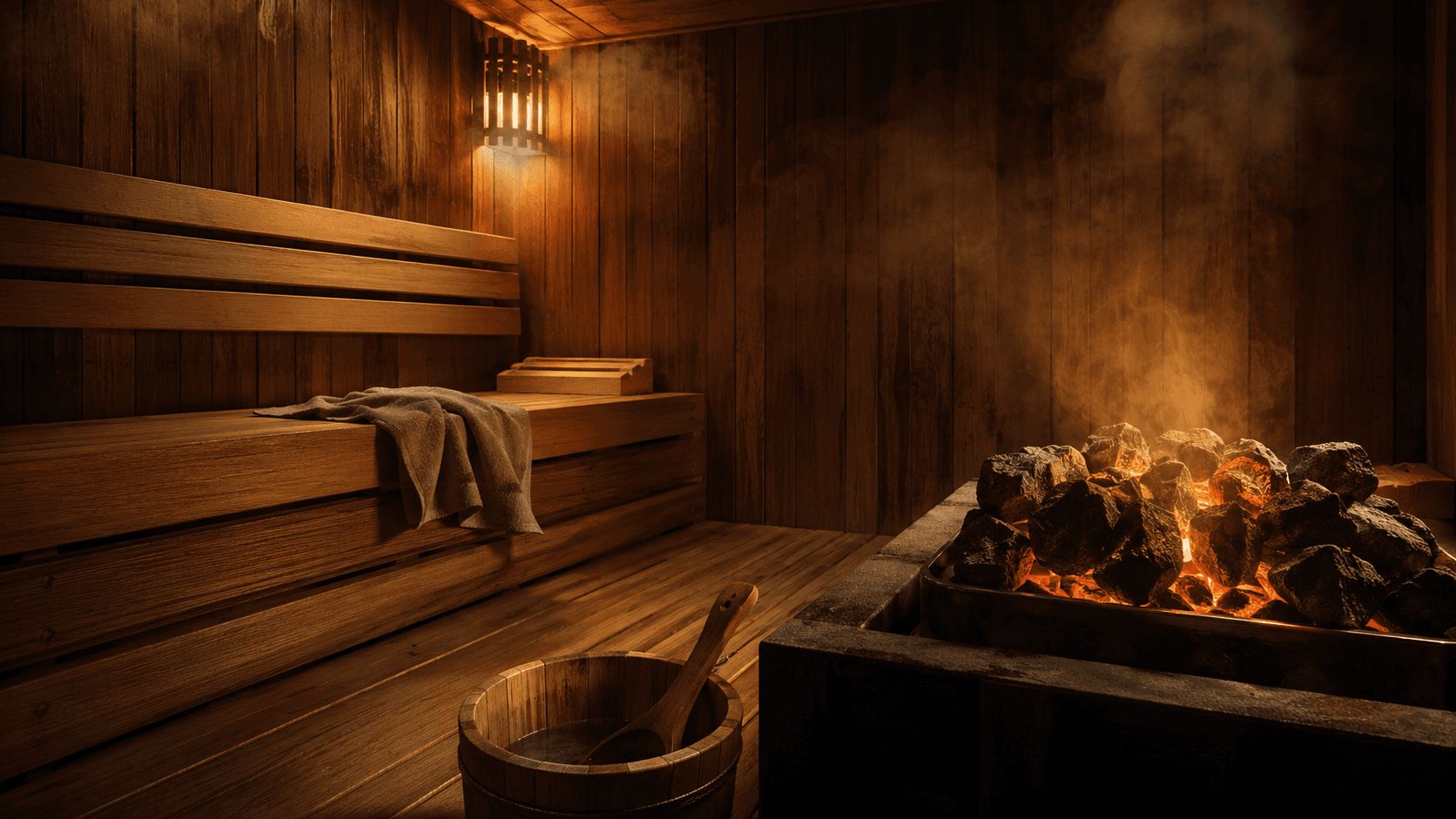
The form most of the longevity research is based on. A wood-paneled room heated by a wood-burning or electric stove with rocks (kiuas). Temperature typically 80–100°C (176–212°F) with controlled humidity adjusted by throwing water on the hot rocks. Low background humidity rises dramatically with each scoop of water. The experience is intense, the sweat is heavy, and the session typically runs 15–30 minutes with cool-down breaks.
Best for: the strongest HSP response, the strongest HGH cascade, the cardiovascular workout effect, and matching the specific protocol the Finnish research documented. The reference standard.
Steam room (Turkish bath / hammam style)
Lower temperature (typically 110–120°F / 43–49°C) with very high humidity (near 100%). Feels hotter than the temperature reading because the high humidity prevents sweat evaporation, which is the body's primary cooling mechanism. Different sensation than dry sauna; some people prefer the steam, others find it suffocating.
Best for: respiratory benefits (the steam supports mucus clearance and may help with sinus and bronchial issues), skin hydration, and people who find dry sauna too intense on the airways. Less of the deep heat shock protein response than traditional sauna due to lower core temperature elevation.
Infrared sauna
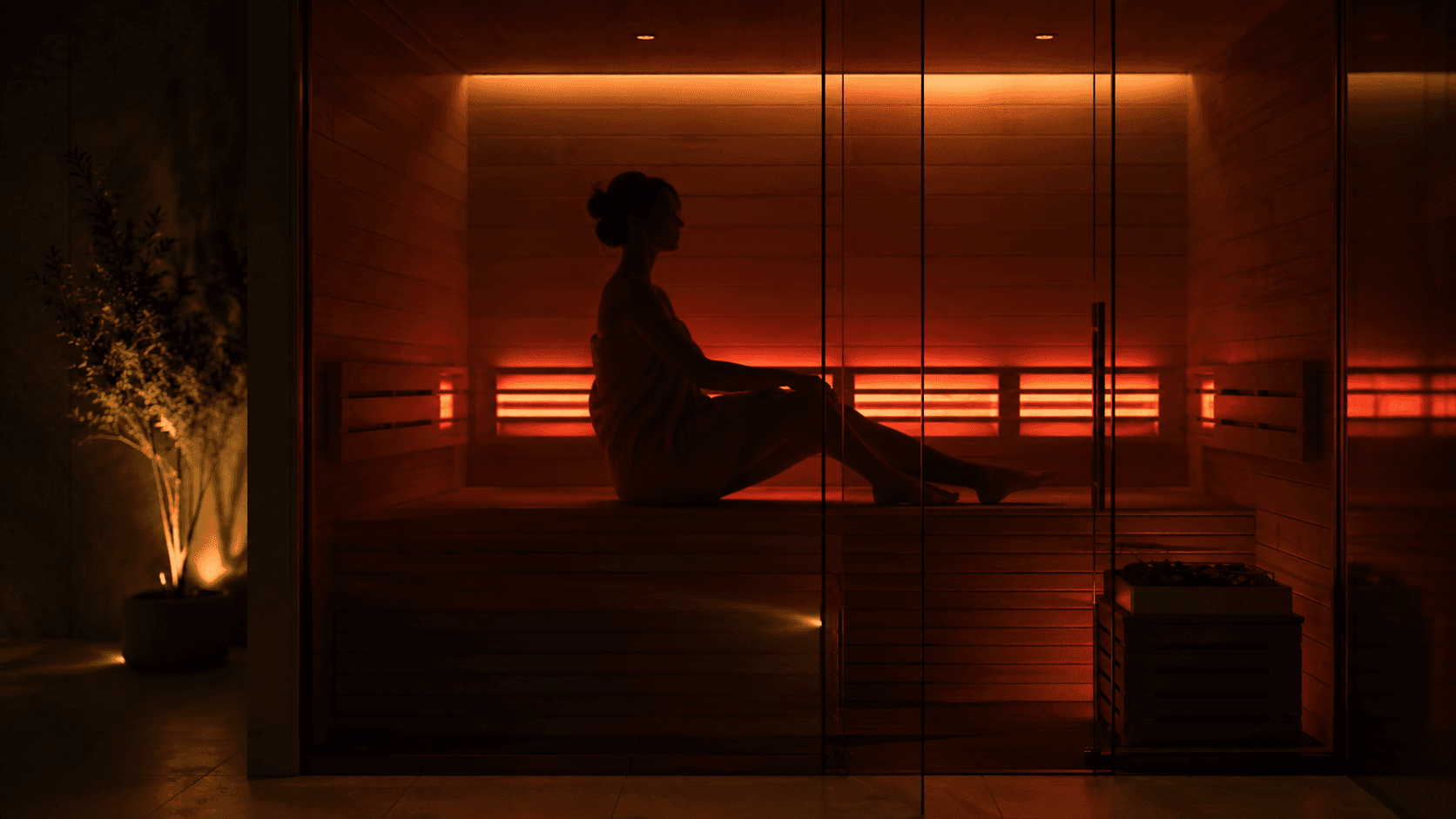
A fundamentally different mechanism than traditional sauna. Instead of heating the surrounding air to heat the body, infrared saunas use infrared light at specific wavelengths to directly heat the body. Air temperature is lower (typically 45–65°C / 113–149°F), but the tissue heating effect can be substantial because the infrared penetrates the skin and warms tissue from within.
Infrared saunas come in three main wavelength categories:
- Far infrared (FIR, 5.6–1000 micrometers) — the most common consumer infrared sauna type. Penetrates the skin surface and is absorbed by water molecules, producing efficient heat generation in superficial tissue. The standard "infrared sauna" experience.
- Mid infrared (MIR, 1.4–5.6 micrometers) — deeper tissue penetration than FIR. Better for joint and muscle applications.
- Near infrared (NIR, 0.76–1.4 micrometers) — the deepest-penetrating wavelength. Same wavelength range as the near-infrared light used in red light therapy. Penetrates deeply enough to reach muscles, joints, and bone, and produces mitochondrial cytochrome c oxidase activation in addition to the heat effect.
- Full spectrum — combines FIR, MIR, and NIR in a single cabin. The most comprehensive infrared exposure, and the variant typically recommended for serious infrared sauna use.
Best for: people who can't tolerate the intensity of traditional sauna, people who want longer sessions (the lower air temperature allows for 30–45 minute sessions versus the 15–25 minute ceiling of traditional sauna), home installation (infrared cabins are smaller and easier to install than traditional saunas), and the specific NIR overlap with red light therapy benefits.
Traditional vs. infrared — the honest comparison
One of the more contested questions in modern sauna discussion is which type produces the better longevity benefits. The honest answer: both work, through somewhat different mechanisms, and the choice depends on what's available and what you'll actually use consistently.
Where traditional Finnish sauna wins
- The longevity data is on traditional sauna. The Finnish studies were of traditional Finnish sauna use, not infrared. The 40% mortality reduction and 66% dementia reduction findings are specifically tied to this protocol. Infrared sauna has its own emerging research, but the massive epidemiological foundation is in traditional sauna.
- Stronger HSP response — the higher core temperature elevation of traditional sauna produces a larger heat shock protein response per session
- Stronger HGH cascade — the more extreme thermal stress produces larger acute HGH elevations
- Better cardiovascular workout effect — heart rate elevation is typically higher in traditional sauna due to the more intense thermal stress
- The cultural tradition is traditional sauna — most of what works about sauna across centuries was developed within this format
Where infrared sauna wins
- More tolerable — the lower air temperature allows for longer sessions and is accessible to people who can't tolerate the intensity of 90–100°C traditional sauna
- More accessible for home installation — infrared cabins are smaller, simpler to install, and don't require the venting and electrical infrastructure of a traditional sauna
- Better sweat-per-session ratio — the longer tolerable sessions produce more total sweat volume than shorter traditional sessions, which matters for detoxification applications
- NIR overlap with red light therapy — full-spectrum infrared saunas deliver the near-infrared wavelengths that produce mitochondrial activation through cytochrome c oxidase, stacking the benefits of red light therapy with the broader heat therapy effects
- Easier on the cardiovascular system for people with conditions that make extreme heat stress inadvisable
- Cleaner air — no smoke or combustion byproducts (unlike wood-burning traditional saunas)
The honest practical summary
If you have access to a traditional Finnish sauna and can tolerate it, that's the reference standard backed by the strongest research. Most gym saunas, hotel saunas, and Scandinavian- style spa setups fall into this category.
If you're installing at home, infrared is usually the more practical choice due to installation simplicity and cost. The benefits overlap substantially with traditional sauna even if the specific mechanism mix is different.
The best sauna is the one you actually use. A consistently-used infrared sauna at home will produce more cumulative benefit than a theoretically-superior traditional sauna at the gym that you visit twice a month.
Infrared sauna deep dive — wavelengths and what they do
For those choosing an infrared sauna, the wavelength selection matters. The three categories produce measurably different effects:
Far infrared (FIR)
The longest infrared wavelengths (5.6–1000 micrometers). FIR is absorbed primarily by water molecules in the body, producing efficient heating of the dermis and superficial tissue layers. Does not penetrate deeply into muscle or bone. Produces the bulk of the "sweat response" in infrared sauna use and most of the cardiovascular workout effect.
Primary applications: detoxification, skin health, cardiovascular conditioning, the standard sweat- inducing sauna experience.
Mid infrared (MIR)
Wavelengths 1.4–5.6 micrometers. Penetrates deeper than FIR, reaching muscle and joint tissue. Better for inflammation reduction in deep tissue, joint pain, and muscle recovery applications.
Primary applications: joint pain, muscle recovery, deeper tissue inflammation, post-training therapy.
Near infrared (NIR)
Wavelengths 0.76–1.4 micrometers. The deepest penetration of the three. Same wavelength range as therapeutic red light therapy. Produces mitochondrial activation through cytochrome c oxidase — the same mechanism covered in the red light therapy article — in addition to whatever heat effect is produced.
Primary applications: cellular energy production, wound healing, mitochondrial function, brain health (NIR penetrates deep enough to reach the superficial brain tissue), skin collagen production, deeper tissue regeneration.
Full spectrum infrared
The combination of FIR, MIR, and NIR in a single cabin. Delivers the complete infrared experience — surface heating, deep tissue heat, and mitochondrial activation simultaneously. This is the variant generally recommended for serious infrared sauna use, particularly for people wanting to stack the red light therapy benefits with the broader sauna effects.
The NIR overlap with red light therapy
One of the cleanest practical points about infrared sauna is that a quality full-spectrum infrared sauna delivers most of the near-infrared wavelengths that produce the photobiomodulation effects covered in the red light therapy article. The mitochondrial cytochrome c oxidase activation, the nitric oxide release, the anti-inflammatory cascade, and the broader cellular regeneration that red light therapy produces are largely the same effects produced by the NIR component of a full-spectrum infrared sauna — with the added benefit of the heat shock protein, HGH, and cardiovascular workout responses that the heat exposure itself produces.
For someone choosing between a dedicated red light therapy panel and a full-spectrum infrared sauna, the sauna covers more ground per session — the NIR benefits plus the heat benefits in one installation. For someone primarily interested in the targeted red-light skin, hair, joint, or thyroid applications without the heat load, a dedicated panel is more focused and more affordable. Many people serious about both end up with both — a panel for targeted daily use and a sauna for the deeper weekly sessions.
The practical protocol
Frequency
- Minimum for documented benefit: 2–3 sessions per week. The 24% all-cause mortality reduction in the Finnish data starts at this frequency.
- Optimal for maximum benefit: 4–7 sessions per week. The 40% mortality reduction and 66% dementia reduction findings are at this frequency.
- Daily use is sustainable for most healthy adults, particularly with infrared sauna's lower thermal stress per session.
Temperature and duration
- Traditional sauna: 80–100°C (176–212°F), 15–25 minutes per session, with optional cool-down breaks during long sessions. The Finnish data specifically associated sessions over 19 minutes with the strongest benefits.
- Infrared sauna: 45–65°C (113– 149°F), 30–45 minutes per session. The lower temperature allows for longer total exposure.
- Steam room: 43–49°C (110–120°F), 15–25 minutes.
Timing of day
Both morning and evening sauna are defensible:
- Morning sauna — produces alertness from norepinephrine release, supports the circadian wake-up cascade, and pairs well with a fasted state for amplified HGH effects
- Evening sauna — supports sleep through the post-session core temperature drop. Finish 60–90 minutes before bed to allow body temperature to fully return to baseline before attempting sleep.
- Post-workout sauna — supports recovery, amplifies HSP-mediated muscle repair, and stacks well with the resistance training protocol from the weight lifting article
Cold contrast — the sauna-cold cycle
One of the more powerful traditional practices is cold exposure immediately following a sauna session — the Finnish "sauna then plunge into the cold lake" pattern, the Russian "banya then snow roll," the Scandinavian cold plunge tradition. The combination produces effects neither heat nor cold produces alone.
What the cold contrast adds:
- Additional norepinephrine release — cold exposure produces another wave on top of the sauna's elevation
- Vasoconstriction-then-vasodilation cycling — the rapid alternation produces a "vascular workout" that improves endothelial function more than either intervention alone
- Brown adipose tissue activation — cold exposure increases metabolically active brown fat
- Improved mood and stress resilience — the combined hormetic effect is one of the cleaner modern interventions for depression and anxiety
- Faster recovery cool-down — clean transition out of the heat without the lingering warmth that can interfere with subsequent activities
The practical protocol: after exiting the sauna, take a cold shower (target the coldest temperature you can tolerate for 1–3 minutes) or step into a cold plunge or natural cold body of water. The shocking part lasts 20–30 seconds; after that the body adapts and the experience becomes tolerable and even pleasant. Then return to the sauna for another round, or finish with the cold and move on with the day.
Electrolytes and hydration
Sauna sessions can produce 1–2 pints of sweat in a single 20-minute traditional sauna session, sometimes more. This isn't just water loss — it's substantial electrolyte loss, particularly sodium, potassium, magnesium, and calcium. Replacing only water without replacing the electrolytes produces the hyponatremic "feeling-bad-after-sauna" pattern that some people attribute to sauna itself but is actually pure electrolyte depletion.
The simple electrolyte protocol for regular sauna use:
- Hydrate before the sauna — 16–24 oz of water with a pinch of real salt 30–60 minutes before the session
- Sip during the session if it extends past 20 minutes — water with salt or a proper electrolyte mix
- Replenish after — this is where Dr. Berg's Electrolyte Powder or a similar quality product earns its place. One scoop in 16–24 oz of water immediately after sauna covers the major electrolyte losses with no sugar or junk. LMNT, Redmond Re-Lyte, and the DIY salt-magnesium-potassium mix from the electrolyte powder article are also reasonable options.
- Don't skip the electrolytes — the people who say "sauna gives me headaches" are almost always people doing repeated sessions with plain-water hydration. Add the salt and the headaches disappear.
Equipment and brands
Commercial gym and spa saunas
The most accessible entry point. Many gyms (particularly Planet Fitness, LA Fitness, Lifetime Fitness, YMCAs, and higher-end fitness clubs) include sauna access in standard membership. Most of these are traditional dry saunas at 70–90°C. Hotels increasingly offer sauna access in their fitness facilities. Spas typically have both traditional and infrared options.
For someone testing whether sauna becomes a sustainable habit before investing in home equipment, the gym membership is the right starting point. If you find yourself genuinely using the sauna 3+ times per week at the gym, that's the signal that home installation is worth considering.
Home traditional sauna
Wood-burning or electric-heated cabin saunas designed for outdoor or basement installation. Best brands include Almost Heaven Saunas (American-made, traditional design), SaunaLife, Dundalk LeisureCraft, and Finnleo (Finnish-made, high-quality). Cost typically $3,000–$15,000 depending on size and features.
Requires electrical or gas infrastructure for the heater (240V for most electric units), proper venting, and either outdoor space or a basement with adequate ventilation. The installation is more involved than infrared, but the experience matches the reference standard the Finnish research documented.
Home infrared sauna cabins
The most popular home sauna category in modern wellness culture. Cabin saunas that plug into standard electrical outlets, take up roughly the footprint of a large closet, and deliver full-spectrum infrared in a residential setting. Leading brands:
- Sunlighten — the premium brand in this category. Full-spectrum models with proprietary heater technology, well-regarded by clinical practitioners, on the more expensive end ($3,000–$10,000+).
- Clearlight — competitive premium option with strong reputation for build quality and low EMF (electromagnetic field) emissions
- Therasage — known for the portable lower-cost models including the Thera360 portable sauna
- JNH Lifestyles, Dynamic Saunas, Maxxus — mid-tier accessible options widely available on Amazon, typically $1,500–$3,500
- Higher DOSE — the modern wellness brand best known for the sauna blanket (covered below)
The sauna blanket — the accessible option
One of the more interesting recent developments in home heat therapy is the infrared sauna blanket — a zippered, body-length infrared heating blanket that you lie inside, producing most of the infrared sauna experience at a fraction of the cost and footprint of a cabin sauna. Higher DOSE has been the brand most associated with this category, but similar products exist from multiple manufacturers.
What sauna blankets are good for:
- Apartment living — no cabin installation required, stores rolled up when not in use
- Significantly lower cost — $500– $700 versus $3,000+ for a cabin
- Travel — though not exactly luggage-friendly, more portable than a cabin
- The sweat response — produces substantial sweating and core temperature elevation comparable to mid-intensity infrared sauna sessions
Where they fall short of a cabin sauna:
- Movement restriction — you're lying inside a zippered blanket, which is claustrophobic for some people
- Generally far-infrared only — most blankets don't include the near-infrared wavelengths that produce the red-light-therapy overlap
- EMF concerns — some early blankets had higher electromagnetic field emissions than ideal; the modern quality brands have addressed this but worth checking specifications
- Cleanup — you'll sweat through clothing into the blanket; an absorbent towel-liner is essential
The honest framing: a sauna blanket is not a perfect substitute for a real sauna, but it is a meaningful intervention at an accessible price point. For someone who wants to start regular sauna practice without committing to gym sessions or a $3,000+ cabin, the blanket is a legitimate option. For someone serious enough about sauna to be doing it 4+ times per week, the cabin (or gym access) is the better long-term investment.
My approach
The pattern I follow for sauna and heat therapy:
- Regular sauna sessions — aiming for the 2–3 per week minimum, ideally toward the 4+ per week range as schedule allows
- 15–25 minute sessions for traditional, 25–40 minutes for infrared when available
- Post-training timing when possible — sauna after the lifting sessions covered in the weight lifting article produces the cleanest stack: training stress + heat stress + the combined HSP and HGH response
- Cold finish when the facility allows it — cold shower or cold plunge after the final sauna round
- Electrolyte replenishment after every session — one scoop of Dr. Berg's Electrolyte Powder in 16–24 oz of water immediately after exit
- Fasted morning sauna occasionally for the amplified HGH response — pairing sauna with the fasting protocol produces some of the strongest growth hormone spikes available without pharmaceuticals
- Evening sauna for sleep support when the schedule fits — finish 60–90 minutes before bed, take advantage of the post-session temperature drop to support sleep onset per the sleep article protocol
How to start
- Find the nearest sauna access. Gym, YMCA, hotel fitness center, spa, community recreation center. Test the practice before investing in home equipment.
- Start with shorter sessions. First-time sauna users frequently push too hard and end up feeling sick. Start with 5–10 minutes and build to 20–25 minutes over weeks. The adaptation is real and takes time.
- Hydrate before and after. Water with salt before, electrolyte powder after. Skipping this is the most common cause of "sauna doesn't agree with me" reports.
- Don't combine with alcohol. The cardiovascular load of sauna combined with alcohol's effect on blood pressure regulation has been implicated in some of the rare sauna-related fatalities in the Finnish record. I'm SDA and don't drink anyway, but worth stating directly.
- Cool down between rounds. Traditional sauna protocol includes brief cold showers or sit-outs between sauna rounds. Don't try to do 45 straight minutes the first time.
- Build to 3+ sessions per week before judging the effects. The benefits compound with regularity; occasional sauna use produces far less of the longevity effect than the consistent practice the Finnish data documents.
- Consider the home option after several months of consistent gym sauna use, if the practice has become genuine routine. The economics favor home installation for anyone using sauna 3+ times per week long-term.
- Pair with the rest of the protocol. Sleep, training, walking, real food, minerals, sun, red light therapy, fasting — sauna is part of the stack, not a standalone fix. Its effects compound dramatically when the foundation is in place.
Honest cautions
- Cardiovascular disease — most forms of stable cardiovascular disease are compatible with sauna use and may benefit from it, but recent heart attack, unstable angina, severe aortic stenosis, and uncontrolled arrhythmias warrant medical guidance before starting.
- Uncontrolled hypertension — sauna acutely raises heart rate and produces vasodilation. Generally beneficial long-term but warrants medical guidance if blood pressure is poorly controlled.
- Pregnancy — particularly first trimester. The elevated core temperature is associated with developmental concerns. Generally avoided during pregnancy.
- Young children — body temperature regulation is less developed; sauna exposure should be supervised and limited.
- Multiple sclerosis — heat can acutely worsen MS symptoms in some patients (Uhthoff's phenomenon). Some MS patients tolerate sauna without issue; others find it triggers flares. Test cautiously.
- Certain medications — diuretics, antihypertensives, anticholinergics, and others that affect thermal regulation or cardiovascular response warrant medical guidance before regular sauna use.
- Recent surgery — wound healing concerns; check with surgeon.
- Alcohol — covered above. The combination is genuinely dangerous and is implicated in most of the rare sauna-related fatalities.
- Don't fall asleep in the sauna — overheating risk
- Cool down before driving — post- sauna fatigue and dehydration can affect attention and reaction time
- Listen to your body — dizziness, nausea, racing heart, or feeling generally unwell are signals to exit immediately.
Equipment to consider
For full cabin installation, Sunlighten and Clearlight are the premium brands most-recommended by integrative-medicine practitioners and serious sauna users; both are sold direct from their websites rather than through Amazon affiliate channels. For traditional wood saunas, Almost Heaven Saunas, SaunaLife, and Finnleo are the brands worth knowing.
Closing
Regular sauna use is one of the most evidence- supported longevity interventions in modern medicine. The Finnish epidemiological data — 40% all-cause mortality reduction, 50% cardiovascular mortality reduction, 66% dementia risk reduction at 4–7 sessions per week — describes effect sizes that virtually no pharmaceutical intervention can match. The biology underneath the numbers is solid: heat shock proteins, growth hormone, BDNF, norepinephrine, improved cardiovascular function, and the broader hormetic stress response that compounds across multiple systems simultaneously.
The practical version is simple: find sauna access (gym, spa, home), use it 3–7 times per week for 15–30 minutes per session at appropriate temperature, hydrate with electrolytes after, ideally finish with cold contrast, and run the practice consistently over years. Combined with the broader protocol on this site — sleep, training, walking, real food, minerals, sun, fasting, red light therapy — sauna is one of the most powerful additions to the longevity stack modern medicine has identified.
For me, the practice is part of the regular rhythm of training and recovery alongside the rest of the protocol. The cardiovascular workout, the post- session calm, the cumulative effects on sleep quality and mood, and the long-term longevity benefits documented in the research all reinforce the case. The Finnish men in the studies weren't doing anything exotic — they were just maintaining a daily-to-near-daily practice their culture had held onto when most of the modern world abandoned it. The longevity advantage is what the data showed. The practice itself is what produced it.
Sources & further reading
- Laukkanen et al., 'Association between sauna bathing and fatal cardiovascular and all-cause mortality events' — JAMA Internal Medicine, 2015 (the foundational paper)
- Laukkanen et al., 'Sauna bathing is inversely associated with dementia and Alzheimer's disease in middle-aged Finnish men' — Age and Ageing, 2017 (the 66% dementia reduction paper)
- Kunutsor et al., 'Sauna bathing reduces the risk of stroke in Finnish men and women: A prospective cohort study' — Neurology, 2018
- Laukkanen et al., 'Cardiovascular and Other Health Benefits of Sauna Bathing: A Review of the Evidence' — Mayo Clinic Proceedings, 2018
- Patrick & Johnson, 'Sauna use as a lifestyle practice to extend healthspan' — Experimental Gerontology, 2021 (Rhonda Patrick's comprehensive review)
- Pilch et al., 'Effect of a single Finnish sauna session on white blood cell profile and cortisol levels in athletes and non-athletes' — Journal of Human Kinetics, 2013
- Janssen et al., 'Whole-body hyperthermia for the treatment of major depressive disorder: a randomized clinical trial' — JAMA Psychiatry, 2016 (the depression study)
- Hannuksela & Ellahham, 'Benefits and risks of sauna bathing' — American Journal of Medicine, 2001
- Genuis et al., 'Blood, urine, and sweat (BUS) study: monitoring and elimination of bioaccumulated toxic elements' — Archives of Environmental Contamination and Toxicology, 2011 (the heavy metal sweat study)
- Dr. Rhonda Patrick — FoundMyFitness sauna research summary
- Andrew Huberman — The Science & Health Benefits of Deliberate Heat Exposure (Huberman Lab episode)
- Dr. Eric Berg — Sauna Benefits (representative)
- Beever, 'Far-infrared saunas for treatment of cardiovascular risk factors: summary of published evidence' — Canadian Family Physician, 2009
- Sunlighten — Premium full-spectrum infrared saunas (direct from manufacturer)
- Clearlight Saunas — premium infrared cabins
- Higher DOSE — sauna blanket and broader heat therapy products