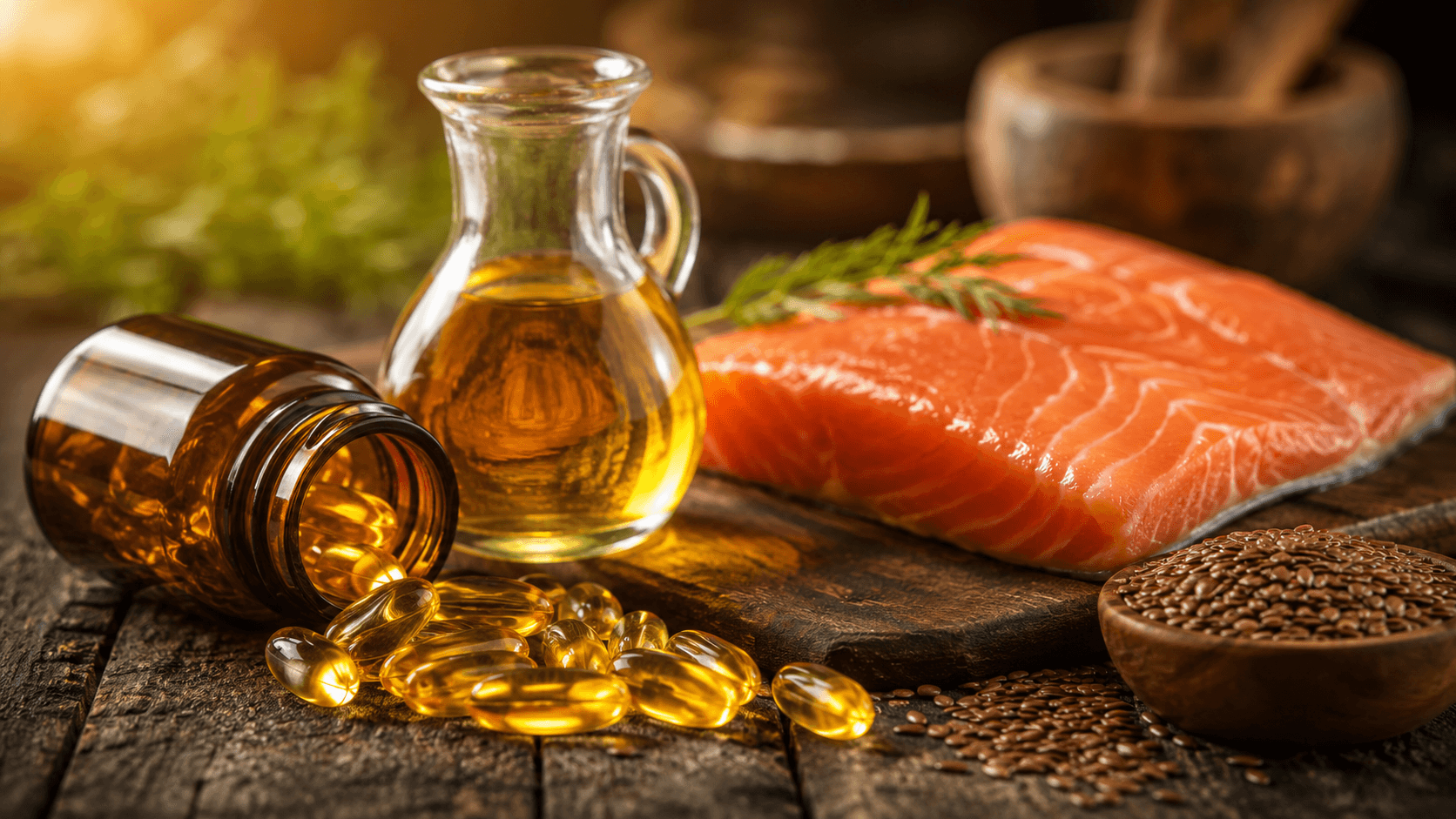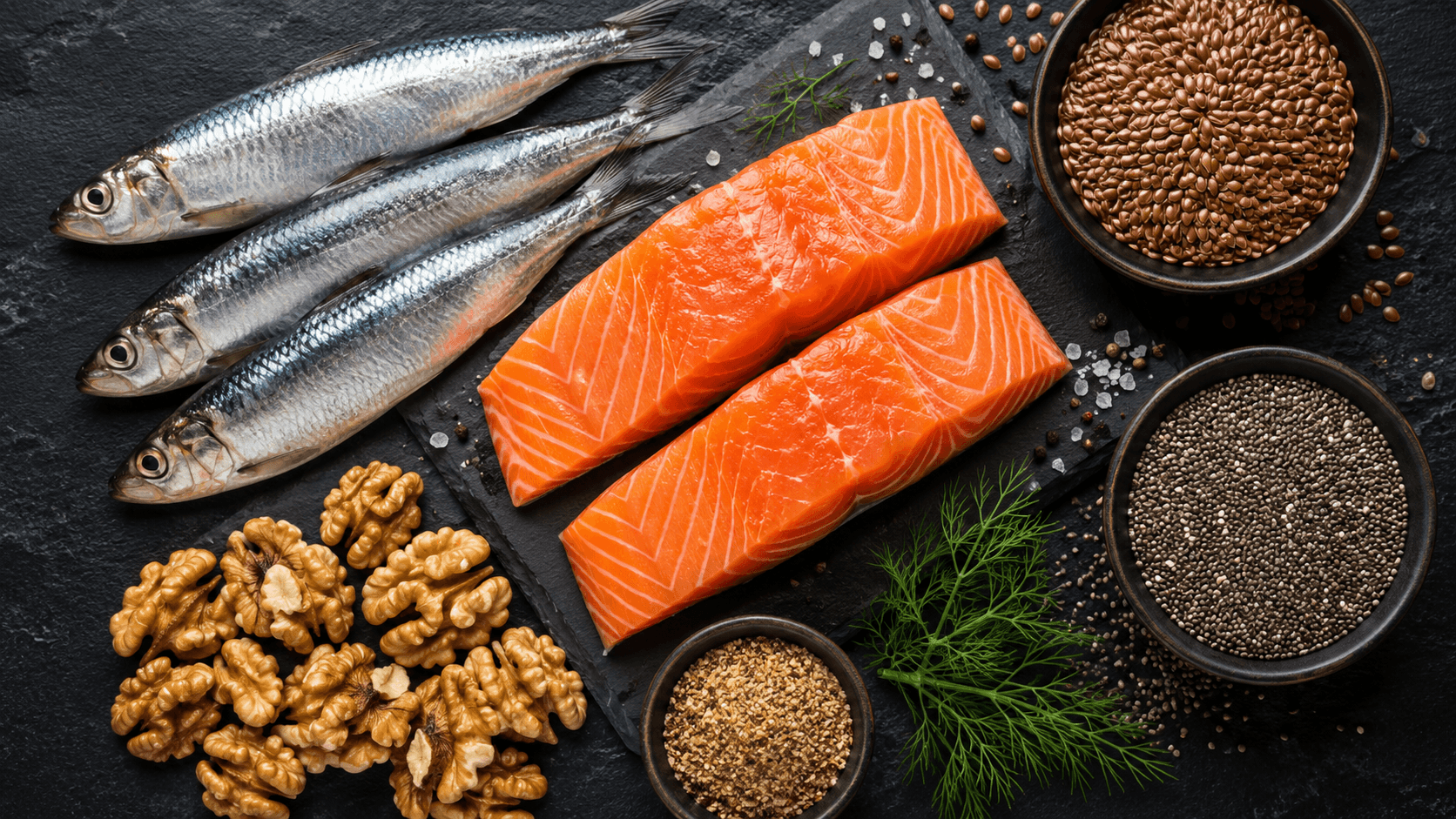
Essential fatty acids (EFAs) are the two categories of fat the human body cannot produce on its own and must obtain from food: omega-3 and omega-6. Every cell membrane in the body is built partly from these fats. Every brain cell. Every retinal cell. The signaling molecules that regulate inflammation, blood clotting, hormone production, and immune function across the body are built directly from them. They are not optional. The body cannot work properly without them. And the modern food supply has produced a situation where most people are simultaneously deficient in omega-3 and overdosed on omega-6 — a ratio collapse so dramatic that it is now arguably one of the largest single drivers of the modern chronic-disease epidemic.
The honest version of the case: a healthy human diet historically delivered omega-6 and omega-3 in a ratio of roughly 1:1 to 4:1. The modern Western diet, driven by industrial seed oils and processed food, delivers them at a ratio of 15:1 to 25:1 — sometimes higher. Translated into the language the body actually speaks: this means a chronic, sustained signaling environment for inflammation, blood vessel constriction, blood clotting, and the broader pro-disease cascade that cardiovascular disease, autoimmune disease, depression, cognitive decline, joint disease, and many cancers all share as a common underlying feature.
This article covers what essential fatty acids actually are at the molecular and signaling level, the historical ratio versus the modern catastrophe, the breakdown of omega-3 (ALA, EPA, DHA) and omega-6 (LA, GLA, AA) with what each one does, the special role of GLA and CLA, the documented benefits across cardiovascular, brain, mood, joint, hormonal, and inflammatory systems, the real food sources that should be the foundation, the seed oils that must come out, the fish oil quality and rancidity problem that determines whether any supplement actually works, the Youngevity EFA Plus product that pairs with Tangy Tangerine, and the personal protocol I follow.
What essential fatty acids actually are
Fats are long chains of carbon atoms with hydrogen attached. Three properties of the chain determine what the fat does in the body:
- Chain length — short (4–6 carbons), medium (8–12), long (14–22), or very long (24+)
- Saturation — saturated (no double bonds), monounsaturated (one), polyunsaturated (two or more)
- Position of the first double bond — counted from the methyl end of the chain. Omega-3 means the first double bond is at position 3. Omega-6 means position 6. Omega-9 means position 9 (olive oil's main fat). The position determines what enzymes can act on it and what signaling molecules it eventually becomes.
The body can manufacture saturated fats and monounsaturated fats on its own. It cannot manufacture polyunsaturated fats with double bonds at positions 3 or 6 — these are the essential fatty acids, the ones that must come from food. The two parent essential fatty acids are:
- Alpha-linolenic acid (ALA) — the parent omega-3, an 18-carbon chain with 3 double bonds. Found in flax, chia, hemp, walnuts, and leafy greens. The body can elongate ALA into the longer-chain omega-3s (EPA and DHA), but inefficiently — typically only 5–10% conversion in healthy adults, less in many people.
- Linoleic acid (LA) — the parent omega-6, an 18-carbon chain with 2 double bonds. Found in virtually all nuts, seeds, grains, and — most consequentially — in industrial seed oils. The body converts LA into longer-chain omega-6s including gamma-linolenic acid (GLA) and arachidonic acid (AA).
Both omega-3 and omega-6 are converted into eicosanoids — short-lived signaling molecules including prostaglandins, thromboxanes, and leukotrienes — that regulate inflammation, blood clotting, blood vessel dilation, immune response, and cellular communication across nearly every system in the body. Omega-3-derived eicosanoids tend to be anti-inflammatory and resolution-promoting. Omega-6-derived eicosanoids tend to be pro-inflammatory and activation-promoting. Both are necessary. The body needs both signals to work properly. What it cannot tolerate is the modern ratio that produces near-continuous inflammatory signaling with almost no anti-inflammatory counterweight.
The historical ratio versus the modern collapse
The single most important fact about essential fatty acids in 2026: the modern food supply has produced an omega-6 to omega-3 ratio in the typical diet that is 5 to 25 times what human biology was made for.
What the historical record shows:
- Hunter-gatherer diets: ratio of approximately 1:1 to 2:1 omega-6 to omega-3
- Traditional Mediterranean diet: roughly 2:1 to 4:1
- Traditional Japanese and Inuit diets: often 1:1 or even reversed in favor of omega-3
- Modern Western diet: 15:1 to 25:1, with some calculations going substantially higher
What changed: industrial extraction and processing of seed oils made omega-6 cheap and ubiquitous. Soybean oil, corn oil, canola oil, sunflower oil, safflower oil, cottonseed oil — all are heavy in omega-6 linoleic acid. These oils didn't exist in any meaningful quantity in human diets before the early 20th century. The technology to extract them at industrial scale was developed roughly a century ago. They are now in nearly every processed food, virtually every restaurant meal, most baked goods, salad dressings, margarines, fried foods, and an enormous fraction of the modern food supply. The omega-6 load coming from these sources is historically unprecedented.
At the same time, omega-3 intake has dropped. Wild fish consumption is down (and farmed fish, fed grain- based feed, contain less omega-3 than wild). Pasture- raised animal products are now the exception rather than the norm; grain-fed meat and dairy contain substantially less omega-3 than the grass-fed versions our ancestors ate. Even the eggs are different — pasture-raised eggs have several times the omega-3 of industrial cage eggs. The dietary omega-3 has collapsed at the same time the dietary omega-6 has exploded.
The result is the chronic-inflammatory state that defines modern population health: elevated CRP, elevated IL-6, elevated TNF-alpha, sustained low-grade inflammation that doesn't quite produce acute disease but accumulates over decades into cardiovascular disease, type 2 diabetes, autoimmune conditions, depression, cognitive decline, joint disease, and cancer. "Inflamm-aging" is, in significant part, essential fatty acid ratio collapse playing out at population scale.
The omega-6 to omega-3 ratio is not a minor nutritional footnote. It's one of the single most consequential measurements you can take of someone's chronic disease trajectory — and the modern food supply has tilted it against virtually everyone alive in the West today.
Omega-3 — the three forms that actually matter
Omega-3 fatty acids come in three forms with very different biological behavior:
ALA (alpha-linolenic acid) — the plant form
The parent omega-3. Found in plant foods — flax seeds, chia seeds, hemp hearts, walnuts, leafy greens. The body can convert ALA into the longer-chain omega-3s (EPA and DHA), but the conversion is inefficient: typically 5–10% to EPA, and only 0.5–5% to DHA in healthy adults. The conversion is worse in older adults, men compared to women, people with inflammatory conditions, and people with certain genetic variants.
Practical implication: plant omega-3 sources contribute, but they don't replace direct EPA and DHA consumption. Vegetarians and vegans relying solely on flax, chia, and hemp for omega-3 typically run measurably low on EPA and DHA — the omega-3s that do most of the anti-inflammatory and brain-supporting work. This is one of the harder things about a healthy vegan diet in 2026, and one of the reasons careful algae-derived EPA/DHA supplementation matters for plant-only diets.
EPA (eicosapentaenoic acid) — the anti-inflammatory powerhouse
A 20-carbon omega-3 with 5 double bonds. Found in fatty fish — wild salmon, sardines, mackerel, herring, anchovies. EPA is the precursor to the most important anti-inflammatory eicosanoids in the body, including the resolvins and protectins that actively turn off inflammation rather than just preventing it.
EPA-specific benefits documented in the clinical literature:
- Cardiovascular event reduction — the REDUCE-IT and JELIS trials both showed substantial reductions in major cardiovascular events with EPA supplementation
- Triglyceride reduction — typically 20–50% reductions at therapeutic doses
- Anti-depressant effects — most studies of omega-3 for depression find the effect concentrated in EPA rather than DHA
- Reduced joint inflammation in rheumatoid arthritis and other inflammatory joint conditions
- Improved insulin sensitivity
- Reduced systemic inflammation markers — CRP, IL-6, TNF-alpha
DHA (docosahexaenoic acid) — the brain fat
A 22-carbon omega-3 with 6 double bonds. Found in the same fatty fish as EPA, plus directly in algae (which is where the fish originally got it). DHA is the most structurally important fat in the human brain — the brain is roughly 60% fat by dry weight, and roughly 25% of that fat is DHA specifically. The retina is even more DHA-concentrated, which is why omega-3 deficiency is implicated in macular degeneration and broader visual problems.
DHA-specific benefits:
- Neural tissue structure and function — DHA is built into every neural cell membrane and required for proper neuronal signaling
- Brain development in fetuses and infants — DHA accumulation in the fetal brain during the third trimester is one of the highest-stakes nutritional events in human development
- Cognitive function in adults — higher DHA status is associated with better memory, processing speed, and resistance to age-related cognitive decline
- Reduced Alzheimer's risk — Schaefer et al. (Framingham Heart Study) found that individuals in the top quartile of DHA status had roughly 47% lower risk of Alzheimer's compared to the lowest quartile
- Vision and retinal health
- Mood support, though more weighted toward EPA than DHA in most depression studies
The practical implication for adults: both EPA and DHA are needed, and both must come from fish, algae, or quality supplements rather than from ALA conversion alone. Wild salmon, sardines, mackerel, and herring deliver both in real food form. Quality fish oil and algae supplements deliver both in concentrated form. Flax and chia alone do not.
Omega-6 — necessary but catastrophically oversupplied
Omega-6 fatty acids are not the enemy. The body requires them. Linoleic acid (LA), the parent omega-6, is necessary for cell membrane structure, skin barrier function, and the production of certain signaling molecules that the body genuinely needs. Arachidonic acid (AA), the longer-chain omega-6 the body produces from LA (or obtains directly from animal foods), is the precursor to the eicosanoids that drive acute inflammation — and acute inflammation, properly controlled and properly resolved, is what allows wound healing, immune response, and tissue repair to happen.
The problem is not omega-6 existence. The problem is omega-6 excess combined with omega-3 deficiency, which produces:
- Sustained inflammatory signaling without adequate anti-inflammatory counterweight
- Increased blood clotting tendency, elevating cardiovascular event risk
- Vascular constriction from imbalanced prostaglandin signaling
- Disrupted immune signaling contributing to autoimmune patterns
- Increased oxidative stress — polyunsaturated fats are oxidatively unstable, and the high omega-6 load in modern diets is the substrate for ongoing lipid peroxidation in tissues
Reducing omega-6 is mostly a matter of removing the industrial seed oils from the diet (covered below in the "What to avoid" section). Modest omega-6 from real-food sources — nuts, seeds, eggs, grass-fed meat — is fine and not the problem.
GLA (gamma-linolenic acid) — the special therapeutic omega-6
One specific omega-6 deserves its own section: gamma-linolenic acid (GLA). GLA is an 18-carbon omega-6 that, despite being part of the omega-6 family, produces anti-inflammatory eicosanoids rather than the pro-inflammatory ones that arachidonic acid produces. It is the rare omega-6 that helps rather than hurts the inflammatory balance.
GLA is found in only a few food sources:
- Borage oil — highest GLA content of any common source, roughly 20–25%
- Evening primrose oil — 8–10% GLA, the more commonly available source
- Black currant seed oil — 15–20% GLA
- Hemp seed oil and hemp hearts — small amounts
Documented benefits of supplemental GLA:
- Cyclical breast tenderness — covered in the women's cycle article; evening primrose oil has decades of clinical use for this
- Skin barrier function — particularly in atopic dermatitis and eczema
- Rheumatoid arthritis symptom reduction
- Diabetic peripheral neuropathy
- General anti-inflammatory support alongside the omega-3 protocol
GLA is part of the Youngevity EFA Plus formula (covered below), which is one of the reasons that product is more comprehensive than basic fish oil alone.
CLA (conjugated linoleic acid) — the grass-fed compound
Conjugated linoleic acid (CLA) is a modified form of linoleic acid found primarily in grass-fed dairy and grass-fed ruminant meat (beef, lamb, goat). The "conjugated" refers to a specific arrangement of double bonds in the molecule that gives it dramatically different biological properties than regular linoleic acid. CLA is anti-inflammatory and has documented benefits for body composition, immune function, and cancer prevention in animal models and some human studies.
Key facts about CLA:
- Grass-fed beef contains roughly 3–5x more CLA than grain-fed feedlot beef. This is one of the meaningful nutritional differences between the two, alongside the omega-3 content.
- Grass-fed butter and dairy — particularly the cultured kinds — are excellent CLA sources. The CLA in real grass-fed butter is part of why it's been used as a health food across traditional cultures for thousands of years.
- Synthetic CLA supplements exist (typically derived from safflower oil through chemical conjugation) but the synthetic isomer profile is different from the natural one, and the evidence on synthetic CLA supplements is more mixed than for natural food-source CLA.
The practical CLA strategy is to eat grass-fed beef and lamb and use grass-fed dairy fats (ghee, butter from grass-fed cows) in your kitchen rotation. Real food beats synthetic supplements in this category. The EFA Plus product does include CLA from safflower as part of its broader formula, which provides supplemental coverage on top of the food sources.
Benefits across systems — what the literature actually shows
The clinical literature on essential fatty acids is extensive. The condensed picture of where the documented benefits are strongest:
Cardiovascular
- Reduced cardiovascular events — the GISSI-Prevenzione trial showed omega-3 reduced sudden cardiac death by roughly 45% in post-myocardial-infarction patients. The Japanese JELIS trial showed EPA reduced major coronary events by ~19% over five years.
- Triglyceride reduction of 20–50% at therapeutic doses
- Blood pressure reduction — modest but consistent across studies
- Improved HDL/LDL ratio
- Reduced atherosclerotic progression in some long-term studies
- Reduced arrhythmia incidence particularly in vulnerable populations
Brain and cognition
- Reduced Alzheimer's risk — Framingham data showed top-quartile DHA had ~47% lower Alzheimer's risk than bottom quartile
- Better cognitive performance in older adults across multiple cohort studies
- Slower age-related cognitive decline
- Critical for fetal brain development — pregnancy DHA intake correlates with infant cognitive outcomes
- Reduced ADHD symptoms in children in multiple controlled trials
Mood and mental health
- Antidepressant effects — multiple meta-analyses have shown omega-3 (particularly EPA- dominant formulations) produces significant reductions in depression symptoms, with effect sizes comparable to or exceeding some prescription antidepressants
- Anxiety reduction
- Bipolar mood stabilization — added to standard treatment, omega-3 has shown benefit in multiple trials
- Improved mood in postpartum women — maternal omega-3 status correlates inversely with postpartum depression incidence
Joint and inflammation
- Rheumatoid arthritis symptom reduction — well-documented, including reduced morning stiffness, joint tenderness, and NSAID use
- Osteoarthritis pain reduction
- Lower CRP, IL-6, TNF-alpha across chronic inflammatory conditions
- Inflammatory bowel disease symptom improvement
Hormonal and women's health
- PMS and menstrual cramp reduction — covered in the women's cycle article
- Improved pregnancy outcomes when maternal omega-3 status is adequate
- Fertility support in both men and women — omega-3 is required for healthy sperm and for ovulation
Other systems
- Skin barrier function — better hydration, reduced eczema and dermatitis
- Vision and macular health — DHA is critical for retinal function
- Improved insulin sensitivity
- Cancer prevention — most evidence is for breast and colorectal cancers; mechanism involves inflammation reduction and direct effects on cancer cell signaling
Real food sources — the foundation
Whole food sources are always the foundation; supplements fill the gaps. The best real-food sources of essential fatty acids:
Fatty fish (EPA and DHA)
- Wild salmon — Alaskan when possible. The single best whole-food source of EPA and DHA. Twice a week is the standard target.
- Sardines — cheap, shelf-stable, almost zero mercury, and one of the best omega-3 sources on a per-dollar basis. A tin of sardines on sourdough with olive oil and lemon is an EFA-perfect meal in three minutes.
- Mackerel — particularly Atlantic mackerel, which is low-mercury and high-omega-3. Spanish/king mackerel are higher-mercury and worth limiting.
- Herring — traditional Northern European omega-3 food, often available as kippered herring
- Anchovies — small, low-mercury, dense in omega-3
- Trout (rainbow and lake) — solid omega-3 content with lower mercury than larger fish
Pasture-raised meat and eggs
- Grass-fed beef and lamb — contain meaningful omega-3 and substantial CLA; grain-fed feedlot meat contains far less of both
- Pasture-raised eggs — yolks contain several times the omega-3 of industrial cage egg yolks
- Game meat (venison, elk) — very high omega-3 because the animals eat their natural wild diet
Plant ALA sources
- Hemp hearts — covered in detail in their dedicated article. One of the best plant omega-3 sources with a useful omega-3 to omega-6 ratio.
- Ground flax seeds — must be ground for the body to access the oils. Highest plant ALA content of common foods.
- Chia seeds — another excellent ALA source, plus fiber and a variety of micronutrients
- Walnuts — meaningful ALA plus a broader micronutrient profile
- Leafy greens — modest but cumulative ALA
- Algae oil supplements — the only vegan source of pre-formed EPA and DHA
What to avoid — industrial seed oils
The single most consequential dietary change for improving the omega-6:omega-3 ratio is removing industrial seed oils from the kitchen and minimizing them in restaurant food. The seed oils to specifically avoid:
- Soybean oil — by far the most- consumed seed oil in the US food supply, in virtually every processed food
- Corn oil
- Canola oil (rapeseed) — sometimes marketed as healthy because of its lower omega-6 content vs. soybean, but still industrial-processed and oxidatively unstable
- Sunflower oil
- Safflower oil
- Cottonseed oil
- Grapeseed oil
- Rice bran oil
- "Vegetable oil" (typically a blend of the above)
What to use instead — all covered in their own articles:
- Real extra-virgin olive oil — high in monounsaturated omega-9 (not essential but cardiovascularly beneficial), with polyphenol support
- Coconut oil — stable saturated fat for high-heat cooking
- Grass-fed beef tallow — stable animal fat, with K2 and CLA from grass-fed sources
- Ghee and grass-fed butter
- Avocado oil — high monounsaturated, stable at moderate heat
Removing industrial seed oils does more for the omega-6:omega-3 ratio than any amount of fish oil supplementation can. The omega-3 has to come in, but the omega-6 also has to come down. Both ends of the equation matter.
The fish oil quality and rancidity problem
One of the most under-discussed facts about fish oil supplementation is that a significant fraction of fish oil products on the market are oxidized (rancid) before they reach the consumer. Polyunsaturated fats are oxidatively unstable by nature — the same double bonds that make them anti-inflammatory when fresh make them pro-oxidant and pro-inflammatory when degraded. A rancid fish oil supplement can actively work against the benefits you're trying to obtain by taking it.
What separates quality from junk:
- Third-party testing for oxidation (peroxide value, anisidine value, totox value) and heavy metals
- Manufacture and best-by dates on the label — fresh fish oil shouldn't sit for years
- Dark glass or opaque packaging — light accelerates oxidation
- Refrigeration recommendation for liquid products; refrigeration storage at home regardless of label instructions
- Smell test — fresh fish oil smells like fish, lightly and pleasantly. Rancid fish oil smells aggressively fishy, oily, or like old paint. Capsules that produce strong fishy burps after ingestion are typically rancid.
- Sourcing transparency — quality brands disclose what fish their oil comes from and how it was processed
- Antioxidant inclusion — quality products include vitamin E or other antioxidants to slow oxidation in the bottle
Quality brands worth knowing
- Nordic Naturals — gold standard for clinical fish oil; widely third-party tested; high freshness; broad product line including high-EPA and high-DHA formulations
- Carlson Labs — Norwegian-sourced, freshness-focused, well-respected in clinical use
- Pure Encapsulations — the brand referenced across the mineral articles also makes quality EFA products
- Garden of Life — broad natural- health line including quality fish and plant oils
- Sports Research — accessible quality option widely available on Amazon
- Youngevity EFA Plus — the product covered next; the comprehensive formula that pairs with Tangy Tangerine for the full Wallach 90-nutrient framework
Youngevity EFA Plus — the comprehensive formula
EFA Plus is Youngevity's essential fatty acid product, designed by Dr. Joel Wallach as the fat-soluble companion to Beyond Tangy Tangerine. The Tangy Tangerine powder delivers the water-soluble vitamins, minerals, amino acids, and antioxidants. EFA Plus delivers the fat-soluble side of the 90-essential- nutrients framework — the omega-3, omega-6, GLA, and CLA the body needs but that the modern diet consistently fails to supply in the right proportions.
What's in each capsule:
- Fish oil providing EPA and DHA — the long-chain omega-3s the body needs for inflammation resolution, cardiovascular support, and brain function
- Flaxseed oil providing ALA — the plant omega-3 that contributes to the overall omega-3 picture alongside the fish-sourced EPA and DHA
- Borage oil providing GLA — the anti-inflammatory omega-6 that addresses the specific therapeutic case for GLA covered earlier
- Safflower oil providing CLA — the conjugated linoleic acid that supports body composition and inflammation control alongside the grass-fed-meat food sources
- Vitamin E as an antioxidant to stabilize the polyunsaturated fats in the capsule and contribute to the body's fat-soluble vitamin intake
The product specifically addresses the criticism that most fish oil supplements only deliver EPA and DHA without covering the broader EFA picture. By combining all four major essential fatty acid categories (omega- 3 EPA/DHA, omega-3 ALA, omega-6 GLA, and CLA), EFA Plus functions as a comprehensive single-product solution for the fat-soluble nutritional gaps that Wallach identified decades ago.
The same caveats from the Tangy Tangerine article apply — Youngevity is an MLM, the Amazon listings are typically third-party resellers at potentially marked- up prices, and buying direct from youngevity.com through an authorized distributor is typically the cleaner option. The product itself is a high-quality comprehensive formula regardless of distribution channel.
My approach
The way I personally use EFA supplementation, layered on top of the broader real-food protocol covered across this site:
- One to two EFA Plus capsules per day, usually after a meal. Fat-soluble nutrients absorb better with food, particularly with food that contains some fat to trigger the bile and lipase release that emulsifies and digests the capsule contents. Taking EFA capsules on an empty stomach is a common mistake that reduces absorption substantially.
- Wild salmon two to three times a week as the foundational whole-food omega-3 source. The EFA capsule supplements the salmon, not the other way around.
- Sardines weekly in some form — on sourdough with olive oil, in a salad, mashed onto toast. Cheap, shelf-stable, and excellent.
- Pasture-raised eggs daily — the yolks contribute meaningful omega-3 plus the broader nutrient profile covered in the B-vitamins article
- Hemp hearts in protein shakes and on oatmeal — additional plant ALA on top of the animal-source EPA and DHA
- Grass-fed beef in regular rotation — for the CLA, the omega-3 content, and the broader clean-meat protein foundation
- Zero industrial seed oils in the home kitchen — only real fats: olive oil, coconut oil, beef tallow, ghee, grass-fed butter
- EFA Plus paired with the rest of the Wallach stack — alongside the half-serving of Tangy Tangerine covered in that article. The two products are designed to work together as the water-soluble and fat-soluble halves of the 90-nutrient framework.
How to start
- Fix the omega-6 side first. Cut industrial seed oils from your kitchen — replace them with olive oil, coconut oil, butter, ghee, and tallow. This change does more for the ratio than any supplement.
- Add fatty fish 2–3 times a week. Wild salmon, sardines, mackerel, herring. The whole- food foundation.
- Start with 1 EFA Plus capsule per day after a meal. Build to 2 if your diet is lower on fatty fish or your inflammation markers warrant more aggressive supplementation. Take with a meal that contains some fat for absorption.
- Buy quality. Whichever fish oil or EFA product you choose, prioritize freshness, third- party testing, and a brand with a reputation worth protecting. The cheapest fish oil at the grocery store is often rancid and counterproductive.
- Refrigerate after opening. Slow the oxidation of the bottle's contents. Liquid fish oil should always live in the fridge; capsules benefit from refrigeration too.
- Add plant ALA sources — ground flax, chia, hemp hearts, walnuts. Not as replacements for EPA and DHA but as additions to the broader EFA picture.
- Give it 8–12 weeks before judging effects. Tissue fatty acid composition takes months to fully shift. Inflammation markers, joint symptoms, mood, and cognitive markers all respond to the protocol over weeks to months rather than days.
- Test if you want hard data. Omega-3 index testing (OmegaQuant and others) measures the percentage of EPA and DHA in red blood cell membranes. Target is >8%; most modern adults test in the 3–5% range before intervention.
Honest cautions
- Blood-thinning medications — warfarin (Coumadin), apixaban (Eliquis), rivaroxaban (Xarelto), aspirin, clopidogrel (Plavix). High-dose fish oil has blood-thinning effects of its own and can compound the effect of these medications. Coordinate with your prescribing physician.
- Pre-surgical caution — most surgeons recommend stopping fish oil 1–2 weeks before scheduled surgery to allow bleeding time to normalize.
- Pregnancy and breastfeeding — omega-3 is important during these life stages, but the specific dose and source warrant practitioner guidance, particularly to avoid high-mercury fish and contaminated fish oils
- Fish allergies — obviously a contraindication for fish oil. Algae oil is the alternative for getting EPA and DHA without fish.
- Rancid product warning — if your fish oil tastes or smells aggressively fishy or produces strong fishy aftertaste/burps, it's likely rancid and should be replaced. Rancid fish oil is worse than no fish oil.
- Don't over-rely on supplementation — the supplement supplements the food, not the other way around. Whole food sources are always the foundation. EFA Plus or any fish oil product cannot fix a diet built on industrial seed oils and processed food.
- Soybean and corn oil hide in unexpected places — including "vegetable oil," salad dressings, mayonnaise, fried food, baked goods, and most processed packaged food. Reading labels is part of the protocol.
What I actually use
Closing
Essential fatty acids are not a peripheral health topic. The omega-6 to omega-3 ratio is one of the single most consequential measurements of someone's chronic disease trajectory, and the modern food supply has tilted that ratio against virtually everyone alive in the West today. The mechanism is mechanistic — every cell membrane in the body, every signaling molecule that regulates inflammation, every neural cell, every retinal cell, depends on the right balance of these fats in the right proportions. The chronic disease epidemic of the modern world is, in significant part, ratio collapse playing out at population scale.
The fix is simple in structure if not always in execution: remove the industrial seed oils, eat fatty fish two or three times a week, eat grass-fed meat and pasture-raised eggs, add quality EFA supplementation to close the remaining gap, and run it for months. The body responds within weeks on some markers (triglycerides, mood, inflammation) and months on others (joint health, cognitive function, omega-3 index). The accumulated benefits across cardiovascular, brain, mood, joint, and hormonal health compound over years.
For me, EFA Plus has been part of the protocol alongside the rest of the Wallach 90-nutrient stack for a long time. One to two capsules after a meal, most days, on top of the wild salmon and sardines and pasture-raised eggs and grass-fed meat that do most of the actual nutritional work. The supplement fills in what the food doesn't fully cover. The food does the rest. The seed oils stay out. The ratio stays in the range the body was actually made for.
Sources & further reading
- Simopoulos, 'The Importance of the Ratio of Omega-6/Omega-3 Essential Fatty Acids' — Biomedicine & Pharmacotherapy, 2002 (the foundational paper on the ratio problem)
- Simopoulos, 'An Increase in the Omega-6/Omega-3 Fatty Acid Ratio Increases the Risk for Obesity and Inflammation' — Nutrients, 2016
- GISSI-Prevenzione Investigators, 'Dietary supplementation with n-3 polyunsaturated fatty acids and vitamin E after myocardial infarction' — The Lancet, 1999
- Yokoyama et al. (JELIS), 'Effects of eicosapentaenoic acid on major coronary events in hypercholesterolaemic patients' — The Lancet, 2007
- Bhatt et al. (REDUCE-IT), 'Cardiovascular Risk Reduction with Icosapent Ethyl for Hypertriglyceridemia' — New England Journal of Medicine, 2019
- Schaefer et al., 'Plasma phosphatidylcholine docosahexaenoic acid content and risk of dementia and Alzheimer disease: the Framingham Heart Study' — Archives of Neurology, 2006
- Mocking et al., 'Meta-analysis and meta-regression of omega-3 polyunsaturated fatty acid supplementation for major depressive disorder' — Translational Psychiatry, 2016
- Calder, 'Omega-3 fatty acids and inflammatory processes: from molecules to man' — Biochemical Society Transactions, 2017 (comprehensive mechanism review)
- Harris, 'The Omega-3 Index: a new risk factor for death from coronary heart disease?' — Preventive Medicine, 2004 (the omega-3 index concept)
- Cordain et al., 'Origins and evolution of the Western diet: health implications for the 21st century' — American Journal of Clinical Nutrition, 2005
- Dr. Joel Wallach & Dr. Ma Lan — Youngevity EFA Plus product information
- Nordic Naturals — Ultimate Omega product page
- OmegaQuant — Omega-3 Index testing
- Dr. Eric Berg — Essential Fatty Acids overview (representative)
- Dr. Mark Sircus — broader fatty acid and inflammation framework