The egg is about the closest thing to a complete food that exists, and you can buy a dozen of them for a few dollars at any store in the country. Complete protein, a long list of vitamins and minerals, healthy fats, and one of the best dietary sources of choline on the planet — all wrapped in a shell, shelf-stable for weeks, and cookable in five minutes by anyone. If a supplement company could patent the egg, they'd sell it as a miracle. They can't, so instead the egg spent forty years being blamed for heart disease on a theory that never held up. This article is about what's actually in an egg, why the part everyone was told to throw away is the best part, and why two or three a day is one of the simplest upgrades most people could make to how they eat.
The fear was manufactured
For most of living memory, the egg was treated as something to ration. Doctors warned against it. “Heart-healthy” campaigns pushed egg-white omelets and egg substitutes in a carton. An entire generation grew up believing that the yolk was a little yellow time bomb for the arteries. None of it was ever well supported, and the people pushing it have quietly walked most of it back — without much of an apology to the food they spent decades slandering.
The whole scare rested on one tidy-sounding idea: eggs are high in cholesterol, cholesterol clogs arteries, therefore eggs cause heart disease. Every step of that chain turns out to be either wrong or far more complicated than the slogan, and the slogan is what got taught for two generations.
The cholesterol myth, briefly
Here is the part that quietly dismantles the whole egg scare: the cholesterol you eat is not the cholesterol in your blood. Your liver makes the large majority of the cholesterol in your body— it's so important that the body refuses to leave the supply to chance. Eat more cholesterol and a healthy liver simply makes less; eat less and it makes more. The system is self-regulating in most people, which is exactly why decades of studies failed to find the clean link between eating eggs and heart disease that everyone assumed must be there.
The official story has been catching up to this for years. The U.S. Dietary Guidelines, which had capped dietary cholesterol at 300 mg a day for decades, quietly dropped that limit in the 2015–2020 edition, conceding that dietary cholesterol is “not a nutrient of concern for overconsumption.” That is an enormous reversal stated in the smallest possible voice. The food that was rationed on cholesterol grounds was de-listed as a concern, and almost no one was told.
The cholesterol you eat is not the cholesterol in your blood. Your liver makes most of it and adjusts production to match — which is why forty years of looking never found the link the egg was convicted on.
And there's a deeper point the fear-mongering missed entirely: cholesterol is not a poison the body tolerates — it's a raw material the body requires. It's the precursor your body uses to build testosterone, estrogen, and the other steroid hormones; it's the backbone of vitamin D synthesis in the skin; it builds the membrane of every cell and the sheath around every nerve. A diet engineered to drive cholesterol as low as possible is not obviously a healthy one. (This is part of why the natural testosterone article treats dietary cholesterol from eggs and other whole foods as support, not sabotage.)
What's actually in an egg
Strip away the politics and look at the food itself. A single egg is one of the most nutrient-dense things in the average kitchen:
- Complete protein. The egg contains all nine essential amino acids in such ideal proportion that nutrition science literally used it as the reference standard against which the protein quality of every other food was scored. About 6–7 grams of the most usable protein you can eat, per egg.
- Choline. One of the best dietary sources there is. A couple of eggs covers a large share of the daily requirement for a nutrient most people are short on — and choline is foundational for the brain (it builds acetylcholine, the memory and focus neurotransmitter), for the liver, and for a developing baby's brain in pregnancy.
- Vitamin B12 — for nerves, energy, and red blood cells (see the B12 article).
- Vitamin D — eggs are one of the few whole foods that contain it at all, concentrated in the yolk (see the vitamin D article).
- Vitamin A, riboflavin, selenium, iodine, and more — a broad spread of vitamins and trace minerals in a single package.
- Lutein and zeaxanthin — the two carotenoids that concentrate in the retina and protect long-term eye health; egg yolk is one of the most bioavailable sources of them.
- Healthy fats and cholesterol — the raw materials for hormones, cell membranes, and the absorption of all those fat-soluble vitamins it carries.
Put together, that's protein, brain nutrition, eye protection, hormone-building raw material, and a spread of vitamins and minerals — in a food that costs pennies and stores for weeks. The body was built to run on whole foods like this, assembled and complete, not on isolated nutrients in a pill. The egg is whole food doing what whole food does.
The yolk is the point
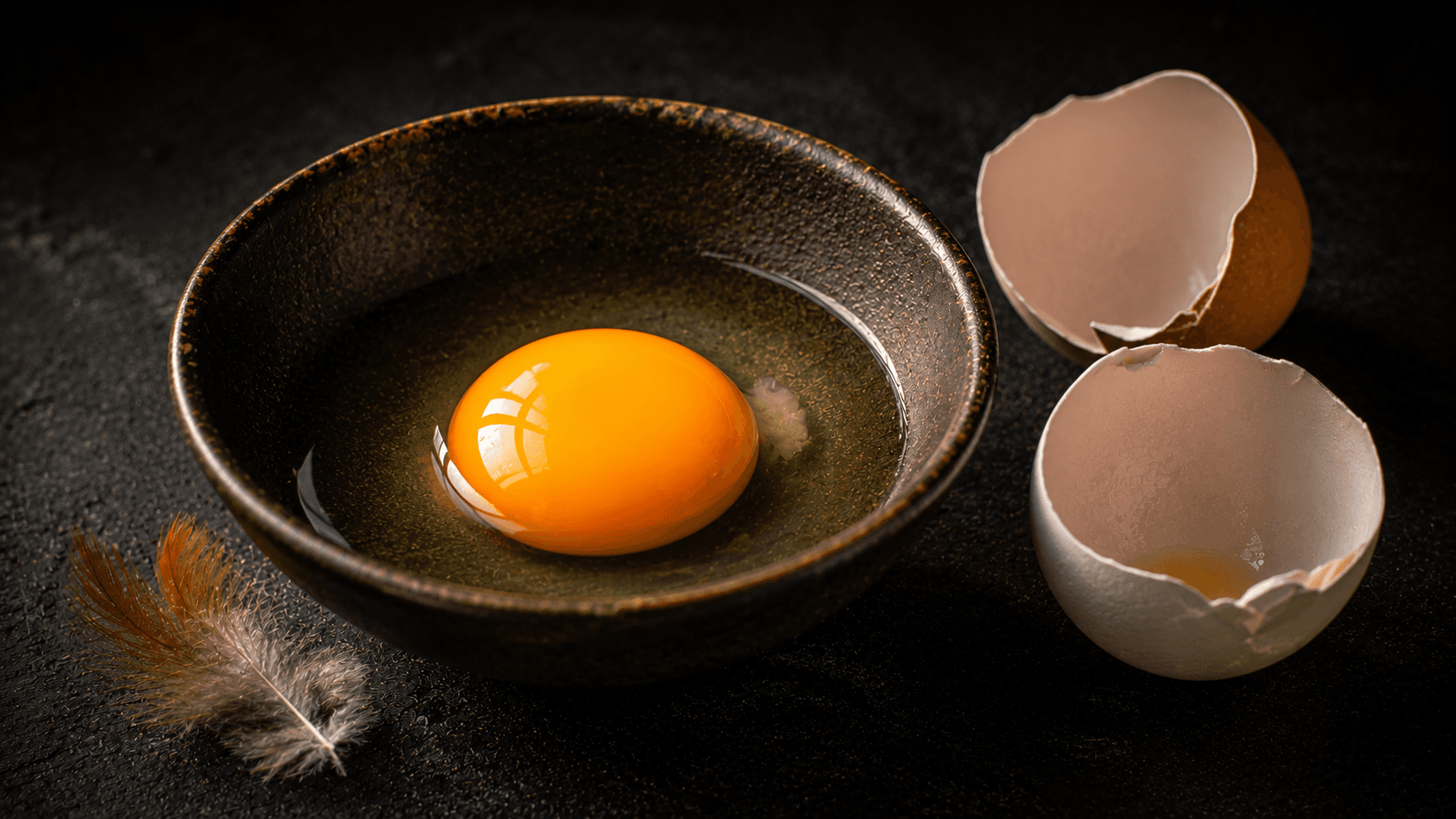
The single most counterproductive thing the egg scare produced was the egg-white omelet — the idea that the “healthy” move is to throw the yolk in the trash and eat the white. It's almost exactly backwards. The white is mostly protein and water. The yolk is where nearly all the value lives: the choline, the vitamin D and A, the lutein and zeaxanthin, the riboflavin, most of the minerals, the healthy fats, and the fat-soluble vitamins those fats carry. Throwing away the yolk to avoid the cholesterol is discarding the most nutritious part of one of the most nutritious foods, on the strength of a fear that never panned out.
Eat the whole egg. The yolk isn't the thing to fear about an egg — it's the reason to eat one.
Pastured vs. conventional
All eggs are good. Some are noticeably better. The difference comes down to how the hen lived and what she ate.
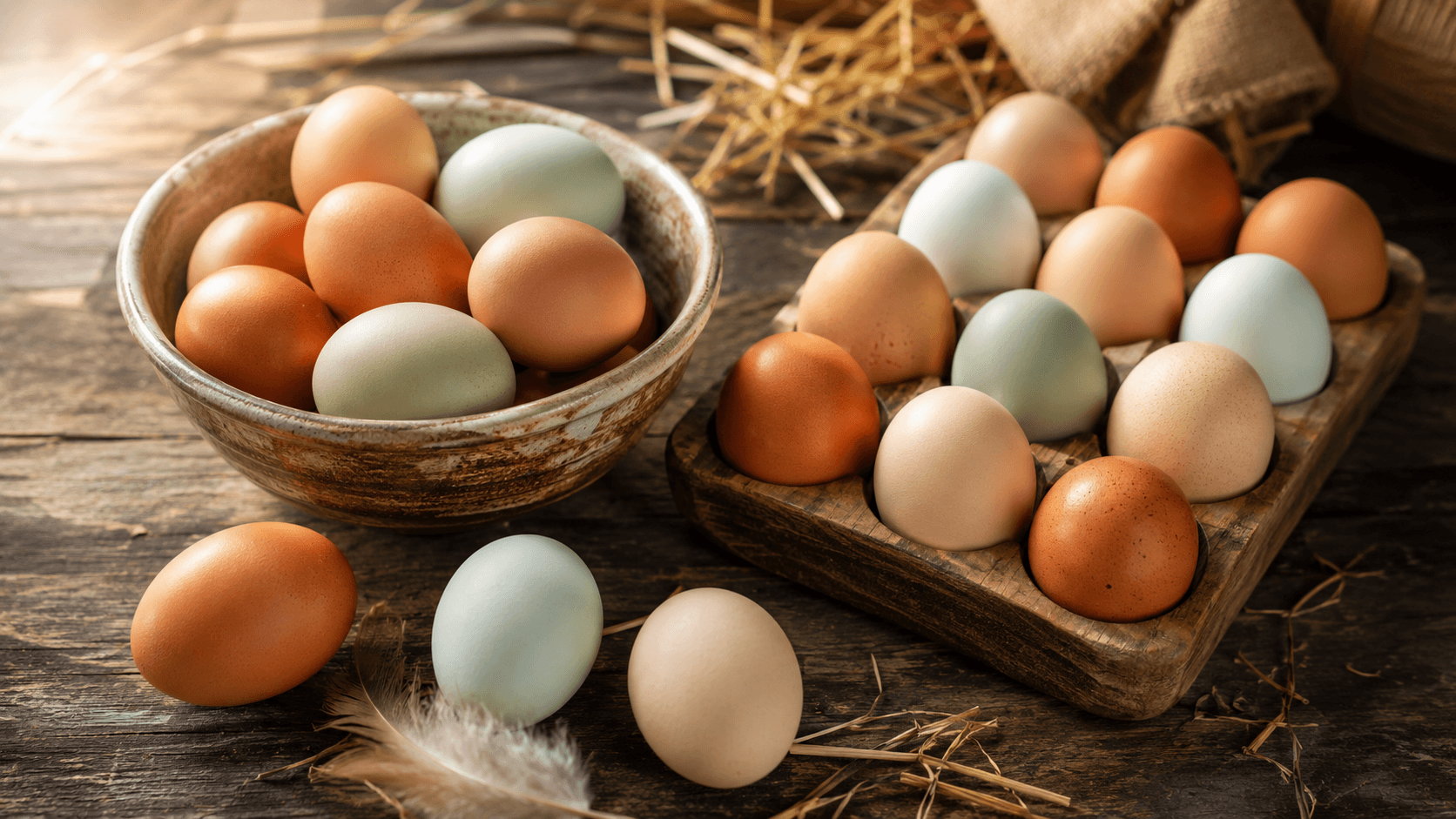
A hen out on real pasture — eating grass, bugs, and seeds in actual sunlight, the way a chicken is meant to live — lays a measurably different egg than a hen confined indoors and fed only grain. Pasture-raised eggs run higher in omega-3 fats, vitamin D, vitamin A, and vitamin E, with a better omega-3 to omega-6 ratio (which matters for the reasons covered in the essential fatty acids article). You can often see it: a true pastured yolk is a deep orange, not the pale yellow of a confinement egg. That color is carotenoids — the nutrition showing up in the bowl.
A note on the labels, because they're engineered to confuse:
- “Pasture-raised” is the one that actually means the hens spent real time outdoors on land. This is the label worth paying for.
- “Free-range” and “cage-free” sound similar but are far weaker — they can mean a crowded barn with a small door to a tiny porch. Better than battery cages, not the same as pasture.
- Best of all: eggs from a local farmer you can actually talk to, or from your own backyard hens. Fresh, pastured, and traceable beats any carton.
Don't let the sourcing question stop you, though. If pasture-raised isn't in the budget, conventional eggs are still a genuinely good food and far better than most of what they'd replace. Buy the best you can afford and eat them.
How to cook them
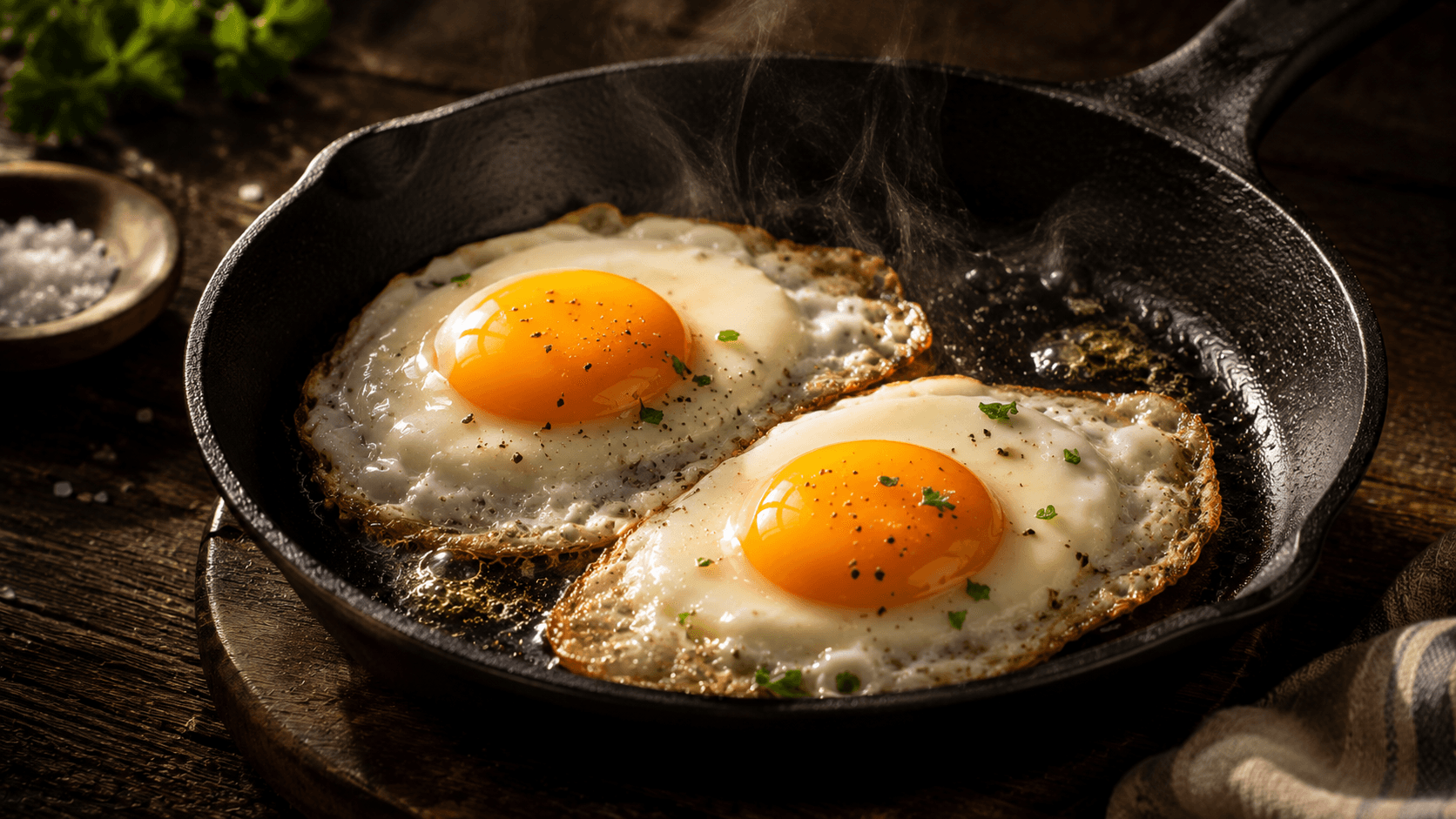
One simple principle covers most of it: protect the yolk. The delicate fats and the cholesterol in the yolk are more prone to heat damage and oxidation the harder and longer you cook them. So the gentler, lower-heat preparations that leave the yolk soft and runny preserve the most nutrition, while blasting eggs at high heat until the yolk is dry and chalky degrades some of what makes them worth eating.
- Best: soft-boiled, poached, or over-easy — gentle heat, the yolk left runny.
- Good: a slow, low-heat soft scramble, cooked in butter, ghee, or a stable fat rather than seed oil.
- Least ideal: hard-frying at high heat until the edges are brown and crisp, or hard-boiling until the yolk is dusty and grey-rimmed.
Cook them in a stable fat — butter, ghee, coconut oil, or beef tallow are all good choices — not a seed oil, which oxidizes and defeats the purpose. The fat you cook the egg in matters almost as much as the egg.
A clean food
Worth a brief note for anyone eating by the biblical dietary framework: the egg of a clean bird is a clean food, and the chicken sits squarely on the clean side of the line. Eggs aren't a gray area or a compromise — they're among the simplest, cleanest whole foods available. The clean and unclean foods article covers the broader framework; the short version is that the egg belongs comfortably inside it.
How I do this
My own approach is unfussy. I aim for two or three eggs a day— though honestly, some days I don't eat any at all, and I don't worry about it when that happens. There's no rigid count to hit. But two or three a day is the rhythm I come back to, and it's what I'd point most people toward: enough to make a real contribution to the day's protein and choline without it ever becoming a chore.
- Two or three a day, most days. Some days none — and that's fine. The point is the steady habit over time, not a daily quota.
- Pasture-raised when I can get them. Deep orange yolks, from a local source or the best carton available. When that's not an option, regular eggs still get eaten without a second thought.
- Yolks soft, never thrown away. Soft-cooked, over-easy, or a gentle scramble. The whole egg, every time — the yolk is the reason I'm eating it.
- Cooked in a stable fat. Butter, ghee, or another real fat — never a seed oil.
Closing
The egg is one of the great quiet examples of the mainstream getting it exactly backwards. A cheap, accessible, near-complete food — protein, choline, the fat-soluble vitamins, the hormone-building raw materials, all in a five-minute package — got demonized for two generations on a cholesterol theory that the people who pushed it have since walked back in the smallest possible print. The fear was never warranted. The food was always good.
Eat the whole egg. Buy the best ones you can. Keep the yolk soft and cook it in a real fat. Two or three a day, most days, is one of the simplest, cheapest upgrades a person can make to how they eat — a superfood hiding in plain sight, on every shelf, for the price of almost nothing.
Sources & further reading
- 2015–2020 Dietary Guidelines for Americans — the edition that dropped the 300mg dietary-cholesterol limit
- Dr. Eric Berg — Why Eggs Won't Raise Your Cholesterol (representative)
- Thomas DeLauer — The Health Benefits of Eggs / choline and the whole egg (representative)
- Zeisel & da Costa, 'Choline: an essential nutrient for public health' — Nutrition Reviews, 2009
- Fernandez, 'Dietary cholesterol provided by eggs and plasma lipoproteins in healthy populations' — Current Opinion in Clinical Nutrition, 2006
- Lutein and zeaxanthin and eye health (AREDS-related research overview)
- Related on this site — Clean and unclean foods
- Related on this site — Natural testosterone
- Related on this site — Essential fatty acids