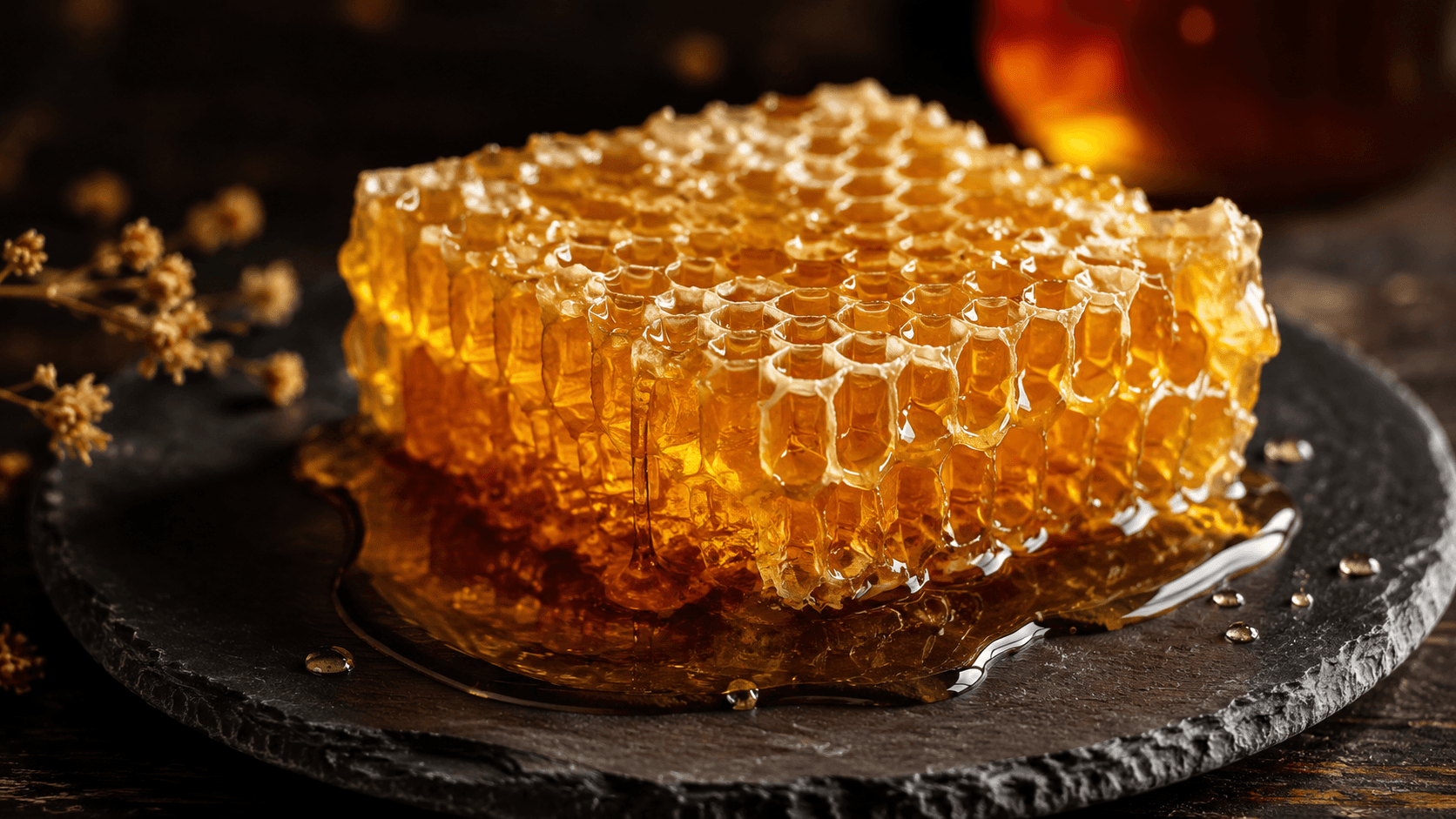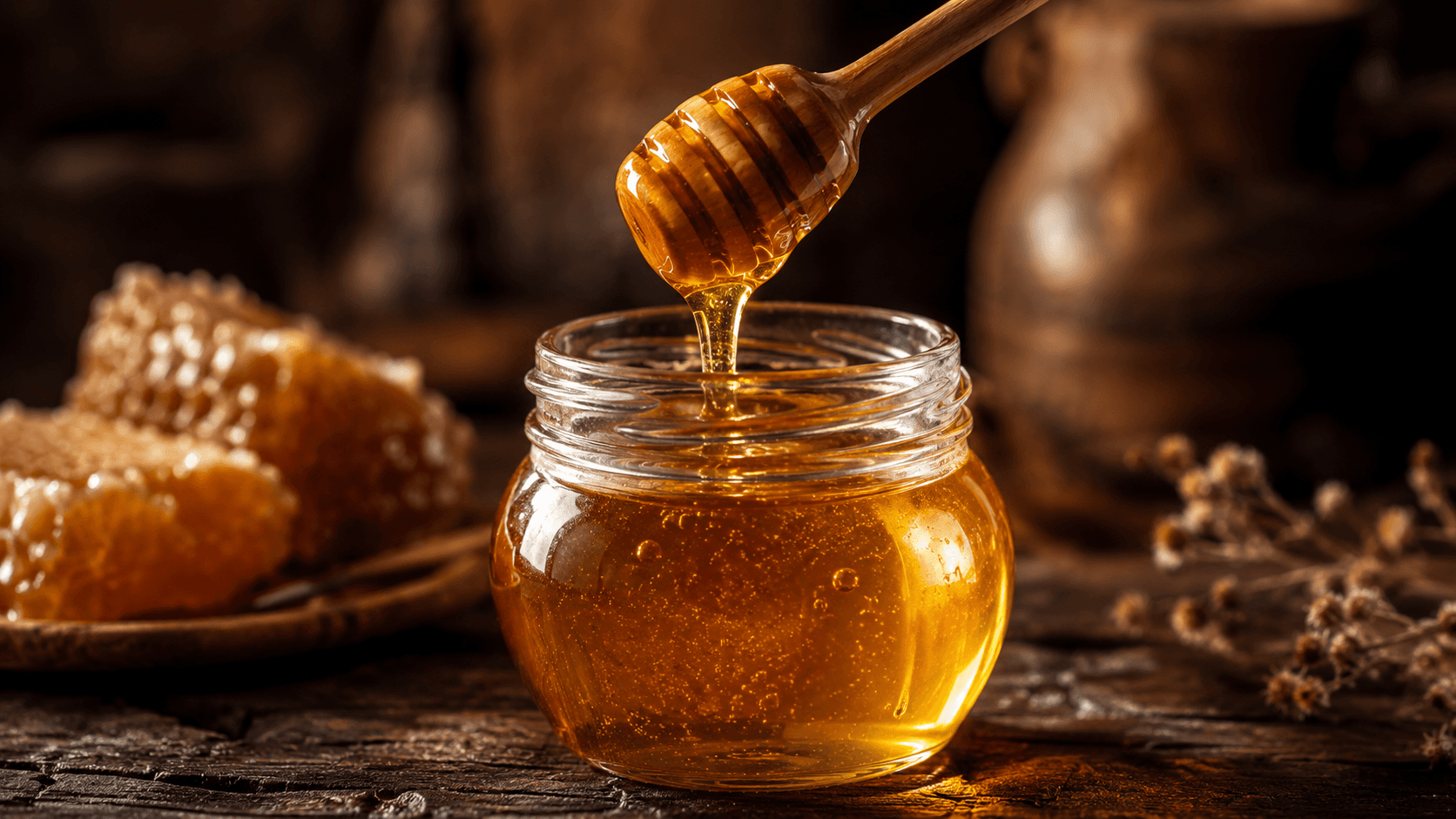
Honey is one of the most ancient and powerful natural medicines humanity has ever used. It is also, in modern American grocery stores, one of the most counterfeited foods on the planet. By the assessment of multiple independent investigations — including a landmark study by the pollenology lab at Texas A&M University and a subsequent Food Safety News investigation — 77% of honey samples from major US big-box retailers contained no pollen at all, and 100% of honey samples from CVS, Walgreens, and Rite Aid pharmacy aisles contained zero pollen. Under the FDA's own technical definition, honey without pollen cannot legally be called honey. And yet it is sold under that name in tens of thousands of stores across the country every single day.
The fake-honey problem is on par with the olive oil fraud situation we covered earlier — and arguably worse, because honey marketing leans so heavily on words like "pure," "raw," "natural," and "organic" that consumers reasonably believe they're getting the ancient medicinal food they imagine. Most are getting something quite different: a thoroughly heat-treated, ultra-filtered, frequently rice-syrup-or-corn-syrup-cut industrial sweetener that has lost the pollen, the enzymes, the antioxidants, the antimicrobial activity, and almost everything else that ever made honey medicinal. It looks like honey on the shelf. It pours like honey. It tastes vaguely like honey. It is, by every meaningful biochemical measure, not honey.
This article is the long version of the conversation most people never get. What real honey actually does, why the modern supermarket version doesn't do it, the fifteen specific brands that have failed lab testing or been named in fraud lawsuits, the five brands genuinely worth your money (three of which I personally buy), the Manuka honey case, the four at-home tests anyone can use to spot fake honey in seconds, and the daily protocol I actually follow. This is the article I wish someone had written for me a decade ago.
What real honey actually is
Real, raw honey is one of the most chemically complex single foods in the human diet. It contains:
- Pollen — the "fingerprint" of honey. Pollen tells you what flowers the bees visited and allows the honey's geographic origin to be traced. Pollen also carries its own nutritional and immunological contribution (see the bee pollen article).
- Live enzymes — glucose oxidase (produces small amounts of hydrogen peroxide, which is partly responsible for honey's antibacterial action), invertase, diastase, and others. Heat destroys these.
- Antioxidants and polyphenols — flavonoids and phenolic acids that give darker honeys their high ORAC values.
- Vitamins and minerals — small but meaningful amounts of vitamin C, B vitamins, calcium, iron, magnesium, potassium, and zinc.
- Trace amounts of propolis and royal jelly — additional bee-derived antimicrobial and bioactive compounds.
- Roughly 200 distinct chemical compounds in total — far from the simple "sugar with flavor" description most consumers have.
The biochemistry matters because it is the entire reason honey is medicinal rather than just sweet. Strip out the pollen, the enzymes, the antioxidants, and the bee-derived compounds, and you're left with what industrial filtered "honey" actually is — sugar water with no medicinal value, and frequently cut with cheaper syrups for additional profit margin.
What real honey does — the documented benefits
The medical literature on real raw honey is remarkably strong. Most of these effects disappear completely with industrial processing, which is part of why the fake-honey problem matters so much.
Antibacterial and antimicrobial
Honey has been used as a wound dressing for over 4,000 years. Modern medicine has come back around to it — medical-grade honey (typically Manuka) is used in hospitals today for burns, ulcers, surgical wounds, and infections that don't respond to conventional antibiotics, including some MRSA infections. The antibacterial action comes from multiple mechanisms working simultaneously: high sugar concentration (osmotic stress on bacteria), low pH, hydrogen peroxide produced by the glucose oxidase enzyme, and (in Manuka especially) methylglyoxal. The combination is broad-spectrum and bacteria have difficulty developing resistance to it, for the same reason garlic's allicin is hard to resist — multiple simultaneous attack mechanisms.
Antiviral and antifungal
Raw honey has demonstrated activity against various viral strains (including influenza and herpes simplex) and fungal pathogens (including Candida species). The mechanism is partly the same polyphenol and hydrogen peroxide chemistry, partly direct disruption of viral envelope proteins.
Cough suppressant
One of the most surprising mainstream-medicine acknowledgments of honey: multiple controlled trials have shown that a teaspoon of raw honey before bed is more effective at reducing nighttime cough in children than dextromethorphan, the active ingredient in most over-the-counter cough syrups. The Mayo Clinic and even the WHO acknowledge this in their cough management guidance. The mechanism is partly a coating/soothing effect on the throat, partly the antimicrobial action on any underlying infection, partly the antioxidant contribution.
Wound healing
Medical-grade honey accelerates wound healing through several mechanisms: it draws moisture out of the wound (osmotic action) which inhibits bacteria, it provides a moist environment that promotes tissue regeneration, and it delivers a continuous low dose of hydrogen peroxide for antimicrobial protection. Burn units, ulcer clinics, and post-surgical wound-care protocols use medical-grade honey routinely.
Local allergy support
Similar to bee pollen, locally-sourced raw honey can contribute to seasonal allergy desensitization through regular exposure to small amounts of the local pollens carried in the honey. The mechanism is the same immunotherapy-like principle covered in the bee pollen article. Local source matters specifically for this benefit.
Other documented effects
- Sleep support. A teaspoon of raw honey before bed stabilizes blood sugar through the night and may support melatonin production. A traditional sleep aid with real biochemical basis.
- Gut and prebiotic effects. Raw honey contains oligosaccharides that feed beneficial gut bacteria, plus the antimicrobial action selectively suppresses harmful organisms.
- Antioxidant load. Darker honeys (buckwheat, manuka, sourwood) have ORAC values comparable to many berries.
- Modestly better glycemic response than refined sugar despite being sweet — the fructose content and the small amounts of slowing fiber and phenolics produce a gentler blood sugar curve.
- Anti-inflammatory action through the same polyphenol pathways covered in the onion and beets articles.
Almost all of this disappears when honey is industrially processed. Which brings us to the next section.
The fake honey epidemic
The fraud takes several forms. Most supermarket "honey" has been subjected to one or more of the following:
- Overheating — exposes honey to high temperatures during bottling, which destroys enzymes and creates a toxic compound called hydroxymethylfurfural (HMF). Real raw honey has HMF levels below 10 mg/kg; processed honey can exceed 200 mg/kg.
- Ultra-filtration — heating the honey and pushing it through extremely fine filters under pressure to remove all pollen. The stated purpose is to make the product "clearer" and prevent crystallization; the actual purpose is often to destroy traceability so the honey's origin (often Asian, frequently Chinese) cannot be identified.
- Adulteration with cheap syrups — rice syrup, corn syrup (high-fructose corn syrup especially), beet syrup, or other sweeteners blended into the honey to increase volume. Modern detection looks for "manose" levels (a marker that distinguishes real honey sugars from syrup adulterants); elevated manose is a clear adulteration signal.
- Origin laundering — Chinese honey, which faces antidumping tariffs in the US and is often contaminated with banned antibiotics (chloramphenicol especially), is routinely shipped through India, Vietnam, Malaysia, Indonesia, or other countries, repackaged, and sold as a product of those countries instead. Senator Chuck Schumer has warned publicly about this for over a decade.
- Misleading "raw" and "organic" labels — neither term has legally enforced standards specific to honey in the United States (the USDA does not have its own honey-specific organic standard). The labels mean whatever the producer wants them to mean.
The headline finding from the investigative work is striking. Per the Texas A&M pollenology lab and the Food Safety News follow-up investigation:
- 77% of honey from major big-box retailers (Walmart, Costco, Sam's Club, Target) contained no pollen at all.
- 100% of honey from pharmacy chains (CVS, Walgreens, Rite Aid) contained no pollen.
- Roughly half of supermarket-brand honey generally tested below FDA standards for being legally classified as honey.
Under the FDA's own standard, honey without pollen cannot legally be called honey. That standard is ignored or quietly worked around on the shelves of almost every major American retailer.
The 15 worst brands — what failed lab testing or got sued
The following list is drawn from a combination of the Texas A&M pollen study, Food Safety News investigations, class-action lawsuits (particularly the Florida fake-honey suit and various California suits), and independent lab testing by food-fraud watchdog sites. These are not personal opinions — they are documented results.
1. Great Value Raw Honey (Walmart)
Walmart's in-house brand. Lab testing found HMF levels of 22 mg/kg in Great Value Raw Honey — more than twice the normal level for raw honey, indicating significant overheating that destroys enzymes, vitamins, and antioxidants. The Great Value Organic Raw Honey sample also contained manose levels three times higher than normal, a clear marker of syrup adulteration. Under FDA standards, this would technically disqualify it from being legally called honey.
2. Trader Joe's Manuka Honey
Trader Joe's was sued by customers in a class-action lawsuit for labeling its product as 100% New Zealand Manuka honey while lab testing showed it contained only 57–63% Manuka pollen. While an appeals court ultimately ruled the label was technically legal (because Manuka was the primary floral source), the lawsuit exposed misleading labeling and significantly diluted product. The price was a red flag — authentic premium Manuka can cost hundreds of dollars per jar; Trader Joe's version was a small fraction of that.
3. Good & Gather (Target)
Named in the Florida fake-honey lawsuit. Tests showed Good & Gather honey, including the "premium" orange blossom and clover variants, had been ultra-filtered to the point that not a single grain of pollen remained. Without pollen, there is no way to verify the floral or geographic source — and the bar of "premium" private- label organic honey has been quietly dropped to "may as well be generic syrup."
4. Nice! (Walgreens)
The Texas A&M pollenology lab found that 100% of honey samples from Walgreens contained no pollen whatsoever — meaning the product legally fails to meet the FDA's definition of honey. Walgreens ultra-filters and overheats its store-brand honey until every enzyme, vitamin, and mineral is gone, leaving (per the watchdog site Small Batch Goodness) "fake honey that's basically just sweetener."
5. Berry Hill Clover Honey (Aldi)
A class-action lawsuit accused Aldi of removing all pollen from its Berry Hill honey, stripping out nutrients and the ability to trace the honey's origin. Experts have noted that this kind of ultra-filtration is frequently used to hide the origins of cheap imported honey, particularly from China, where shipments have repeatedly been found to contain syrup adulterants, illegal antibiotics (including chloramphenicol, which causes bone marrow damage), and heavy metals.
6. Publix Private Label Honey
Publix's private-label honeys (orange blossom honey, pure clover honey) were specifically named in Florida's fake-honey lawsuit. Tests showed the honey had been ultra-filtered to the point of removing all natural pollen — a direct violation of Florida's honey standard, which permits only minimal filtration. The implication is the same as for the other ultra-filtered products: unable to verify origin, potentially syrup-adulterated.
7. Signature Select (Safeway and Albertsons)
Safeway and Albertsons' private label clover honey tested with zero pollen across all samples. The labels still proudly claim "raw and unfiltered." Both of those claims are flatly false for a product that has been ultra-filtered to total pollen removal. The absence of pollen also raises the possibility of syrup blending or questionable origins.
8. Kroger Honey
America's largest supermarket chain. Independent lab testing showed Kroger's bottled honey has been heated to extremely high temperatures, destroying its natural enzymes, antioxidants, and vitamins. Researchers found elevated HMF — the marker of overheating and quality degradation. The labeling claims of "pure honey" are marketing language with no legal standard backing them.
9. Whole Foods 365 Organic Honey
The most surprising one for many consumers. Whole Foods 365 Organic Honey is heavily heated and largely imported from Brazil or Argentina, despite the "organic mountain forest honey" label imagery. Even organic certification does not guarantee the product hasn't been overheated or blended. Whole Foods sells the aesthetic of clean and premium; the actual product is industrially processed honey in better packaging.
10. Sue Bee Honey (Sue Bee Honey Association)
A century-old American brand. A class-action lawsuit in California found Sue Bee clover honey contained no pollen whatsoever, failing to meet California's legal definition of honey. The lawsuit alleged Sue Bee intentionally removed all pollen to conceal the honey's origin and avoid quality inspection — and investigators noted suspicions that Sue Bee was importing cheap honey from Asia (including China) where honey is often cut with syrup or contaminated with illegal antibiotics.
11. Nature Nate's Honey Co.
Marketed as "100% pure, raw, and unfiltered." Independent lab results showed HMF levels as high as 232 mg/kg — multiple times above the safe limit. The watchdog site Small Batch Goodness suggested Nature Nate's may be diluted with corn syrup, and viral expose by blogger A Choan called the brand out for being "heated, degraded, and far from raw." The taste is fine; the actual nutrient and enzyme content is largely destroyed.
12. Smucker's Honey Packets (Fast-Food Distribution)
Smucker's doesn't sell household jars of honey, but they supply the small packets to chains like KFC, McDonald's, and Wendy's. Lab testing found zero pollen in 100% of Smucker's samples, which means the product legally cannot be called honey. In reality, those packets are mostly corn syrup blended with a trace of industrial honey and filtered until crystal clear. Fast-food chains label these "honey sauce" to skirt the FDA's rule that any mix of syrup and honey cannot legally be sold as honey.
13. Members Mark (Sam's Club)
Per Food Safety News, 77% of honey samples from big-box retailers including Sam's Club, Costco, and Walmart contained no pollen at all. Members Mark honey is believed to be imported in large quantities from India, Vietnam, or disguised Chinese sources, then repackaged under the Members Mark label. Senator Chuck Schumer has publicly warned that Chinese honey disguised as imports from other countries can be laced with illegal antibiotics yet still reach American shelves.
14. HEB Honey (Texas)
A regional Texas favorite. Testing shows HEB honey samples have been stripped of nearly all natural pollen, following the same pattern as the other big-box brands. Texas does not enforce strict honey standards the way Florida does, which allows HEB to sell this pollen-free product without breaking state law. The cute bear-shaped jars are particularly common at family breakfast tables — and they're delivering the same industrial-syrup-product as everywhere else.
15. CVS and Rite Aid Pharmacy Store-Brand Honey
The most striking finding of all. Per the Texas A&M pollenology lab, 100% of honey samples from CVS and Rite Aid contained zero pollen. To cut costs, pharmacy chains import ultra-filtered low-grade honey from Asia — particularly China — where pollen is removed specifically to dodge customs inspections and anti-dumping tariffs. Some batches of Chinese honey have tested positive for chloramphenicol, a banned antibiotic known to cause liver damage and aplastic anemia in humans. The FDA inspects only about 5% of imported honey, meaning the rest reaches shelves untested.
The honey on the pharmacy shelf is the one place this gets darkly ironic — a health-store retailer selling a product that is, in measurable lab terms, the opposite of healthy.
The 5 brands worth your money
Now the brighter side. After the catalog of fraud above, here are the brands that have consistently held up in independent testing, lab analysis, and consumer reputation as genuinely raw, traceable, and worth what they cost. I personally buy three of these.
1. YS Eco Bee Farms Raw Honey
A family-run business spanning four generations of traditional beekeeping. YS Eco Bee Farms operates on a single rule: keep honey as it is in the hive. No pasteurization, no micro-filtration, no additives. Just 100% raw honey with the enzymes, vitamins, and minerals intact.
The honey has a thick, creamy texture, a naturally sweet aroma, and crystallizes organically over time — all signs of untouched authentic honey. The Spruce Eats named YS Eco Bee Farms the best overall honey, praising its unmatched purity and naturally rich flavor.
2. Be Well Honey (South Carolina)
Raw and unfiltered, with all natural pollen and enzymes preserved. What makes Be Well distinctive is the natural blend of floral sources — blackberry, sugar maple, holly, tulip poplar, blueberry blossoms — which creates a layered, complex flavor that Tasting Table described as "heavenly." Their sourwood honey, made from the rare sourwood blossom, has won national awards. Tasting Table ranked Be Well among the top two raw honey brands in America.
3. Local Hive Honey (originally Rice's, founded 1924)
A modern reinvention of America's regional honey tradition. Local Hive partners with hundreds of local beekeepers across the United States to deliver region-specific honeys — Local Hive California, Local Hive Florida, Local Hive Pacific Northwest, Local Hive Midwest, and over 20 other regional varieties. Each jar carries the distinct floral notes of its home region.
Every jar is 100% raw honey, unfiltered, unblended, unpasteurized. Local Hive is True Source Certified, which means the entire supply chain has been independently audited and verified — no illegal imports, no syrup blending, no hidden sourcing. If you want the local-pollen allergy benefit specifically, choosing the Local Hive variety matched to your region is the practical play.
4. Lineage Provisions Raw Organic Honey
The most rigorously tested honey on this list. Lineage Provisions is hand-harvested from wild hives in remote regions, jarred without any processing that would destroy enzymes. The brand carries both USDA Organic and True Source Certified labels, and publishes lab results showing testing for glyphosate and 390+ contaminants with undetectable results across the board.
The product holds a 4.9 out of 5 star rating from thousands of reviews on the official website. For someone who wants the deepest possible quality verification, Lineage is the safest pick.
5. Wedderspoon Manuka Honey
The leading trusted name in New Zealand Manuka honey. Wedderspoon's flagship product — raw Manuka K-Factor 16 — is harvested from single-flower Manuka nectar and remains raw and unpasteurized to preserve enzymes, antioxidants, and bioactive compounds. Wedderspoon uses its own K-Factor grading system instead of the more widely-known UMF system, but independently tests each batch to verify Manuka pollen content, enzyme activity, and natural potency.
Important point: Wedderspoon does not blend Manuka with cheaper honey. Every jar is 100% authentic Manuka. At roughly $40 for a 500-gram jar it's not cheap, but authentic Manuka honey carries unique antibacterial potency that ordinary raw honey doesn't match — covered in the next section.
The best option of all — your local beekeeper
Before we go any further, this is the single most important honey recommendation in this entire article: your best source of real honey is almost certainly a local beekeeper, not Amazon, not Whole Foods, not even the trusted brands listed above. If you have access to a local farmers' market, a small family farm, an apiary you can visit, or a beekeeper at a roadside stand, that is the option to choose first. The commercial brands in this article are excellent defaults — what I personally buy when local options aren't convenient — but they are defaults, not the ceiling.
The reasons local beekeepers beat even the best commercial brands:
- Local pollen for local allergies. This is the single biggest practical benefit. The allergy desensitization mechanism covered in the bee pollen article depends specifically on exposure to the same pollens your immune system reacts to in your environment. Honey from a beekeeper whose hives are within 30 miles of your home carries exactly those pollens. Honey shipped from another state or imported from another continent — even high-quality, raw, unfiltered honey — doesn't carry your local pollens and can't deliver this benefit. For seasonal allergy support specifically, local is non-negotiable.
- Maximum traceability. You can literally see the hives. You know the beekeeper. You know what flowers the bees visit. There's no paperwork chain to verify or supply chain to audit — the honey came from a hive a few miles away, by way of a person you can call by name.
- Minimal processing by default. Small-scale local beekeepers almost universally jar honey with nothing more than a coarse strain to remove wax bits and bee parts. No heat-flash, no ultra-filtration, no industrial bottling line. The honey arrives in your kitchen essentially the way it came out of the hive.
- Often dramatically more affordable than premium online brands. A local beekeeper's quart of raw honey often costs less than a small jar of premium commercial brand — because there's no shipping, no Amazon markup, no national-brand marketing budget baked into the price.
- Supports a real local food system. The bees themselves are part of an ecosystem that needs hobbyist and small-scale commercial keepers to survive. Buying from a local beekeeper directly funds beekeeping in your area in a way buying any commercial brand simply doesn't.
- You can ask questions. What flowers are the bees foraging? Do you ever heat the honey? Do you medicate the hives? A local keeper will give you direct, specific answers. Try getting that from a national brand's customer service.
Where to find local beekeepers:
- Farmers' markets — almost every decent farmers' market in the country has at least one local honey vendor. This is the most accessible option for most people.
- Local beekeeper associations. Almost every state has a beekeeper association, and most county-level associations publish member directories you can search. Searching "[your state] beekeeper association" usually finds them fast.
- Small family farms and orchards — many fruit and vegetable farms keep bees for pollination and sell the honey directly. Apple orchards, blueberry farms, and citrus growers are particularly common sources.
- Roadside stands in rural and semi-rural areas. Often the honey on a roadside stand is from a beekeeper who lives less than a quarter mile from where you're standing.
- LocalHarvest.org and similar directories — searchable databases of small farms and producers near any US zip code.
And — important caveat that the user feedback prompted: you absolutely don't have to stick to the specific brands listed in this article. The honey market has more good small producers than any single article could possibly catalog. If you find a producer at a farmers' market who you trust, or a regional brand sold at your local co-op that has the right markers — raw, unfiltered, traceable origin, ideally with True Source or USDA Organic certification — that is just as legitimate as anything I've specifically named. The five brands listed are starting points, not endpoints. Apply the criteria above (clear sourcing, "raw and unfiltered," reasonable price, no marketing-only claims) and you can confidently buy from countless small producers I haven't even heard of.
The Manuka honey case
Manuka honey deserves a section of its own. It is produced by bees that pollinate the Manuka bush (Leptospermum scoparium), which grows almost exclusively in New Zealand and parts of Australia. The Manuka flower is the only known significant source of a compound called methylglyoxal (MGO), which gives authentic Manuka honey antibacterial potency dramatically beyond what ordinary raw honey provides.
Real Manuka honey carries documented activity against some of the most difficult bacterial pathogens — MRSA, H. pylori, antibiotic-resistant strains. Some hospital wound-care protocols use medical-grade Manuka for infections that have failed conventional treatment. The clinical literature on Manuka in wound care is stronger than for almost any other food.
The grading systems — UMF and K-Factor
Manuka honey is graded by its methylglyoxal content, which determines its therapeutic potency. The two main systems:
- UMF (Unique Manuka Factor) — the most widely recognized international standard. Ratings of UMF 10+ are considered therapeutic; UMF 15+ is strong; UMF 20+ is medical-grade. The number corresponds to MGO content per kilogram.
- K-Factor — Wedderspoon's proprietary grading system. K-Factor 12, 16, 20, and 22+ roughly correspond to increasing pollen and bioactive compound concentrations. Different framework, similar quality-tier concept.
- MGO rating — some brands list the methylglyoxal content directly in mg/kg. MGO 100+ is useful; MGO 250+ is potent; MGO 500+ is medical-grade.
Manuka caveats worth knowing
- Most "Manuka honey" sold globally is fake or heavily diluted. Industry estimates suggest the world sells far more Manuka honey by volume than New Zealand can possibly produce. The Trader Joe's lawsuit (their "100% New Zealand Manuka" tested at 57–63% Manuka pollen) is one of many similar cases.
- Authentic Manuka is expensive. Real high-grade Manuka from New Zealand starts around $40 for a small jar and can run into the hundreds for medical-grade UMF 20+ products. If it costs $15, it isn't real Manuka.
- Look for UMF certification or proprietary grading from a single trusted producer. UMF-certified honey is the gold standard. Wedderspoon's K-Factor is a credible proprietary system from a reputable producer.
- For everyday use, regular high-quality raw honey from a brand like YS Eco Bee Farms is more practical. Manuka is for specific uses — wound care, sore throat, acute illness — not for daily sweetening.
How to read a honey label
The label is the first line of defense against fake honey. The signals that matter:
- Ingredient list should read: honey. Period. One ingredient. If the label lists "corn syrup," "rice syrup," "sugar," "natural flavoring," or anything else alongside honey, it isn't honey. (Note: dishonest producers sometimes omit adulterants from labels, so this is necessary but not sufficient.)
- "Raw" and "unfiltered" are the words to look for. Raw means it hasn't been heated to destruction. Unfiltered means the pollen is still there. These are the two markers most worth caring about.
- Avoid "filtered" or "ultra-filtered" — these almost always indicate processing that has destroyed the nutritional and medicinal value.
- Clear geographic origin matters. "Product of USA" or "Texas wildflower honey" with a specific named region is trustworthy. "Packed in USA from imported honey" or "blend of US and foreign honeys" is a warning sign — that's deliberately vague language used to disguise sourcing.
- Don't trust marketing terms alone. "100% pure," "all natural," "premium" — these have no legal force in the honey industry. They're decorative copy.
- Crystal-clear honey at low cost is the single biggest red flag. Real raw honey is slightly cloudy, often has visible pollen, and costs more. Industrial honey is glass-clear because every pollen grain has been filtered out.
Certifications worth looking for
- True Source Certified. The single most meaningful certification in the honey industry. True Source independently audits the entire supply chain — from apiary to exporter to importer to final packer — and requires authenticity testing for adulteration. Roughly 40% of honey sold in the US and Canada carries this seal. It is specifically designed to combat honey laundering. If a jar has the True Source logo, the supply chain has been verified.
- USDA Organic. Honest caveat: the USDA still doesn't have its own honey-specific organic standard. Most "USDA Organic" honey is certified to foreign organic standards that the USDA accepts as equivalent. The label is meaningful but not bulletproof.
- Non-GMO Project Verified. Confirms the bees weren't fed GMO-based food sources and the honey contains no GMO-derived ingredients. An indirect but meaningful indicator that the honey hasn't been blended with GMO corn syrup.
- USDA Grade A. A quality grade (clarity, moisture, flavor) — not a sourcing verification. Helpful as a quality marker, not as a fraud-prevention check.
- UMF (for Manuka specifically). The New Zealand-administered Unique Manuka Factor certification — the gold standard for verifying authentic Manuka content and potency.
- "Tested for purity" or "C4/C3 tested" — indicates lab testing for adulteration with cane sugar (C4) or rice syrup (C3) plant-derived sweeteners. A real positive signal when present.
Four at-home tests to spot fake honey
None of these are 100% accurate on their own. Sneaky adulterators can mimic the texture of real honey, and some legitimate honeys (lightly processed) behave slightly atypically. But if a sample fails multiple tests at once, the case for fakeness becomes very strong.
1. The water test
Fill a glass with room-temperature water. Drop a spoonful of honey into it without stirring.
- Real honey sinks straight to the bottom and gathers in one cohesive mass without dissolving immediately. Even when gently swirled, it dissolves slowly.
- Fake or syrup-cut honey dissolves quickly or spreads through the water, creating sugary streaks. Adulterated honey will largely dissolve within a few minutes.
2. The flame test
Dip a dry matchstick (or a cotton candle wick) into the honey, then try to light it.
- Real honey contains very little water and lets the match ignite easily, burning with a steady flame.
- Fake honey usually contains added water or syrup, which dampens the match and makes ignition difficult or impossible.
Caveat: the matchstick has to be completely dry going in. A pre-wet match invalidates the test.
3. The paper towel test
Drop a few drops of honey onto a clean paper towel or white napkin and wait one minute.
- Real honey is thick and holds its shape, barely soaking through if at all.
- Diluted honey with high water content quickly seeps into the paper, spreading out and leaving a noticeable wet ring.
4. The refrigerator test
Place the honey jar in the refrigerator (around 41°F / 5°C) for several hours to several days.
- Real honey thickens and gradually crystallizes, usually starting from the bottom. The crystals are fine and uniform, resembling soft sugar or firm butter. This is a good sign, not a defect.
- Fake or heavily processed honey may not crystallize evenly. It might separate into layers (watery top, sugary bottom) or form coarse, clumpy crystals. If the honey stays perfectly liquid and clear after weeks in the fridge with no crystallization, that's a strong signal of fake content or heavy adulteration.
A jar that fails three or four of these tests at once is almost certainly not real honey — regardless of what the label says.
My approach
Up to two tablespoons a day of real raw honey, used across a handful of consistent applications. Three trusted brands rotated.
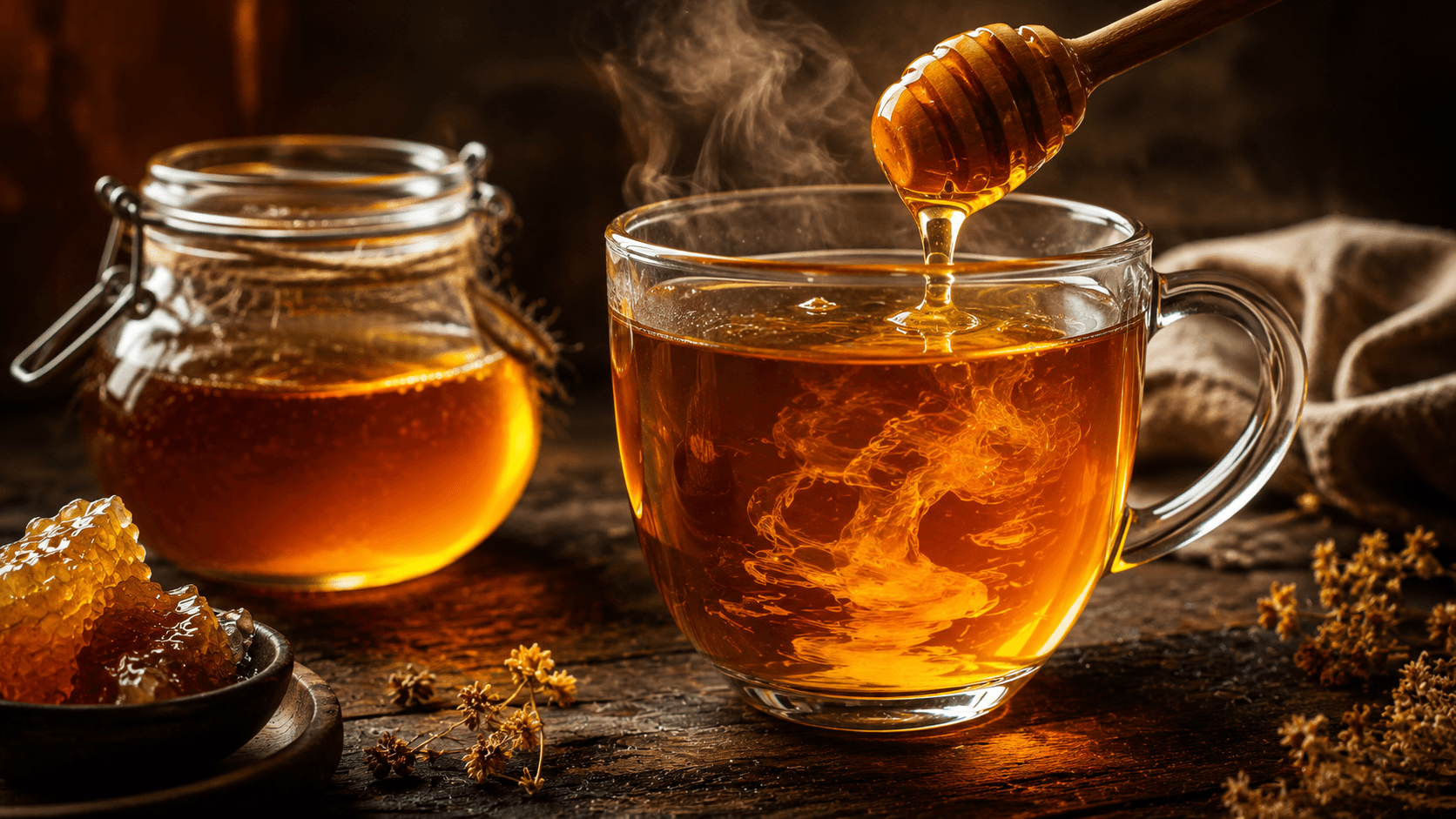
- Stirred into tea. A teaspoon to a tablespoon in hot (not boiling — heat destroys the enzymes) tea is the simplest daily use. Ginger tea with a spoon of raw honey is one of the most consistent daily medicine routines available.
- On pancakes and on toast with peanut butter. The everyday food applications. A tablespoon of real raw honey is a meaningful nutrient and antioxidant contribution on top of an otherwise simple breakfast.
- Occasionally added to the flu bomb. A spoonful of raw honey into the garlic flu bomb adds antimicrobial action of its own, and dramatically improves the drinkability of an otherwise intense beverage. Not always done, but on harder rounds of the protocol it makes a real difference.
The three brands I rotate through:
- YS Eco Bee Farms Raw Honey — four generations of traditional beekeeping, no processing, named "best overall" by The Spruce Eats.
- Local Hive Honey — True Source Certified, raw, regional varieties so you can match your local pollen for the allergy benefit if you want.
- Lineage Provisions Raw Organic Honey — the most heavily tested option, both USDA Organic and True Source Certified, with published lab results for hundreds of contaminants.
Any one of those alone is a serious upgrade over supermarket honey. Rotating among them gives some floral variety and ensures I'm never out.
How to start
- Throw out the supermarket honey you have right now. If it's from any of the 15 brands above, it's not doing you any good. If it's from any other brand without "raw," "unfiltered," and a clear geographic origin on the label, the same likely applies.
- Buy one quality jar from a trusted brand or from a local beekeeper. Your local farmers' market is the gold standard for local-pollen allergy benefit and traceability. A quality online brand (the ones above) works for general use.
- Run the water test once when you open it. It takes 30 seconds. You'll know immediately whether you've got the real thing.
- Store at room temperature in a sealed jar away from direct sunlight. Real honey keeps essentially indefinitely — archaeological digs have found edible honey in Egyptian tombs after 3,000+ years.
- Don't heat it to boiling. Adding to warm (not hot) tea is fine. Boiling destroys enzymes. Baking with raw honey defeats most of the medicinal benefit, though it's still better than refined sugar.
- Watch for crystallization — it's a good sign. If your honey crystallizes over weeks or months, that's authentic raw honey doing what raw honey does. Just warm the jar gently in warm water to re-liquefy.
- Never give honey to an infant under one year old. The risk is infant botulism from Clostridium botulinum spores, which adults handle fine but infants cannot. Important caveat that applies to all raw honey.
What I actually buy
A reminder before the affiliate links: my best recommendation is still a local beekeeper at a farmers' market. The brands below are what I buy when local options aren't immediately convenient, and they are genuinely good — but the local option, where available, is always the first choice.
Closing
Honey is one of the strangest cases of food fraud in the modern American food system. The fake-honey problem is larger and more systematic than the olive oil fraud we covered earlier, and arguably more damaging — because real honey is genuinely medicinal in ways the fake version is not even capable of mimicking. Fake honey is industrial sweetener with no medicinal value and the potential for actual harm (heavy metals, banned antibiotics, undisclosed corn or rice syrup adulterants).
The protocol is simple even if the marketplace isn't: your best option is a local beekeeper at a farmers' market — that's the recommendation if you can get it. Failing that, buy raw, unfiltered, geographically traceable honey from a True-Source- Certified producer or one of the small trusted brands named above. The criteria matter more than the specific brand — apply them, and there are countless good small producers worth supporting that this article doesn't list by name. Run a quick at-home test the first time. Use one to two tablespoons a day in tea, on toast, on pancakes, in the flu bomb when sickness comes around. Keep a jar of Manuka in the cupboard for the moments where you need its specific antibacterial potency.
The bees did something extraordinary. They've been doing it for ages, since long before anyone studied it. The fact that most Americans buy a product labeled "honey" that contains no pollen, no enzymes, no antioxidants, and no medicinal value — and call it part of a "healthy" breakfast — is one of the quieter food tragedies of the modern era. The fix costs a few dollars more per jar and lasts months. It's one of the easier upgrades on this entire site.
Don't buy the fake stuff.
Related reading on this site: the sleep article covers a teaspoon of raw honey in the evening as a small but real support for overnight blood sugar stability and sleep quality. The natural testosterone article covers raw honey's boron content as part of the broader mineral foundation for male hormonal health. The women's cycle article covers honey as a traditional cycle-support food in many cultures.
Sources & further reading
- Food Safety News — Tests Show Most Store Honey Isn't Honey (the foundational US fake-honey investigation)
- Texas A&M Pollenology Lab — pollen testing of US commercial honey samples
- The Spruce Eats — Best Honey Brands (independent ranking and review)
- Tasting Table — Top Raw Honey Brands in America
- True Source Certified — the certification program for honey traceability
- UMF Honey Association — Manuka honey grading and verification
- Molan, 'Honey: a biological wound dressing' — Wounds, 2015
- Paul et al., 'Effect of Honey, Dextromethorphan, and No Treatment on Nocturnal Cough' — Archives of Pediatric and Adolescent Medicine, 2007
- Carter et al., 'Therapeutic Manuka Honey: No Longer So Alternative' — Frontiers in Microbiology, 2016