Turmeric is the single most-researched spice in modern nutritional medicine. As of this writing, the PubMed database contains over 12,000 peer-reviewed papers on turmeric and its primary active compound, curcumin — more than for almost any other plant-derived medicine in human history. The research case spans inflammation, joint health, cardiovascular disease, cancer, depression, cognitive function, Alzheimer's, liver protection, blood sugar regulation, gut health, and dozens of other conditions. The Ayurvedic medical tradition has used turmeric for at least 4,000 years. Modern science has spent the last forty validating most of what the tradition already knew.
There is just one practical catch. Curcumin — the compound responsible for almost all of turmeric's medicinal effects — is almost completely unabsorbed when eaten on its own. Take a tablespoon of plain turmeric powder and most of the active compound passes straight through your digestive system without ever entering the bloodstream. The single most important practical fact in this entire article is the fix: a pinch of black pepper alongside the turmeric increases curcumin absorption by 2,000% (per Shoba et al., 1998 — the canonical piperine paper). Pair that with a bit of healthy fat and you have moved from "interesting yellow spice with little practical effect" to "one of the most therapeutically active single foods on earth."
This article covers what turmeric actually is, what curcumin does, the bioavailability story, the major documented health benefits, the brain and Alzheimer's research that has gotten unusually robust in the last decade, the depression case (with clinical trials showing fluoxetine-comparable results), and the practical cooking applications I use to get turmeric into my daily diet.
What turmeric actually is
Turmeric is the rhizome (underground stem) of Curcuma longa, a plant in the ginger family. Visually, fresh turmeric root looks remarkably like a smaller, more vibrantly orange ginger root. India produces about 80% of the world's turmeric, where it has been a staple of Ayurvedic medicine (called haldi) and cooking for at least 4,000 years. The dried, ground powder is the form most people in Western kitchens encounter, but fresh turmeric root is available in many grocery stores and is increasingly common in juice bars and health-food contexts.
The active compounds are a group called curcuminoids, of which there are three main members:
- Curcumin — by far the most abundant and most studied. Constitutes roughly 2–8% of dried turmeric powder by weight (varies by source). The bright golden-yellow color of turmeric is curcumin's color.
- Demethoxycurcumin and bisdemethoxycurcumin — minor curcuminoids with overlapping but slightly different bioactivity profiles.
Turmeric also contains several volatile oils — ar-turmerone, beta-turmerone, alpha-turmerone — which contribute additional anti-inflammatory and possibly neuroprotective effects independent of curcumin. The whole spice is more medicinal than an isolated curcumin extract for this reason, even though concentrated curcumin supplements are useful for therapeutic dosing.
The bioavailability problem — and the black pepper rule
This is the single most consequential practical fact about turmeric, and the one most people get wrong. On its own, curcumin is poorly water-soluble, rapidly metabolized by the liver, and quickly eliminated by the kidneys. The result: oral curcumin alone produces only trace plasma concentrations. Almost all of it is gone before it can act on tissues.
The classic 1998 study by Shoba and colleagues quantified the size of the problem and the size of the solution. They measured plasma curcumin concentrations in human subjects after dosing with curcumin alone versus curcumin combined with piperine — the active compound in black pepper. Adding just 20 mg of piperine alongside curcumin increased curcumin bioavailability by 2,000%. Plasma concentrations within 30 minutes to an hour were dramatically higher, and the curcumin remained active in the body much longer.
Plain turmeric powder without black pepper is largely a wasted intervention. Turmeric with black pepper and a bit of fat is a serious dose of bioactive curcumin. The difference between the two is a single pinch of pepper.
Piperine works by inhibiting the liver enzymes (particularly UDP-glucuronyl transferase) that metabolize curcumin out of circulation. With piperine present, curcumin lasts in the bloodstream long enough to actually reach tissues and have effect.
The second piece of the bioavailability fix is fat. Curcumin is fat-soluble, not water-soluble — meaning it absorbs much more efficiently in the presence of dietary fat. Pairing turmeric with olive oil, coconut oil, ghee, avocado, or any quality fat dramatically improves absorption beyond what piperine alone provides. Traditional Indian cooking — turmeric simmered into oil or ghee at the beginning of a dish — works exactly this way without anyone needing to think about the biochemistry.
A third practical detail: gentle heat actually increases turmeric's bioavailability. Cooking turmeric in oil or ghee, or simmering it into a soup or stew, makes the curcumin more accessible to the digestive system rather than less. This contradicts the "always eat it raw" intuition some people apply to other medicinal foods. Turmeric is the opposite — heat helps.
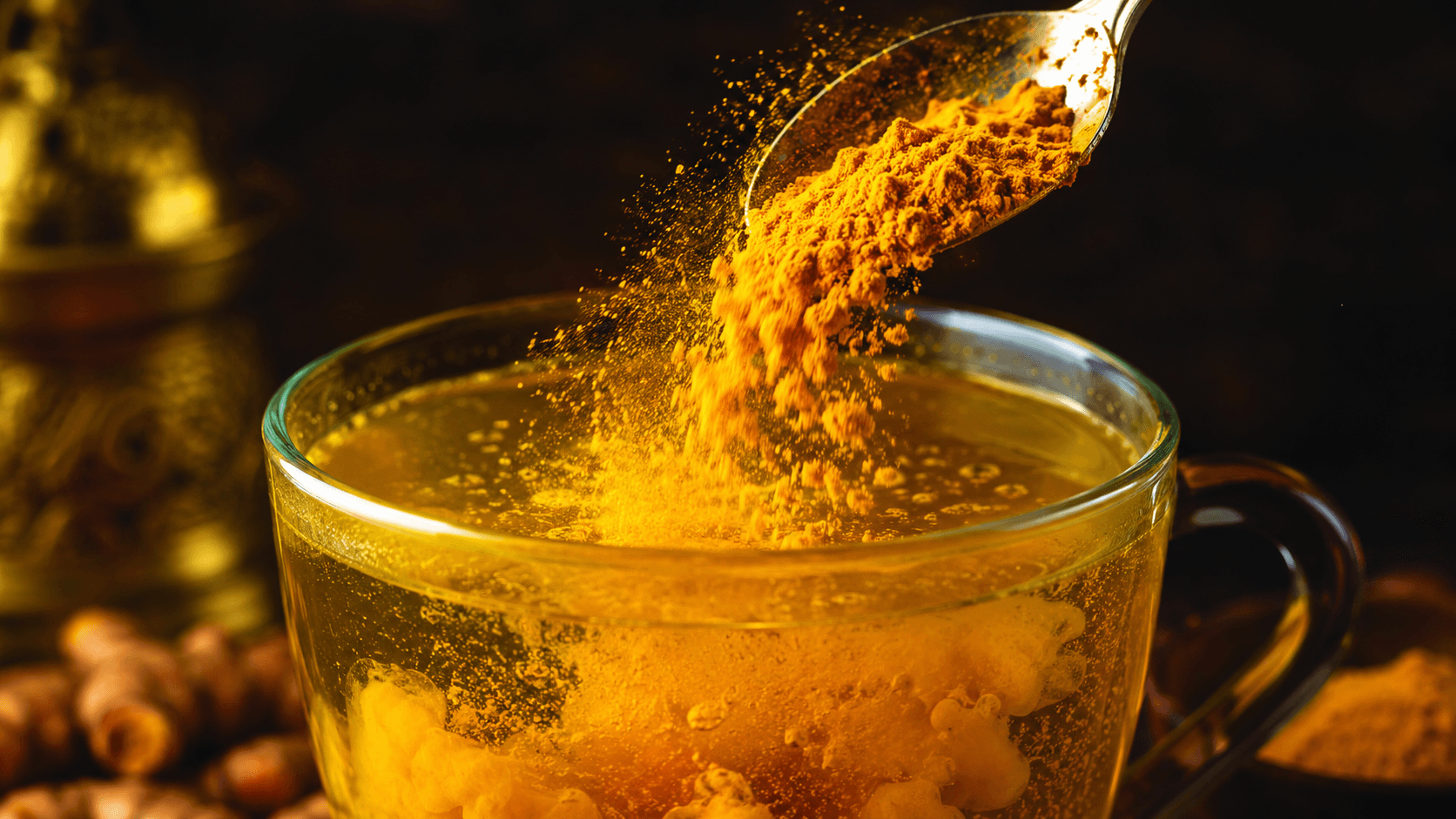
The simple rule: turmeric + black pepper + fat + a bit of heat is the formula. Nearly every traditional turmeric preparation accomplishes all four of these naturally. Almost no Western "turmeric supplement" pill does, which is why most cheap turmeric capsules produce disappointing results.
Anti-inflammatory — the headline benefit
Curcumin's signature property is its anti-inflammatory action. The mechanisms are unusually broad — it doesn't just inhibit one pathway, it modulates several simultaneously:
- Inhibits NF-κB — the master transcription factor for inflammation. Same pathway covered in the coconut oil, onion, and ginger articles. Turmeric is one of the most potent natural NF-κB inhibitors known.
- Inhibits COX-2 and 5-LOX — the two enzymes that pharmaceutical NSAIDs (ibuprofen, aspirin, celecoxib) target. Curcumin produces comparable anti-inflammatory effects through these pathways, without the gastrointestinal ulceration risk that long-term NSAID use carries.
- Reduces pro-inflammatory cytokines — TNF-α, IL-1β, IL-6 — all measurable in blood and all consistently lowered by curcumin supplementation in controlled trials.
- Increases antioxidant capacity by upregulating the body's own antioxidant systems (glutathione, superoxide dismutase, catalase).
The practical result: chronic low-grade inflammation — the kind that underlies most modern chronic disease, from cardiovascular to metabolic to neurodegenerative — measurably decreases with regular curcumin intake. Multiple meta-analyses of randomized controlled trials have confirmed this effect at doses achievable through food plus piperine, not just through high-dose supplements.
Joints and arthritis
The single most studied clinical application of curcumin. Numerous RCTs have shown that curcumin supplementation produces meaningful improvements in both osteoarthritis and rheumatoid arthritis — comparable in some studies to low-dose ibuprofen or diclofenac for pain and stiffness, without the GI side effects.
The specific findings across the literature:
- Reduced pain scores in patients with knee osteoarthritis, typically within 4–8 weeks of consistent dosing.
- Improved joint function measured by standardized tests of mobility, flexibility, and daily activity.
- Reduced morning stiffness — a particularly common complaint that responds well to curcumin.
- Reduced inflammatory markers (ESR, CRP) in rheumatoid arthritis patients.
- Sparing of cartilage — emerging evidence that curcumin may slow the cartilage breakdown that drives osteoarthritis progression.
Combined with boron, magnesium, and ginger (which has its own joint research backing), turmeric forms the core of what a serious natural joint-health protocol looks like.
Brain, cognition, and Alzheimer's
This is the section of turmeric research that has accelerated most dramatically in the last decade, and arguably the section with the most consequential long-term implications. Curcumin crosses the blood-brain barrier — something most therapeutic compounds do not — and exerts measurable effects directly in the brain.
The major findings:
- Binds and helps clear β-amyloid plaques — the protein deposits implicated in Alzheimer's disease. Curcumin binds amyloid directly and appears to inhibit its aggregation.
- Reduces tau tangle formation — the other primary pathological feature of Alzheimer's.
- Reduces neuroinflammation — chronic low-grade inflammation in the brain is increasingly recognized as a driver of cognitive decline and dementia.
- Increases BDNF (brain-derived neurotrophic factor) — the growth factor responsible for new neuron formation and synaptic plasticity. Low BDNF is implicated in depression, cognitive decline, and several psychiatric conditions.
- Antioxidant protection for brain tissue, which is unusually susceptible to oxidative damage due to its high lipid content and metabolic activity.
The most cited human trial: an 18-month double-blind, placebo-controlled study published in the American Journal of Geriatric Psychiatry examined the effects of a bioavailable curcumin formulation on memory and brain amyloid in non-demented adults. The curcumin group showed measurable improvements in memory tests and reduced amyloid accumulation on PET imaging compared to placebo. For a single food compound to produce that kind of effect over an 18-month window is, by the standards of dementia research, remarkable.
A separate randomized trial of a curcumin-galactomannan complex (CurQfen) at 500 mg twice daily found measurable improvements in cognitive performance and brain activity in adults with mild cognitive impairment.
The implication: regular daily turmeric, used correctly with piperine and fat, is among the few dietary practices with research support for long-term cognitive protection. Pair that with adequate B12 (the other vitamin with serious dementia-prevention evidence) and a real anti-cognitive-decline protocol starts to come together from food alone.
Depression
One of the more striking modern findings: multiple randomized controlled trials have shown curcumin producing antidepressant effects comparable to fluoxetine (Prozac) in patients with major depressive disorder. The most-cited trial — a 2014 Indian study published in Phytotherapy Research — found that curcumin at 500 mg twice daily was as effective as fluoxetine 20 mg over a 6-week period, with a much better side-effect profile.
Multiple subsequent trials and meta-analyses have replicated and extended this finding. The mechanism is multi-pronged: increased BDNF, reduced neuroinflammation, modulation of serotonin and dopamine signaling, and reduction of oxidative stress. Depression has increasingly come to be understood as a neuroinflammatory condition, and curcumin is one of the most potent natural anti-neuroinflammatories available.
For someone exploring food-based interventions for depression alongside or instead of pharmaceutical treatment, daily turmeric — with piperine and fat — is one of the better-evidenced single additions available.
Important honest caveat: this is not a recommendation to discontinue prescribed antidepressants without medical supervision. Curcumin can be an adjunct or, for mild-to-moderate depression, potentially a first-line natural approach — but the decision-making here belongs with a real practitioner who can monitor the transition.
Cardiovascular and metabolic
- Endothelial function. Curcumin improves the flexibility and responsiveness of blood vessel linings — in some studies producing effects comparable to moderate-intensity exercise.
- Cholesterol moderation. Reductions in total cholesterol, LDL, and triglycerides; increases in HDL across multiple controlled trials.
- Blood pressure. Modest but consistent reductions, particularly in subjects with elevated baseline pressure.
- Anti-platelet effect — mild blood- thinning action similar to garlic and ginger.
- Atherosclerosis — animal and preliminary human studies suggesting curcumin slows arterial plaque progression.
- Blood sugar and insulin sensitivity. Improvements in fasting glucose, HbA1c, and insulin sensitivity in pre-diabetic and type-2 diabetic populations.
Cancer research
Turmeric and curcumin have one of the largest oncology-related research bodies of any natural compound. Mechanisms include direct cytotoxicity against several cancer cell lines, induction of apoptosis (programmed cell death) in cancer cells while sparing healthy cells, inhibition of angiogenesis (the blood vessel growth tumors require), modulation of multiple cell-signaling pathways involved in cancer progression, and reduction of the chronic inflammation that promotes carcinogenesis.
The clinical trial picture is genuinely promising — phase I/II trials have explored curcumin as an adjunct to standard cancer therapies for colorectal, pancreatic, breast, prostate, and other cancers. The most consistent findings: improved quality of life, reduced chemotherapy side effects, and modest reductions in tumor markers in some studies. Curcumin is not a stand-alone cancer treatment — but as part of a comprehensive approach alongside conventional care, the evidence is meaningful.
Other documented benefits
- Liver support. Hepatoprotective against alcohol-induced and toxic liver damage in multiple animal and human studies. Particularly relevant for non-alcoholic fatty liver disease, where curcumin supplementation has reduced liver enzyme markers and improved liver function.
- Gut health. Promising research on curcumin for inflammatory bowel disease (Crohn's, ulcerative colitis) — comparable to mesalamine (sulfasalazine) in some studies for maintaining remission, without the same side effect profile.
- Skin health. Topical turmeric (often as a paste) has been used in Indian and South Asian traditions for wound healing, acne, and as a skin brightener for thousands of years. Modern research supports these uses, particularly the wound-healing effects.
- Antimicrobial. Active against various bacterial, viral, and fungal pathogens — milder than garlic or oregano but still real.
- Antioxidant load. One of the higher ORAC values of any culinary spice.
My approach — turmeric in the kitchen
I don't take a turmeric supplement, and I don't take it medicinally in any structured way. What I do is cook with it regularly across five specific applications, all of which deliver curcumin in the right context — gently heated, paired with fat, and ideally seasoned alongside black pepper (which I add almost reflexively whenever I add turmeric, because the combination is the point).
The five real uses:
- Chicken. Turmeric is one of the standard spices in any chicken seasoning blend or marinade I use. A teaspoon of turmeric, a pinch of black pepper, salt, olive oil, and any other spices (paprika, garlic powder, etc.) on chicken before roasting, grilling, or pan-searing. The fat in the chicken plus the olive oil plus the pepper makes this close to a textbook curcumin absorption setup.
- Rice. A pinch of turmeric in the rice water turns plain rice into beautiful golden rice. Adds essentially no flavor at the small doses used here but contributes meaningful color and a small daily curcumin dose to a staple food.
- Roasted vegetables — cauliflower especially. Cauliflower tossed with olive oil, salt, black pepper, and a generous half-teaspoon of turmeric, then roasted at 400°F until the edges caramelize, is one of the most reliable healthy side dishes in my rotation. The combination hits every absorption requirement: fat (oil), pepper (piperine), and gentle heat. Works equally well on broccoli, Brussels sprouts, potatoes, sweet potatoes, and carrots.
- Soups and stews. A teaspoon stirred into chicken soup, butternut squash soup, lentil soup, or any vegetable-based broth. The long, gentle cooking in a soup is ideal for curcumin extraction from the powder.
- Protein smoothies. A quarter to half-teaspoon stirred into the same protein shake that already includes the spirulina. Works with banana-based or fruit-forward smoothies; the turmeric flavor is masked by the other ingredients. Adding a pinch of black pepper here is worth it — sounds odd in a smoothie but the absorption boost is real and you genuinely don't taste it.
Between those five applications, I'm getting turmeric into my body several times a day in forms that actually absorb — which is the part most "I take a turmeric capsule" protocols are missing. The cooking approach is, for most people, more effective than the supplement aisle.
Optional additions for higher dosing
For someone with a specific health goal beyond general maintenance — chronic joint pain, inflammatory condition, mood support, cognitive concern — the cooking approach can be supplemented with one of the following:
Golden milk (haldi doodh)
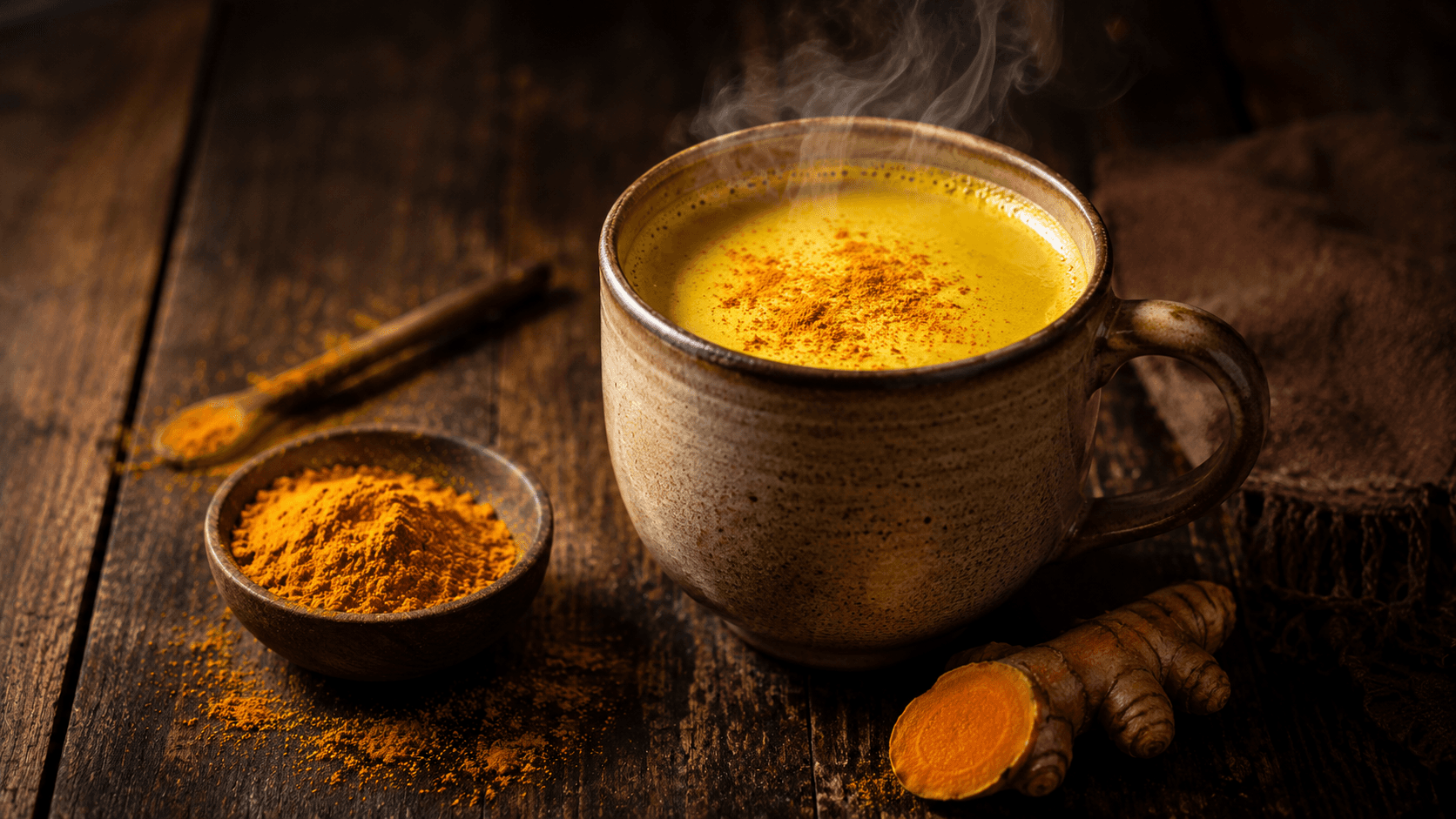
The traditional Ayurvedic preparation. Heat a cup of milk (dairy or non-dairy — coconut milk works beautifully here) until just warm, not boiling. Whisk in: a half-teaspoon of turmeric, a generous pinch of black pepper, a half-teaspoon of grated ginger (or ginger powder), a pinch of cinnamon, and a teaspoon of raw honey (stir in after the milk has cooled slightly to avoid destroying the honey's enzymes). Drink before bed for sleep, anti-inflammation, and cold/flu support. One of the most beautiful and effective traditional medicinal preparations in any culture.
Standardized curcumin extract
For therapeutic dosing — say, for someone with significant joint pain, depression, or an inflammatory condition — a standardized curcumin extract (95% curcuminoids) with piperine is the typical approach. Quality brands include Thorne Curcumin Phytosome, Pure Encapsulations Curcumin with BioPerine, Jarrow Curcumin 95, and Dr. Berg's Turmeric Curcumin with BioPerine. Typical therapeutic doses are 500–1,000 mg of curcuminoids twice daily.
Newer formulations (liposomal, phytosome, nano-curcumin, curcumin-galactomannan complexes like CurQfen) achieve dramatically higher bioavailability than even piperine-paired curcumin. For someone serious about therapeutic dosing, these are worth the extra cost.
How to buy and store turmeric
- Look for deep golden-yellow to orange-yellow color. Pale, washed-out yellow turmeric powder is old or low-quality. Vibrant color is a real freshness and potency indicator.
- Organic is worth it for turmeric. Conventional turmeric, particularly from India, has been the subject of repeated heavy-metal contamination warnings — particularly lead contamination from soil and from certain artificial color adulterants used historically. Organic-certified turmeric from reputable brands has dramatically lower contamination risk.
- Reputable brands — Simply Organic, Frontier Co-op, McCormick Gourmet, and Spicely Organics are widely available and reliable for culinary use. Larger Indian-grocery brands like Swad and Laxmi are also generally good quality at a fraction of the price, though check for organic certification specifically.
- Fresh turmeric root can be found in many grocery stores' produce sections and most Asian/Indian markets. Looks like a smaller, more vibrantly orange ginger root. Use the same way as fresh ginger — grated or finely chopped, in cooking or in tea.
- Store in a cool, dark cupboard in a sealed jar. Turmeric loses potency with light and heat exposure. Replace every 1–2 years for maximum potency.
- Will stain everything. Honest warning: turmeric is one of the most aggressive natural dyes in any kitchen. It will stain plastic cutting boards, fingertips, white clothes, and grout. Wipe up spills immediately and consider keeping a dedicated turmeric measuring spoon.
Honest cautions
- Blood thinners. Curcumin has mild anti-platelet effects similar to garlic, ginger, and bee pollen. If you're on prescription blood thinners (warfarin, clopidogrel, etc.), talk to a doctor before adding high-dose curcumin supplementation. Culinary amounts in cooking are fine.
- Gallstones and bile duct obstruction. Curcumin stimulates bile flow — usually a good thing, but in someone with gallstones or a bile duct obstruction, it can trigger discomfort. If you have diagnosed gallstones, check with a practitioner before high-dose supplementation.
- Iron absorption. High doses of curcumin may modestly reduce iron absorption from food. For someone with anemia or chronic iron deficiency, separating turmeric-heavy meals from iron-rich meals is a reasonable precaution.
- Pregnancy. Culinary turmeric is considered safe in pregnancy. High-dose curcumin supplementation is not well-studied in pregnancy and is generally avoided.
- Surgery. Most surgeons recommend stopping high-dose curcumin supplementation 1–2 weeks before scheduled surgery due to the anti-platelet effect.
- GI side effects at very high doses. Mild nausea, diarrhea, or stomach upset can occur at supplemental doses above 4 grams daily. Culinary doses are far below this threshold.
How to start
- Buy a jar of quality organic turmeric powder this week. Total cost: a few dollars. This is the single highest-leverage addition you can make to your spice cabinet.
- Always pair with black pepper and fat. This is the non-negotiable rule. A pinch of pepper and a quality oil alongside the turmeric is the entire bioavailability formula. Skip this and most of the benefit is wasted.
- Start with one or two cooking applications. Roasted vegetables and turmeric-seasoned chicken are the easiest entry points. Build up to having it in three to five meals a week.
- Try golden milk once as a bedtime preparation. It's one of the more pleasant ways to get a real daily dose, and the sleep effect is noticeable for many people.
- Use heat. Cooking turmeric in oil or simmering it into a soup actually increases bioavailability rather than reducing it. Don't be afraid to cook with it.
- Consider a standardized supplement only if you have a specific health goal beyond general maintenance — chronic joint pain, mood support, inflammatory disease. For everyday preventive use, cooking is enough.
Closing
Turmeric is one of the strongest cases for traditional food-medicine in the entire nutritional literature. The Indian Ayurvedic tradition used it for 4,000 years. Modern research has now produced 12,000+ peer-reviewed papers backing most of what tradition already knew — anti-inflammatory, antioxidant, joint-protective, cardio-protective, neuroprotective, and likely cancer-protective. The clinical evidence for comparable-to-pharmaceutical effects in arthritis and depression specifically is unusually strong.
The single practical rule that determines whether you get any of these benefits or not is turmeric + black pepper + fat. Skip any one of those three and most of the curcumin you consume passes through you without ever entering circulation. Combine them — as nearly every traditional turmeric preparation does naturally — and you have one of the most powerful daily food medicines available.
Combined with garlic, ginger, real olive oil, adequate magnesium, boron, and vitamin D, turmeric rounds out the anti-inflammatory and joint-and-brain-protective foundation that the modern chronic-disease epidemic specifically needs. Most of this protocol is just cooking — paying attention to what you put in the pan. That's the level of difficulty this stuff is operating at, and that's why the food- first approach beats the supplement-shelf approach for most people, most of the time.
A pinch of golden powder. A grind of black pepper. A splash of olive oil. The rest is dinner.
Sources & further reading
- Dr. Berg — Amazing Turmeric Benefits for Health & Healing
- Shoba et al., 'Influence of piperine on the pharmacokinetics of curcumin in animals and human volunteers' — Planta Medica, 1998 (the canonical 2,000% bioavailability paper)
- Gupta et al., 'Therapeutic Roles of Curcumin: Lessons Learned from Clinical Trials' — AAPS Journal, 2013
- Sanmukhani et al., 'Efficacy and Safety of Curcumin in Major Depressive Disorder: A Randomized Controlled Trial' — Phytotherapy Research, 2014
- Small et al., 'Memory and Brain Amyloid and Tau Effects of a Bioavailable Form of Curcumin in Non-Demented Adults: A Double-Blind, Placebo-Controlled 18-Month Trial' — American Journal of Geriatric Psychiatry, 2018
- Hewlings & Kalman, 'Curcumin: A Review of Its Effects on Human Health' — Foods, 2017
- Curcumin Formulations for Better Bioavailability: What We Learned from Clinical Trials — ACS Omega / PMC, 2023
- Neuroprotective Potential of Curcumin in Neurodegenerative Diseases — Journal of Biochemical and Molecular Toxicology, 2025